

Should Boston trade the handful of rising stars left in its barren farm to chase one more Stanley Cup?
On paper it makes sense: this roster is elite now and the prospect pool ranks dead last in the NHL.
But the correct call isn’t a blanket yes or no. It needs to be surgical: use late picks and expendable depth, not top prospects like Fabian Lysell or Mason Lohrei, unless the return is franchise-changing.
With tight cap space and few internal replacements, any move must add real, immediate impact.
Immediate Assessment of Bruins’ Cup Window and Prospect Trade Value

The Boston Bruins sit in a rare spot where the present feels urgent and the future feels thin. Through the first 29 games of the 2023 season, the team held 43 points, tied for the best record in the Eastern Conference. That’s not a team thinking about next year. That’s a Stanley Cup contender in win-now mode, and everyone inside the organization knows it. The question isn’t whether the Bruins should try to capitalize on this championship window. It’s whether they can afford to mortgage what little prospect depth they have left to do it.
Here’s the reality: the Bruins’ farm system ranks dead last in the NHL. They’ve already traded away three of their last four first-round picks to keep playoff rosters competitive, and the cost is starting to show. They had no draft selection until 92nd overall in 2023 and no picks in the first three rounds of the 2024 draft. That’s not just aggressive roster management. That’s scraping the cupboard clean. Still, two top prospects, Fabian Lysell and Mason Lohrei, project to push for NHL roster spots within the next year or two. Both hold tangible value on the trade market. Both represent some of the only high-upside chips the front office still controls.
The strategic calculation is straightforward: trade prospects now and you add immediate help, maybe enough to tip the balance in a deep playoff run. Keep them, and you protect a long-term pipeline that’s already close to empty. Most teams in this spot lean toward the present, especially when the roster is already strong enough to compete. But the Bruins aren’t most teams. They’ve been living in this window for years, and the bill for all those short-term moves is coming due. The answer to whether prospects are worth trading depends on what’s available, what it costs, and whether management believes this core has more than one last run left in it.
Evaluating the Boston Bruins’ Prospect Pool for Trade Decisions

When you rank 32nd in prospect pool depth across the entire league, you don’t have the luxury of shopping carelessly. The Bruins’ farm system isn’t just thin. It’s nearly invisible. Years of aggressive win-now trades stripped the organization of early-round picks and left development pipelines running dry. They didn’t pick until 92nd overall in 2023, and heading into 2024, they had no selections in the first three rounds. That’s not a sign of championship confidence. That’s a sign the future has already been spent.
Still, not every prospect holds the same trade value. And not every young player should be off-limits. The Bruins do have a handful of names worth protecting, and a larger group of developmental pieces who could be moved without gutting the next wave of talent. Understanding which tier each prospect belongs to matters, especially when weighing whether to package one or two for a veteran rental with playoff experience.
Tier 1 (Untouchable): Fabian Lysell and Mason Lohrei. Both project as top-six or top-four NHL players within two seasons and represent the only high-end talent left in the system.
Tier 2 (High Cost, High Risk to Trade): Players like Brett Harrison or Ryan Mast, who show clear upside but haven’t yet proven they’ll translate to NHL impact. Moving them weakens depth without immediate certainty.
Tier 3 (Expendable in the Right Deal): Mid-tier AHL depth or late-round picks who don’t project as core contributors. These are the names you package to sweeten a deal or reduce acquisition cost.
Tier 4 (Filler Assets): Players with limited upside or development stalls. Useful for balancing salary in trades but not meaningful losses if moved.
Tier 5 (Throwaway Picks): Late-round selections (sixth, seventh round) that statistically produce NHL players at a low rate. These should always be in play for veteran upgrades.
Fabian Lysell’s Value to a Future Top-Six
Lysell remains the crown jewel of what’s left in Boston’s system. Selected in the first round in 2021, he’s posted near point-per-game production in junior and AHL development despite an underwhelming showing at the World Juniors. That tournament performance raised some concerns, but his offensive instincts and scoring touch are undeniable. He’s a right-shot winger with the skill set to anchor a second or third line within the next two seasons. In a system this barren, that makes him close to untouchable.
Trading Lysell would send a clear signal: the front office believes this Cup window closes in the next 12 months, and they’re willing to sacrifice the best internal replacement option for aging forwards. That’s not inherently wrong, but it’s risky. If the move doesn’t result in a championship, the Bruins lose both the immediate gamble and the long-term insurance. Lysell’s value to a contending team is obvious. Offensive skill at forward is always in demand. But his value to Boston’s future might be even higher, especially as the current top-six core ages out of their prime years.
Mason Lohrei’s Importance to Future Defensive Depth
Lohrei brings something the Bruins desperately need on the blue line: size, mobility, and a left-shot presence that can move the puck. He’s posted just under point-per-game production across two NCAA seasons with Ohio State, a strong indicator of offensive instincts from the back end. At 6’4″, he has the frame to play a modern shutdown role while still contributing in transition. That profile projects as a top-four defenseman, and left-shot defensemen with that combination of size and skill don’t grow on trees.
Unlike Lysell, whose position might have more internal depth options down the line, Lohrei fills a specific organizational need. The Bruins’ defensive pipeline has even fewer high-end prospects than the forward group. Losing Lohrei would create a gap that’s nearly impossible to replace internally. He’s close to NHL-ready, which makes him attractive to other teams, but that same timeline makes him critically valuable to Boston’s next competitive phase. Moving him now would be a clear bet that the current roster can win it all before the blue line needs a youth injection. That’s a short window to bet on.
Weighing Short-Term Gains vs Long-Term Roster Stability for the Bruins

Every contending team faces the same tension: add now or protect later. For the Bruins, that choice is sharper than most because they’ve already leaned hard into the present. Trading first-round picks year after year kept playoff rosters competitive. It also drained organizational depth to historically low levels. Now the question is whether doubling down one more time makes sense, or whether it’s time to stop trading the future and start building it back up.
The Florida Panthers offer a cautionary example. They traded their first-round pick to Montreal as part of the Ben Chiarot deal, betting that adding a veteran defenseman would push them over the top. Instead, they missed expectations, and that pick could end up in the top ten. Losing a lottery-range selection for a rental who didn’t deliver a championship is the nightmare scenario for any front office. It’s the kind of mistake that sets a franchise back for years, especially when the prospect pool is already weak.
Boston’s situation mirrors Florida’s in some ways. Strong roster, tight cap, limited pipeline, and a front office under pressure to deliver now. The difference is the Bruins are still performing at the top of the conference, which makes the short-term case stronger. But if this core doesn’t win in the next season or two, the drop-off could be steep. Bergeron’s retirement, an aging Marchand, and an expensive Pastrnak extension all point to a narrow window. The question isn’t just whether to trade prospects. It’s whether the front office believes the current group can actually finish the job. If the answer is yes, you move assets. If the answer is maybe, you protect what’s left and plan for the next era.
Bruins’ Current Trade Assets and Salary-Cap Constraints
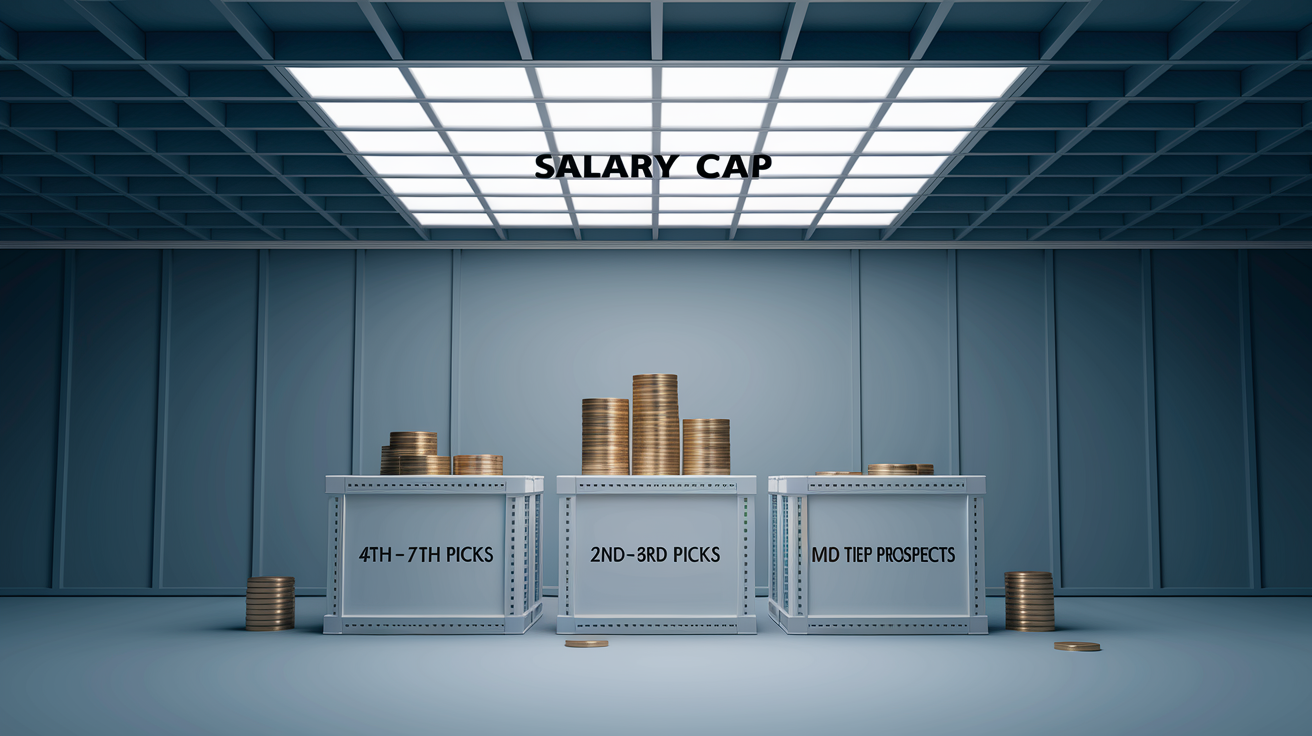
The Bruins don’t just have a prospect problem. They have a cap problem. With roughly $2.8 million in available salary-cap space, most veteran targets who could genuinely move the needle carry cap hits well beyond what Boston can absorb without making corresponding moves. That means every trade conversation starts with the same challenge: how do you fit a $4 million or $5 million player under a hard cap when you’re already tight against the ceiling. The answer usually involves salary retention, moving out a roster player, or attaching extra assets to convince another team to take on a contract. None of those options are clean.
Adding to the complication, the Bruins have very few draft picks left to trade. They hold no selections in the first three rounds of the 2024 draft. They already burned their 2023 first-rounder in a previous deal. That leaves mid-to-late-round picks and prospects as the primary trade currency, and when the farm system ranks 32nd, those prospects carry more risk than usual. Moving a second or third-tier prospect might seem like a reasonable cost for a veteran upgrade, but if that prospect develops into an NHL contributor two years from now and the veteran rental is long gone, the trade looks a lot worse in hindsight.
Here’s how the Bruins’ remaining trade assets break down by liquidity and risk:
Late-round picks (4th–7th): Most expendable. Rarely produce NHL players, easy to include in deals without long-term consequence.
Non-first-round picks (2nd–3rd): Valuable but replaceable. Useful for acquiring mid-tier rentals or sweetening a package without gutting the system.
Mid-tier prospects: High-risk to move. Some upside, but unproven. Losing one or two is manageable. Losing several weakens an already thin pipeline.
Top prospects (Lysell, Lohrei): Should be protected unless an elite, franchise-altering player becomes available. Trading either one is a signal that the front office is all-in on this exact roster winning now.
Potential Veteran Targets and Bruins Trade Fits for a Cup Push

The trade market for playoff rentals operates on a predictable rhythm: as the deadline approaches, teams out of contention start fielding calls, and prices rise based on demand. For the Bruins, the challenge is finding veterans who fit under the cap, address a specific roster need, and don’t cost a top prospect or future first-round pick. That’s a narrow target range, but it’s not impossible. The key is identifying players on expiring contracts with affordable cap hits. The kind of depth additions that provide insurance without forcing the front office to mortgage the future.
Pat Maroon is the exact profile Boston should prioritize. At 35 years old, he carries an $800,000 cap hit and posted 3 goals and 9 assists with Minnesota through early December 2023. He’s a bottom-six winger with three straight Stanley Cup championships from 2019 to 2021, and Minnesota acquired him that offseason for just a seventh-round pick. That’s the kind of acquisition that doesn’t break the bank and doesn’t require sacrificing organizational depth. Maroon won’t replace a top-six scorer, but he can fill in for an injured veteran, bring playoff experience, and add physicality without creating long-term cap complications.
The broader lesson is that not every deadline move needs to be a blockbuster. The Bruins are better served targeting affordable, short-term additions rather than swinging for a big name that costs premium assets. Here’s the type of veteran profile Boston should focus on:
Expiring contract rentals under $1.5 million. Players with affordable cap hits who can slot into the bottom six or third defensive pair without requiring major roster manipulation.
Veterans on rebuilding teams willing to retain salary. A 50% retained player turns a $3 million cap hit into $1.5 million, making more options viable within Boston’s tight budget.
Depth forwards with playoff pedigree. Players who’ve won before and understand the grind of a long postseason run, even if their regular-season production is modest.
Right-shot defensemen with mobility. A specific organizational need if injuries hit the blue line, especially if the player can move the puck and play special teams.
The smartest approach for Boston is patience. Wait for sellers to emerge, identify the low-cost fits, and avoid bidding wars for players who require giving up a first-round pick or a top prospect. The difference between adding a Pat Maroon type for a seventh-rounder and trading Fabian Lysell for a bigger name could be the margin between keeping the pipeline alive and gutting it completely.
Comparing Bruins’ Situation to Recent Cup Winners’ Trade Strategies

Championship teams don’t follow a single blueprint when it comes to trading prospects and picks, but there are patterns. Tampa Bay and Colorado both made aggressive deadline acquisitions, but they targeted players on expiring deals and avoided surrendering their top prospects unless the return was a proven elite talent. Florida, on the other hand, swung hard for Ben Chiarot and lost a first-round pick that could turn into a top-ten selection without delivering a championship. The difference between those outcomes comes down to timing, price, and whether the core roster was truly one piece away.
Boston’s situation shares elements of all three models. Like Tampa, they have an established core with championship experience and a tight window to maximize it. Like Colorado, they’re a top team in their conference with the depth to compete but gaps that could be addressed with the right addition. And like Florida, they’ve already traded away significant draft capital and risk compounding that mistake if they overpay for a rental who doesn’t deliver. The key is learning from those examples. Be aggressive when the price is right, but don’t confuse activity with progress. Adding a big name just to say you did something isn’t the same as adding the right piece.
| Team Strategy | Key Outcome |
|---|---|
| Tampa Bay Lightning — Targeted rentals on expiring deals, preserved top prospects | Back-to-back Cups in 2020 and 2021 without gutting the pipeline |
| Colorado Avalanche — Traded mid-tier assets for depth, protected core prospects | 2022 Stanley Cup, strong pipeline remained intact for sustained contention |
| Florida Panthers — Traded first-round pick for Ben Chiarot, failed to deliver championship | Lost what became a top-ten selection without winning, weakened future flexibility |
Asset Hierarchy: What the Bruins Should and Shouldn’t Trade
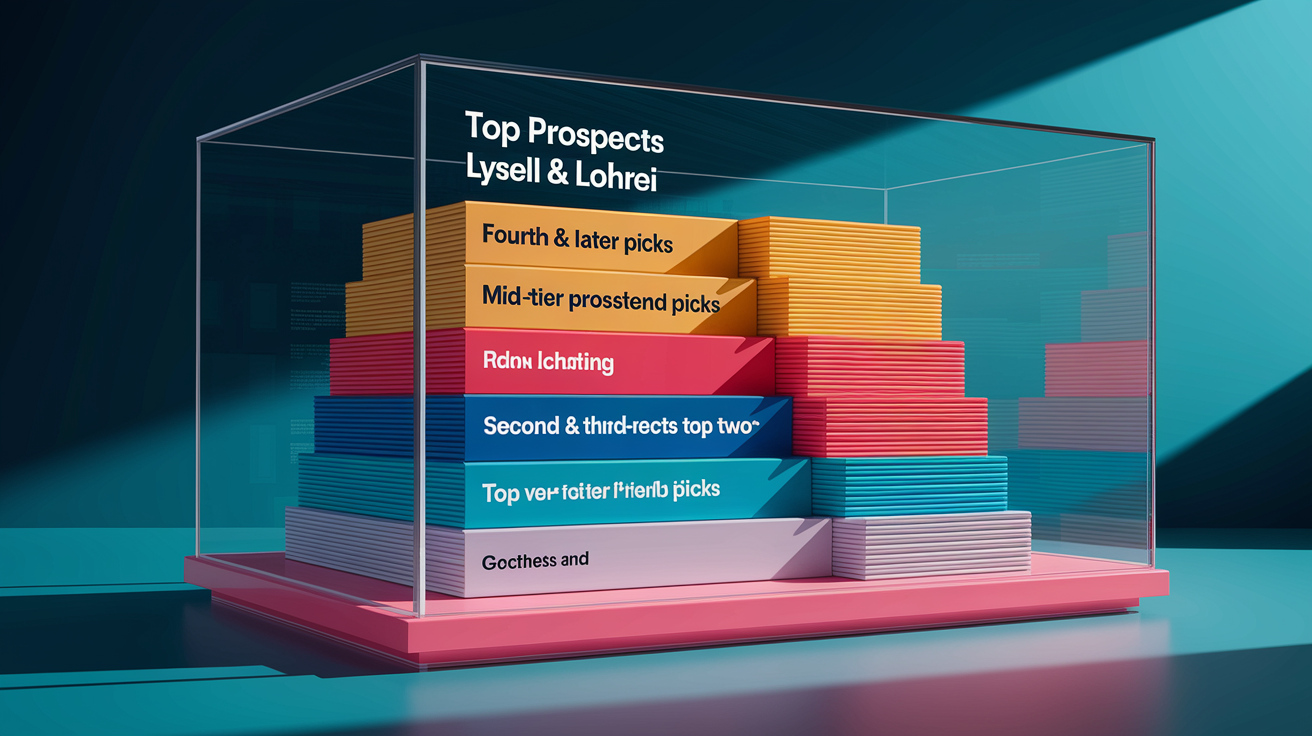
When you’re working with limited trade capital, every asset needs to be ranked by replaceability and long-term value. The Bruins can’t afford to treat all picks and prospects the same. Some are expendable, others are foundational, and a few sit somewhere in between. The front office needs a clear hierarchy before walking into any trade conversation. Otherwise it’s too easy to overpay in the moment and regret it two years later.
Bruins Should Trade Prospects, Not Picks is a common refrain among analysts, and there’s logic to it. Prospects are uncertain, picks represent future optionality. But when your farm system ranks 32nd and you’ve already burned most of your early-round selections, that advice gets complicated. The smarter approach is to protect your best prospects and your remaining first-round picks while staying flexible with everything else. Here’s how the Bruins should rank their trade assets from most expendable to least:
Fourth and later-round draft picks. These should always be in play. The hit rate on late-round picks is low, and acquiring a proven veteran, even a depth piece, is almost always a better bet than hoping a seventh-rounder develops into an NHLer.
Mid-tier prospects outside the top two. Players who show some upside but haven’t separated themselves as core pieces. Moving one or two to acquire a veteran rental is reasonable, especially if the player fills a specific need.
Second and third-round picks. Valuable, but not irreplaceable. If the return is a legitimate playoff contributor, these picks are fair game. Just don’t package multiples unless the target is a difference-maker.
Top prospects (Lysell, Lohrei). Only move these for elite, franchise-altering talent. A Bo Horvat or Patrick Kane type might justify it, but a middle-six rental or depth defenseman doesn’t.
The margin for error is thin. The Bruins have already used most of their margin. That means being disciplined, saying no to deals that feel exciting but don’t actually improve the roster’s championship odds, and recognizing that sometimes the best trade is the one you don’t make.
How a Bruins Prospect Trade Shapes the Franchise Beyond 2024

The decision to trade or keep prospects isn’t just about this season or next. It’s about what the Bruins look like in 2026 and beyond. The current core is aging. Bergeron retired, Marchand is in his mid-thirties, and Pastrnak’s big extension locks him in long-term but doesn’t make him younger. At some point soon, the Bruins will stop drafting in the late twenties and thirties and start picking in the teens or higher. When that happens, the prospects they traded away today will matter a lot more than they do right now.
If Boston moves Lysell or Lohrei for a rental and wins a Cup, no one will second-guess it. Championships justify almost any cost. But if they trade those players and come up short, the fallout is more than just disappointment. It’s a franchise stuck in transition with no internal talent ready to step in. The next phase of Bruins hockey depends on whether management believes this core has multiple runs left or just one. If it’s one, you trade everything that isn’t nailed down and bet it all. If it’s more than one, you protect the best young talent and build for sustained contention, not just a single shot. Either choice is defensible, but only if the front office is honest about which window they’re actually operating in.
Final Words
In the middle of a Cup push, the Bruins look like contenders now but their prospect depth is thin. We covered the weak farm, the two near‑NHL hopefuls (Fabian Lysell and Mason Lohrei), tight cap space, and limited draft picks.
Trading prospects can buy real short-term value, but it has to be surgical and avoid gutting the future.
Boston Bruins: are their prospects worth trading for a cup push — maybe, if moves keep the core strong and the team flexible. Stay optimistic.
FAQ
Q: Do the Bruins have any good prospects?
A: The Bruins do have some good prospects: Fabian Lysell and Mason Lohrei stand out and could be NHL-ready in 1–2 years, but Boston’s overall farm system ranks near the bottom and lacks depth.
Q: Why did Sweeney trade Marchand?
A: Sweeney reportedly traded Marchand to recoup assets and ease cap pressure while preparing for an aging core, prioritizing long-term flexibility over keeping a high-cost veteran on the roster.
Q: Do the Bruins have a chance of making the playoffs?
A: The Bruins do have a strong chance of making the playoffs — after 29 games they had 43 points and sat atop the East, though depth issues and injuries could change that picture.
Q: Why did Milan Lucic leave the Bruins?
A: Milan Lucic left the Bruins to pursue a new contract and a fresh opportunity as Boston shifted roster priorities, making the move a mix of player choice and team direction.