

Should Florida chase a veteran goalie at the deadline even with Bobrovsky slipping and the team leaning toward seller mode?
Bobrovsky’s numbers this season raise real doubts.
The Panthers sit 10 points out, cap room is tight, and they just signed Louis Domingue as cheap depth.
So here’s the take: a veteran rental only makes sense as a low-cost stopgap or insurance if Bobrovsky is moved.
Paying picks or a big salary for a one-year fix would be a bad bet.
Short-term depth? Yes. Big trade? Probably not.
Evaluating the Panthers’ Goaltending Needs Ahead of the Deadline
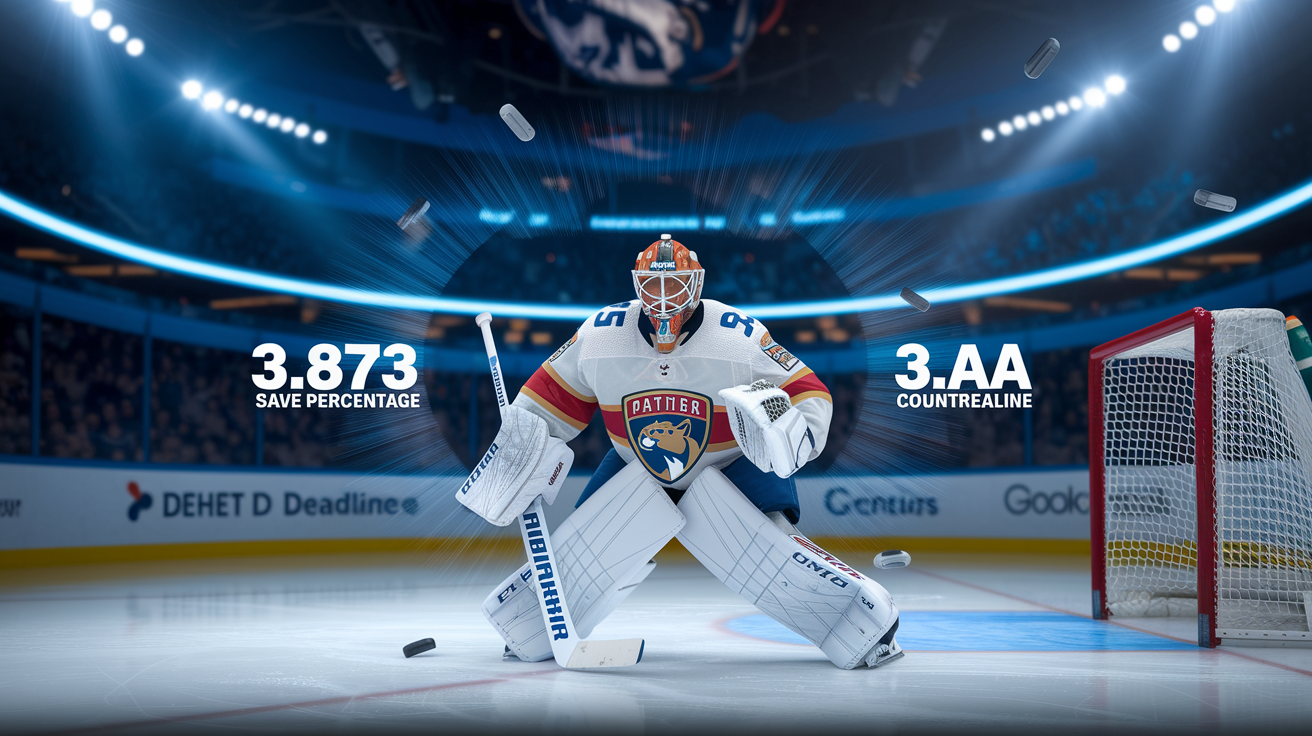
Sergei Bobrovsky’s current form is raising questions Florida didn’t expect to answer this late in the season. At 37, the two-time Stanley Cup champion is posting an .873 save percentage through 43 appearances. That’s a sharp decline from the playoff reliability that defined his back-to-back championships. His 22-19-1 record and 3.13 goals-against average paint a picture of inconsistency that doesn’t align with what playoff teams demand from their starting netminder.
Bobrovsky’s playoff résumé remains elite. .907 save percentage across 117 postseason games, two Vezina Trophies, 451 career wins. But this season’s numbers suggest age and workload are catching up.
The Panthers’ defensive struggles make the goaltending question harder to solve. Allowing 3.34 goals against per game ranks among the weaker outputs in the Atlantic Division, and that leaky back end amplifies every mistake Bobrovsky makes. When a team gives up that many chances, it needs above-average goaltending just to stay competitive. Florida’s averaging 2.98 goals for per game, which means the margin for error in net is razor-thin. A veteran addition could stabilize what’s become a two-way problem. But it would only mask the larger defensive breakdown if the skaters don’t tighten up.
With a 30-28-3 record and sitting 10 points behind the second wild-card spot, the Panthers have reportedly shifted into seller mode ahead of the March 6 deadline. That posture lowers the urgency to add a veteran. If you’re listening to offers on Bobrovsky, you’re probably not preparing to pay premium assets for another aging netminder. The front office signed Louis Domingue to a two-way deal as low-cost insurance, signaling a preference for internal flexibility over expensive external fixes.
Key reasons Florida would or would not pursue a veteran goalie:
- Bobrovsky’s .873 save percentage creates immediate doubt about reliability in high-leverage games.
- Defensive metrics (3.34 GA/GP) mean any goalie will face volume. A steady veteran could limit damage better than younger internal options.
- Sitting 10 points out of playoff position reduces the incentive to sacrifice picks or prospects for a short-term rental.
- Reported willingness to trade Bobrovsky suggests the team may prefer to clear cap space and rebuild rather than double down on the current roster.
- The signing of Domingue on a two-way contract indicates organizational preference for flexible, low-cost depth rather than high-commitment veteran acquisitions.
Assessing the Florida Panthers’ Current Goalie Depth and Internal Options
Spencer Knight’s development timeline has been uneven. The organization hasn’t shown full confidence in handing him the net for a playoff push. While Knight possesses the physical tools and pedigree to be a franchise starter, inconsistency and limited high-pressure experience make him a risky bet for a team that needs immediate stability.
If the Panthers remain buyers in any capacity, Knight would likely slot into a 1B role behind a veteran acquisition. If they pivot fully to rebuilding, this becomes his audition for next season. Either way, he’s not the answer for a team chasing a wild-card spot right now.
Louis Domingue’s signing gives Florida an experienced NHL option who can step in without costing draft capital or taking up significant cap space. Domingue went 3-3 with the AHL Charlotte Checkers this season after starting the year in the KHL. His 144 career NHL games provide a baseline of competence. The two-way structure of his contract means he can shuttle between the AHL and NHL as needed, offering roster flexibility without long-term commitment. He’s emergency insurance, not a solution. Useful if Bobrovsky gets hurt or traded, but not someone who changes the playoff outlook on his own.
| Goalie Option | Experience Level | Projected Role |
|---|---|---|
| Sergei Bobrovsky | 451 career wins, 117 playoff games | Starter (if retained) or trade asset |
| Spencer Knight | Limited NHL sample, developmental phase | 1B or future starter audition |
| Louis Domingue | 144 NHL games, veteran journeyman | Emergency depth, AHL/NHL shuttle |
Veteran Goalie Options Available on the NHL Trade Market

The league-wide goalie market is thin but active heading into the March 6 deadline. Several teams positioned as sellers have veteran netminders on expiring contracts. Playoff contenders with goaltending issues (Montreal, Edmonton, and Vegas have all been mentioned) are evaluating whether to upgrade. Florida’s willingness to listen on Bobrovsky adds one more name to a market that’s mostly rental options and short-term fixes. The supply-and-demand dynamic favors sellers right now. Any team looking to add a goalie will likely pay a premium in picks or prospects.
Realistic veteran targets for Florida would include goalies on teams outside the playoff picture who carry manageable cap hits and proven playoff experience. Names like a backup from a rebuilding Western Conference team, a rental from a fringe Eastern squad, or a tandem partner being shopped by a club committed to its younger starter all fit the profile. These goalies typically come with one year or less remaining on their deals, minimizing long-term financial risk while providing immediate competence.
Expect asking prices to include a mid-round pick and possibly a B-level prospect, depending on the goalie’s recent performance and postseason résumé.
Market pricing for veteran goalies at the deadline has been steady in recent years. Teams don’t overpay for rentals unless the goalie’s a clear difference-maker. Given Florida’s current seller posture and Bobrovsky’s availability, it’s more likely the Panthers look for low-cost depth rather than a headline acquisition. If they do pivot and decide to add, it would signal a last-minute change in organizational direction, probably driven by Knight proving he’s not ready or Bobrovsky’s performance continuing to decline sharply.
Fit and Role Projection
A veteran goalie brought into Florida would most likely serve as a stabilizing tandem partner behind Bobrovsky or as insurance if Bobrovsky gets traded before the deadline. The role would be to absorb 15 to 20 starts down the stretch, provide a reliable option in back-to-backs, and offer playoff experience if the Panthers somehow claw back into contention.
If Bobrovsky is moved, the veteran would potentially step into a 1A role alongside Knight, giving the team a safety net while the younger goalie continues developing. The Panthers’ defensive struggles mean any incoming goalie needs to handle volume and limit second-chance opportunities. This isn’t a system that makes life easy in the crease.
Salary Cap and Trade Cost Implications for a Veteran Goalie

Bobrovsky’s contract is a $10 million cap hit in the final year of a seven-year, $70 million deal. It limits how much financial flexibility Florida has to add another veteran. If the Panthers trade Bobrovsky before the deadline, they’d likely need to retain a portion of his salary to make the deal work for the acquiring team, especially given his 16-team no-trade list. That retained money would stay on Florida’s books for the rest of the season, reducing the cap relief and making it harder to absorb another goalie’s full hit. The math gets tighter if the incoming goalie carries anything above league minimum, and the Panthers would need to navigate pro-rated cap calculations carefully.
Adding a veteran goalie at the deadline means paying only a fraction of the player’s annual cap hit, since the trade happens with roughly a quarter of the season remaining. A goalie with a $4 million cap hit, for example, would cost Florida around $1 million in pro-rated space. That’s manageable if Bobrovsky is moved and salary is retained strategically, but it still requires roster gymnastics and possibly waiving another player to stay cap-compliant.
The Domingue signing on a two-way deal was a signal that Florida prefers moves with minimal cap impact. That makes a high-salary veteran addition less likely unless the front office sees a clear path back into playoff contention.
Key trade cost factors when acquiring a veteran goalie:
- Draft picks. Expect to surrender at least a mid-round pick (third or fourth) for a proven rental with playoff experience.
- Prospects. Teams may ask for a B-level organizational piece, especially if the goalie has strong recent numbers or postseason upside.
- Retained salary. Florida would likely need the selling team to retain 25% to 50% of the goalie’s cap hit to make the math work after any Bobrovsky trade.
- Roster space. Clearing a spot means waiving or reassigning a current player, similar to the Toby Bjornfot move, which adds complexity if other injuries arise.
- Contract term of the incoming goalie. Rentals (expiring after this season) cost less in trade assets than goalies with another year remaining, who offer longer-term value but higher acquisition prices.
Weighing the Risk vs. Reward of Adding a Veteran Goaltender
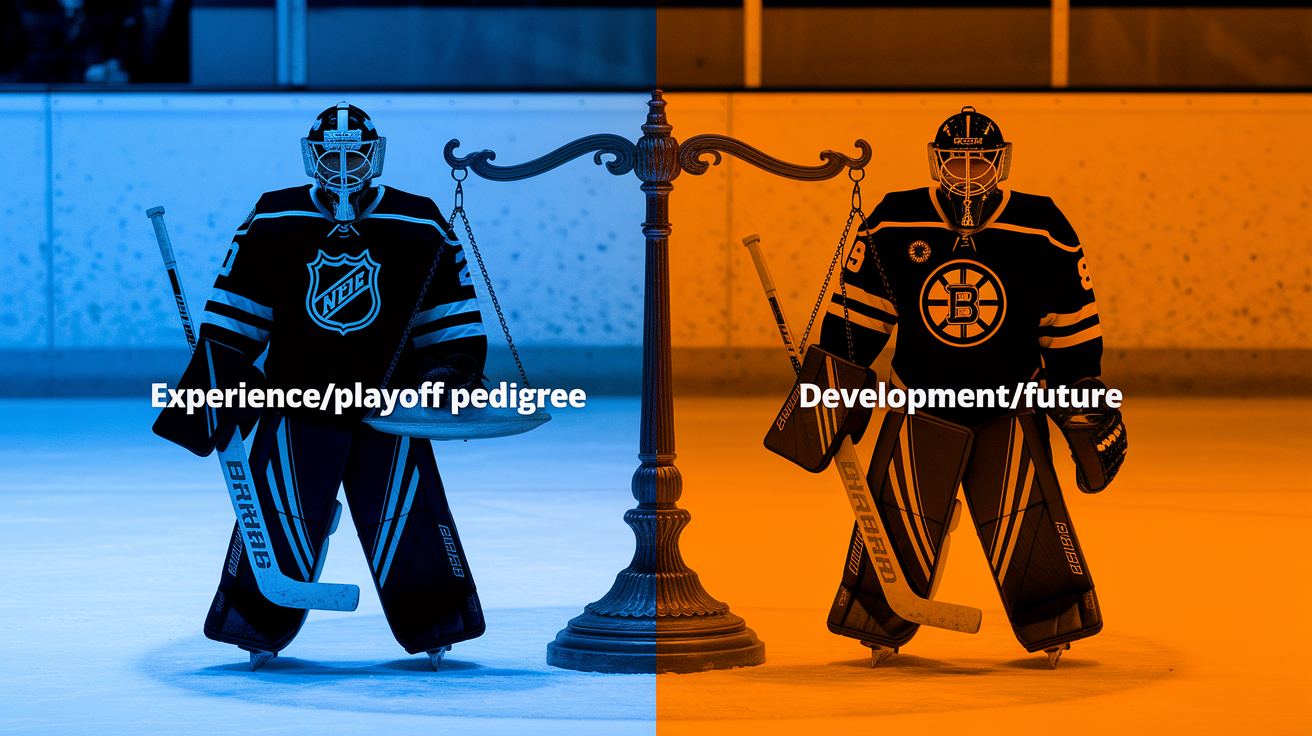
Adding a veteran goalie brings playoff experience and mental toughness that younger options often lack. A netminder who’s been through high-pressure series knows how to manage big moments, stay composed after bad goals, and provide steady leadership in the locker room. Bobrovsky’s own postseason track record (two Stanley Cups and a .907 save percentage across 117 playoff games) shows what that experience looks like when it works.
Bringing in another veteran, even as a backup or 1B, could stabilize the team emotionally and give the coaching staff confidence to rotate goalies without worrying about inexperience costing critical points. That stability matters when a team’s fighting for playoff positioning or trying to build momentum heading into the postseason.
The risks are real, though. Adding a veteran disrupts the current depth chart and could slow Spencer Knight’s development by limiting his NHL reps at a critical stage. If the new goalie struggles or clashes with the existing tandem, it creates chemistry issues without solving the on-ice problem. There’s also the financial risk. If Florida overpays in assets for a rental who underperforms, the team loses draft capital and prospects that could’ve been used to rebuild or address other positional needs.
Short-term fixes often look smart in March but age poorly by June, especially when the player was acquired to mask deeper structural problems like the Panthers’ 3.34 goals-against average.
Whether the risk vs. reward calculation shifts depends entirely on Florida’s deadline posture. If the front office decides to become buyers and chase a wild-card spot, adding a veteran makes sense as a stabilizing move that buys time for Knight and provides insurance if Bobrovsky gets hurt or traded. If they stick with the reported seller stance, paying assets for a veteran becomes illogical. It contradicts the goal of accumulating picks and clearing cap space. The Louis Domingue signing suggests the latter path is more likely, meaning the Panthers are prioritizing flexibility and future-focused moves over expensive deadline gambles.
How a Veteran Goalie Acquisition Would Affect the Panthers’ Playoff and Long-Term Outlook

In the short term, adding a veteran goalie would give Florida a better chance to claw back into the playoff race, though 10 points is a steep gap to close with limited games remaining. A reliable netminder could turn a few close losses into wins, improving playoff seeding if the Panthers somehow sneak into the second wild-card spot. Against top Eastern teams like Carolina (38 wins), Detroit (36 wins), and Toronto (35 wins), having a steady presence in net becomes critical. Those clubs have the offensive firepower to expose inconsistent goaltending. A veteran addition would also prepare the team for higher-stakes games down the stretch, offering a Plan B if Bobrovsky’s .873 save percentage doesn’t improve.
For the next one to two seasons, acquiring a veteran goalie could extend Florida’s championship window if the move pairs with other roster upgrades. If the goalie comes on a short-term deal and performs well, the Panthers buy themselves another competitive year without long-term financial commitment. That flexibility matters for a team trying to balance win-now moves with future cap space.
On the other hand, if the goalie’s a rental who doesn’t re-sign or a multi-year addition who declines quickly, Florida could find itself in the same spot next season. Chasing stability in net while other needs go unaddressed. The move only makes sense if it’s part of a larger plan to remain competitive, not a standalone gamble.
Long-term considerations include how the acquisition affects Spencer Knight’s trajectory and the organization’s cap structure. If Florida brings in a veteran who takes significant starts, Knight’s development stalls, and the team risks losing confidence in a former first-round pick. Cap balancing becomes harder if the Panthers retain salary on any Bobrovsky trade while also absorbing a new goalie’s hit, even pro-rated. The front office would need to weigh whether the short-term playoff push is worth sacrificing future flexibility, especially if the team’s underlying defensive issues (3.34 GA/GP) don’t improve.
Potential long-term outcomes if Florida acquires a veteran goalie at the deadline:
- The team makes a late playoff push, gains postseason experience for younger players, and builds momentum heading into next season.
- Knight’s development is delayed or disrupted by reduced playing time, creating uncertainty at the position for 2026–27 and beyond.
- Cap complications arise if the Panthers retain Bobrovsky’s salary in a trade while also absorbing a new goalie’s hit, limiting future roster flexibility.
- The veteran underperforms or gets injured, leaving Florida with the same goaltending instability they tried to solve. Plus fewer assets and a worse draft position after sacrificing picks or prospects.
Final Words
With Bobrovsky’s form slipping (.873 SV%, 3.13 GAA) and a shaky defense (3.34 GA/GP), Florida’s goalie question is front and center.
We weighed internal options (Knight, Domingue), the trade market, cap limits, and the risk vs. reward of adding a veteran now.
Should the Florida Panthers pursue a veteran goalie at the deadline? It hinges on whether they decide to buy for a real playoff push or protect the long-term window. Either choice can work — the right move should steady the net and keep the championship window open.
FAQ
Q: Is the Florida Panthers goalie Russian?
A: The Florida Panthers’ starting goalie, Sergei Bobrovsky, is Russian. He’s 37, a veteran with Cups and Vezina trophies, though his play has dipped this season.
Q: Is the Florida Panthers goalie good?
A: The Florida Panthers’ goalie has struggled this season, posting a .873 save percentage and 3.13 GAA, a noticeable drop from playoff-ready performance.
Q: Who will be the Panthers backup goalie?
A: The Panthers’ backup role is expected to be Spencer Knight as the primary NHL option, with Louis Domingue signed as veteran AHL-to-NHL insurance and depth.
Q: Do the Florida Panthers have a first round pick in 2026?
A: Whether the Florida Panthers have a 2026 first-round pick isn’t publicly confirmed; no clear record in our sources, so watch official team reports and trade updates.