

Would the Rangers trade a first-round pick plus a top prospect to land a true top-six winger?
A tight cap, a thin prospect pool, and crowded forward depth mean there’s no cheap way in, so rentals will likely cost a second-round pick plus a mid-tier prospect, while a Lindholm-level upgrade probably requires a first and a top prospect.
This post breaks down what the Rangers can realistically give up, listing the picks, prospects and NHL-ready roster pieces tied to each price tier.
Comprehensive Breakdown of Rangers Assets and What They Must Give Up

The Rangers are stuck in a familiar spot. They need a proven top six winger, but they don’t have a stockpile of assets they can afford to lose. The forward depth chart is basically full at both NHL and AHL levels, yet the prospect pool doesn’t include many blue chippers who could anchor a big package. Draft picks are the easiest thing to move, but New York’s been chasing playoff success for years now and already burned through several first rounders. That leaves the front office working with less than they’d like.
What the Rangers can actually trade breaks down into three buckets: mid to late first round picks in the next couple drafts, a group of second and third tier prospects who project as middle six guys or depth pieces, and younger roster players who’ve proven they can handle NHL minutes but haven’t locked down top six roles. Matt Berard, Brennan Othmann, Brett Berard sit in the system and could sweeten a deal. But none of them carry the kind of pedigree that turns a competitive offer into an overwhelming one. Kaapo Kakko has been floated in trade rumors and represents a movable roster piece with upside still attached, though his struggles in top six minutes have definitely hurt what he’d bring back.
The depth chart actually makes things harder. The forward group includes promising players at every level. Edström and Rempe on the fourth line, Brisson and McConnell-Barker in Hartford. There’s not much room to subtract major pieces without thinning the system to a dangerous degree. Filip Chytil’s injury situation restricts things even more. If he stays out, the Rangers can’t give up internal center depth unless the incoming winger can play both center and wing. Every asset they give up removes a layer of insurance and narrows the path to internal development.
The cost ladder gets steeper depending on who you’re targeting. A short term rental winger with retained salary, someone like Vladimir Tarasenko or Jason Zucker, would cost a second rounder and a middling prospect. That’s manageable for a team pushing for the playoffs. Elias Lindholm is a different animal entirely. His positional versatility, proven 40 goal upside, and impending free agency make him a high demand commodity. He’d require a first round pick plus one of the organization’s top five prospects, possibly with a conditional pick tied to playoff success or a contract extension. That jump in price isn’t just about performance. It’s about scarcity. Lindholm can play center or wing, address multiple roster needs at once, and anchor a line for years if they re-sign him.
Five Categories of Movable Rangers Assets:
- First round draft picks in 2025 or 2026, unprotected or lightly protected
- Mid tier forward prospects ranked 6th through 15th in the organizational depth chart, including Brennan Othmann, Brett Berard, and Jaroslav Chmelar
- Young NHL ready roster players with surplus positional depth, primarily Kaapo Kakko
- Second and third round picks in upcoming drafts, used as package add ons or for lower cost targets
- Conditional picks tied to performance milestones, playoff rounds reached, or contract extensions with acquired players
Salary Cap Realities When Adding a Top‑Six Winger

The Rangers are operating with almost no cap cushion. That reality shapes every trade conversation and forces them to rely on salary retention from the selling club. Adding a winger on a full contract is basically impossible without subtracting an existing NHL salary. Retention is the only realistic mechanism to fit a $5.0 to $5.3 million player into the current payroll. Most available wingers carry cap hits in that range, and teams willing to retain 50 percent make feasible acquisitions possible without gutting the existing roster.
But retention shifts the asset cost upward. A selling team agreeing to carry half a player’s salary for the rest of the season burns one of its three league maximum retention slots. That’s a finite organizational resource. The sacrifice increases the draft pick premium New York has to pay. Sellers routinely demand an additional mid round selection or upgraded prospect just for agreeing to retain. So the Rangers’ cap constraint doesn’t lower the trade price. It raises it. Because every dollar retained by the other side represents value the Rangers have to repay in futures.
| Player | Full Cap Hit | 50% Retained Cap Hit |
|---|---|---|
| Vladimir Tarasenko | $5.0 million | $2.5 million |
| Jason Zucker | $5.3 million | $2.65 million |
| Elias Lindholm | $4.85 million | $2.425 million |
Comparing Trade Packages Using Recent NHL Precedent
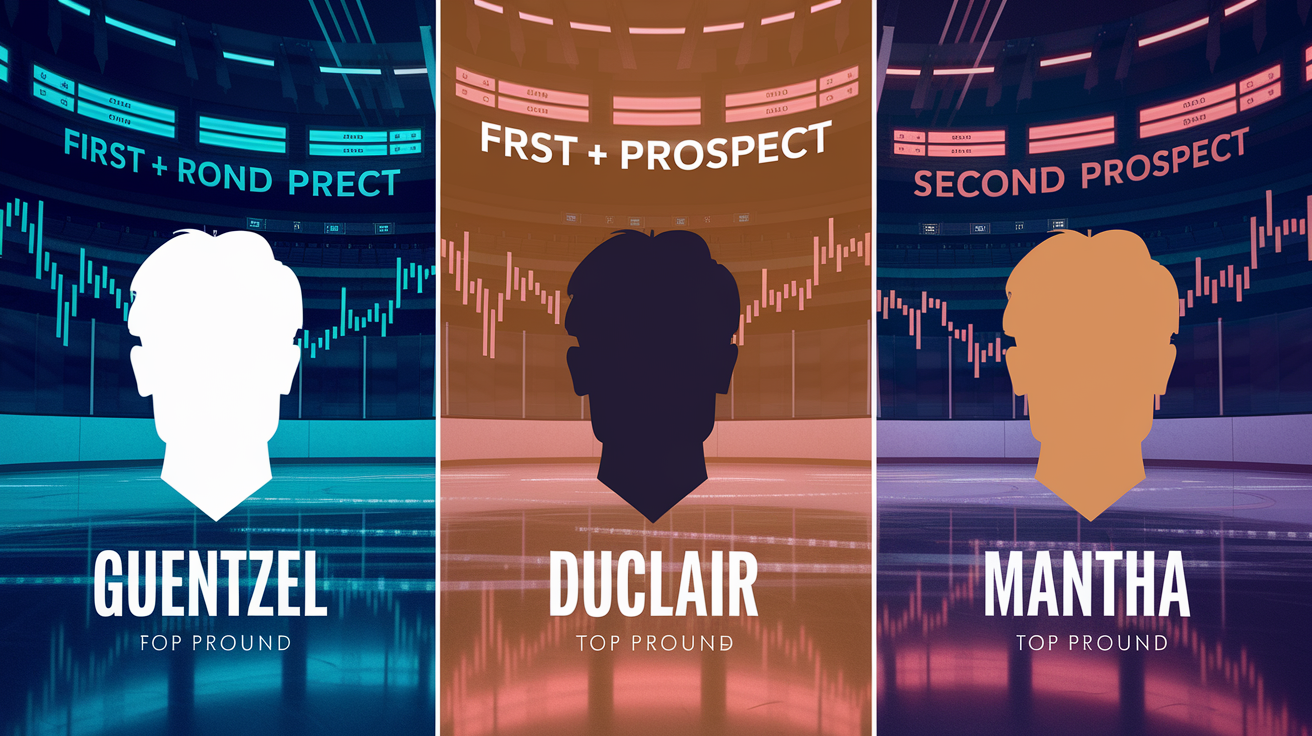
Recent deadline moves establish the pricing floor and ceiling for top six wingers. Jake Guentzel’s trade to Carolina cost a first round pick, a top prospect, and additional conditional selections. That reflected his status as a proven playoff performer with term control. Anthony Duclair’s move to Tampa Bay required less. A second round pick and a mid tier prospect. His track record was shorter and his role projection more limited. Anthony Mantha’s deal to Vegas fell somewhere between. The Golden Knights gave up a second rounder and a depth piece for a physical winger with inconsistent production.
Those three transactions thinned the available market quickly and raised the cost for remaining targets. Each deal removed a credible option. Clubs still hunting for scoring help now have to bid against shrinking inventory and tighter timelines. The Rangers entering late in the deadline cycle face steeper prices simply because fewer alternatives remain. Sellers holding the last viable wingers can extract premiums from desperate buyers racing the 3:00 p.m. Eastern cutoff.
Performance based conditions became common structuring tools in those trades. They let buyers limit upfront cost while rewarding sellers if the acquired player drives playoff success. A conditional third round pick escalating to a second if the team reaches the conference final, or a prospect swap triggered by a contract extension, lets both sides manage risk. The Rangers can replicate that framework. Offer a guaranteed second rounder and a prospect, with a conditional upgrade if the incoming winger contributes 10 plus playoff points or signs an extension before July 1.
Breakdown of Potential Targets and Their Projected Trade Costs
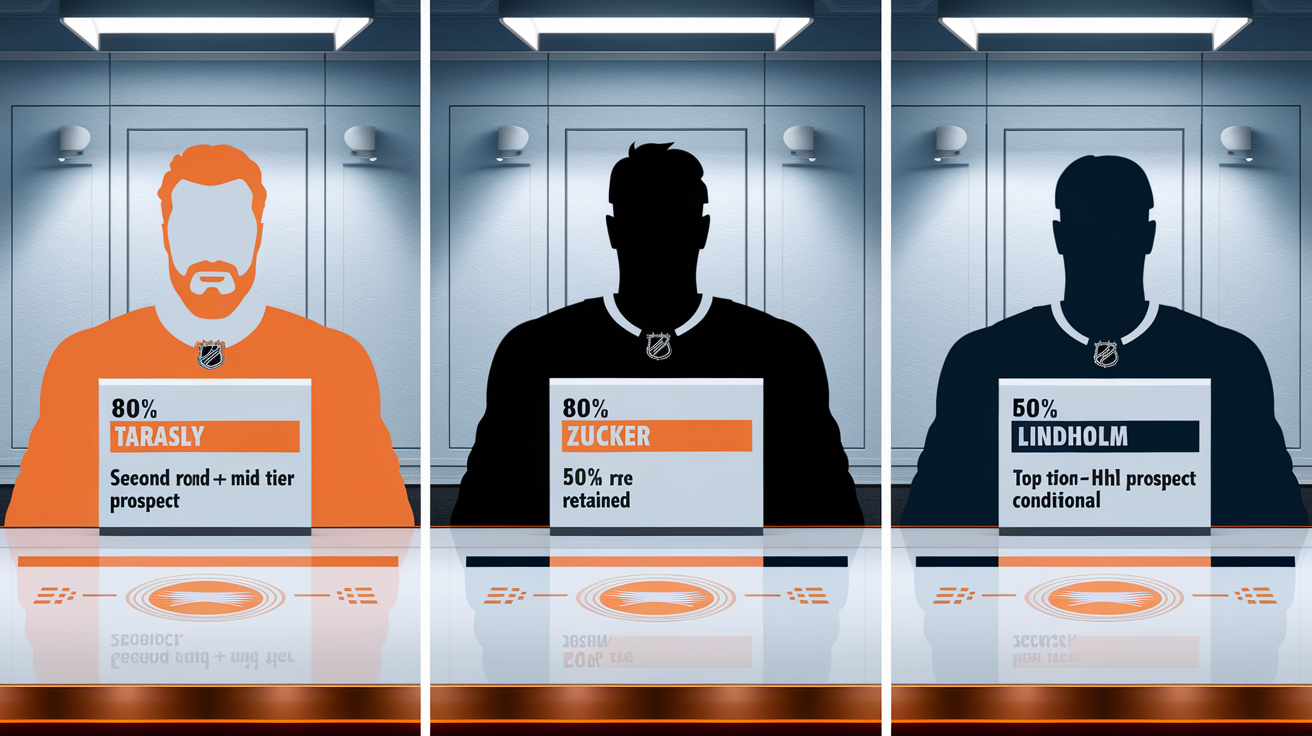
Vladimir Tarasenko’s Trade Price
Tarasenko sits on a one year, $5.0 million contract with Ottawa. He’s produced 13 points in 14 games this season, rekindling the shooting first style that made him effective during his prior Rangers stint. 21 points in 31 regular season games and 4 points in 7 playoff contests. His familiarity with the organization, the locker room, and the system lowers integration risk. He’s a low drama addition who can slot immediately onto the second line. The projected acquisition cost sits at a second round pick and a mid tier prospect ranked 8th through 12th organizationally, with Ottawa retaining 50 percent to bring his cap hit to $2.5 million. That package reflects rental pricing for a proven secondary scorer with postseason experience but limited long term upside.
Jason Zucker’s Trade Price
Zucker represents a similar valuation tier. He’s skating on a one year, $5.3 million deal with Arizona after posting 27 goals and 48 points with Pittsburgh the prior season. Early production this year shows three goals in nine games. Continued competence, though not explosive growth. Arizona’s poor start increases the likelihood they become sellers, and Zucker’s age and contract term position him as a classic deadline rental. Useful for three months, gone by summer. The expected cost mirrors Tarasenko’s. Second round pick, mid tier prospect, 50 percent retention yielding a $2.65 million Rangers cap hit. Zucker’s lack of prior Rangers familiarity and slightly higher salary explain why his price doesn’t drop below Tarasenko’s, despite fewer organizational ties.
Elias Lindholm’s Trade Price
Lindholm commands a materially higher price because of positional versatility, peak upside, and looming free agency. His 11 points in 16 games this season and a prior 42 goal, 82 point campaign demonstrate offensive ceiling that Tarasenko and Zucker can’t match. His ability to play center addresses Filip Chytil’s ongoing uncertainty. Calgary’s poor start and Lindholm’s expiring contract create trade urgency on both sides, but his status as one of the deadline’s premier available forwards guarantees competition from multiple contenders. The projected cost: a first round pick (2025 or 2026, unprotected), the Rangers’ top non NHL prospect (likely Brennan Othmann or Brett Berard), and a conditional third round selection escalating to a second if Lindholm re-signs or the Rangers advance past the second round. That premium reflects not just performance, but the dual position flexibility. And the understanding that acquiring Lindholm removes him from every other contender’s board.
How a Newly Acquired Winger Would Change Rangers Line Construction

Adding a proven top six winger immediately stabilizes the right side and pushes underperforming players down or out of the lineup entirely. Alexis Lafrenière remains the only effective right wing option alongside Artemi Panarin. That leaves Mika Zibanejad without a reliable finisher on his line. Blake Wheeler and Kaapo Kakko have both struggled in top six minutes, creating a persistent weak link that opponents exploit. A Tarasenko or Zucker acquisition slots the newcomer directly beside Zibanejad and Chris Kreider. That forms a second scoring line capable of matching production against opponents’ second defensive pairings and providing secondary offense the Rangers currently lack.
Lindholm’s dual position capability unlocks additional roster flexibility. If Filip Chytil remains unavailable, Lindholm can slide into the 1B center role, splitting top line minutes with Zibanejad and allowing Vincent Trocheck to anchor a more balanced third line. If Chytil returns, Lindholm shifts to right wing and provides the same shooting presence as Tarasenko or Zucker but with higher defensive responsibility and faceoff reliability. That versatility also stabilizes special teams. Lindholm’s penalty kill experience and power play net front presence give the coaching staff multiple deployment options without sacrificing offensive punch.
Four On-Ice Impacts of Adding a Top-Six Winger:
- Line chemistry improves immediately by pairing Zibanejad with a shoot first option who can finish high danger chances in tight
- Power play deployment diversifies as the new winger occupies the left half wall or net front, opening passing lanes for Panarin and Fox
- 5 on 5 expected goals rise because the second line no longer hemorrhages scoring chances during even strength shifts
- Defensive zone deployment becomes more balanced, reducing over reliance on the Panarin, Trocheck, Lafrenière line to drive all offensive production
Balancing Win‑Now Pressure With Long‑Term Asset Management

The Rangers occupy a narrow competitive window defined by Artemi Panarin’s prime years, Igor Shesterkin’s elite goaltending, and a supporting cast entering or exiting peak performance. That urgency justifies sacrificing futures for immediate upgrades. But only if the incoming player meaningfully raises the team’s ceiling rather than marginally improving depth. A rental winger who contributes 15 to 20 points over three months provides value. Yet depleting organizational assets for incremental gains risks hollowing future rosters without delivering a championship.
General manager Chris Drury has to weigh the cost of inaction against the cost of overpayment. Standing pat preserves draft picks and prospects but forces the Rangers to compete with a flawed top six. They’d be relying on internal improvement from Kakko or Wheeler that hasn’t materialized. Acquiring Tarasenko or Zucker at moderate cost addresses the need without crippling future flexibility. That offers a middle path. Upgrade the roster while retaining higher end prospects and multiple first round picks for future moves. Pursuing Lindholm represents the aggressive end of the spectrum. A first rounder and top prospect exchanged for a player who might leave in free agency. You’re betting that three months of elite two way play and playoff production justify the risk.
Alternative paths exist but carry their own limitations. Signing a free agent winger mid season requires cap space the Rangers don’t possess and depends on quality players reaching the open market. Unlikely scenario. Internal promotion of a prospect like Brennan Othmann or Brett Berard accelerates development timelines but gambles on unproven players delivering top six production immediately. That’s a low probability outcome that doesn’t solve the immediate need. Trading for a lower cost depth winger improves the bottom six without addressing the Zibanejad line’s weakness. The core problem stays unresolved.
| Trade Now | Keep Assets |
|---|---|
| Immediate upgrade to second line scoring and playoff roster strength | Preserve first round picks and top prospects for future moves or internal development |
| Risk losing acquired player to free agency or playoff underperformance | Risk wasting Panarin’s prime and missing competitive window without necessary reinforcement |
| Thin organizational depth and limit flexibility for additional deadline or summer acquisitions | Maintain roster insurance against injuries and retain multiple pathways to roster improvement |
Final Words
Right in the action: this piece showed the assets on the table, draft picks, mid-tier prospects, and a few young roster players, and how the price jumps for premium names like Lindholm.
Cap space, salary retention and uncertainty around Chytil and Kakko all limit options.
What the New York Rangers must give up to add a top-six winger is straightforward: small packages for rentals, or a first-round pick plus a top prospect for elite targets. Do it wisely, and it gives the team a real scoring boost.
FAQ
Q: What do the NY Rangers need?
A: The NY Rangers need a proven top-six winger, more short-term scoring depth, and cap flexibility, ideally a rental or affordable signing that doesn’t cost core prospects or block young forwards’ development.
Q: Why was Vincent Trocheck not traded?
A: Vincent Trocheck wasn’t traded because the Rangers didn’t get a fair return, valued his center depth, and faced salary and fit hurdles that made moving him undesirable before the deadline.
Q: What draft picks do the New York Rangers have in 2026?
A: The New York Rangers’ 2026 draft picks aren’t finalized. They likely keep their own first-round pick unless traded, plus any conditional picks from past deals; check official transactions for updates.
Q: Why do Rangers trade Kreider?
A: The Rangers trade Kreider to get assets while his value was high, free cap space, and rebalance the roster, exchanging a veteran scorer for picks, prospects, or positional upgrades.