

How does a college star with 1,500 yards and awards slide in the NFL draft?
Because the draft isn’t a reward show. It’s a projection market.
NFL teams care more about physical traits, medical history, scheme fit and character than college stats.
A slow 40 time, short arms, a bad MRI or tape that only works in one system can cost you rounds.
This post breaks down the core reasons college production often fails to match pro projection and what scouts really value.
Core Factors Behind Why College Stars Slide in the NFL Draft
College production doesn’t always translate to draft position. You can dominate on Saturdays, rack up awards, and still watch your name fall down the board in April. The disconnect happens because NFL teams evaluate completely different things than what college coaches reward. College stats measure what you did against 19-year-olds in system-friendly matchups. NFL evaluation tries to predict what you might do against the fastest, strongest athletes on earth, in unfamiliar schemes, under extreme pressure.
Teams weigh measurables over production because physical traits are harder to teach than football instincts. A receiver who runs a 4.7-second 40 won’t suddenly run 4.4 in the NFL, no matter how many touchdowns he caught in college. Scouts want arm length, hand size, burst, hip flexibility, strength ratios that fit positional thresholds. When those numbers fall short, even a 1,500-yard season won’t save you from sliding into Day 2 or Day 3.
The draft is a projection market. Not a reward ceremony.
Injuries and character flags can erase years of dominance in a single news cycle. A failed physical pushes a first-round talent into the third round. An arrest two weeks before the draft can make you undraftable. Teams invest millions in rookie contracts and can’t afford to gamble on durability or behavior red flags when dozens of safer prospects remain on the board.
Six core drivers explain why college stars fall:
- Athletic testing deficits – Combine and pro-day metrics (40 time, vertical jump, shuttle drills, bench press) that fall below positional thresholds signal limited upside
- Size and frame concerns – Height, weight, arm length, hand size, body proportions that don’t match NFL positional templates
- Injury history and medical flags – Chronic or structural issues, failed physicals, concussion history, surgical repairs that raise durability doubts
- Character and off-field problems – Arrests, failed drug tests, poor interviews, maturity concerns, social media incidents that trigger background alarms
- Scheme fit and role limitations – College production in simplified systems, slot-only receivers, gap-specific defenders, positions that don’t translate to pro schemes
- Competition level and film inconsistency – Dominance against weak opponents, small sample sizes, single bad games that expose technical weaknesses
Physical Attributes and Measurable Thresholds That Cause College Stars to Fall
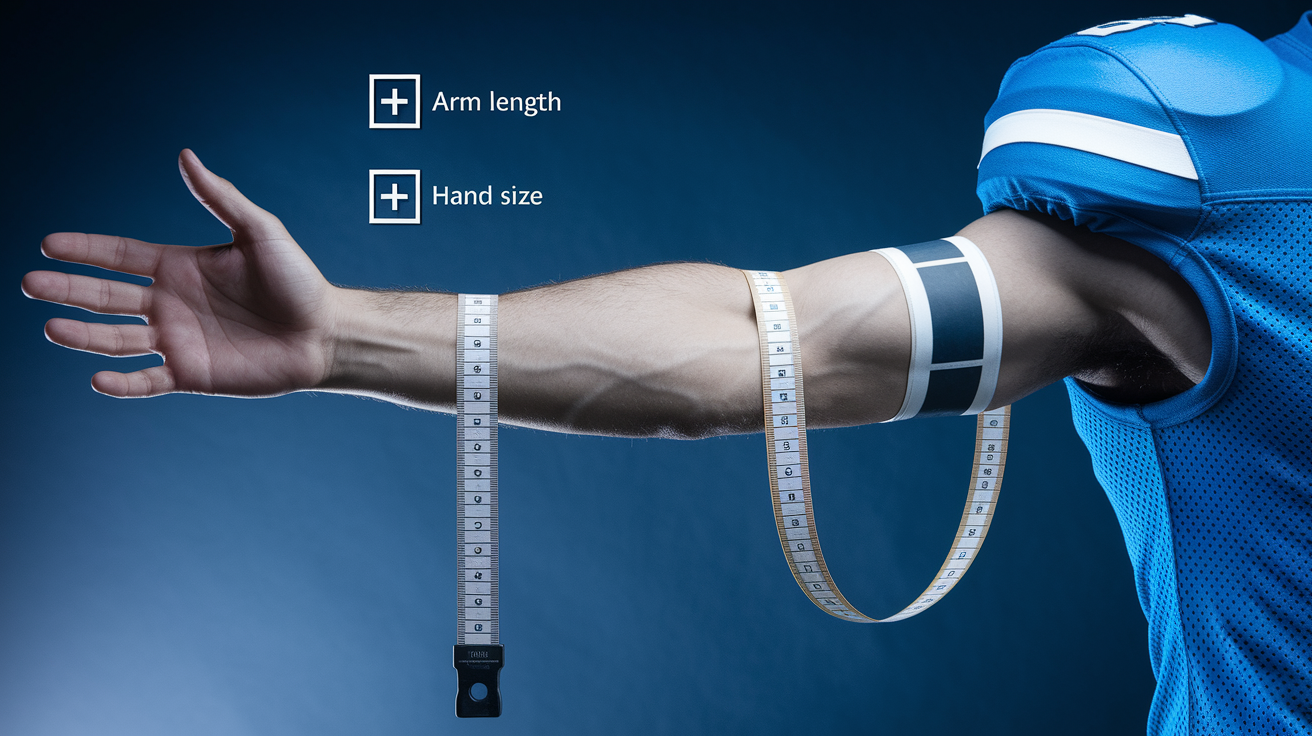
NFL teams operate on positional blueprints built from decades of data about which body types succeed at each spot. Offensive tackles need 34-inch arms to keep edge rushers at distance. Cornerbacks need sub-4.5 speed to stay with NFL receivers. Defensive linemen need explosive first steps measured by 10-yard splits and three-cone drills. When a college star’s measurements fall outside those ranges, evaluators downgrade their projection regardless of college stats.
A productive tackle with 32-inch arms might dominate the ACC but gets pushed into Round 3 because NFL pass rushers will simply swim past his short reach.
Testing metrics override tape because physical traits set your ceiling. Coaches believe they can teach technique, reads, assignments. But they can’t add three inches to your wingspan or shave two-tenths off a 40 time. That’s why a receiver who runs 4.65 after catching 80 passes in college will slide behind a 4.38 guy with 40 catches. Speed kills in the NFL, and slow players get exposed no matter how polished their route running looked against college corners. Even a single poor drill performance, a tight hip turn in the three-cone or stiff movement in positional work, can confirm a scout’s doubt and justify dropping you a full round.
| Metric | Why It Matters | Typical Threshold | Example Concern |
|---|---|---|---|
| Arm length (OT/EDGE) | Controls pass-rush leverage and blocking reach | 33–34+ inches | Short arms allow rushers inside or let blockers get beat wide |
| 40-yard dash (WR/CB/RB) | Measures straight-line speed and separation ability | Sub-4.5 for most skill positions | Slow times suggest limited deep threat or coverage range |
| Vertical jump / broad jump | Indicates lower-body explosiveness and burst off the line | 35+ inch vertical, 120+ inch broad | Poor explosion limits first-step quickness and contested-catch ability |
| Hand size (QB/WR/CB) | Affects ball security, grip in cold weather, and pass deflections | 9+ inches for QB, 9.5+ for WR | Small hands raise fumble and drop concerns, especially in bad weather |
Medical Flags, Durability Questions, and Injury History Impact on Draft Position
Medical evaluations can single-handedly crater your draft position. Every team brings prospects to their facility for physicals, reviews surgical history, examines MRIs, interviews team doctors. A single red flag, a partially torn labrum that hasn’t been disclosed, a knee that shows early cartilage wear, a concussion history longer than expected, will push you down multiple rounds.
Teams view the draft as a four-year investment. An injury-prone rookie who misses half his snaps under contract delivers zero return on a premium pick.
Recurring injuries send the loudest alarm. A quarterback with diminished arm strength after multiple shoulder procedures, or a cornerback who missed half a season with soft-tissue problems, tells teams that durability is already compromised before you take an NFL hit. Even minor concerns accumulate. A prospect with a repaired ACL, a lingering hamstring issue, and a concussion within the past year will slide because evaluators assume the injury pattern will continue under the heavier NFL schedule and bigger collisions.
Some injuries carry specific stigma. Concussion history triggers brain health concerns and early retirement risk. Shoulder and rotator cuff issues in quarterbacks, tackles, edge rushers often require surgery that costs a full season of development. Knee injuries, especially multi-ligament repairs or microfracture procedures, raise long-term mobility and explosion questions. A failed physical at a team facility during pre-draft visits can leak to other teams within hours, tanking your stock across the league before the draft even begins.
Common medical situations that cause draft stock declines:
- Multiple surgeries on the same joint – Indicates structural weakness and high re-injury risk, especially in knees, shoulders, ankles
- Chronic soft-tissue injuries – Hamstring, groin, hip issues that recur signal poor flexibility, strength imbalances, overuse vulnerability
- Concussion history with extended recovery – More than two diagnosed concussions or symptoms lasting weeks raise early retirement and liability fears
- Undisclosed or downplayed injuries – When medical records reveal problems you didn’t report, teams question honesty and medical judgment
- Structural abnormalities found in scans – Bone spurs, cartilage degeneration, congenital issues that may not hurt now but project poorly for a ten-year career
Scheme Fit, Role Translation, and System-Dependent College Production
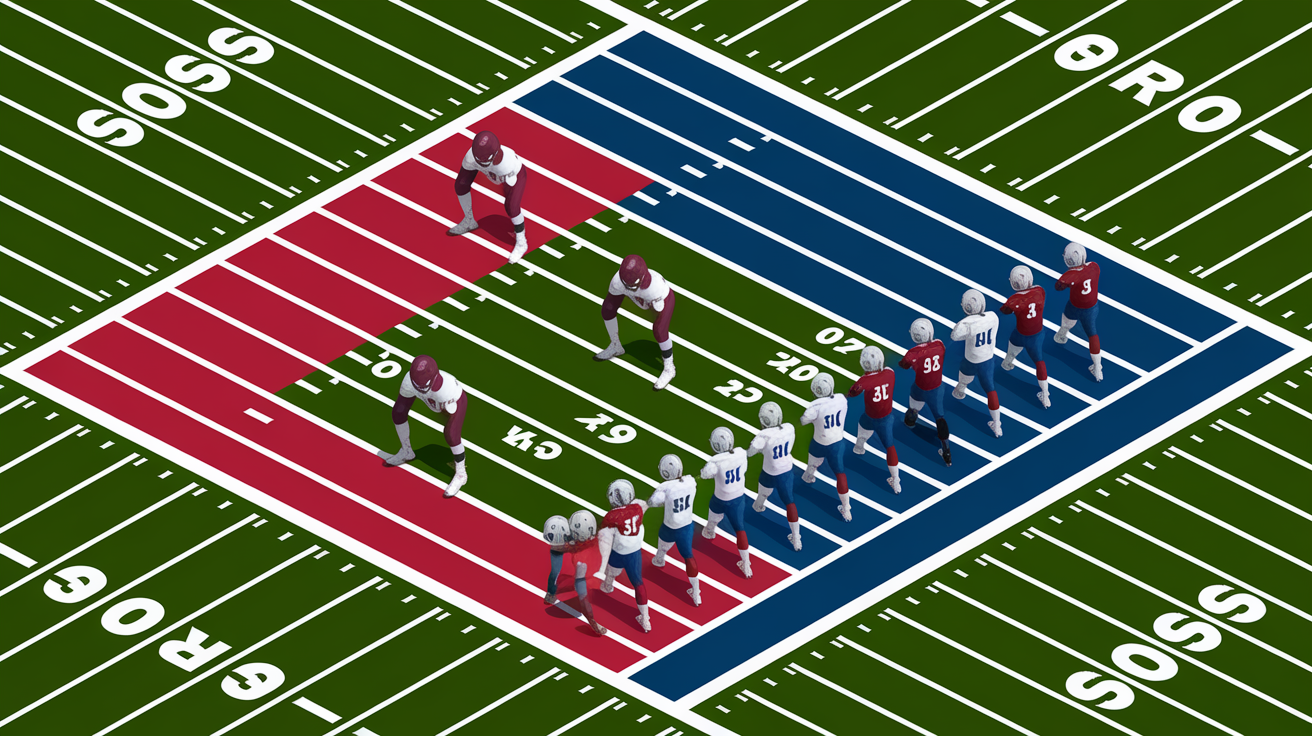
College offense and defense are built to win games, not prepare prospects for the NFL. Coaches design around their best players’ strengths and hide weaknesses within the system. A slot receiver might run simple option routes against zone coverage and pile up 90 catches without ever learning to beat press man coverage or run a full route tree. A defensive end in a four-man front might pin-and-read against the run all season and never develop pass-rush moves NFL teams require from edge players.
When evaluators watch tape and see a one-dimensional skill set, they downgrade the projection because you’ll need to learn an entirely new role at the next level.
Teams want versatility and position flexibility because NFL rosters are smaller and game plans change weekly. A linebacker who only played off-ball in college but can’t cover tight ends in space becomes a two-down player who leaves the field on passing downs. A receiver who dominated from the slot but lacks the size, release skills, or ball tracking to play outside gets labeled a gadget player. And gadget players slide into Day 2 or Day 3 because teams can find those traits later or in free agency. Production totals look great on a stat sheet, but if the tape shows the same three concepts on repeat, scouts assume you can’t handle complexity.
Five common scheme and role translation issues that hurt draft stock:
- Slot-only receivers who lack outside release skills – Can’t beat press coverage, don’t track deep balls, struggle with boundary leverage, limiting them to underneath and crosser routes
- Quarterbacks in RPO-heavy or simplified read offenses – Never progressed past half-field reads, relied on scheme to create open throws, can’t process full-field pro concepts under pressure
- Edge rushers from college 3-4 or odd fronts – Played two-gap responsibilities, heavy run fits, lack the pass-rush repertoire NFL 4-3 teams expect from defensive ends
- Man-coverage corners in college zone schemes – Played off-coverage all year, lack press technique and top-end recovery speed, struggle in man-match NFL systems
- Running backs in zone-blocking schemes with pre-snap motion – Ran behind open creases, lack vision to set up blocks, patience to read blockers, power to create yards after contact in pro gap schemes
Competition Level, Film Variability, and Why One Bad Game Hurts Draft Stock
A single poor performance can unravel months of strong tape. Scouts know college schedules are uneven. Some opponents feature future NFL starters and others are overmatched. So they zero in on the hardest matchups to see how you handle NFL-caliber competition. When a cornerback gets torched by a top receiver in a conference championship game, that loss of separation, inability to flip hips, late break on the ball confirms every doubt an evaluator had while watching tape against weaker opponents.
One bad game doesn’t erase a career, but it does provide the clearest evidence of your ceiling when the competition matches what you’ll face on Sundays.
Highlight dominance against weak opponents inflates college stats and misleads casual fans. A defensive end might rack up 15 sacks against Group of Five tackles who can’t handle speed or power, but when that same player faces a Power Five all-conference left tackle and gets stonewalled, scouts see the limitations. NFL teams don’t care how many sacks you had against bad competition. They care whether the pass-rush plan, hand usage, bend, motor show up against future pros. If the best tape comes from blowouts against bad teams, the evaluation drops.
Small sample sizes and limited exposure to top competition make projection harder and increase risk. A player who only faced a handful of NFL-caliber opponents in college gives scouts fewer data points to build confidence. When the few marquee matchups reveal technical flaws, inconsistent effort, inability to adjust mid-game, teams assume those problems will only get worse in the NFL. That’s why one visibly bad game against Oregon, Alabama, or Georgia can cost you an entire round, even if the rest of the season looked clean.
Character Flags, Interview Red Alerts, and Off-Field Issues That Trigger Draft Slides

Character concerns can turn a first-round talent into an undrafted free agent overnight. Teams invest heavily in background checks, psychological testing, interviews with college coaches and teammates, even private investigators to uncover red flags that won’t show up on tape. A sexual assault arrest two weeks before the draft, even without a conviction, will make most teams remove you from their board entirely because the risk of suspension, media backlash, locker-room disruption outweighs any on-field ability.
One off-field incident doesn’t just hurt your stock. It can end a professional career before it starts.
Interview performance matters as much as any drill. Teams bring prospects into war rooms, grill them on football concepts, ask about personal history, test how they handle pressure, watch how they interact with coaches and front-office staff. A player who can’t explain his assignments, shows up late, appears disinterested, gives inconsistent answers about past issues will plummet down draft boards. Teams talk to each other, and word spreads fast when you bomb multiple interviews. Evaluators assume that immaturity, lack of preparation, poor communication skills in April will only get worse when you sign a million-dollar contract and face real NFL pressure.
Failed drug tests and substance abuse history carry serious consequences. Even marijuana, legal in many states, remains banned under the NFL’s substance policy, and a positive test at the combine can cost you tens of millions in guaranteed money. Repeat violations during college, patterns of poor decision-making around substances, associations with people involved in drug distribution all push prospects down the board. Teams know that one failed test in the NFL triggers escalating discipline. A four-game suspension for a second offense costs a quarter of the season, and that’s unacceptable risk for a premium pick.
Six typical character red flags that cause draft slides:
- Legal problems and arrests – Any criminal charge, especially violent or sexual offenses, triggers immediate board removal or multi-round drops regardless of on-field talent
- Maturity and leadership concerns – Poor work habits, skipping workouts, clashing with coaches, selfish behavior that teammates or staff report in background checks
- Social media behavior and public perception – Controversial posts, inflammatory comments, patterns of poor judgment online that create PR risk for teams
- Failed or inconsistent interview performances – Inability to discuss film, explain scheme responsibilities, answer basic questions about effort and preparation
- Substance abuse history or positive drug tests – Any failed test, admitted use, rehab stints that suggest lack of discipline or risk of future suspensions
- Dishonesty or evasiveness during the process – Lying about injuries, downplaying off-field incidents, giving conflicting answers that destroy trust with evaluators
Positional Value and Draft Economics That Push College Stars Down the Board
Not all positions carry equal draft capital. Quarterbacks, left tackles, edge rushers, shutdown cornerbacks command premium picks because they directly influence wins and protect expensive investments at other spots. A dominant college running back or off-ball linebacker might be the best player in a draft class, but teams will still pass on them in Round 1 because those positions are easier to fill later or in free agency and offer lower return on investment.
Positional value explains why a good quarterback always goes higher than a great safety, even when the safety is the better football player.
Depth at a position within a single draft class pushes even talented prospects down the board. When ten quality wide receivers are available, teams know they can wait until Round 2 or 3 and still land a starter. A receiver projected as a late first-rounder in a weak class might slide to the third round in a deep year, not because his ability changed but because supply exceeds demand. Front offices build draft boards around scarcity, and scarcity shifts every year based on how many players declare and how college schemes produce talent at each spot.
Positional premium and supply-demand dynamics create predictable draft patterns:
- Premium positions that justify top-15 picks – Quarterback, left tackle, edge rusher, lockdown cornerback, because they protect the passer, pressure the opposing quarterback, eliminate half the field in coverage
- High-value but less scarce positions – Interior offensive line, defensive tackle, safety, outside receiver, important roles but easier to find quality depth in later rounds or free agency
- Devalued positions despite college production – Running back and off-ball linebacker, positions where rookie contracts don’t offer value advantages over cheap veterans or late-round picks
- Situational and special-teams roles – Long snapper, blocking tight end, pure special-teams players, almost never drafted before Day 3 regardless of college performance because teams can find replacements easily
Real Case Studies: Ten 2024 College Stars Whose Draft Stock Dropped
The 2024 NFL Draft cycle featured a clear pattern. Players who entered the process as consensus top prospects saw their stock slide one week before the draft due to testing deficits, injury concerns, off-field issues, scheme-fit questions. These cases illustrate how quickly draft momentum can shift when teams weigh measurables, medical reports, character evaluations against college production. A first-round projection in January can become a Day 3 selection in April when new information surfaces or a bad workout confirms old doubts.
| Player | School | Position | Projected Range | Primary Reason for Slide |
|---|---|---|---|---|
| Kelvin Banks Jr. | Texas | OT | 1st round (at risk) | Less dominant 2024 production than expected; underwhelming combine testing numbers for a consensus top-10 prospect |
| Denzel Burke | Ohio State | CB | Day 3 risk | Poor performance vs. Oregon’s Tez Johnson exposed coverage limitations; mediocre athletic testing pushed him from top corner to possible third-day pick |
| James Pearce Jr. | Tennessee | DE | 1st round (could slip) | Solid 2024 stats but not dominant tape; concerns about slender frame and whether he can hold up against NFL offensive tackles |
| JT Tuimoloau | Ohio State | DE | Mid-to-late Day 2 | Strong frame and power but below-average explosiveness for NFL edge standards; lacks the burst teams want from premium pass rushers |
| Isaiah Bond | Texas | WR | Undrafted risk | Recurring off-field issues and recent sexual assault arrest tanked his stock; teams are pulling him off boards despite speed and college production |
| Luther Burden II | Missouri | WR | Round 2 | Dynamic with the ball but struggles reading coverages; limited to slot role and lacks outside versatility, capping upside as primarily a gadget player |
| Tetairoa McMillan | Arizona | WR | Early 1st (outside top 5) | Viewed by some as the top pure receiver but questions about passion, commitment, consistency dropped him from top-five buzz to mid-first projection |
| Quinn Ewers | Texas | QB | As far as 5th round | Accumulating injuries, diminished arm strength, poor processing under pressure; former elite high-school prospect now facing major slide |
| Jack Sawyer | Ohio State | DE | Day 2 / early Round 3 | Strong postseason and led Buckeye defense but lingering athleticism and explosiveness concerns limit ceiling; likely falls into Round 2 or 3 |
| Will Johnson | Michigan | CB | 1st round (outside top 10) | Considered a top prospect a year earlier; injury-plagued 2024 season and average tape softened demand, pushing him from top-10 talk to mid-first range |
These ten players demonstrate how stock drops happen across every position and for overlapping reasons. At least five suffered from poor testing or limited explosiveness, two dealt with injury histories that raised durability flags, one faced career-threatening legal trouble, several were hurt by scheme limitations or inconsistent tape. The 2024 cycle proved that college success, even at elite programs, doesn’t guarantee draft position when physical traits, medical records, character evaluations, scheme fit fail to meet NFL thresholds.
Steps Prospects Can Take to Avoid Falling in the Draft

Avoiding a draft slide starts months before the combine. Prospects who hire experienced trainers to prepare for every drill, from the 40-yard dash to positional workouts, give themselves the best chance to hit measurable thresholds that unlock higher draft slots. Testing well doesn’t just confirm talent. It removes doubt. A strong combine performance can push a Day 2 projection into Round 1, while a poor one can cost you millions in guaranteed money. Training for explosion, flexibility, sport-specific movement is as important as any college season because NFL teams weigh those numbers heavily in final evaluations.
Off-field reputation and interview skills matter just as much as on-field ability. Prospects need to clean up social media, avoid risky situations and people, prepare thoughtful answers for every question teams will ask about effort, leadership, scheme knowledge, past mistakes. A polished interview that shows maturity, football intelligence, accountability can erase minor concerns, while a bad one can confirm every doubt. Teams talk, and a reputation for being prepared, coachable, reliable spreads as fast as red flags do.
Five steps prospects can take to avoid falling in the draft:
- Invest in professional combine and pro-day training – Work with experienced coaches to optimize 40 times, vertical jumps, shuttle drills, positional workouts so testing confirms talent instead of raising doubt
- Clean up off-field image and associations – Remove controversial social media posts, avoid situations that create legal or character risk, distance from people who bring negative attention
- Develop technical skills and position versatility – Add route concepts, pass-rush moves, coverage techniques, blocking fundamentals that prove you can handle multiple roles and aren’t a one-trick college system product
- Prepare thoroughly for team interviews – Study film, know your assignments and responsibilities on every play, practice explaining concepts clearly, have honest answers ready for questions about effort, mistakes, goals
- Show positional flexibility and special-teams willingness – Demonstrate that you can contribute immediately on coverage units, play multiple spots, aren’t too proud to do the dirty work that keeps you on a 53-man roster
Final Words
We laid out the main reasons college stars slide on draft night: poor testing, medical red flags, scheme fit, inconsistent film, character concerns, and draft math.
We used 2024 examples to show how one bad test or interview can cost several rounds. We also gave practical fixes prospects can use, like targeted combine prep, cleaning up off-field issues, and showing position versatility.
That’s the short answer to why college stars fall in the NFL draft. It’s not hopeless — teams still find late gems, and players can protect their stock.
FAQ
Q: Who’s richer, Peyton Manning or Tom Brady?
A: Tom Brady is richer, with higher career earnings, endorsements, and business deals, placing him slightly ahead of Peyton Manning in most public net worth estimates.
Q: What college players will be in the 2026 NFL draft?
A: The college players in the 2026 NFL Draft aren’t finalized; it will include seniors and juniors who declare early, plus late breakouts—final lists depend on post‑2025 season decisions and declarations.
Q: Why did Tim Tebow fail in the NFL?
A: Tim Tebow failed in the NFL mainly because his throwing mechanics and accuracy didn’t meet pro quarterback standards, and scheme fit plus limited development stopped him from becoming a consistent starter.
Q: Why are players entering the transfer portal?
A: Players are entering the transfer portal to chase more playing time, a better scheme or coaching fit, greater NFL exposure, academic or personal reasons, or to move closer to home.