

Could this posting window reshape MLB rosters more than any recent offseason?
Names like Munetaka Murakami, Tatsuya Imai and Kazuma Okamoto in Japan, and KBO strikeout machines such as Cody Ponce, are getting real buzz from clubs that used to only glance overseas.
We’ll walk through the top targets, what analytics and scouts are saying, and which fits look like instant upgrades versus longer-term, higher-risk gambles.
Bottom line, these international additions could change playoff odds and payroll plans for teams willing to pull the trigger.
Rumored International Targets Drawing Early MLB Attention

Munetaka Murakami is the name everyone’s talking about heading into this year’s posting window. The buzz started back in 2022 when the 25-year-old crushed 56 home runs with a 1.168 OPS for the Yakult Swallows and took home MVP honors. That power didn’t disappear in 2025, even with a shortened season. He slashed .273/.379/.663 with 22 homers across just 56 games. Front offices have been tracking him closely, and it doesn’t hurt that he’s got two gold medals (2023 WBC and 2020 Olympics) plus a Japan Series ring from 2021.
Right-hander Tatsuya Imai is pulling just as much attention after what he did in 2025. He struck out 178 batters across 163.67 innings while posting a 1.92 ERA. The guy’s only 5’11” but he throws mid-90s from a low arm slot and can touch 99 MPH when he’s locked in. He’s kept his ERA under 2.50 for four straight seasons while logging over 155 innings in each of the last three years. Scouts who’ve watched him think he can step into a rotation and eat innings from day one.
Kazuma Okamoto rounds out the top tier of Japanese targets. What teams like about the 30-year-old first baseman is consistency. He’s hit at least 30 home runs in six straight seasons, including 41 in 2023, and he’s led the Central League in homers three times. His career line sits at .277/.361/.521, and he’s got two Mitsui Golden Glove Awards. Teams needing lineup protection right now are circling him.
Detailed Profiles of Top NPB Players Expected to Be Posted

Munetaka Murakami’s the headliner here because of his age and that proven elite power. But teams aren’t all on the same page about how his game translates to MLB velocity and breaking stuff. His strikeout rate has topped 28 percent in each of the last three seasons. His whiff rate climbed to 37.3 percent in 2024 before settling at 36.7 percent in 2025. That swing-and-miss tendency is going to get exposed by big league pitching staffs, especially guys who can land secondary pitches in the zone. Teams are modeling scenarios where his strikeout rate jumps another five to seven points during his adjustment period. Still, the raw power’s exceptional. Front offices willing to accept the risk think his ability to punish mistakes could lead to 30-plus homers annually once he settles in.
Elite raw power with a slugging ceiling in the mid-.600s in the right environment. Gold-medal experience in high-pressure situations shows he’s got the makeup. Strikeout and whiff trends are the red flag when it comes to contact consistency against advanced breaking balls.
Kazuma Okamoto is the safest bet of the top three NPB guys. He combines plus raw power with above-average plate discipline and a defensive profile that works at first base or can shift to a corner outfield or DH spot without creating roster headaches. He hit 15 homers in just 69 games during the 2025 season, keeping his career trajectory intact despite limited playing time. Six consecutive 30-homer seasons show durability and power consistency that appeals to front offices tired of boom-bust profiles. Scouts project him as a middle-of-the-order run producer who can contribute immediately. His age-30 season in 2026 probably limits contract length to four or five years instead of the six-plus-year deals reserved for younger imports.
Six straight seasons with at least 30 home runs is power reliability you can bank on. Three Central League home-run titles and two Gold Glove Awards give him credibility on both sides. Age-30 season might restrict contract length but he’s got win-now value for contenders.
Tatsuya Imai is the most polarizing profile in this group. You’ve got frontline stuff and multi-year consistency running into physical concerns related to his 5’11” frame and low-slot delivery. His 95 MPH fastball and 99 MPH peak velocity from that low arm angle create deceptive plane and movement. Striking out 178 batters while logging 163.67 innings in 2025 shows both swing-and-miss ability and durability under a heavy workload. Teams are split on how his fastball plays against MLB power hitters who see upper-90s velocity regularly. Some evaluators worry his release point and lack of height reduce his ability to attack high in the zone or get whiffs on elevated heaters.
Four straight seasons with an ERA below 2.50 and 155-plus innings per year shows consistency. Low arm slot and 95–99 MPH fastball creates a unique deception and movement profile. Physical frame and delivery mechanics raise questions about sustained velocity under MLB workload.
Leading KBO Players Drawing MLB Interest
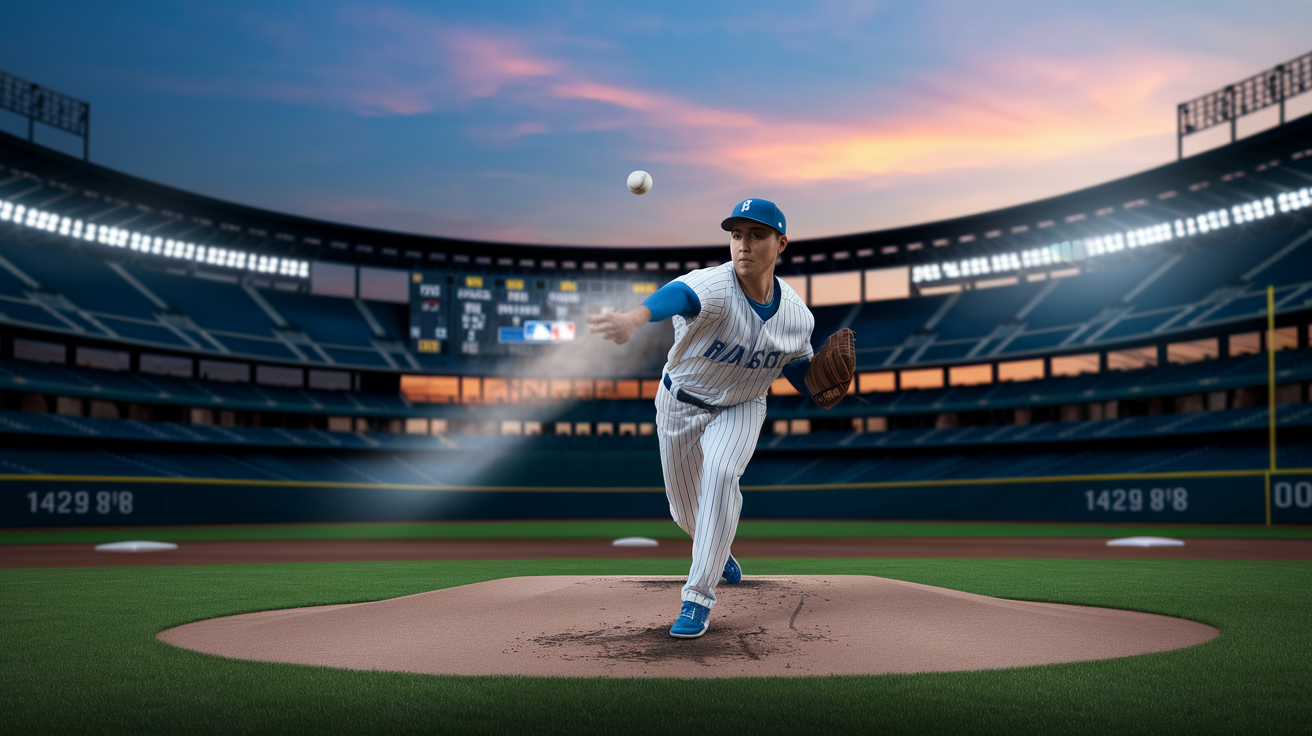
Cody Ponce has become the KBO-to-MLB storyline of the winter after shattering the league’s single-season strikeout record with 252 punchouts across 180.67 innings in 2025. He broke Hyun-Jin Ryu’s 2010 mark that had stood for 15 years. The 6’6″ right-hander also set a KBO record with 18 strikeouts in a single nine-inning regulation game and posted a 1.89 ERA while averaging 95.5 MPH on his fastball and touching 98.5 MPH on his best nights. His frame, velocity, and swing-and-miss production have drawn comparisons to upper-rotation MLB starters. Multiple teams have requested updated medicals and biomechanics reports ahead of the posting period.
Drew Anderson logged equally impressive strikeout numbers in 2025, fanning 245 batters across 171.67 innings while posting a 2.25 ERA that ranked among the KBO’s best. The right-hander’s ability to miss bats at elite rates while limiting walks and damage has generated interest from clubs seeking rotation depth. Questions linger about how his secondaries hold up against MLB lineups that can spoil breaking balls and sit fastball in favorable counts. Anderson’s strikeout-to-walk ratios and low home-run rates in Korea suggest advanced command and an ability to sequence effectively, both traits that translate well to the big leagues.
| Player Name | Key 2025 Stat |
|---|---|
| Cody Ponce | 252 strikeouts (KBO record) |
| Drew Anderson | 245 strikeouts, 2.25 ERA |
KBO position players Sung-Mun Song and Baek-Ho Kang are both drawing steady scouting attention. Song posted consecutive elite seasons (.340/.409/.518 with 19 homers in 2024; .315/.387/.530 with 26 homers in 2025) while showing speed-power balance that fits multiple lineup roles. Kang, entering his age-26 season, has posted an OPS over .800 in each of the last two seasons and logged three campaigns with at least 20 home runs. Teams see a versatile bat with upside remaining. Song’s perfect 21-for-21 stolen-base performance in 2024 adds a dimension that appeals to teams seeking multi-category contributors. Kang’s youth and power trajectory position him as a potential breakout candidate in a weaker pitcher environment.
How MLB Teams Are Approaching This Year’s Posting Market

Front offices are treating the 2025-2026 international posting class as a rare opportunity to add proven production without surrendering draft picks or prospect capital. That’s shifted organizational resource allocation away from domestic free agency in some cases. Teams with clear rotation needs or lineup holes at corner positions have been particularly aggressive in scouting NPB and KBO leagues over the past 18 months. Multiple clubs have embedded full-time scouts in Japan and Korea to track performance trends, injury updates, and behavioral intel that might influence bidding strategies. The Dodgers, Padres, and several other large-market franchises have been linked to multiple targets, using international scouting budgets and analytics infrastructure to model transition risk more precisely than smaller-market competitors.
Posting fees remain a significant consideration, especially for mid-market clubs balancing total acquisition cost against long-term payroll commitments. Teams are modeling scenarios in which posting fees push total contract value into nine-figure territory for top-tier pitchers, creating direct competition with domestic free-agent alternatives who carry less transition uncertainty but also command higher annual salaries.
Analytics departments are playing a larger role than ever in international evaluations. They’re using Statcast-equivalent data from NPB and KBO to project MLB performance and adjust for league quality, park factors, and competition level. Clubs are building custom models that weight recent performance, age curves, pitch shape, and batted-ball profiles to estimate likely outcomes. Those projections influence which players receive serious bids versus which get filtered out during preliminary review. Risk tolerance varies widely. Some teams prioritize floor and immediate MLB readiness, while others chase upside and accept higher bust probability if the ceiling justifies the gamble.
Comparing This Year’s Class to Past Posted Stars
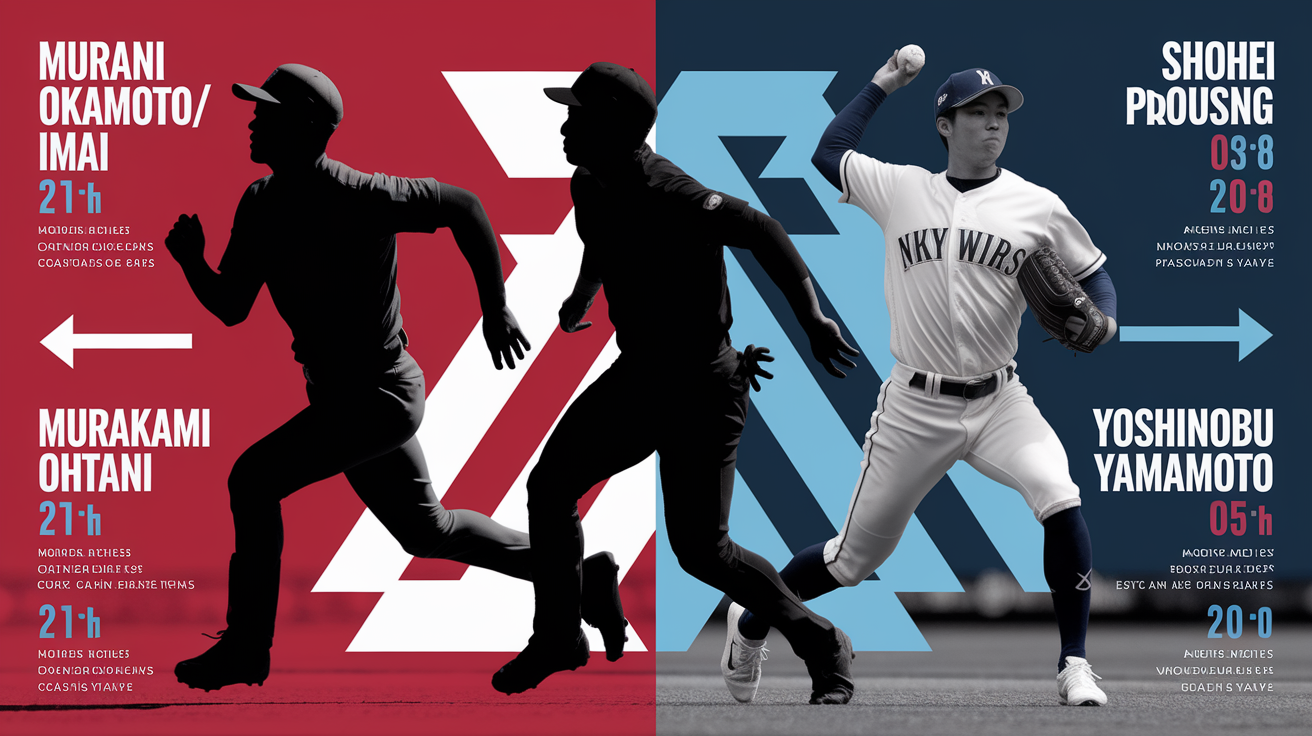
This year’s top trio of Murakami, Okamoto, and Imai invites natural comparisons to the 2023-2024 wave that brought Shohei Ohtani and Yoshinobu Yamamoto to MLB. Scouts caution that neither Murakami nor Imai carries the same generational upside or international profile that drove Ohtani’s record-breaking contract. Yamamoto’s seamless transition to the Dodgers (posting elite strikeout and walk rates during his rookie season) has raised the bar for NPB pitchers and created higher expectations for Imai’s debut. Murakami’s strikeout concerns echo the early struggles faced by several recent Japanese hitters who needed a full season to adjust to MLB breaking-ball usage and velocity consistency.
Kazuma Okamoto’s profile mirrors the high-floor, lower-ceiling imports who’ve succeeded as middle-of-the-order run producers without ever reaching All-Star status. Think players who arrived in their late 20s with established NPB track records and translated power while accepting elevated strikeout rates. The KBO pitchers, particularly Cody Ponce, draw comparisons to previous Korean imports who dominated the KBO before facing mixed results in MLB. Some transitioned into solid rotation pieces, while others struggled with command regression or velocity drop-off under the grind of a 162-game schedule.
Historical data shows that NPB hitters who posted strikeout rates above 28 percent in Japan typically saw those rates climb five to eight points during their first MLB season. That trend weighs heavily in Murakami evaluations. Successful NPB pitchers with similar size and velocity to Imai have generally required one mechanical adjustment (often release consistency or secondary refinement) to maintain effectiveness. KBO pitchers with Ponce’s strikeout rates but lower velocity have historically faced steeper transition challenges.
Murakami’s power ceiling resembles past elite NPB sluggers, but strikeout trends echo players who needed multi-year adjustment periods. Imai’s stuff and consistency align with mid-rotation MLB imports who succeeded after minor mechanical tweaks. Ponce’s KBO strikeout dominance mirrors pitchers who translated into backend starters or high-leverage relievers depending on command retention.
Posting Timeline and Eligibility Explained
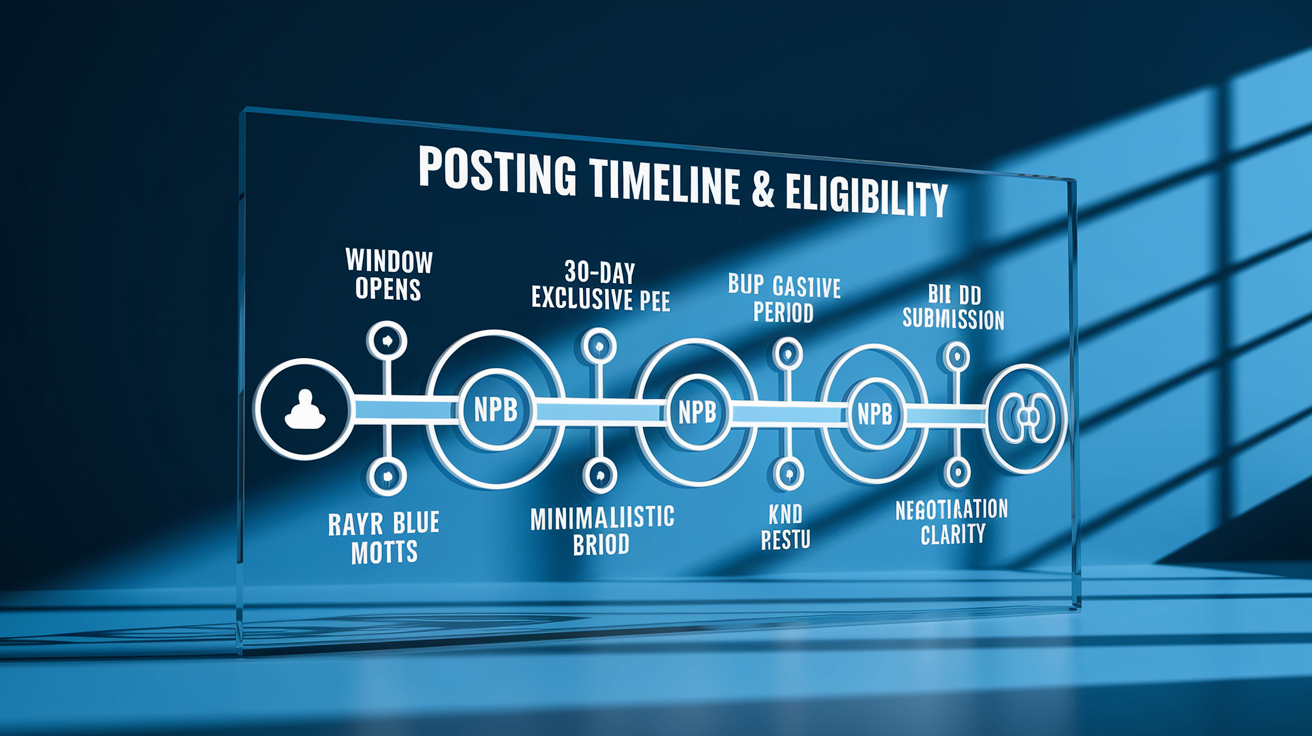
The current posting system operates on a negotiation window that opens once a player’s NPB or KBO team agrees to post him. That triggers a 30-day exclusive period during which MLB clubs can negotiate directly with the player and his representatives. Teams must submit sealed bids for the posting fee within the first several days of the window, and the highest bidder earns exclusive negotiating rights for the remainder of the 30-day period. If no agreement is reached within that window, the player returns to his international team for another season and may be posted again the following offseason. Posting failures are rare once a player and team commit to the process.
Eligibility rules require NPB players to accumulate at least nine years of professional service before qualifying for international free agency without posting. That means younger stars like Murakami must be posted by their teams if they want to move to MLB before reaching that threshold. KBO players face similar service-time requirements, though posting has become the standard path for top talent seeking MLB opportunities in their mid-to-late 20s. Recent rule adjustments have capped posting fees and adjusted negotiation timelines to prevent teams from monopolizing talent through excessive financial commitments. That’s created a more competitive bidding environment that benefits players while limiting runaway spending by large-market clubs.
Final Words
in the action, we ran through which NPB and KBO players are drawing early MLB buzz, broke down top profiles, showed what teams are watching, explained the posting timeline and compared this class to past imports.
The post points to specific names, team links, stats, and timeline you can track before posting.
If you’re asking “Which international free agents are generating MLB whispers ahead of the posting period”, the short answer: a handful of high-velocity arms and impact bats from Japan and Korea are leading the chatter. Expect more clarity when posting opens, and some exciting signings soon.
FAQ
Q: Who are the best unsigned free agents in the MLB?
A: The best unsigned free agents in the MLB are typically veteran starting pitchers, high-upside relievers, and middle-of-the-order bats; check current free-agent trackers (MLB Trade Rumors, team reports) for an up-to-date list.
Q: Who was the first MLB player to earn $1,000,000 a year?
A: The first MLB player to earn $1,000,000 a year is often credited to Nolan Ryan in 1979, though contract structures varied and seven-figure deals broadly appeared in the late 1970s.
Q: Do MLB wives travel with their husbands?
A: MLB wives travel with their husbands sometimes; many join for long homestands or nearby road trips, but season length, children’s schedules, and travel fatigue often mean families split time between home and the road.
Q: What is the largest signing bonus for an MLB international player?
A: The largest signing bonus for an MLB international player is reported to be in the low tens of millions, set in recent years; official international signing trackers list exact figures and update regularly.