


Would any team actually give up the haul needed to acquire Auston Matthews?
He’s a generational 26-year-old goal scorer who changes a lineup night after night.
That rarity drives a price few clubs can meet: think three first-round picks, at least one blue-chip prospect, an NHL-ready top-six piece, and major cap gymnastics.
Add Matthews’ no-movement clause and his $13.25M cap hit, and the list gets even tougher.
This post shows exactly which assets, structures, and trade paths would be needed to land him.
Auston Matthews’ Trade Value and What It Would Cost to Acquire Him

Auston Matthews is the gold standard for NHL centers. His goal scoring doesn’t just look good on paper. Multiple 40-goal seasons, at least one 60-goal campaign, and advanced metrics that consistently put him in the league’s top five most impactful skaters. At 26, he’s smack in the middle of his prime with years of elite play still ahead. He’s the kind of franchise cornerstone you build around, not trade away.
Getting a player like Matthews would cost more than almost any deal in recent NHL history. Start with three first-round picks, minimum. Add a high-end prospect with legitimate star potential. Throw in an NHL-ready player who can contribute right now. Toronto wouldn’t even pick up the phone without a young, cost-controlled center or winger to replace some of Matthews’ offensive output. They’re not interested in a pure futures deal. The total package would eclipse most blockbuster trades, and it’s not just about production. It’s his marketability, his leadership, his ability to carry a contender for five years.
His goal scoring drives most of that valuation. Centers who can consistently hit 50-plus goals are rare. Matthews does it while playing all situations. Penalty kill, power play, everything. His two-way game, faceoff ability, and knack for making linemates better separate him from other high-scoring forwards. And age matters. He’s not a rental or someone heading toward decline. Any team trading for Matthews gets his best years, which justifies the massive premium.
Typical Assets Required in a Matthews Trade:
- Three or more first-round picks, at least one unprotected
- One elite prospect in the top 10 to 15 of the team’s organizational depth chart
- One NHL-ready player under 25 with top-six or top-four upside
- A young center or winger who can immediately fill a scoring role
- Probably one additional mid-tier prospect or conditional pick to balance things out
Matthews’ Contract Structure and Its Impact on a Possible Trade

Matthews signed a four-year extension in August 2023 worth $13.25 million per season through 2027-28. The deal includes a full no-movement clause. That means he controls any trade destination completely. There’s no surprise deal here. Matthews would need to approve any transaction, which narrows the pool of realistic suitors to teams he’d actually want to join.
His $13.25 million cap hit ranks among the highest in the NHL. That creates immediate problems for most organizations. Only a handful of teams have enough cap space to absorb that number without moving significant salary back to Toronto. The structure also includes substantial signing bonuses paid up front, which limits the value of retention. Even if Toronto retained 50 percent of Matthews’ cap hit (the maximum allowed), the acquiring team would still need to clear nearly $6.7 million in space.
The no-movement clause restricts trade mechanics even further. Toronto can’t play multiple suitors against each other if Matthews only agrees to waive for one or two destinations. This gives him negotiating leverage and ensures any deal happens on his terms. Combined with the cap constraints, Matthews’ contract makes a trade logistically challenging before you even consider the asset cost. Teams would need to be cap compliant, Matthews approved, and willing to part with a historic return. All at the same time.
Comparable Superstar Trades That Help Set Matthews’ Market
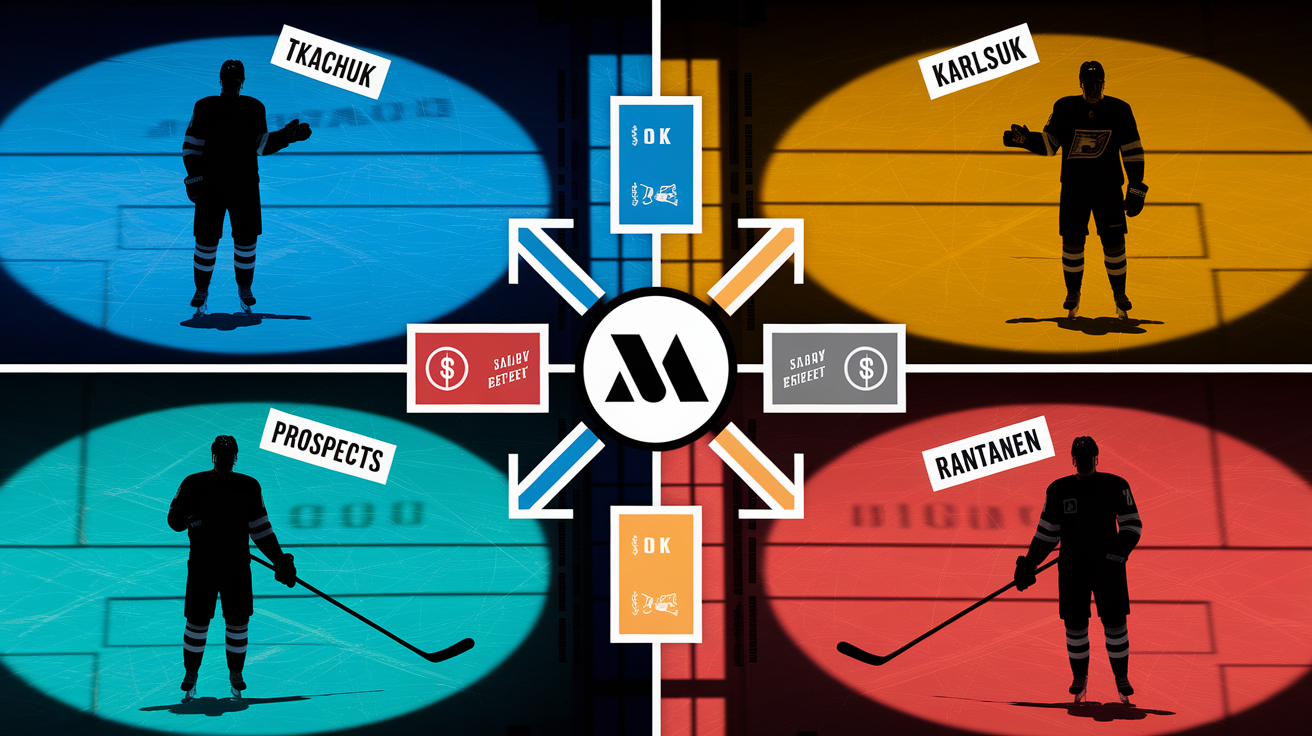
The NHL rarely sees franchise centers traded in their prime. But a few recent blockbusters provide useful benchmarks. Jack Eichel’s move from Buffalo to Vegas in 2021 involved Peyton Krebs, Alex Tuch, a first-round pick, and a second-round pick. Matthew Tkachuk’s trade to Florida in 2022 brought back Jonathan Huberdeau, MacKenzie Weegar, a first-round pick, and a conditional pick. Erik Karlsson’s 2023 deal to Pittsburgh required multiple picks, prospects, and a three-team structure to manage salary. Each deal forced the acquiring team to surrender immediate NHL talent, multiple draft assets, and often additional pieces to balance cap and roster needs.
Matthews’ value exceeds all three. Eichel was injured and carried uncertainty about his neck surgery. Tkachuk was an elite winger, not a center, and was one year away from unrestricted free agency. Karlsson was 33 and came with durability questions. Matthews is younger than Karlsson was, healthier than Eichel was, and signed longer than Tkachuk was. His goal scoring consistency and two-way impact put him in a tier above each of those players at the time of their trades.
The table below shows how recent superstar trades break down:
| Player | Trade Components | Year |
|---|---|---|
| Jack Eichel | Peyton Krebs, Alex Tuch, 2022 1st, 2023 2nd | 2021 |
| Matthew Tkachuk | Jonathan Huberdeau, MacKenzie Weegar, 2025 1st, 2023 conditional 4th | 2022 |
| Erik Karlsson | Multiple picks, prospects, three-team salary retention | 2023 |
| Mikko Rantanen | Two 1sts, two 3rds, Logan Stankoven | 2025 |
The Rantanen trade to Carolina offers the closest recent parallel. Colorado received two first-round picks, two third-round picks, and top prospect Logan Stankoven. That package reflects what a true superstar costs when no salary retention is needed and the player is under contract for multiple years. Matthews would likely command even more, given his superior goal scoring and the scarcity of elite centers.
Hypothetical Trade Packages for Auston Matthews
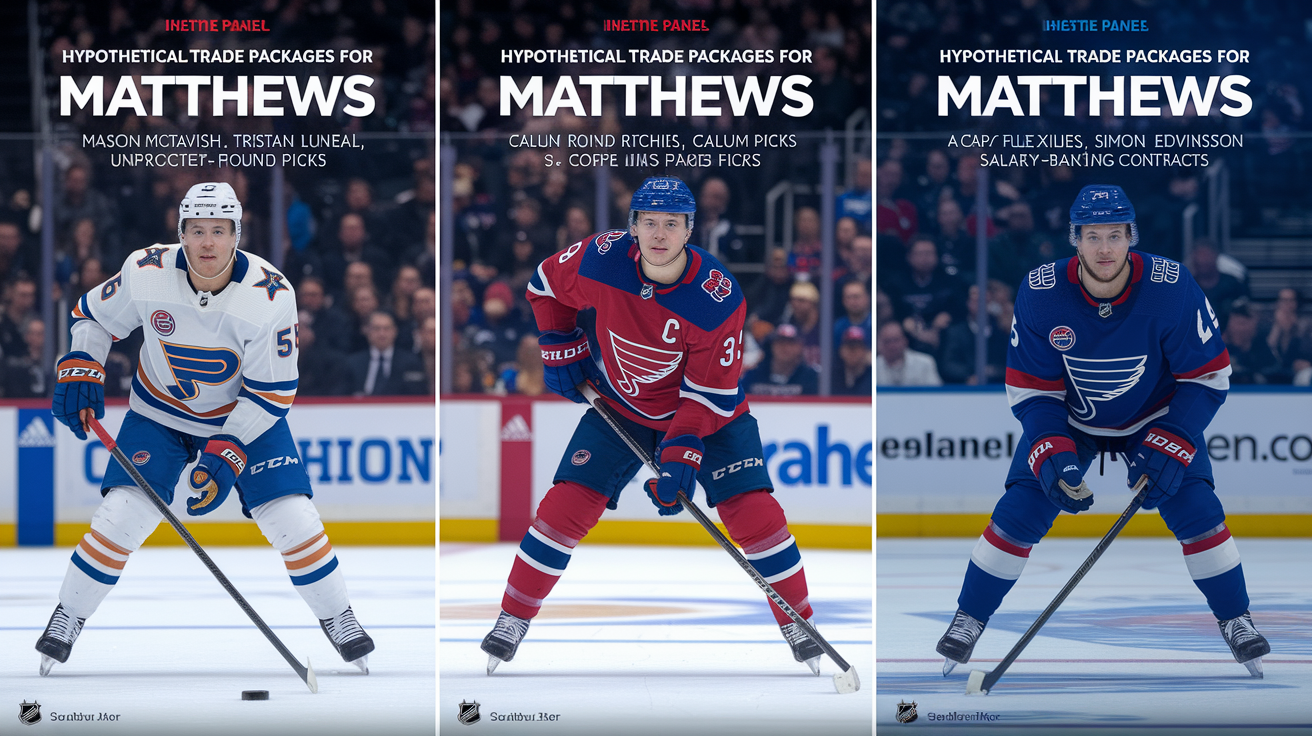
Building a realistic Matthews trade means balancing immediate roster help for Toronto with long-term assets that justify moving a generational talent. No single framework fits every potential suitor. The structure varies depending on the acquiring team’s situation and what they’ve got to offer.
Rebuilding Team with Elite Prospects
A team early in a rebuild, holding multiple lottery picks and a deep prospect pool, could offer three unprotected first-round picks, a top-five organizational prospect, and a cost-controlled young center or winger already contributing at the NHL level. A team like Anaheim might package Mason McTavish, defenseman Tristan Luneau, their next two unprotected first-round picks, and a 2026 first-rounder. This gives Toronto immediate youth and long-term draft capital, though the lack of a proven NHL replacement for Matthews makes it difficult for the Leafs to accept.
Contending Team Trading Win-Now Pieces
A contender looking to capitalize on a narrow championship window might include one blue-chip prospect, one first-round pick, one established top-six forward in his mid-20s, and an additional high pick or prospect. A team like Colorado, if they still had assets after the Rantanen deal, might have offered Calum Ritchie, a 2026 first, a 2027 first, and Jonathan Drouin or a comparable roster forward. This type of package gives Toronto a mix of present and future value but requires the acquiring team to gut its pipeline.
Cap-Flexible Dark Horse with Surplus Assets
A less obvious contender with unusual cap flexibility and a surplus of NHL-ready talent could structure a deal around quantity and roster balance. A team like Detroit might combine Marco Kasper, Simon Edvinsson, a 2026 first, a 2027 first, and salary-balancing contracts like Andrew Copp. This type of package spreads risk across multiple high-upside pieces and gives Toronto immediate help on defense and down the middle.
Salary Cap Challenges in Any Matthews Trade
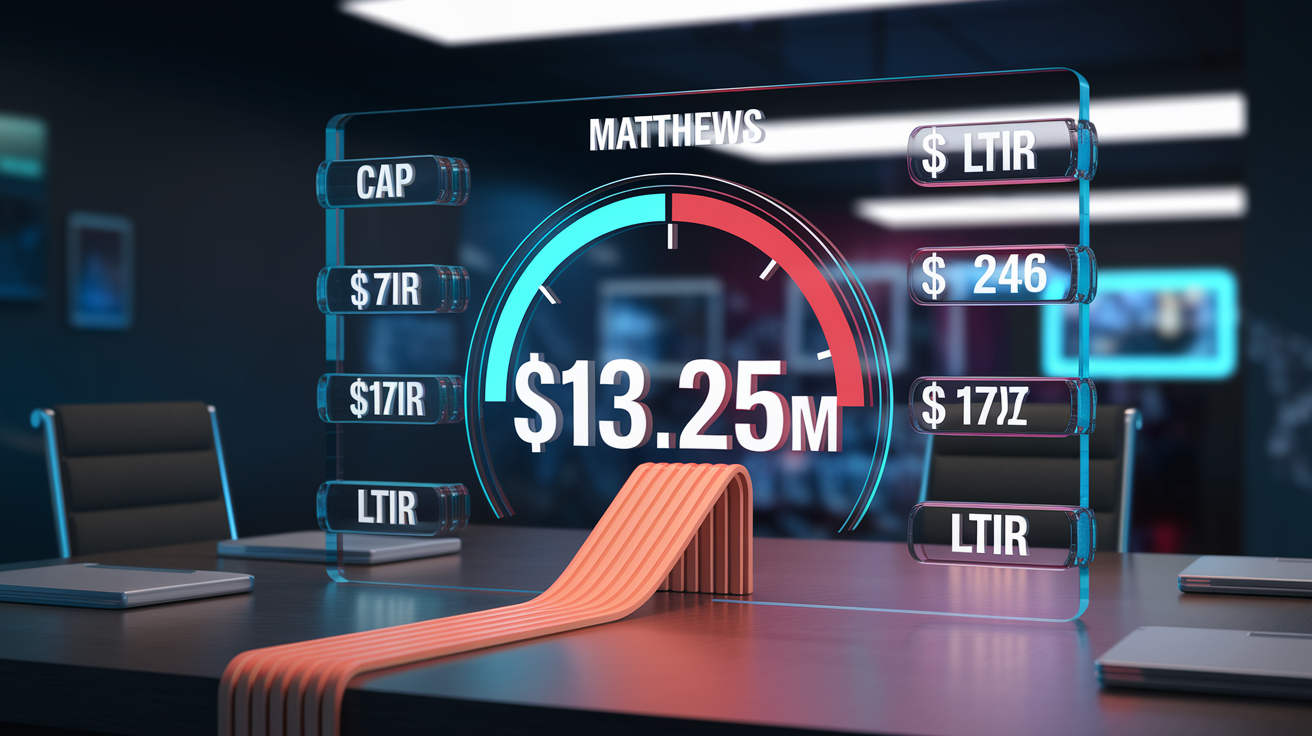
Matthews’ $13.25 million cap hit creates an immediate obstacle for most organizations. Only a few teams carry sufficient space to absorb that number outright. Even those teams would need to maneuver carefully to stay compliant throughout the season. Adding Matthews without subtracting a comparable contract would push most rosters over the cap ceiling, forcing difficult decisions about which players to move out.
Retention and multi-team structures are the most common solutions for mega-deals. Toronto could retain up to 50 percent of Matthews’ salary, reducing his cap hit to roughly $6.6 million for the acquiring team. That retained amount would count against Toronto’s cap for the duration of the contract, a significant long-term commitment. Alternatively, a third team could retain an additional portion of the salary in exchange for draft picks or prospects. This mechanism was used in deals like the Erik Karlsson trade. It allows the acquiring team to fit Matthews under the cap while spreading the financial burden across multiple organizations.
Common Cap-Management Methods in Major Trades:
- Salary retention by the trading team (up to 50 percent of AAV)
- Third-team retention to further reduce cap hit for acquiring team
- LTIR placement of injured player to create temporary cap relief
- Trading out existing contracts in a simultaneous multi-player deal
How Likely Is Toronto to Trade Auston Matthews?
Toronto’s entire organizational strategy revolves around Matthews. The Leafs have built their roster, coaching staff, and front-office decisions around maximizing his prime years. Trading him would signal a complete franchise reset. It would mean abandoning years of incremental roster improvements and likely triggering a prolonged rebuild. Ownership has consistently prioritized contention over asset accumulation. A voluntary Matthews trade is extremely unlikely.
The Leafs’ front office has shown no sign of wavering. Elliotte Friedman reported that Matthews’ deadline trade probability is “0.0 percent.” That reflects both the organization’s stance and the impracticality of moving a player with a no-movement clause mid-season. Any future trade discussion would need to start with Matthews himself. It would probably be tied to dissatisfaction with the team’s direction or a desire to play elsewhere when his contract nears expiration.
Even if Matthews privately expressed interest in a change of scenery, Toronto would face enormous pressure (both internally and from fans) to convince him to stay. The franchise hasn’t won a Stanley Cup since 1967. Matthews represents the best chance to end that drought. Trading him would be seen as organizational failure. It’s a last-resort option, only viable if Matthews explicitly demanded a move and refused to negotiate a contract extension.
Teams Best Positioned to Attempt an Auston Matthews Deal

Only a select group of franchises possesses the asset depth, cap flexibility, and organizational willingness to seriously pursue Matthews. These teams typically fall into distinct categories based on their current roster construction and long-term strategy.
Cap-rich rebuilders like Anaheim or San Jose hold multiple first-round picks, deep prospect pools, and the financial space to absorb Matthews’ contract without major surgery. They could offer a pure futures package while giving Matthews a chance to anchor a young core as it matures. Aggressive contenders like Colorado or Carolina have recently shown willingness to make franchise-altering moves. They might sacrifice significant assets for a player who could deliver a championship.
Team Categories Best Positioned for a Matthews Trade:
- Cap-rich rebuilders with multiple lottery picks, top prospects, and years of financial flexibility to absorb a max contract without immediate competitive pressure
- Aggressive contenders willing to mortgage future assets for a championship-caliber addition and capable of absorbing Matthews’ cap hit through retention or roster moves
- Tax-advantaged markets like Florida, Vegas, or Dallas, where Matthews’ take-home pay would be higher and the team’s competitive window aligns with his contract term
- Teams needing a franchise pivot that have underperformed despite strong supporting casts and view Matthews as the missing piece to elevate a playoff roster into a true contender
- Sleeper teams with deep prospect pools such as Minnesota or Detroit, holding surplus NHL-ready talent and the organizational patience to build around Matthews for five-plus years
Final Words
in the action, this post showed Matthews’ elite scoring and WAR metrics make him one of the NHL’s most expensive assets. We ran through how his NMC and big cap hit cut down suitors, used past superstar trades for context, sketched plausible packages, and flagged the cap tricks teams would need.
If you’re asking what would it take to acquire Auston Matthews: multiple first‑round picks, top prospects, NHL‑ready players and creative cap moves. It’s pricey, but doable — and there are teams willing to try.
FAQ
Q: Who is Justin Bieber’s favorite NHL player?
A: Justin Bieber’s favorite NHL player is reportedly Auston Matthews. Bieber’s a big Leafs fan, has been seen with Matthews, and has publicly praised him, making Matthews his widely cited favorite.
Q: Who is better, Matthews or McDavid?
A: Connor McDavid is generally seen as the better overall player because of unmatched speed, playmaking, and point totals. Auston Matthews is elite at goal scoring and finishing, so they offer different superstar strengths.
Q: How did the Leafs get Auston Matthews?
A: The Leafs got Auston Matthews by selecting him first overall in the 2016 NHL Draft after winning the lottery; he left Switzerland’s ZSC Lions, signed with Toronto, and joined the NHL immediately.
Q: Why is Joseph Woll taking a leave of absence?
A: Joseph Woll is taking a leave of absence for personal reasons, according to the team; officials haven’t shared specifics or a timeline, so his return date remains unclear.