
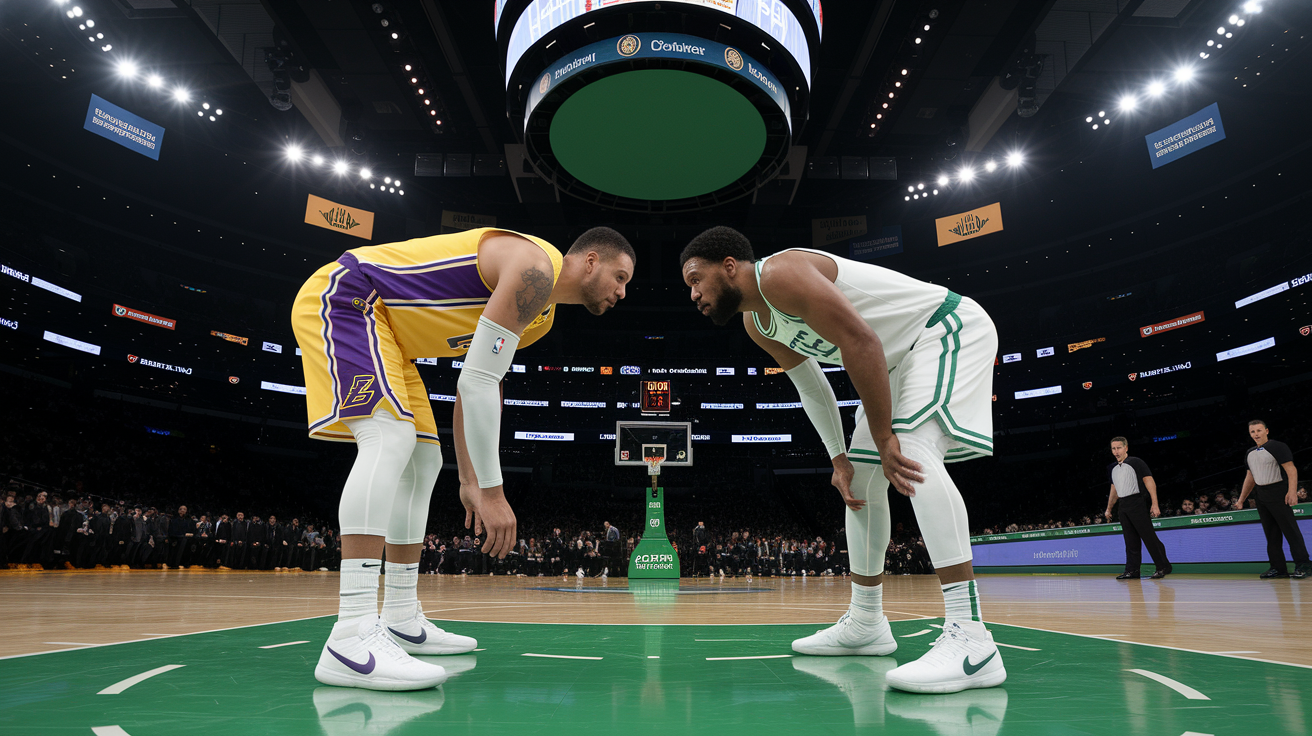

Has the rivalry flipped for good after Boston’s 2024 title?
The Celtics’ 18th banner pushed them past the Lakers’ 17, and that single season changed the whole conversation.
Boston looks stable with Tatum and Brown; L.A. counters with LeBron and Luka but still struggles for consistent playoff depth.
This piece breaks down the newest roster moves, injuries, coaching shifts, and the decades of Finals history that turn every game into more than a regular season night.
Read on to see what the current standings really mean for the rivalry’s next chapter and who holds the edge.
Latest Lakers–Celtics Rivalry Developments and What They Mean Now
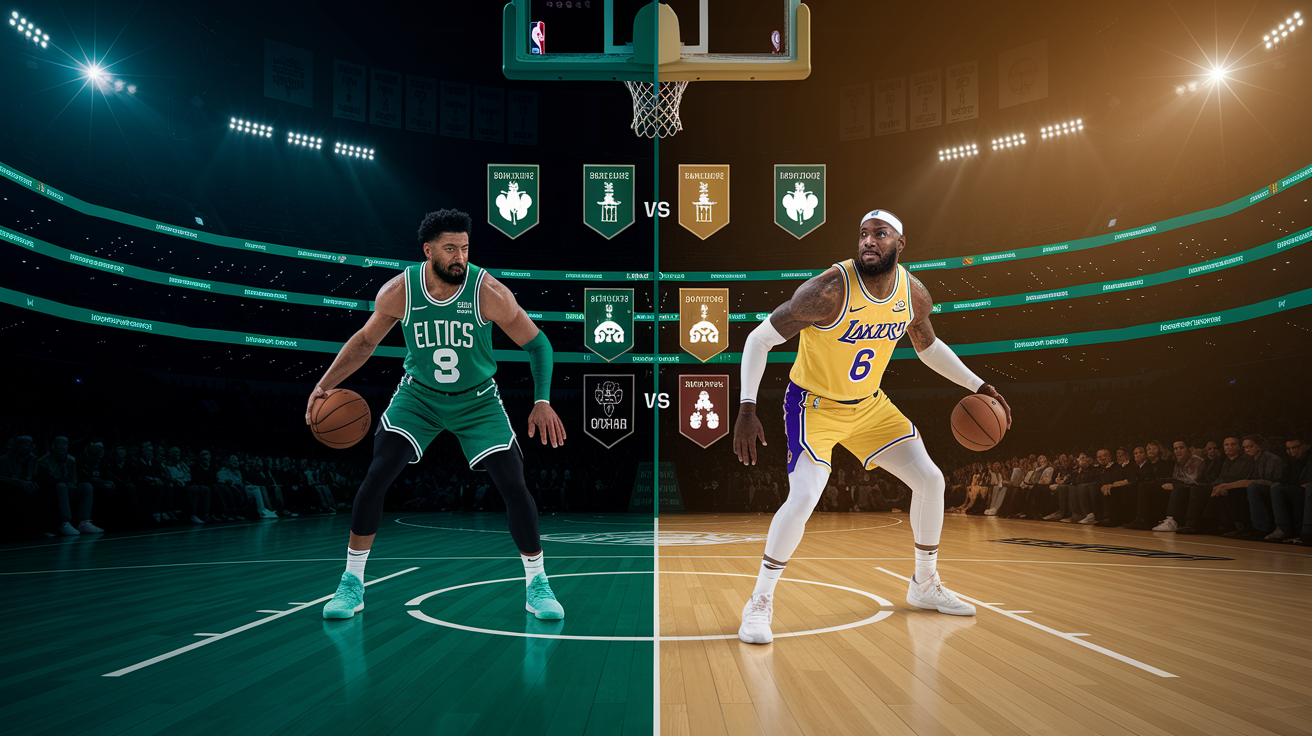
Boston’s got the lead. The Celtics won their 18th championship in 2024, breaking the all-time tie and pushing one banner ahead of the Lakers’ 17. That single season flipped the entire rivalry conversation. What used to be a dead heat turned into a scoreboard with Boston on top and L.A. scrambling to catch up. Jayson Tatum and Jaylen Brown carried the Celtics through a Finals run that proved their franchise can develop stars and keep them together. The Lakers? Still competitive, sure. LeBron James keeps pulling off elite stretches, and now they’ve added Luka Dončić to the mix. But they can’t string together the kind of sustained playoff runs that just powered Boston to a title.
The consistency gap is obvious when you look at the numbers. Since 2010, the Lakers have missed the playoffs seven times. They’ve been in the Play-In Tournament three of the last four years. One championship in that stretch—the 2020 bubble ring. Boston, meanwhile, reached the Eastern Conference Finals six times, made two Finals appearances, and grabbed the 2024 crown. Coaching tells part of the story too. Darvin Ham’s time with the Lakers ended with people questioning his rotations and game plans. Joe Mazzulla stabilized Boston’s system, mixing defensive discipline with pace-and-space looks. That kind of structure advantage compounds when you’ve also got deeper star talent and better postseason results.
What’s shaping the rivalry from 2024 to 2026:
- Injuries: Boston enters 2024–25 with a healthy roster and rotation options. The Lakers are dealing with LeBron’s load management needs and questions about Dončić’s conditioning on defense.
- Roster moves: Boston locked down Tatum and Brown with max deals. The Lakers brought in Dončić but lost cap flexibility and depth in the process.
- Coaching: Mazzulla runs a switch-heavy defense that punishes teams trying to hunt mismatches. The Lakers’ new staff wants to push pace in transition, but they don’t have Finals-tested rotations yet.
- Seeding: Celtics project as a top-three seed in the East. Lakers look like a fringe playoff team in the West, probably headed for another Play-In run.
- Expert picks: Most analysts don’t see a Celtics–Lakers Finals happening by 2026. But both rosters are talented enough to make deep runs if health breaks their way.
A Finals rematch isn’t happening anytime soon unless the Lakers solve their consistency issues. Boston’s entering this cycle with youth, continuity, and momentum. Los Angeles counters with aging star power and the Dončić wildcard. The next chapter gets decided by which franchise can turn current talent into a sustained playoff push—and whether the Lakers can close that one-championship gap before Tatum and Brown stretch it wider.
Historical Lakers–Celtics Rivalry Overview Across All Eras
The rivalry kicked off in the NBA’s early days. Boston and Minneapolis first met in the 1959 Finals, which ended in a 4–0 Celtics sweep. First Finals clean sheet in league history. That series launched Boston’s dynasty under Red Auerbach and Bill Russell, who anchored 11 titles in 13 seasons between 1957 and 1969. The Lakers moved from Minneapolis to Los Angeles in 1960 and immediately stepped into the Celtics’ shadow. Through the 1960s, the two franchises met in the Finals six times. Boston won every single matchup. Russell’s defense and Auerbach’s game plans proved too much for Lakers stars Elgin Baylor and Jerry West. The 1969 Finals delivered a weird twist—Jerry West won the first-ever Finals MVP despite losing in seven games, which just underscored how painfully close the Lakers got without ever breaking through against Boston in that decade.
The 1980s brought the rivalry back and basically saved the NBA. After a quiet 1970s, Larry Bird and Magic Johnson entered the league in 1979 and turned their personal battle into a cultural event. The franchises met in the Finals three times: 1984, 1985, and 1987. The Celtics took the first one, a brutal seven-game grind where Bird claimed Finals MVP. The Lakers answered in 1985 and again in 1987, with Magic’s “baby skyhook” in Game 4 of the ’87 Finals becoming one of the sport’s most iconic clutch moments. The Bird-Magic thing went way beyond basketball. It drove TV ratings, global expansion, and the league’s commercial boom. “Showtime” glamour against Boston blue-collar toughness became the NBA’s main storyline, turning two franchises into the sport’s permanent faces.
The rivalry went quiet in the 1990s. Michael Jordan’s Bulls took over, and both franchises were rebuilding. The Lakers built a new powerhouse in the early 2000s with Kobe Bryant and Shaq, while Boston struggled through a post-Bird drought. The 2008 Finals brought everything roaring back. Boston’s new “Big Three”—Paul Pierce, Kevin Garnett, and Ray Allen—beat Kobe’s Lakers in six games, giving the Celtics their 17th title and first since 1986. The Lakers came back immediately. They won the 2009 championship, then beat Boston in a tense seven-game 2010 Finals to grab their 16th banner. That 2010 series is the last time the two franchises met in the Finals, and it set up a decade-long title chase.
The 2020s turned the rivalry into a race for banners. The Lakers tied the Celtics at 17 championships with their 2020 bubble title, delivered by LeBron James and Anthony Davis just months after Kobe Bryant’s death. Boston answered four years later with their 18th, putting the pressure back on L.A. The long-term legacy now depends on who hits 20 first, which young core sustains success longer, and whether the two meet in the Finals again before the current generation retires. The rivalry’s still the NBA’s gold standard. A storyline that spans seven decades and keeps shaping how the league markets itself worldwide.
Iconic Lakers–Celtics Finals Moments and Defining Games
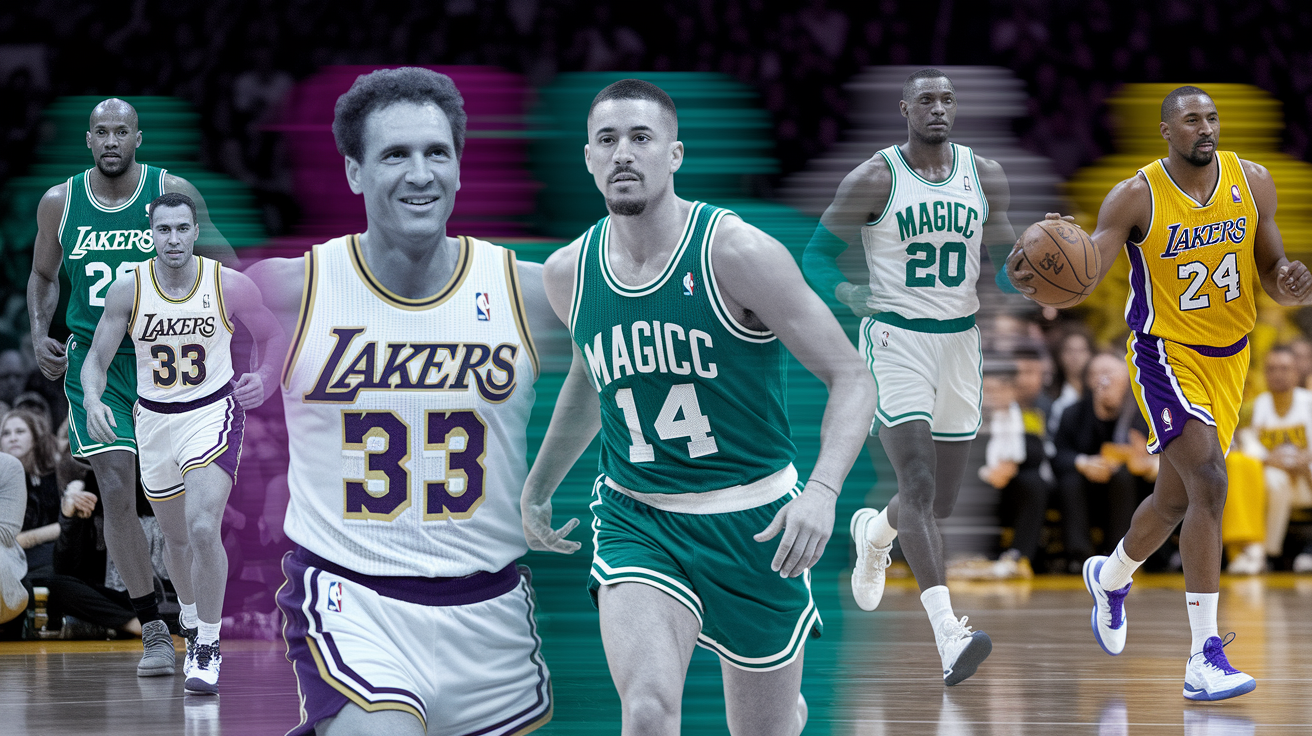
The Celtics owned the rivalry’s opening stretch. The 1959 Finals produced the league’s first sweep, a statement opener to a decade-long stranglehold. Between 1959 and 1969, the teams met six times in the Finals. Boston won every matchup. Bill Russell’s defense and Red Auerbach’s tactics repeatedly shut down the Lakers’ star duo of Elgin Baylor and Jerry West. But the 1969 Finals delivered the rivalry’s first major curveball. Despite losing the series 4–3, Jerry West earned Finals MVP—still the only time a player from the losing team has won that award. West averaged 37.9 points per game across the series, a statistical masterclass overshadowed by Boston’s championship culture and Russell’s farewell win in his final season as player-coach.
The 1980s trilogy gave the rivalry its most legendary moments. The 1984 Finals went to seven games, with Larry Bird’s Celtics outlasting Magic Johnson’s Lakers in a physical, tactical battle that featured heated crowds and multiple late-game collapses. Bird claimed Finals MVP after averaging 27.4 points and 14 rebounds. The Lakers flipped things in 1987, powered by Magic’s “baby skyhook” in Game 4—a running hook over Parish and McHale that sealed a crucial road win and shifted momentum for good. Magic earned his third Finals MVP that year, cementing the Lakers’ “Showtime” identity and proving they could win the rivalry’s biggest stages after years of getting knocked out by Boston.
The 2008 and 2010 Finals brought the rivalry back for a modern crowd. Boston’s Big Three dismantled the Lakers in six games in 2008, with Paul Pierce delivering one of the rivalry’s most dramatic sequences—leaving Game 1 on a wheelchair after what looked like a serious knee injury, then returning minutes later to hit key shots and spark Boston’s comeback. That series gave the Celtics their 17th championship, tying the Lakers’ count at the time. Two years later, the Lakers got revenge in a seven-game Finals decided by defense and grit. Kobe Bryant shot poorly in Game 7 but grabbed 15 rebounds, while Pau Gasol and Ron Artest made crucial plays down the stretch to give L.A. its 16th title and deny Boston a repeat.
| Year | Series Result | Notable Moment | Key Players |
|---|---|---|---|
| 1959 | Celtics 4–0 | First Finals sweep in NBA history | Bill Russell, Bob Cousy (BOS); Elgin Baylor (LAL) |
| 1969 | Celtics 4–3 | Jerry West wins Finals MVP despite losing | Bill Russell (BOS); Jerry West, Wilt Chamberlain (LAL) |
| 1984 | Celtics 4–3 | Seven-game classic; Bird’s first Finals MVP | Larry Bird, Kevin McHale (BOS); Magic Johnson, Kareem Abdul-Jabbar (LAL) |
| 2010 | Lakers 4–3 | Game 7 defensive battle; Kobe’s redemption | Kobe Bryant, Pau Gasol (LAL); Paul Pierce, Kevin Garnett (BOS) |
Legendary Players Who Shaped the Lakers–Celtics Rivalry
The rivalry’s foundation got built on Russell-era dominance against Lakers legends who never broke through. Bill Russell ended his career with 11 NBA championships, anchoring Boston’s defensive identity and mental edge. Elgin Baylor, one of the league’s most explosive scorers, went 0–7 in Finals matchups against the Celtics despite averaging 25 points and 15 rebounds across those series. Jerry West posted similarly dominant individual numbers—his 1969 Finals MVP performance is still the only one from a losing team—but finished 0–6 against Boston in Finals play. West’s career became a story of excellence without the ultimate payoff against the rivalry’s early dynasty, a narrative that stuck with the Lakers until their first L.A.-based championship in 1972, delivered by former Celtics legends Bill Sharman and K.C. Jones as coach and assistant.
Talent across different eras shaped the rivalry’s momentum swings. The Lakers’ Showtime era featured Magic Johnson, Kareem Abdul-Jabbar, and James Worthy, a trio built on transition speed and half-court precision. Boston countered with Larry Bird, Kevin McHale, and Robert Parish, combining sharp shooting with frontcourt toughness. The two cores met three times in the 1980s, splitting the rivalry 2–1 in favor of the Lakers after Boston won the opening 1984 battle. That decade turned the rivalry global, with Bird and Magic embodying contrasting styles—West Coast flash versus East Coast fundamentals—while delivering some of the highest-rated Finals games in TV history. Their individual legacies became inseparable from the rivalry, each player’s Hall of Fame case amplified by their head-to-head Finals battles.
Modern superstars carried things into the 2000s and beyond. Kobe Bryant’s Lakers faced Paul Pierce and Kevin Garnett’s Celtics twice, splitting the 2008 and 2010 Finals. Pierce’s gritty scoring and Garnett’s defensive intensity matched Kobe’s killer instinct, producing two seven-game series (including 2008’s six-game result) that brought back must-watch Finals basketball after the Jordan era cooled off. The current generation features Jayson Tatum and Jaylen Brown as Boston’s offensive engines, both still in their primes and fresh off the 2024 title. LeBron James remains the Lakers’ leader despite his age, now paired with Luka Dončić in a high-ceiling experiment. The LeBron-Tatum head-to-head sits at 7–6 in favor of Boston, a small sample size that might hint at how the next chapter plays out if these rosters meet in a high-stakes series.
Bird vs Magic
Larry Bird and Magic Johnson didn’t just revive the rivalry. They saved the NBA. The 1984 Finals was a seven-game war that showed off Bird’s all-around game (27.4 points, 14 rebounds, 3.6 assists per contest) against Magic’s playmaking brilliance. Boston won that series, but the Lakers adjusted and took the next two Finals meetings in 1985 and 1987. Magic’s 1987 Finals MVP cemented his legacy as a winner who could overcome Bird’s tactical brain and clutch shooting. The rivalry between the two went beyond their Finals record. It influenced jersey sales, prime-time ratings, and the league’s global expansion throughout the 1980s.
Russell vs Baylor/West
Bill Russell’s mental dominance over Elgin Baylor and Jerry West defined the 1960s. Baylor and West remain two of the greatest offensive players in league history, yet neither ever won a title against Boston. Russell’s Celtics faced the Lakers in six Finals during the decade and won every single series, often in gut-wrenching fashion. The 1969 Game 7 summed it up. West posted 42 points, 13 rebounds, and 12 assists, one of the greatest individual Finals performances ever recorded, and still walked off the court a loser. Russell retired immediately after that win, leaving Baylor and West without their biggest obstacle but also without the ultimate validation of beating him.
Kobe vs Pierce/Garnett
The 2008 and 2010 Finals gave Kobe Bryant his toughest championship tests. Paul Pierce earned Finals MVP in 2008 after outdoing Kobe in a six-game series that exposed the Lakers’ lack of frontcourt depth. Kevin Garnett’s defensive intensity and emotional leadership pushed the series toward Boston, ending the Lakers’ back-to-back title hopes. Kobe’s revenge came in 2010, a brutal seven-game Finals where neither team shot well but the Lakers’ experience and composure held up under pressure. That series became Kobe’s fifth and final championship, proving his post-Shaq era and silencing critics who questioned whether he could win without a dominant big.
Lakers–Celtics Head-to-Head Stats and Championship Comparisons
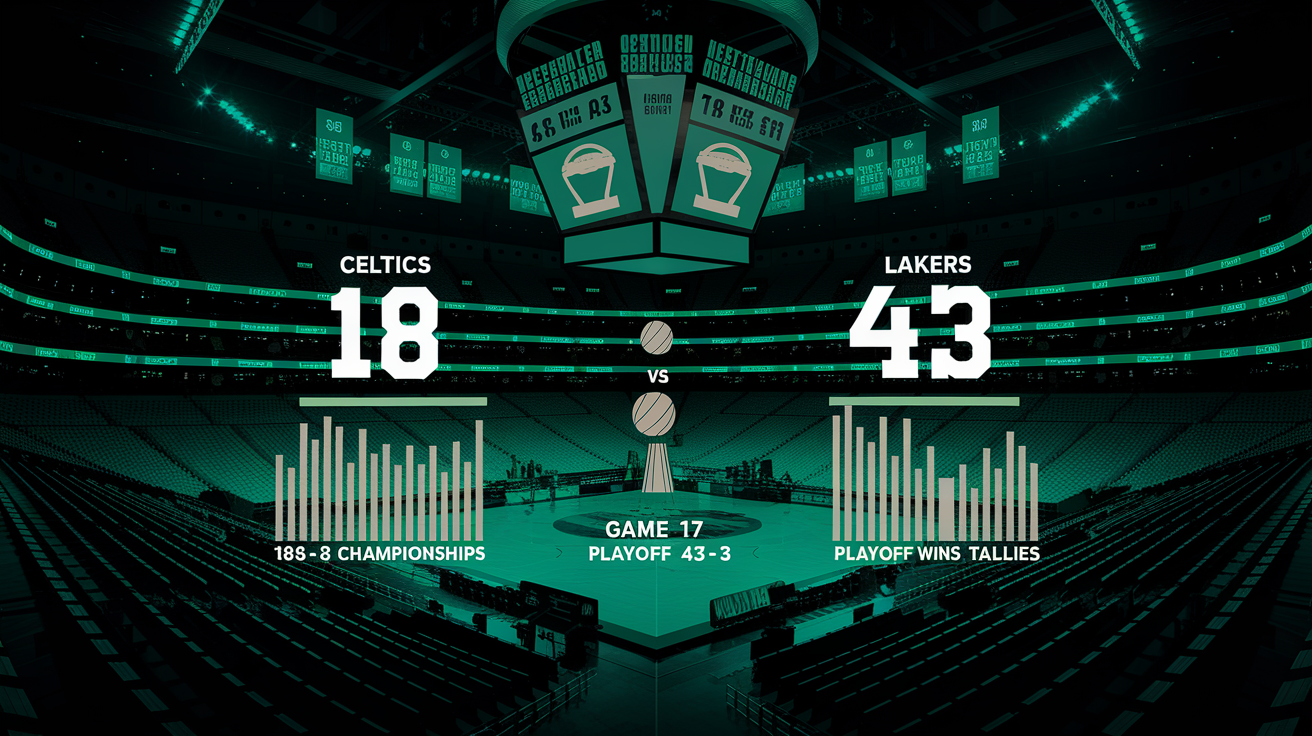
The Celtics own the Finals matchup. Boston holds a 9–3 edge in Finals series wins and a 43–31 advantage in total playoff games won across those series. The numbers reflect decades of Boston dominance, especially the 1960s when the Celtics went 6–0 in Finals meetings. The Lakers’ three Finals victories all came after 1980, with two during the Magic era and one in 2010 with Kobe. The franchises have played five Game 7s in the Finals. The Celtics won four—1962, 1966, 1969, and 1984—while the Lakers grabbed their only Game 7 win in 2010. That 2010 result is still the only time L.A. has closed out Boston in a decisive Finals game, a stat that shows Boston’s historical clutch edge in the rivalry’s highest-pressure moments.
Regular-season performance tilts toward the Celtics too. Boston leads the all-time regular-season series 166–135, a margin built over decades of consistent winning. The Celtics also hold the NBA’s all-time record for most regular-season wins with 3,679 compared to the Lakers’ 3,590, a gap that reflects Boston’s longer streak of sustained excellence across multiple eras. Even in the modern LeBron-versus-Tatum/Brown window, Boston edges L.A. 7–6 in regular-season matchups, a small sample that suggests the Celtics maintain competitive parity even when the Lakers field generational talent. Both franchises have combined for 35 championships out of the NBA’s 78 total seasons, representing 44.87 percent of all titles and cementing the rivalry as the league’s most decorated head-to-head competition.
Six stats that define the rivalry:
- Championships: Boston 18, Los Angeles 17 (Celtics broke the tie with the 2024 title).
- Finals head-to-head series record: Boston 9, Los Angeles 3.
- Playoff game wins in Finals matchups: Boston 43, Los Angeles 31.
- Game 7 Finals results: Boston 4 wins, Los Angeles 1 win.
- All-time regular-season series: Boston 166 wins, Los Angeles 135 wins.
- Combined titles as percentage of all NBA championships: 35 of 78 seasons (44.87%).
Modern Roster Matchups and Current Tactical Landscape
Boston’s current identity centers on two-way versatility and continuity. Jayson Tatum and Jaylen Brown form the league’s most balanced star duo, capable of creating shots in isolation while anchoring switching defenses. The Celtics surround them with role players who space the floor, crash the glass, and execute within structured sets. Joe Mazzulla’s system pushes pace without sacrificing half-court execution, blending transition chances with disciplined shot selection. Defensively, Boston’s switch-heavy scheme exploits mismatches and forces opponents into contested looks, a tactical edge that compounds when Tatum and Brown can guard multiple positions. The Lakers counter with star power but lack comparable depth. LeBron James remains a high-IQ facilitator and late-game closer, while the addition of Luka Dončić gives L.A. another elite shot creator. The challenge is defensive consistency and roster balance. Both stars need heavy usage, and the supporting cast hasn’t shown the same defensive discipline or shooting reliability that Boston’s role players provide.
Tactical matchups would tilt toward the Celtics in a theoretical playoff series. Boston’s defense thrives against isolation-heavy offenses, using help rotations and quick recoveries to limit open looks. The Lakers’ reliance on LeBron and Dončić pick-and-rolls would face constant switching and baseline traps, forcing role players to beat Boston from the arc. Offensively, the Celtics’ spacing creates driving lanes for Tatum and Brown while generating open corner threes, a formula the Lakers’ aging defensive personnel would struggle to contain over seven games. L.A.’s best tactical counter involves transition offense, pushing pace before Boston’s defense can set, and exploiting size mismatches in the post when LeBron or Dončić draw smaller defenders. The Lakers would need to win the rebounding battle and limit turnovers to stay competitive, two areas where their inconsistency has cost them in recent playoff exits.
Advanced metrics show the gap. Boston ranks in the top five in defensive rating, opponent effective field goal percentage, and net rating. All indicators of a well-rounded contender. The Lakers hover near league average in those categories, reflecting their boom-or-bust nature. Per-game efficiency stats show the Celtics generate more assisted baskets, commit fewer turnovers, and defend the three-point line better. Matchup-specific data from recent head-to-head games reveals that Boston forces the Lakers into mid-range shots and contested drives, while L.A. struggles to limit Boston’s catch-and-shoot opportunities. If the two franchises meet in a high-stakes playoff series, the Celtics’ statistical and tactical advantages would probably compound over multiple games unless the Lakers solve their defensive consistency problem and find reliable secondary scoring beyond their two superstars.
Cultural and NBA-Wide Impact of the Lakers–Celtics Rivalry
The rivalry means more than basketball wins and losses. It represents two distinct cultural identities. Los Angeles embodies West Coast glamour, Hollywood celebrity presence, and fast-paced entertainment. “Showtime” wasn’t just a playing style. It became a brand built on transition dunks, courtside stars, and prime-time spectacle. Boston represents East Coast grit, blue-collar work ethic, and tradition-driven pride. The Celtics’ seventeen banners hanging in TD Garden underscore a legacy-first mentality, where championships matter more than individual highlights. This geographic and cultural divide amplifies every regular-season meeting and hypothetical Finals matchup, turning roster comparisons into proxy battles for regional identity. Fans invest emotionally not just in results, but in what those results say about their city’s character and values. That’s why Lakers–Celtics games draw higher viewership, louder arenas, and more media coverage than any other regular-season NBA matchup.
The 1980s Bird-Magic era saved the league and set the template for modern sports marketing. Before their rivalry, the NBA struggled with declining ratings and a perception problem. The Magic-Bird Finals trilogy turned the sport into appointment television, driving record viewership and commercial sponsorship growth. The league used their contrasting personalities—Magic’s smile and flair versus Bird’s stoic intensity—to build narratives that went beyond hardcore fans and reached casual audiences. Celebrity courtside culture exploded during this period, with Jack Nicholson becoming synonymous with Lakers games and Boston Garden earning a reputation as the league’s most hostile environment. The rivalry’s global reach expanded throughout the 1980s and 1990s, helping the NBA establish international fanbases that persist today. Every era of the rivalry since, from Kobe-Pierce to the potential Tatum-Dončić future, carries the cultural weight and media infrastructure built during the Bird-Magic years.
Final Words
Celtics still hold the edge after the 2024 title, but the rivalry is nowhere near settled. Both clubs have moves, injuries and coaching tweaks that matter right now.
We walked through recent roster shifts, coaching matchups, iconic Finals moments, key head-to-head stats, and how today’s tactics shape future games. You get the historical sweep and the immediate stakes.
This wrap-up of the Lakers vs Celtics rivalry latest developments and historical context shows both sides are set for more high-stakes meetings. So stay tuned — more classic moments are coming.
FAQ
Q: Why is the Celtics and Lakers rivalry so historic?
A: The Celtics and Lakers rivalry is so historic because it grew from repeated Finals showdowns, multiple dynasties (1950s–’60s Celtics, 1980s Bird–Magic) and games that helped build the NBA’s global profile.
Q: When did the Lakers vs. Celtics rivalry start?
A: The Lakers vs. Celtics rivalry started in the 1950s, with their first Finals meeting in 1959; Boston’s Russell-era dominance and the Lakers’ 1960 move to Los Angeles kept the feud intense.
Q: What team has 17 rings?
A: The team with 17 rings is the Los Angeles Lakers; Boston moved ahead in 2024 to 18 championships, so the Lakers currently sit at 17 overall.
Q: Who was the richest laker player?
A: The richest Laker player is LeBron James, whose NBA salary, major endorsements and business investments have made him the franchise’s wealthiest current or former player.