

Some say the Lakers vs Celtics rivalry did more to create the modern NBA than any other matchup.
For 65 years and 12 Finals the two teams pushed each other into new styles, bigger crowds, and prime-time TV nights.
This post walks that story from the 1959 sweep to the 2010 Game 7 and the 2024 title that tipped the scale.
You’ll get a clean timeline, the defining games that changed the sport, and why each era mattered, from Russell and Mikan to Magic, Bird, and Kobe.
High-Level Overview of the Lakers vs Celtics Rivalry
The Lakers and Celtics have staged the most storied rivalry in NBA history. Twelve Finals meetings. Sixty-five years of championship battles that basically defined professional basketball.
Boston holds an 18–17 edge in all-time titles after claiming the 2024 championship, breaking a tie that underscored decades of back and forth dominance between the league’s two most successful franchises.
The rivalry ignited in 1959 when the Celtics swept the Minneapolis Lakers in the first of six consecutive Finals victories during the 1960s dynasty era. It reached its cultural peak in the 1980s when Larry Bird and Magic Johnson transformed every matchup into a national event, lifting the NBA from tape delayed broadcasts to prime time spectacle. The modern era saw the rivalry renewed in 2008 and 2010, when Kobe Bryant’s Lakers and Paul Pierce’s Celtics traded championships in hard fought seven game series.
Beyond the championship count, this rivalry shaped the NBA’s identity through contrasting styles, legendary players, and coast to coast fan bases that turned basketball into a cultural touchstone. Each era delivered defining moments that elevated the sport’s visibility, from Bill Russell’s dynasty run to the Showtime Lakers, cementing Lakers vs Celtics as the gold standard by which all other rivalries are measured.
Early Lakers vs Celtics Rivalry Roots and First Finals Clashes
The Lakers franchise began as the Minneapolis powerhouse that dominated the NBA’s early years. Five championships in six seasons behind George Mikan’s unstoppable inside game. That dominance prompted rule changes, including the introduction of the 24 second shot clock and goaltending restrictions, designed to open up a game the Lakers had made almost unplayable for opponents. When the franchise relocated to Los Angeles in 1960, it brought a championship pedigree but faced a new Eastern Conference juggernaut in Boston.
The Celtics had assembled their own dynasty under Red Auerbach, who drafted Bob Cousy in 1950 and Bill Russell in 1956. The first Finals meeting came in 1959, when Boston swept Minneapolis 4–0 to claim their third NBA title and signal a shift in league power.
Key early milestones:
1949: Minneapolis Lakers win first championship, beginning five titles in six years
1956: Celtics win first championship, defeating St. Louis Hawks
1959: Boston sweeps Lakers in Finals, marking first head to head championship clash
1960: Lakers relocate to Los Angeles, setting up coast to coast rivalry structure
Celtics Dynasty Era and the 1960s Lakers vs Celtics Championship Battles
Boston owned the 1960s. Eleven championships in the decade. Eight consecutive titles from 1959 to 1966, a record unmatched in North American professional team sports.
Six of those championships came directly at the Lakers’ expense, establishing a psychological stranglehold that would haunt Los Angeles for 25 years. The Celtics added K.C. Jones in the 1958 draft, creating a backcourt partnership with Cousy that anchored a roster built on team defense and unselfish ball movement.
The Lakers countered with individual brilliance, acquiring Elgin Baylor and later Wilt Chamberlain to challenge Russell’s Celtics. But Boston’s system consistently prevailed in the sport’s biggest moments. The 1962 Finals went to overtime in the deciding game, with the Celtics escaping with another title. Four years later, Boston claimed their eighth straight championship by defeating the Lakers in seven games, a series that exemplified the decade’s one sided Finals results.
1969 Game 7: Russell’s Final Masterpiece and West’s Bittersweet MVP
The 1969 Finals delivered the rivalry’s most dramatic chapter when the Celtics and Lakers met for the seventh time in 11 years. Los Angeles won the first two games before Boston tied the series twice, forcing a deciding Game 7 in which the Lakers fell 15 points behind in the third quarter.
Chamberlain, who had averaged 35 points and 25 rebounds per game during the regular season, missed the final six minutes due to a knee injury as the Celtics pulled away for the victory. Jerry West earned Finals MVP honors despite the loss, becoming the first and only player to receive the award on the losing team. A recognition of his brilliance in a series the Lakers couldn’t close.
The game marked Bill Russell’s final appearance and his 11th championship, ending the decade with Boston holding a 7–0 Finals record against Los Angeles.
Magic Johnson vs Larry Bird and the 1980s Lakers vs Celtics Rivalry Peak
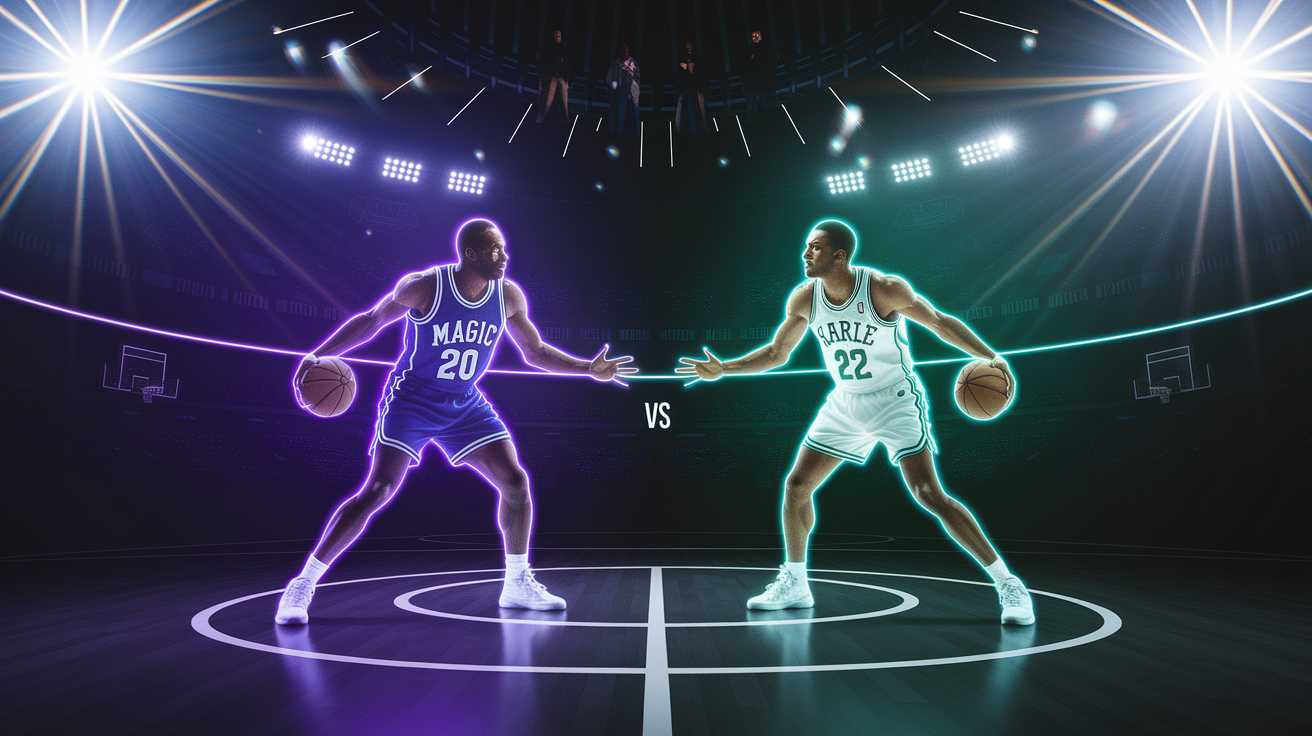
The rivalry’s golden age arrived when Magic Johnson joined the Lakers as the No. 1 pick in 1979 and Larry Bird entered his first season with Boston after being drafted sixth overall in 1978. Entering the decade, the Celtics held a 13–6 championship edge and had never lost a Finals series to the Lakers. But the 1980s would reshape that narrative through three epic Finals meetings that became cultural events.
The Lakers won the 1980 championship in Magic’s rookie season, with the 20 year old earning Finals MVP after filling in for an injured Kareem Abdul-Jabbar in the clinching game. Boston answered with the 1981 title while Los Angeles suffered a first round playoff exit, then the Lakers reclaimed the crown in 1982 under new coach Pat Riley.
The sequence set up 1984, a seven game Finals widely considered one of the greatest playoff series of all time. Kevin McHale’s clothesline foul on Kurt Rambis in Game 4 became the series pivot, shifting momentum to Boston after the Lakers had led 2–1 and were ahead by six points when the hard foul occurred. The Celtics won that game in double overtime to level the series 2–2, then claimed Game 5 in sweltering conditions at Boston Garden, which lacked air conditioning. Boston took the championship in seven games, extending their Finals winning streak over the Lakers to eight series in 25 years.
Five defining 1980s games:
1980 Game 6: Magic Johnson’s 42 point, 15 rebound Finals MVP performance as a rookie center
1984 Game 4: McHale clothesline sparks double overtime Celtic comeback to tie series 2–2
1984 Game 5: Celtics win in 97 degree heat, taking 3–2 series lead
1985 Game 1: “Memorial Day Massacre,” Lakers lose 148–114 before rallying to win series in six
1987 Finals: Kareem’s baby sky hook and Magic’s emergence as Lakers leader in six game victory
The Lakers broke their Finals curse against Boston in 1985 when 38 year old Abdul-Jabbar led them to victory in six games, then defeated the Celtics again in 1987 in what would be the final playoff meeting for over 20 years. The Lakers won five championships in the decade (1980, 1982, 1985, 1987, 1988), while Boston claimed three (1981, 1984, 1986), with only the Philadelphia 76ers and Detroit Pistons interrupting the duopoly.
Modern Era Lakers vs Celtics Rivalry Renewals: 2008 and 2010 Finals
| Year | Key Players | Defining Moments |
|---|---|---|
| 2008 | Celtics: Paul Pierce, Kevin Garnett, Ray Allen; Lakers: Kobe Bryant, Pau Gasol | Game 4 Boston comeback; Game 6 39 point blowout victory; Celtics’ first title in 22 years |
| 2010 | Lakers: Kobe Bryant, Pau Gasol; Celtics: Paul Pierce, Kevin Garnett, Ray Allen | Game 7 defensive battle; Bryant’s fifth championship; Lakers’ 16th title |
| Impact | Series split 1–1 | Lakers finally defeated Celtics in Finals (first since 1987); rivalry renewed for new generation |
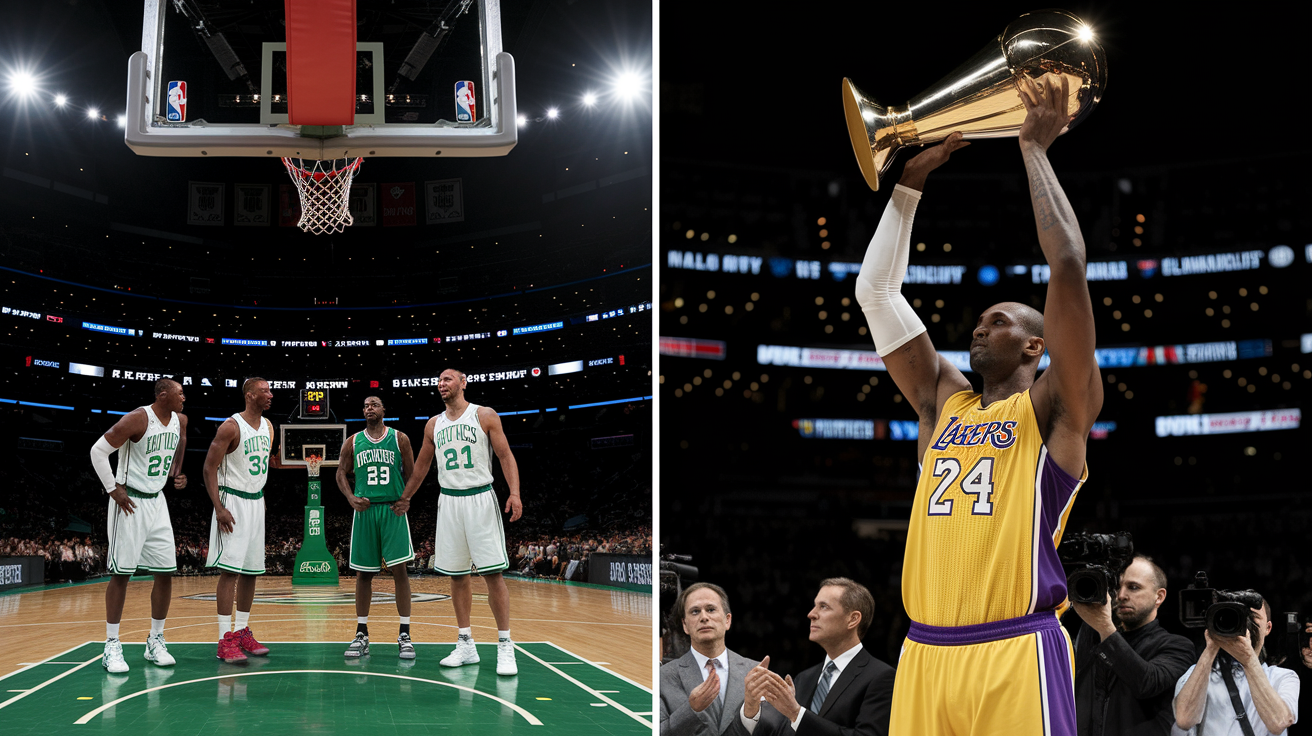
After a 21 year absence from the Finals following their 1987 loss, the Celtics returned in 2008 with a rebuilt roster centered on “The Big Three” of Kevin Garnett, Ray Allen, and Paul Pierce. Boston defeated Kobe Bryant’s Lakers in six games, highlighted by a wild Game 4 comeback that swung momentum and a dominant 39 point victory in the clinching game. The championship marked Boston’s ninth Finals victory over Los Angeles and their first title since 1986.
The 2010 Finals offered redemption for the Lakers in a seven game battle that showcased defensive intensity and half court execution. Bryant led Los Angeles to victory in the final game, securing his fifth championship and the Lakers’ 16th title, completing the franchise’s climb back to parity in the all time championship count. The series represented a stylistic contrast to the high scoring 1980s Finals, with both teams emphasizing defensive versatility and physical play that reflected the modern NBA’s evolution.
Defining Games That Shaped the Lakers vs Celtics Rivalry Legacy
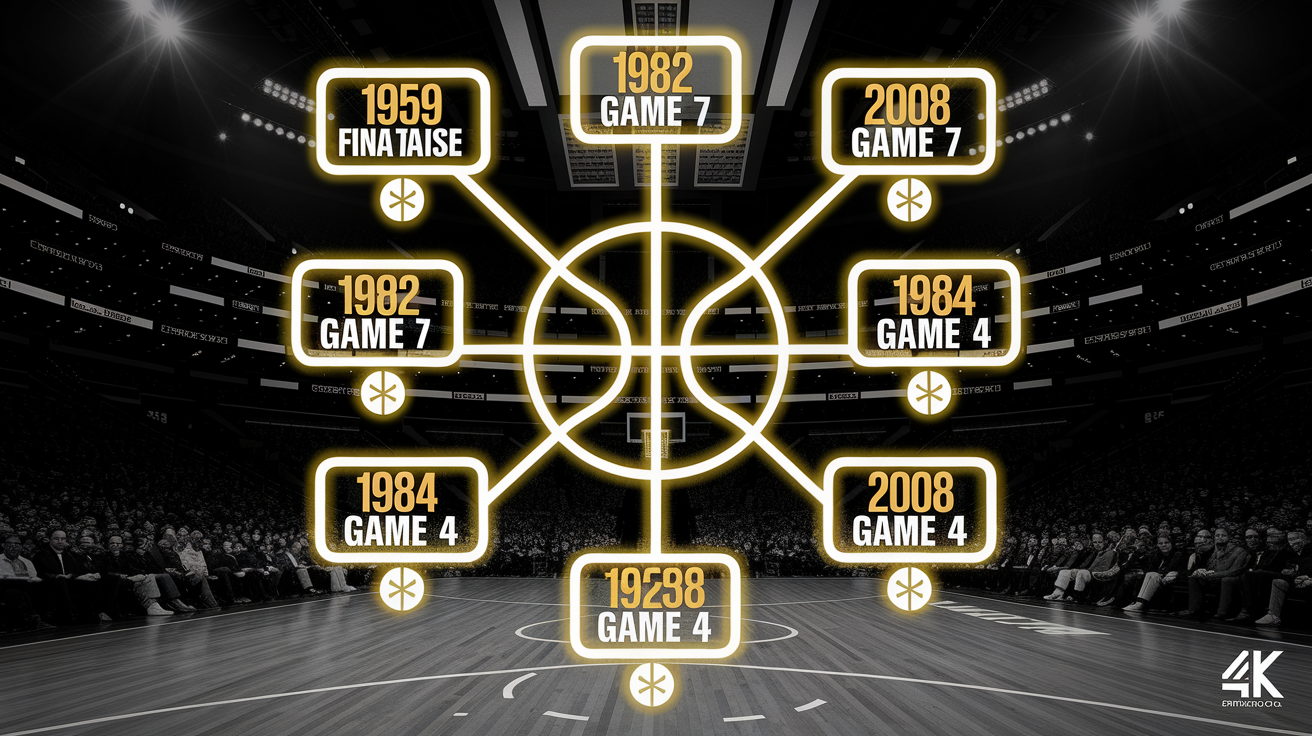
1959 Finals sweep: The first meeting established Celtics dominance, marking the NBA’s first Finals sweep and signaling Boston’s dynasty era had arrived at the Lakers’ expense.
1962 Finals Game 7 overtime: The Celtics escaped with another title in an overtime thriller that showcased Bill Russell’s defensive brilliance and Elgin Baylor’s offensive wizardry in a losing effort.
1969 Game 7: Jerry West became the first Finals MVP on a losing team while Bill Russell claimed his 11th ring in his final game, cementing the decade’s narrative of individual Lakers brilliance falling short of Celtic team success.
1984 Game 4 double overtime: Kevin McHale’s clothesline on Kurt Rambis shifted series momentum, the Celtics rallied from a 2–1 deficit, and Boston went on to extend their Finals curse over LA to eight consecutive series.
2008 Game 4 comeback: The Celtics erased a large deficit to seize control of the series, demonstrating the Big Three’s championship resolve and setting up a six game title run that returned Boston to glory.
These games collectively established the rivalry as the NBA’s gold standard because they combined championship stakes with cultural significance and individual star power. Each era delivered moments that transcended basketball. Russell’s dynasty dominance, Magic and Bird’s stylistic clash, Kobe’s quest for validation, creating a through line of excellence that made every Lakers vs Celtics Finals meeting an event that defined the league’s identity for that generation.
Hall of Fame Players and Coaching Icons Who Elevated the Lakers vs Celtics Rivalry
The rivalry’s sustained excellence rested on an unmatched concentration of Hall of Fame talent across six decades. Red Auerbach built Boston’s dynasty through shrewd drafting and bold trades, assembling rosters around Bill Russell’s defensive genius and complementary stars who bought into team first basketball. Pat Riley transformed the Lakers into Showtime, maximizing Magic Johnson’s vision and Kareem Abdul-Jabbar’s scoring while creating a fast break system that became synonymous with Los Angeles basketball. Phil Jackson and Doc Rivers later carried the coaching torch, guiding their respective franchises through the modern era’s championship battles.
Larry Bird won three consecutive MVP awards from 1984 to 1986, establishing himself as the Celtics’ greatest forward and the perfect foil to Magic Johnson’s charismatic leadership. Magic claimed MVP honors in 1987, 1989, and 1990, becoming the Lakers’ floor general and the face of a franchise that turned basketball into entertainment spectacle. The individual awards underscored each player’s dominance while their head to head Finals battles elevated the NBA’s national profile, transforming the sport from regional interest to cultural phenomenon.
Celtics Legends
Bill Russell anchored eight consecutive championships with his revolutionary defensive approach, finishing with 11 rings in 13 seasons. Bob Cousy orchestrated the early dynasty before passing the torch to K.C. Jones, while John Havlicek bridged the 1960s and 1970s championships with tireless two way play.
The 1980s featured Kevin McHale’s post mastery and Robert Parish’s steady interior presence alongside Bird, creating a frontcourt that dominated half court execution. Paul Pierce, Kevin Garnett, and Ray Allen formed the modern Big Three that delivered the 2008 championship.
Lakers Icons
Jerry West earned Finals MVP in 1969 despite losing to Boston, then became the Lakers’ executive architect. Wilt Chamberlain joined forces with Baylor and West in pursuit of championships that the Celtics repeatedly denied. Magic Johnson teamed with Kareem Abdul-Jabbar and James Worthy to form the Showtime core that won five titles in the 1980s, with Michael Cooper earning the 1987 Defensive Player of the Year award as the only Laker to win that honor as of 2022.
Kobe Bryant carried the franchise into the 2000s, adding five championships including the 2010 Finals victory over Boston that closed the circle on the rivalry’s modern chapter.
Cultural Impact, Legacy, and Future of the Lakers vs Celtics Rivalry
The “Beat L.A.” chant originated at Boston Garden during the 1982 Eastern Conference Finals Game 7 and spread across the league, becoming basketball’s most recognizable crowd rallying cry. The rivalry represented more than geography. It embodied stylistic contrasts between the Lakers’ Showtime flash and the Celtics’ blue collar execution, West Coast glamour versus East Coast grit, and reflected broader American cultural and racial dynamics during the 1980s.
Magic and Bird’s Finals battles transformed the NBA from a league showing Finals games on tape delay into a prime time television draw, with ratings surging and the sport’s popularity expanding beyond its traditional fan base.
The Celtics lead the all time championship count 18–17 after their 2024 title, breaking a tie that had stood since 2020 and reigniting debates about franchise supremacy. Modern stars Jayson Tatum and Jaylen Brown anchor Boston’s current core, while LeBron James remains linked to the Lakers and potential future arrivals like Luka Dončić could set the stage for another Finals renewal.
The rivalry’s future hinges on both franchises returning to championship contention simultaneously, a scenario that would allow a new generation to witness the NBA’s defining matchup and add fresh chapters to basketball’s greatest ongoing story.
Final Words
In the action, we ran through the rivalry’s arc. From the 1959 roots and 1960s dynasty to the Bird–Magic peak and the 2008/2010 renewals.
We broke down the biggest games, the Hall of Fame players and coaches, and the cultural pull that turned these matchups into the NBA’s gold standard.
The lakers vs celtics rivalry history timeline and defining games show a feud built on clutch moments and changing eras. It’s still evolving, and that’s a great thing — more memorable chapters lie ahead.
FAQ
Q: What is the history of the Celtics-Lakers rivalry?
A: The history of the Celtics-Lakers rivalry traces back to their 1959 Finals meeting, spanning 1960s Celtics dominance, the 1980s Bird–Magic peak, and modern renewals in 2008 and 2010, defining NBA lore.
Q: What is the Celtics record against the Lakers?
A: The Celtics’ record against the Lakers varies by era, but Boston leads key Finals series; franchise championships stood at 18 (Celtics) and 17 (Lakers) after 2024.
Q: Who is the Boston Celtics biggest rivalry?
A: The Boston Celtics’ biggest rivalry is with the Los Angeles Lakers, driven by repeated Finals clashes, era-defining star duels, and close championship battles that shaped NBA history.
Q: Has there ever been a 4-0 sweep in the finals?
A: There have been 4-0 sweeps in the NBA Finals; notably the Celtics swept the Lakers 4–0 in 1959, and several other Finals series have ended in sweeps.