

Can one injury really decide a rivalry?
It sounds extreme, but it’s happened more than once, Durant’s 2019 Achilles, Kawhi’s 2017 ankle and Kyrie’s 2015 kneecap each flipped playoff momentum and left title hopes in pieces.
This post tracks the injury updates that shifted the balance in the NBA’s biggest rivalries, explains why real-time medical news forces instant tactical rewrites, and shows how one night can reshape a franchise’s arc.
Pivotal Injury Moments That Immediately Transformed NBA Rivalries
Kevin Durant limped off the court in Game 5 of the 2019 Finals, and everything changed. Golden State had been clawing to stay alive against Toronto. Durant’s brief nine minutes back on the floor had given them hope. Then came the non-contact stumble. The ruptured Achilles. The sudden realization that the Warriors’ championship window had just slammed shut.
The series shifted right there. Competitive balance evaporated. What could’ve been a tight finish turned into a coronation for Toronto.
High-stakes injuries flip rivalry scripts without warning. Kawhi Leonard rolled his ankle on Zaza Pachulia’s foot in Game 1 of the 2017 Western Conference Finals, and what could’ve been a tight Spurs–Warriors battle became a sweep. Kyrie Irving fractured his kneecap in overtime of Game 1 in the 2015 Finals, stripping Cleveland of its second-best shot creator and forcing LeBron to shoulder an impossible load. The series tilted heavily toward Golden State. Chris Paul pulled his hamstring late in Game 5 of the 2018 Western Conference Finals with Houston up 3–2, and the Rockets lost their offensive creativity in Games 6 and 7. Golden State’s dynasty survived.
Real-time medical updates create instant competitive imbalance because playoff rotations are tight. Game plans are rigid. Coaching staffs don’t have room to adjust. When an injury confirmation arrives mid-series, it forces immediate lineup reshuffles, defensive scheme pivots, and tactical compromises that can decide a championship in a matter of possessions.
Six one-line examples of rivalry-altering injury updates:
Derrick Rose’s torn ACL in Game 1 of the 2012 First Round sent Chicago from top contender to vulnerable overnight. Russell Westbrook’s torn meniscus after a collision with Patrick Beverley in Game 2 of the 2013 First Round collapsed OKC’s explosive backcourt identity. Amar’e Stoudemire’s severe hand laceration from punching a fire-extinguisher case after Game 2 in 2012 sealed New York’s 0–3 start and first-round exit. Klay Thompson’s torn ACL on a fast-break dunk attempt in Game 6 of the 2019 Finals ended any chance of forcing a Game 7. Tyrese Haliburton’s sudden non-contact injury in Game 3 of the 2025 Finals disrupted ball movement and spacing in a tight Finals. Chris Bosh’s abdominal strain in Game 1 of the 2012 Eastern Conference Semifinals forced Miami to lean heavily on LeBron and Wade, raising the difficulty of that title run.
Long-Term Patterns in How Injuries Reshaped Rivalry Arcs Across Eras
Injuries do more than flip individual series. They reset entire rivalry arcs. They alter franchise trajectories for years. They force teams to rebuild competitive identity from scratch.
When single moments remove cornerstone players for extended stretches, the ripple effects reshape how franchises approach each other season after season. Former equals become mismatches. Carefully built championship windows dismantle.
The Lakers–Celtics and Celtics–76ers rivalries offer clear examples. Recurring absences forced one side to recalibrate roster construction, draft strategy, and playoff expectations. Instead of a single injury deciding a series, the cumulative weight of overlapping absences shifted the power dynamic for years. One franchise dominated simply because it stayed healthier longer.
Chicago’s rivalry with Detroit and New York’s battles with New Jersey followed similar patterns. Derrick Rose tore his ACL in 2012, and that single event redefined the Bulls’ entire post-2010 identity. Rival teams in the East leapfrogged them in the playoff hierarchy. The Knicks–Nets dynamic hinged on prolonged availability issues. Amar’e Stoudemire’s recurring injuries and other roster instability prevented sustained rivalry intensity.
Ongoing injury patterns strengthen or collapse multi-season rivalry cycles by determining which franchises can sustain competitive depth. Teams that maintain roster continuity and health build institutional advantages. Tighter defensive schemes. Offensive chemistry that compounds over playoff runs.
Teams plagued by recurring absences lose not just games but also the strategic familiarity and rhythm that make rivalries intense. Potential championship clashes turn into lopsided matchups decided by attrition rather than talent.
Game-by-Game Injury Updates That Flipped Playoff Momentum in Rivalries
Single-game injuries disrupt rotations and defensive matchups in ways coaching staffs can’t quickly repair. When a star exits mid-series, the opposing team immediately adjusts. Defensive assignments tighten. Help schemes shift. They target weaker ball-handlers.
The injured team loses more than production. They lose spacing, decision-making, and the tactical flexibility that made their offense effective. Those losses compound with every game the player misses.
Immediate medical confirmations change coaching decisions because they force real-time adjustments to game plans built over weeks. A confirmed absence means rotations must be rewritten. Practice time reallocated. Backup players thrust into roles they haven’t prepared for. The speed of that information flow determines whether a coaching staff can adapt or whether the series slips away before adjustments take hold.
Seven injury-driven playoff momentum swings:
Chris Paul’s hamstring injury in Game 5 of the 2018 Western Conference Finals, with Houston up 3–2, led to losses in Games 6 and 7. Russell Westbrook’s torn meniscus in Game 2 of the 2013 First Round abruptly removed OKC’s explosive backcourt presence. Amar’e Stoudemire’s hand injury after Game 2 in 2012 shifted New York’s series trajectory to a swift exit. Kawhi Leonard’s rolled ankle in Game 1 of the 2017 Western Conference Finals turned a competitive series into a sweep. Kyrie Irving’s fractured kneecap in overtime of Game 1 of the 2015 Finals forced Cleveland into an entirely LeBron-dependent offense. Klay Thompson’s ACL tear in Game 6 of the 2019 Finals ended Golden State’s hopes of extending the series. Derrick Rose’s ACL tear late in Game 1 of the 2012 First Round dropped Chicago from contender to vulnerable overnight.
| Injury Update | Immediate Series Score | Resulting Shift |
|---|---|---|
| Chris Paul hamstring, 2018 WCF Game 5 | Rockets up 3–2 | Rockets lost Games 6 and 7, Warriors advanced |
| Kyrie Irving fractured kneecap, 2015 Finals Game 1 OT | Series tied 1–1 | Cavaliers lost offensive balance, Warriors won title |
| Kawhi Leonard ankle, 2017 WCF Game 1 | Spurs competitive early | Series became a sweep for Warriors |
How Injury Reports Reshaped Warriors–Cavaliers and Other Modern Rivalries
The Warriors–Cavaliers rivalry hinged on injury availability more than any other modern matchup.
The 2015 Finals saw Cleveland stripped of Kyrie Irving’s shot creation. LeBron James was forced into an impossible one-man offensive system. The 2016 rematch featured full health on both sides and produced a historic seven-game battle. Then 2017 and 2018 were defined by Golden State’s depth advantage.
But 2019 flipped the script. Kevin Durant’s ruptured Achilles and Klay Thompson’s torn ACL removed two of the Warriors’ three best players. Toronto got a championship window that opened entirely due to injury timing.
Recent Warriors–Suns battles followed similar patterns. Injury-driven matchup changes decided playoff seeding and series outcomes. When Golden State lost key rotation players to overlapping absences, Phoenix capitalized with faster tempo and aggressive switches. When Phoenix faced its own injury disruptions, including Damian Lillard’s season-ending Achilles tear after joining the roster, offensive spacing collapsed. Defensive schemes shifted to reactive zones. Golden State dictated pace and shot quality.
Rotation adjustments shaped competitive outcomes because playoff success depends on continuity and chemistry, not just star talent. Teams that maintained consistent lineups built defensive familiarity and offensive rhythm. Teams cycling through backup players lost execution efficiency and late-game composure.
The Warriors–Cavaliers rivalry demonstrated this repeatedly. Whichever team sustained health gained immediate tactical advantages that compounded over seven-game series.
Injury Effects on Coaching Strategies and Matchup Planning in Rivalries
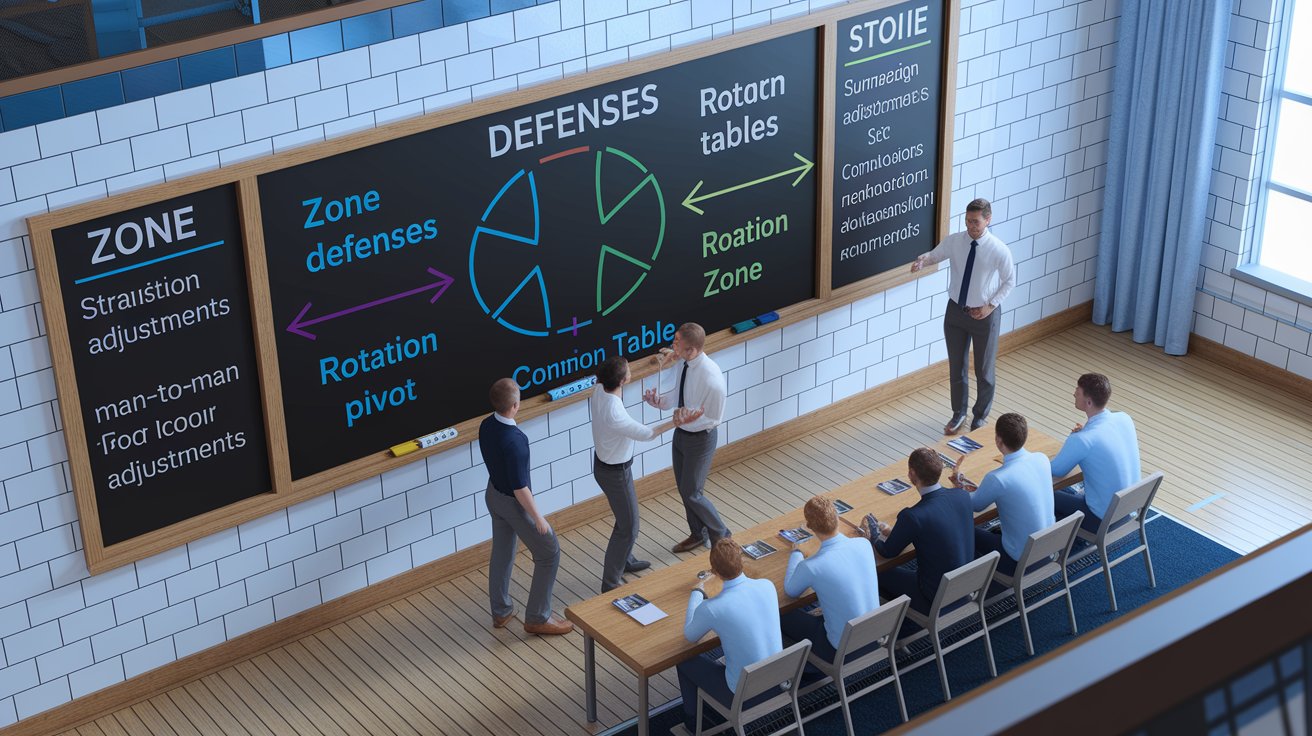
Major injuries force tactical rebuilds mid-series. Coaching staffs have little time to execute them.
When a primary ball-handler exits, offenses slow down. Spacing contracts. Shot creation shifts to players unprepared for that volume. Defensive schemes adjust instantly. Opponents sag off secondary options, load help toward the remaining star, and force role players into decision-making spots they haven’t practiced.
Zone usage increases. Pace drops. Ball-handling responsibilities redistribute in ways that disrupt months of offensive preparation.
Training-staff updates and availability reports guide strategy because they determine whether a player is truly sidelined or might return mid-series. Practice intensity often adjusts due to injury patterns. Teams reduce contact sessions and limit starter minutes to preserve health for high-stakes games. Medical timelines shape rotations. Coaches plan substitution patterns around rehab schedules and conditioning reports. Those decisions often decide whether a team can sustain competitive depth or collapses under the weight of shortened lineups.
Four common coaching adjustments when stars are sidelined:
Shift to zone defenses to mask individual defensive gaps left by injured perimeter defenders. Reduce pace to limit possessions and minimize reliance on backup ball-handlers. Redistribute shot volume toward catch-and-shoot specialists rather than forcing secondary creators into isolation roles. Tighten rotations to seven or eight players, even if it risks fatigue, to maintain defensive communication and offensive continuity.
Measuring the Statistical Impact of Injury Updates in Key NBA Rivalries
Net-rating comparison methods quantify how injuries shift rivalry balance. They measure point differential per 100 possessions before and after a key player exits.
When Tyrese Haliburton tore his Achilles in 2025, Indiana’s assist percentage dropped sharply. Turnover rates increased. The team’s net rating in subsequent games fell by double digits. These metrics isolate the specific value lost. They separate team performance with the injured star on the court from performance without him. They reveal whether backup players can sustain competitive efficiency or whether the system collapses entirely.
Win-probability modeling shifts after injury updates because algorithms recalculate playoff odds based on roster availability, historical on-off splits, and matchup-specific data. When Bradley Beal underwent season-ending hip surgery, the Clippers’ win percentage declined during the post-surgery stretch. Win-probability models adjusted playoff-seed forecasts downward. Real-time updates feed into these models, creating immediate shifts in betting lines, power rankings, and media narratives about championship contention.
Lineup metrics reshape rivalry narratives by showing how specific player combinations perform in head-to-head matchups. When Walker Kessler underwent shoulder surgery, Utah’s defensive rebounding rate fell. Opponents’ field-goal percentage at the rim increased. Those metrics showed exactly how much his rim protection mattered in rivalry games against high-volume interior teams. Lineup data tracks which five-man units succeed in specific matchups. When injuries force new combinations, those metrics often predict series outcomes more accurately than individual player stats.
| Metric | Before Injury | After Injury |
|---|---|---|
| Indiana assist % (Haliburton) | Over 30% of possessions controlled | Sharp decline, increased turnovers |
| Utah defensive rebounding rate (Kessler) | League-average rim protection | Opponent FG% at rim increased |
| Memphis offensive efficiency (Morant) | Top-10 offense when healthy | Outside top 20 in games missed |
Three core analytics tools used to evaluate rivalry impact:
On-off net rating splits to isolate individual player value in head-to-head matchups. Win shares and minutes-lost calculations to estimate total production removed by injury. Lineup-continuity metrics to measure how often starting fives play together and how that correlates with playoff success.
Long-Term Rivalry Consequences of Season-Ending Injury Announcements

Extended absences influence roster construction and rivalry cycles. They force franchises to rethink draft priorities, free-agent targets, and development timelines.
When Damian Lillard suffered a season-ending Achilles tear, it changed Portland’s offensive spacing patterns for the remainder of the season and into the following year. The team had to rebuild ball movement and shot creation around younger, less experienced guards. Bradley Beal’s hip surgery lowered the Clippers’ win percentage and shifted the franchise’s long-range planning, including decisions about roster flexibility and cap management.
Even when teams commit to injured players long-term, as Washington did by exercising Cam Whitmore’s $5.5 million option despite his halted development after just 21 games, the lost time reshapes competitive arcs and delays rivalry rematches.
Medical timelines shape matchup planning because they determine when a rivalry can return to full competitive intensity. When a star is ruled out for the season, opposing teams adjust scouting reports, defensive schemes, and strategic priorities for future seasons. Franchises plan around the injured player’s expected return date. They shift roster moves and trade-deadline decisions to align with when they believe the rivalry will resume at full strength. For insights into how injury timelines reshape broader competitive landscapes, see “Why the 2026 NBA Injury Landscape Could Reshape the Season’s Power Balance”.
Long-range shifts in rivalry momentum occur because extended absences break the continuity that makes rivalries intense. Teams that once met in high-stakes playoff series drift apart in the standings when one side loses its cornerstone player for a full season. By the time the injured star returns, the competitive landscape has shifted. New rivalries have formed. The matchup that once defined playoff narratives becomes a footnote, replaced by fresher, healthier battles.
Media Coverage, Social Reaction, and Narrative Spins Around Rivalry Injury Updates

Media framing shapes fan perception by deciding which injuries are treated as tragic turning points and which are dismissed as routine absences.
Press conferences often hinted at severity before official confirmation. Coaches used careful language like “day-to-day” or “we’ll see” to manage expectations while medical staffs finalized diagnoses. Those hints triggered speculation, debate, and narrative-building that amplified the injury’s perceived impact. A simple sprain became a championship-altering event. Or a serious tear got downplayed until the official announcement forced a narrative reset.
Social reaction and betting movement intensify narratives because fans and bettors respond instantly to injury news. They create feedback loops that shape how the media covers the story. Betting markets shifted instantly after injury reports. Championship odds and series spreads adjusted in real time.
Social media reaction fueled those shifts. Fan theories, highlight clips of the injury moment, and expert speculation spread faster than official team statements. For examples of how media amplified past injury turning points, see “10 freak injuries that flipped NBA Playoff series instantly”.
Five recurring media narratives after major rivalry injuries:
“Championship window slammed shut” when a superstar suffers a season-ending injury during a Finals run. “What if” alternate-history pieces imagining how the series would have unfolded if the player stayed healthy. “Load management debate” articles questioning whether rest protocols could have prevented the injury. “Rivalry forever changed” retrospectives that position the injury as the definitive turning point in a multi-year matchup. “Underdog opportunity” framing that celebrates the less-favored team’s chance to capitalize on the injury.
Comebacks, Rematches, and Rivalries Rekindled After Injury Recoveries
Rivalry intensity changes when key players return. Fans and media treat the rematch as a validation of the original competitive thesis.
When a star who missed a playoff series returns the following season, the narrative resets. The rivalry is framed as incomplete until both sides meet at full strength. The returning player often faces heightened expectations. Every possession gets analyzed for signs of rust or diminished ability. The opponent adjusts defensive schemes to test whether the recovered star can still perform at championship level.
Conditioning and return timelines shape matchup balance because teams reduce minutes during reintegration phases. That limits how much the returning player can impact high-stakes games. Recovery timelines determine when rematches regain competitive intensity. Franchises delay full workloads until conditioning benchmarks are met and medical staffs clear the player for unrestricted play.
Even when a player is officially active, lingering hesitation or reduced explosiveness can tilt a rivalry that once hinged on that player’s dominance.
Fan and media expectations for rivalry rematches center on whether the recovered player can reclaim the role that made the original matchup compelling. When the answer is yes, the rivalry resumes with renewed intensity. When the answer is no, the rivalry fades. It gets replaced by new matchups that better reflect current competitive realities.
Three notable rivalry rematches shaped by player recovery:
Kevin Durant’s return to the Warriors–Cavaliers rivalry dynamic after his 2019 Achilles rupture, shifting to Brooklyn and altering the entire Eastern Conference landscape. Kawhi Leonard’s return after his 2017 ankle injury, which eventually led to his departure from San Antonio and redefined the Spurs’ competitive arc. Derrick Rose’s multiple comeback attempts after his 2012 ACL tear, which never fully restored the Bulls–Heat rivalry intensity that defined the early 2010s.
Final Words
A late-series injury can turn a rivalry on its head — we saw Durant’s Achilles, Kawhi’s ankle and Kyrie’s kneecap flip momentum in real time.
The piece then zoomed out: long-term patterns, game-by-game swing moments, coaching and analytics responses, plus how returns can reignite matchups.
Keeping an eye on Injury updates that shifted the balance in top NBA rivalries gives clear context and keeps fans one step ahead — and it’s a reminder: teams adapt, and many rivalries come back stronger.
FAQ
Q: Why is 69 banned in the NBA?
A: The number 69 isn’t officially banned by the NBA; it’s rarely used because teams and the league avoid sexually suggestive or controversial numbers, and franchises can deny jersey requests.
Q: What was the saddest death in NBA history?
A: There isn’t a single saddest death in NBA history; fans often point to Kobe and Gianna Bryant’s 2020 helicopter crash and earlier tragic losses like Dražen Petrović, Reggie Lewis, and Malik Sealy.
Q: Who has come back from a 3’1 deficit in the NBA?
A: Teams have come back from a 3-1 deficit in the NBA; the most famous example is the 2016 Cleveland Cavaliers, who remain the only team to erase a 3-1 hole in the NBA Finals.
Q: What is the most heated rivalry in the NBA?
A: The most heated rivalry in the NBA is often the Lakers–Celtics rivalry, built on decades of Finals clashes; other intense rivalries include Bulls–Pistons, Celtics–Knicks, and Lakers–Warriors.