
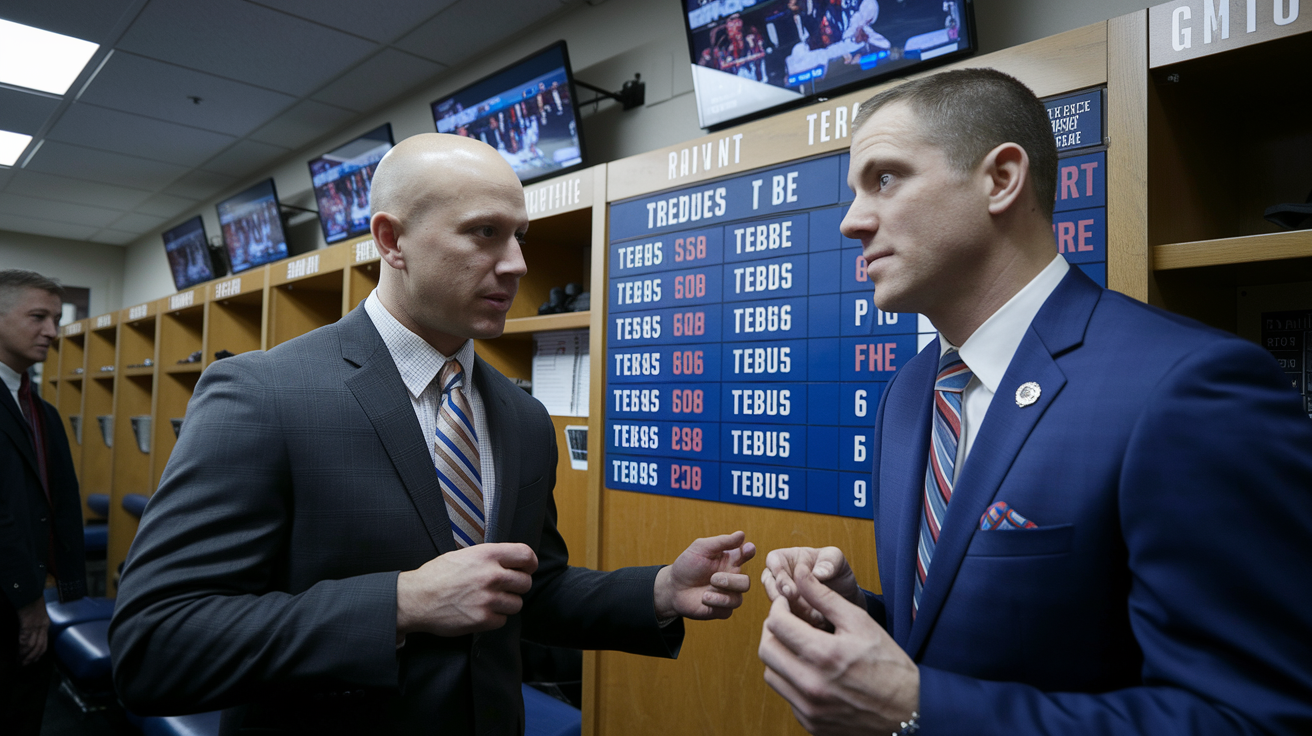

Would you trade a top prospect for two months of elite relief?
When a team is in a playoff push, that’s the question front offices are arguing about at the deadline.
Urgency flips how teams value players: contenders buy short-term performance and accept future cost, while rebuilders protect prospects and picks for years down the line.
This piece shows the concrete differences in assets moved, risk tolerance, and organizational pressure.
Read on to see why the standings, not the player, usually decide whether a trade is smart or reckless.
Core Strategic Differences Between Contenders and Rebuilders
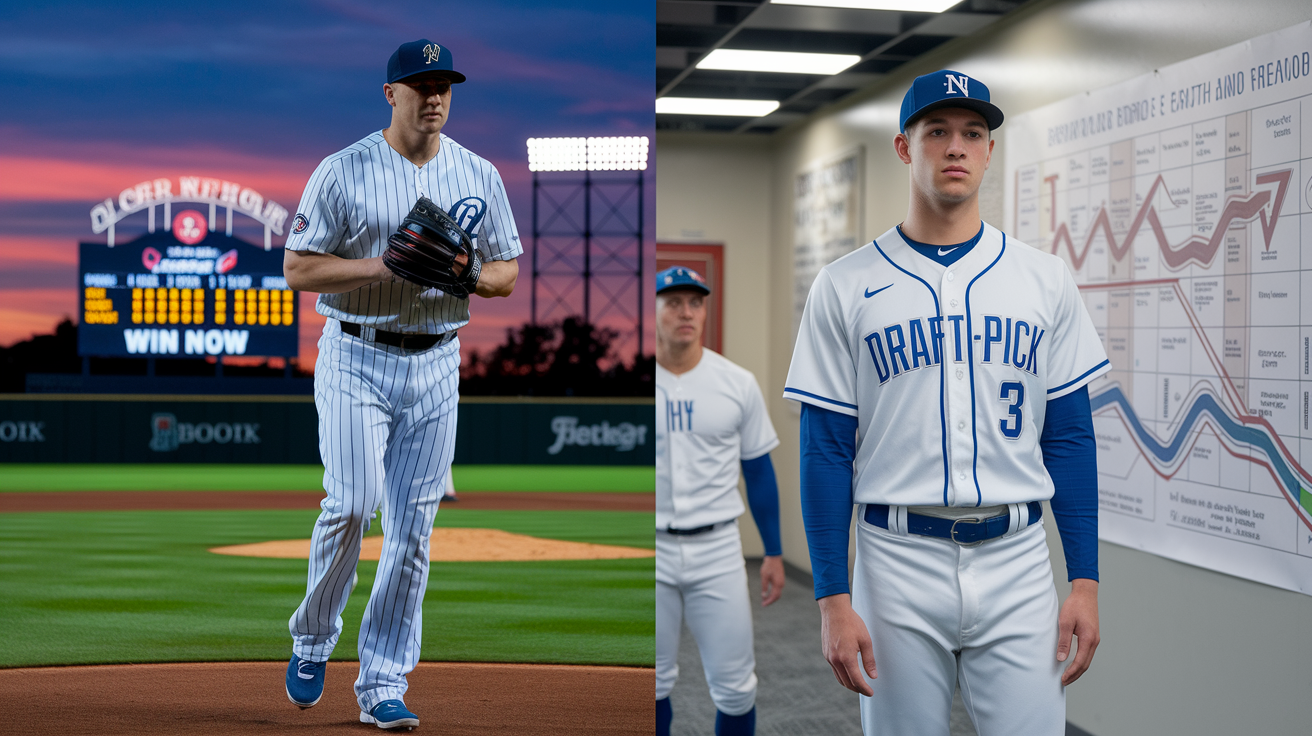
Teams in playoff position ask themselves one question at the deadline: what do we need right now to win. Their competitive window dictates everything. Contenders go after immediate upgrades. Veterans on expiring deals, high-leverage relievers, proven role players who can step in without needing two weeks to adjust. They’ll give up draft picks and prospects who won’t help this season, treating future assets like chips to cash in while the window’s open. Non-contenders? They’re on a totally different clock. Building toward a window two or three years out, so they collect those same picks and prospects. Expiring veterans aren’t roster staples anymore. They’re trade chips.
The split shows up in who each group chases. A contender fighting for playoff positioning in March wants a rental closer who can lock down ninth innings right now, even if he’s gone in free agency four months later. A rebuilder looks at that closer and sees exchange value. How many controllable years can we extract if we move him before he walks for nothing. Win-now teams accept short contracts and limited flexibility down the road. They’re buying performance measured in weeks. Rebuilders want the opposite: team control, cost certainty, long development curves.
Timeline drives everything else. Contenders operate on a two-month planning horizon. The trade has to make sense between now and the end of the postseason. Rebuilders think in draft classes and arbitration clocks. Same transaction, completely different frameworks. What looks like an overpay to a neutral observer makes perfect sense to a team one game out of a playoff spot. What looks like a giveaway to a contender is asset collection for a last-place club.
Key distinctions:
- Rental acquisitions: Contenders pursue proven veterans on expiring contracts. Rebuilders avoid or trade away these guys.
- Prospect priority: Rebuilders treat prospects as untouchable core pieces. Contenders view them as tradeable if the return helps immediately.
- Draft capital: Contenders spend future picks freely. Rebuilders hoard and accumulate them.
- Contract timeline: Contenders accept short deals and luxury-tax penalties. Rebuilders focus on multi-year control and payroll flexibility.
- Urgency level: Contenders operate with win-now desperation. Rebuilders stay patient and refuse to compromise future timelines.
- Player age: Contenders target veteran performance. Rebuilders target youth and upside.
Organizational and Psychological Pressures on Contending Teams

Ownership groups and front offices on contending teams face compounding pressure that rebuilding franchises simply don’t experience. When a team sits in playoff position in late February or early March, every stakeholder starts asking the same thing: did we do enough. Owners who’ve invested heavily in star salaries expect an aggressive push. Failing to acquire help at the deadline feels like wasting a rare competitive window. General managers know that standing pat when a division rival adds a key piece can define how a season gets remembered. Missing the playoffs by one game after refusing to trade a mid-tier prospect? That generates immediate second-guessing. The external scrutiny and internal expectations create a bias toward action, even when the marginal gain from a deal is debatable.
Star players in their prime add another layer of urgency. If a franchise has an MVP-caliber talent signed for three more seasons, the front office knows each of those years represents a fleeting chance to compete at the highest level. Wasting one season of that window feels unacceptable, especially when aging, injury risk, or potential decline loom. Teams become more willing to mortgage future assets because the present opportunity feels both rare and time-limited. “We might not get another shot like this” becomes the operating assumption, and it drives decisions that would seem irrational outside that competitive context.
Fan pressure and media cycles amplify the entire dynamic. Contending markets expect moves. Silence at the deadline gets interpreted as surrender. Front offices know that inaction can erode confidence and season-ticket renewals just as surely as on-field losses.
Asset-Management Differences and Valuation Shifts

The way contenders and rebuilders value the same asset can differ by orders of magnitude. That gap is what makes deadline deals possible. A contending team evaluating a veteran reliever on an expiring contract sees immediate win probability. Each high-leverage out in April and May matters because playoff races are often decided by a single game. That same reliever holds almost no value to a last-place club beyond what he can return in a trade. The rebuilder views him strictly as a vehicle to acquire a prospect or draft pick who might contribute three years from now. Same player, inverse valuation.
Draft picks and prospects represent the starkest philosophical divide. Contenders treat future draft capital as expendable because those picks won’t help this season. The team’s championship window may close before a 2026 second-rounder even reaches the majors. Rebuilders see those same picks as foundational pieces in a multi-year talent pipeline. A playoff-bound team will surrender its top pitching prospect for two months of a proven starter without hesitation if the front office believes that starter is the difference between a wild-card berth and watching October from home. The rebuilder collects that same pitching prospect, accepts the short-term roster downgrade, and banks on the long-term payoff.
Contract structure further separates how each group approaches deals. Contenders will absorb bad money or luxury-tax hits if the player helps immediately. They’re buying performance, not efficiency. Rebuilders won’t take on future salary obligations unless the return in prospects or picks compensates for the financial burden. They actively seek to dump any veteran contract that doesn’t align with their competitive timeline. Expiring deals have high trade value to contenders and zero retention value to rebuilders. Natural deal frameworks.
Typical assets moved by team type:
- Contenders give up: top prospects outside the organization’s immediate plans, future draft picks, lower-tier young players with team control.
- Contenders receive: veteran rentals, proven role players, high-leverage specialists, players who can contribute in the next 60 days.
- Rebuilders give up: expiring veteran contracts, established players who won’t be part of the next competitive core, short-term contributors on affordable deals.
- Rebuilders receive: controllable prospects, draft picks, young players with upside, salary relief and future flexibility.
How Risk Tolerance Changes Based on Standings Position

Playoff odds directly calibrate how much risk a front office will accept at the deadline. Teams sitting comfortably in playoff position with 90-plus percent postseason probability can afford to be aggressive. They’ll trade significant future assets for marginal present-day upgrades because the downside of inaction feels remote. These teams operate with confidence they’re already in, so the question becomes how to optimize once they’re there. That mindset allows big swings on rentals, luxury-tax overages, and the kind of prospect trades that look reckless if the team flames out in the first round but seem justified if they go deep.
Bubble teams sitting between 40 and 60 percent playoff odds face a much more complicated calculation. They’re close enough to taste the postseason but not secure enough to assume they’ll get there. That uncertainty often leads to hesitation or hybrid strategies. Some bubble teams split the difference, making modest adds without surrendering top prospects, hoping to nudge their odds upward without fully committing. Others effectively punt, reasoning that a long-shot playoff berth isn’t worth sacrificing future assets, especially if the path beyond the wild-card round looks difficult. The middle ground is psychologically uncomfortable. It produces the deadline’s most conservative behavior.
Teams well outside playoff contention flip the risk equation entirely. Their tolerance for short-term roster degradation is nearly infinite because losses in April don’t matter when you’re already eliminated. These clubs can move any veteran without worrying about fan backlash or competitive harm. Their risk lies only in undervaluing the players they trade away. The safer move is to extract maximum return and accept whatever lineup holes result. That calculation often leads to the most lopsided-looking deadline deals when a rebuilder trades a struggling veteran who then thrives in a new environment.
Notable Examples of Aggressive Rental Trades

Major League Baseball offers some of the clearest historical examples of playoff urgency driving aggressive rental trades. In 2016, the New York Yankees traded closer Aroldis Chapman to the Chicago Cubs for a package headlined by top prospect Gleyber Torres. The Cubs were chasing their first World Series title in over a century. They valued two months of Chapman’s late-innings dominance more than a future everyday infielder. Chapman posted a 1.01 ERA in the playoffs, saved the final out of Game 7, and the Cubs won the championship. Exactly the kind of outcome that justifies trading a cornerstone prospect for a rental. The urgency of ending a 108-year drought made the deal an organizational imperative, not a gamble.
| Team | Year | Rental Acquired |
|---|---|---|
| Chicago Cubs | 2016 | Aroldis Chapman (closer, 2 months) |
| Toronto Blue Jays | 2015 | Troy Tulowitzki (shortstop, veteran rental) |
| Tampa Bay Lightning | 2020 | Blake Coleman (winger, playoff rental) |
The NHL’s 2020 trade deadline saw the Tampa Bay Lightning mortgage future assets to acquire forward Blake Coleman from the New Jersey Devils, surrendering a first-round pick and a prospect for a gritty, two-way rental winger. Tampa was the Presidents’ Trophy favorite and determined to end years of playoff disappointment. Coleman became a core piece of their bottom-six forward group during the Cup run. The Lightning won back-to-back championships in 2020 and 2021. The urgency of capitalizing on a stacked roster in its prime window justified giving up draft capital that wouldn’t help for years.
The NBA’s deadline dynamics differ because of mid-season roster rules and salary-cap complexity, but urgency still drives rental-style deals. In 2019, the Toronto Raptors traded for Marc Gasol, a veteran center on an expiring contract, giving up a young center and draft assets to upgrade their frontcourt depth for a playoff push. The Raptors won the championship four months later. Gasol’s defensive versatility and playoff experience were cited as key factors. Toronto’s front office understood that their window with Kawhi Leonard was one season, and every asset decision bent toward maximizing that brief opportunity.
Conservative Rebuilder Strategies at the Deadline

Rebuilding franchises approach the trade deadline with patience that borders on stubbornness. They refuse to sacrifice future flexibility for short-term results that won’t move the franchise toward sustainable contention. Their primary goal is asset accumulation. Extracting maximum value from any veteran on an expiring contract, collecting draft picks, and avoiding any deal that surrenders young talent with team control. Where contenders ask “Does this help us win now,” rebuilders ask “Does this improve our situation in two years.” That fundamental reframing changes every calculation.
Expiring contracts become the rebuilder’s most valuable trade chips. A veteran reliever or backup catcher on a one-year deal holds no long-term value to a last-place team, but that same player may be exactly what a contender needs to stabilize a bullpen or fill an injury gap. Rebuilders treat these expiring deals as opportunities to flip short-term roster depth into controllable prospects or future draft picks. Converting a temporary asset into something that aligns with the organization’s timeline. The player leaves in free agency anyway, so trading him three months early in exchange for future value is pure gain.
Draft capital becomes the most coveted return in any rebuilder trade. Picks represent cost-controlled talent with long development runways. Exactly the kind of asset that rebuilding teams prioritize. A second or third-round pick may seem modest to a contender, but to a rebuilder it’s another lottery ticket in the organizational pipeline. Enough of those tickets eventually produce core players. Rebuilders also avoid giving up any young player with remaining team control unless the return is overwhelming, because those players represent the potential foundation of the next competitive roster. The entire strategy revolves around preserving and expanding optionality while the roster resets.
Common rebuilding deadline trade patterns:
- Flipping expiring veterans for prospects: Move any player who won’t be part of the next contending team in exchange for young talent or picks.
- Avoiding long-term salary commitments: Refuse to take on future payroll unless compensated with premium prospects or draft capital.
- Stockpiling draft picks: Treat every trade as an opportunity to add future selections, even lower-round picks that offer inexpensive talent shots.
- Protecting young core players: Keep any player under 26 with team control unless the return dramatically accelerates the rebuild timeline.
Cross-League Case Studies on Deadline Approaches

Major League Baseball’s trade deadline operates under unique constraints that shape both contender and rebuilder behavior. The sport has no salary cap, so contending teams can absorb expensive veteran contracts without violating league rules. But luxury-tax thresholds still create financial pressure points. Playoff-bound clubs typically pursue proven rental starters and high-leverage relievers, often surrendering multiple top-30 organizational prospects for two or three months of performance. Rebuilders focus on flipping any veteran not under long-term control, especially closers and backend starters, because those roles have the highest short-term demand. The lack of a cap allows aggressive financial moves, but the absence of mid-season roster expansion limits how many players a contender can actually integrate.
The NBA’s deadline dynamics are shaped by the salary cap and complex trade rules that require matching contracts in most deals. Contending teams often have limited roster flexibility, so they pursue veteran role players or specialists who fit specific needs. A wing defender, a stretch big, or a backup ball-handler. Because max contracts lock up so much cap space, contenders may only be able to make marginal moves. Rental trades are rare compared to MLB because most valuable players are already on long-term deals. Rebuilders focus on absorbing bad contracts in exchange for draft picks, effectively selling cap space to contenders willing to pay a premium to clear future salary obligations. The cap structure makes every trade a multi-year puzzle, not just a short-term roster swap.
The NHL’s hard salary cap and playoff urgency create a deadline environment where contenders routinely mortgage first-round picks for rental players. Depth forwards, shutdown defensemen, and backup goaltenders. Unlike MLB, where rebuilding teams can retain salary to facilitate deals, NHL rebuilders often lack that flexibility, so trades hinge on cap space and roster fit. Contenders prioritize players with playoff experience and physicality, knowing that postseason hockey rewards depth and defensive responsibility. Rebuilders move any veteran on an expiring deal and chase picks or prospects with high upside, but the hard cap limits the financial creativity available in other leagues.
The NFL’s deadline is the quietest of the major leagues. Constrained by short-term injured reserve rules, complex contract structures, and a one-game playoff format that makes mid-season roster additions less predictive of postseason success. Contending teams occasionally trade for veteran help. A pass rusher, a cornerback, or an offensive lineman. But the short runway between the deadline and season’s end limits integration time. Most NFL deadline deals involve depth players or injured-reserve replacements rather than stars. Rebuilders rarely make major moves because the draft and free agency offer more predictable talent acquisition. Trading key veterans mid-season can destabilize a locker room more dramatically than in other sports.
| League | Key Deadline Constraint | Typical Contender Strategy | Typical Rebuilder Strategy |
|---|---|---|---|
| MLB | No cap; luxury-tax penalties; 40-man roster limits | Acquire rental starters and relievers; absorb salary; trade top prospects | Flip expiring veterans for prospect packages; retain salary to maximize return |
| NBA | Hard cap; salary matching rules; limited roster spots | Add veteran role players; match contracts in multi-team deals; marginal upgrades | Absorb bad contracts for picks; trade veterans with value; stockpile future assets |
| NHL | Hard cap; playoff roster urgency; physical playoff style | Trade picks for rental depth forwards and defensemen; prioritize playoff experience | Move expiring veterans for picks and prospects; chase high-upside young talent |
| NFL | Short integration window; one-game playoff eliminations; draft priority | Acquire depth at key positions; limited star trades; focus on immediate need | Rarely active; prioritize draft capital; avoid mid-season roster disruption |
Final Words
In the action, we laid out why contenders buy short-term help while rebuilders hoard future assets. You saw how timeline, front-office pressure, and asset valuation push teams in different directions.
The case studies, risk examples, and lists showed the practical tradeoffs, rentals, prospects, expiring contracts, and timing matter. That explains midseason moves and who’s likely to be aggressive.
This is how playoff push urgency changes a team’s deadline approach, and it makes the trade deadline one of the best things to watch in sports.
FAQ
Q: How does the new playoff system work?
A: The new playoff system works by expanding the field, adding extra wild-card rounds, and using seed-based brackets where higher seeds get byes or home advantage before advancing to longer series.
Q: Can trades be announced after the deadline?
A: Trades can sometimes be announced after the deadline, but trades must be agreed and processed by the deadline in most leagues; late announcements usually follow completed paperwork, waivers, or conditional deals.
Q: When did the World Series go to 2/3/2 format?
A: The World Series went to a 2/3/2 format in 1924, standardizing the home-road pattern to two games, then three, then two, and it’s remained the usual format with a few exceptions.
Q: How does seeding work for the playoffs?
A: Seeding for the playoffs works by ranking qualified teams by record: division winners get top seeds, wild cards fill lower seeds, and tiebreakers use head-to-head, divisional record, and set criteria.