
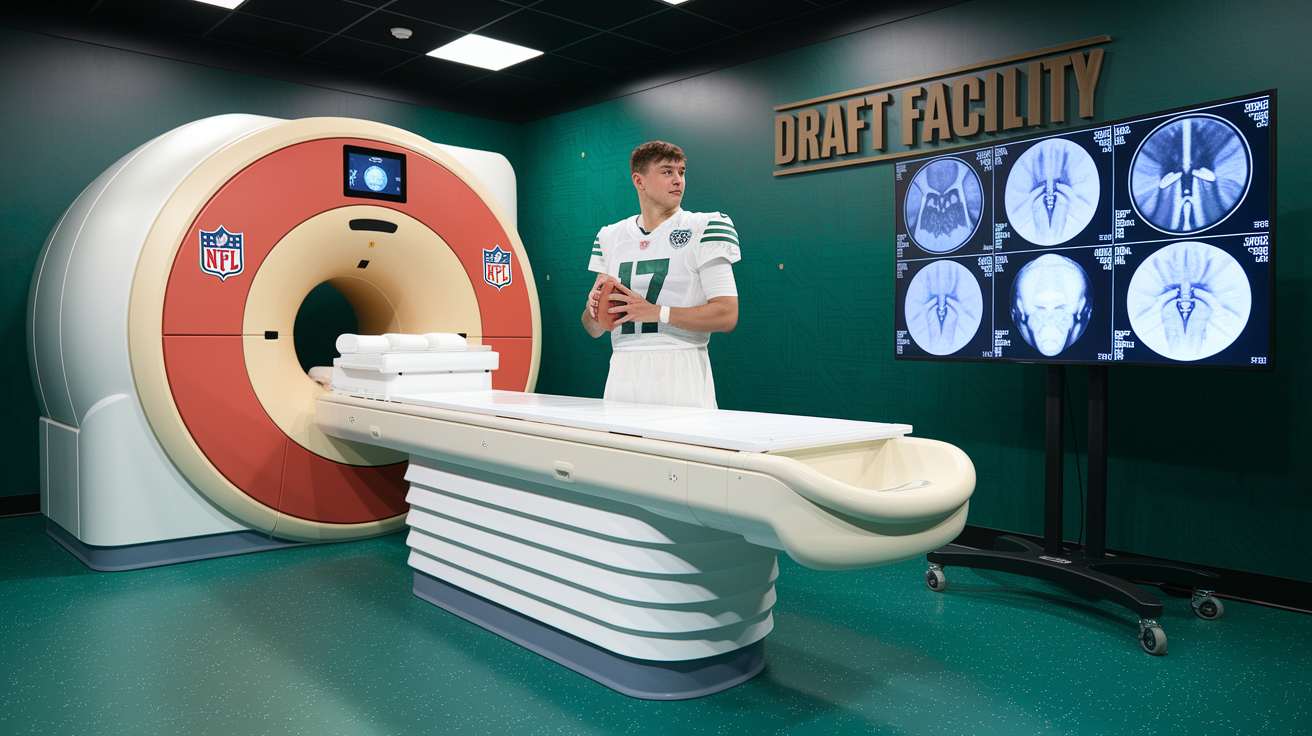

Can a college surgery cost a rookie millions before he ever plays a snap?
Yes, teams often strip guaranteed cash when medicals show trouble.
Rookie deals are slotted by draft spot, but medical reports change how much of that money is truly protected.
This piece breaks down the exact moves teams make: cutting signing bonuses, shifting guarantees to injury-only language, adding vesting and roster bonuses, and using offsets to limit risk.
Read on to see what injury history really does to a rookie’s guaranteed pay and what players can do about it.
How Injury Histories Directly Influence Rookie Contract Guarantee Levels
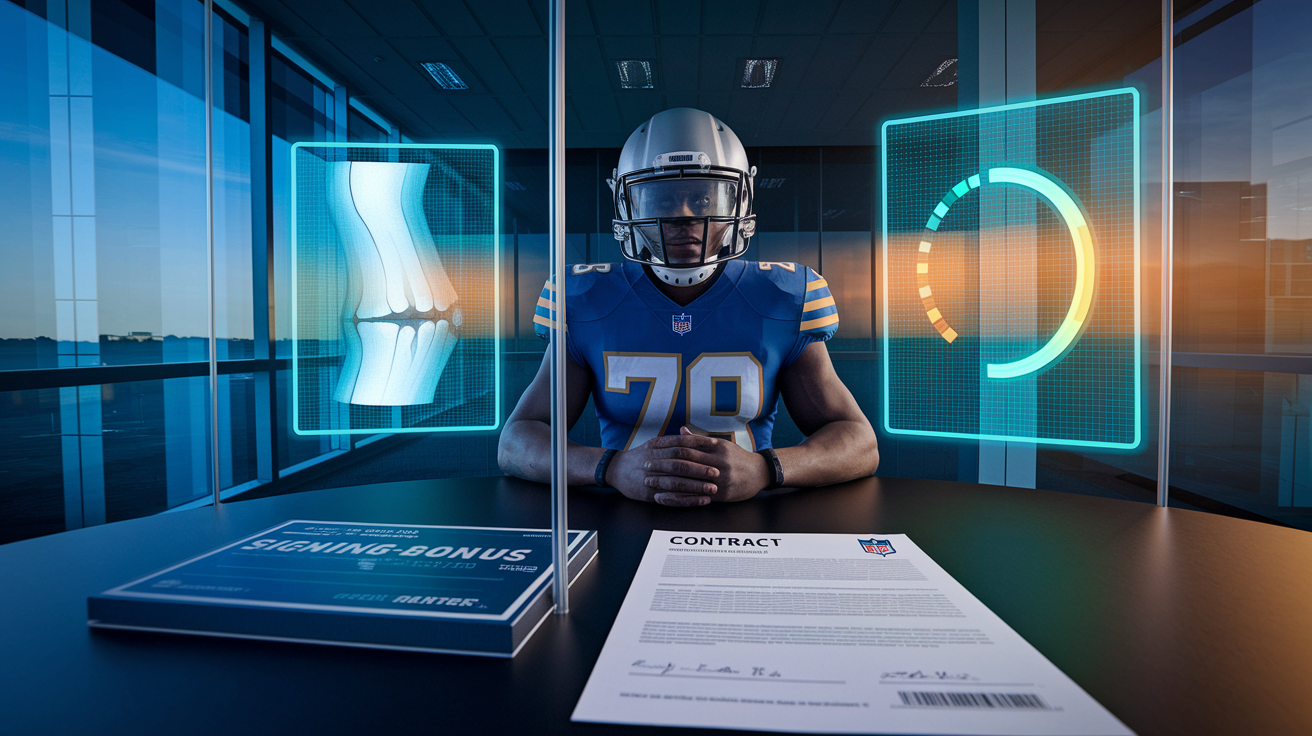
Rookie contracts in the NFL follow slotted CBA scales tied to draft position, but the actual protection inside those deals changes when teams find medical issues during pre-draft evaluations. Teams can’t just slash the total number, but they can rework how much money is actually locked in and what has to happen for it to pay out. A top-10 pick with clean medicals might get a fully protected signing bonus and guaranteed base salaries for two or three years. A guy with chronic joint problems or multiple surgeries? Much of that money gets converted to injury-only guarantees or roster bonuses that only vest if he makes the team on certain dates.
Teams discount guarantees when they see prior surgeries, weird imaging results, long-term durability red flags, or projections showing missed games over the life of the rookie deal. A prospect who needed ACL reconstruction, labrum repair, or microfracture surgery triggers internal models that estimate missed-game probability and re-injury risk. Those models feed directly into how much guaranteed money the front office will commit up front. When a team projects a rookie missing six-plus games in year one or needing follow-up procedures, they usually move chunks of the signing bonus into performance-based vesting clauses or shift guaranteed salary into injury-only language that only pays if the player gets hurt from a new football injury while under contract.
Injury-only guarantees work more as team leverage than player protection. Robert Griffin III’s 2015 benching is the clearest example. Washington picked up his fifth-year option in 2014, which was guaranteed for injury only under the old CBA. Rather than risk activating that guarantee by playing Griffin and exposing him to injury, the team benched him for the whole 2015 season. The guarantee never triggered, and they avoided the full payout. This showed every front office how injury-only language could be used not just as a safety net, but as a way to dodge paying a player whose medical outlook had gotten worse.
Common injury-history factors that reduce rookie guarantees:
- Prior ACL, Achilles, or other major ligament reconstruction within 18 months of the draft
- Chronic joint conditions flagged during Combine or team medical exams (hip labrum tears, bone-on-bone findings, cartilage damage)
- Multiple surgeries on the same body part or history of re-injury
- Abnormal MRI or imaging results showing structural concerns not yet causing symptoms
- Projected recovery timelines that extend into the rookie season or push rehab into training camp
Medical Evaluations at the Draft and Their Role in Guarantee Adjustments
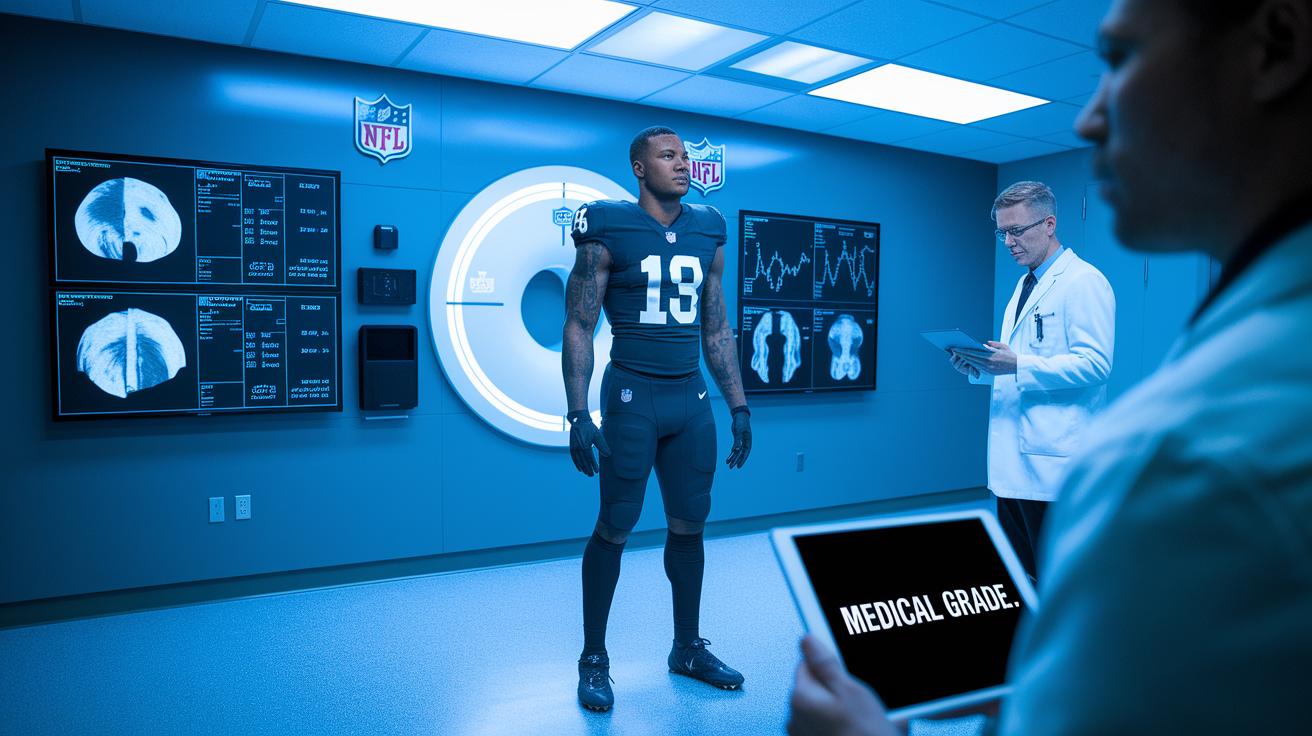
The NFL Combine medical process includes comprehensive MRIs of major joints, orthopedic reviews by independent physicians, biomechanical movement assessments, and detailed surgical-history interviews. Every draft-eligible player gets baseline imaging of knees, shoulders, hips, ankles, and spine, regardless of injury history. Teams receive copies of all imaging and written reports from independent examiners, then run their own follow-up exams during private visits and pro days. If a prospect’s had surgery, teams request operative notes, post-op imaging, and functional testing results. Biomechanics evaluations measure gait patterns, joint load distribution, and movement asymmetries that point to compensatory mechanics or elevated risk of future injury. These findings get compiled into a medical grade for each prospect, and that grade becomes a direct input into contract-guarantee structuring.
Chronic issues and surgical histories get flagged with specific risk codes, and teams adjust guarantees downward when a prospect’s medical file suggests elevated probability of missed time or career-shortening injury. A player who tore his ACL in college and returned to play a full season may still see reduced guarantees if post-surgical imaging shows early cartilage wear or if range-of-motion testing reveals deficits. Teams use internal actuarial models to estimate career length and total games played, then tie those projections to how much guaranteed money they’re willing to commit. The gap between a clean medical file and a flagged one can mean the difference between three years of fully guaranteed salary and a deal where only the signing bonus is protected.
| Issue Type | Common Finding | Typical Contract Impact |
|---|---|---|
| Ligament reconstruction (ACL, MCL, Achilles) | MRI shows scar tissue, range-of-motion deficit, or early cartilage wear | Guaranteed salary reduced; injury-only language added to year-two base |
| Hip/shoulder labrum tear | Imaging reveals partial tear or post-repair abnormality | Signing bonus reduced 10–20%; roster bonus replaces guaranteed base in year two |
| Chronic ankle instability | History of multiple sprains; imaging shows ligament laxity | Injury-only guarantee replaces full guarantee on year-one salary |
| Microfracture or cartilage repair | MRI shows graft integration concerns or bone edema | Signing bonus cut by 15–30%; vesting schedule tied to games played |
| Spinal abnormalities (stenosis, disc issues) | Imaging shows structural narrowing or bulging discs | Full guarantee withheld; injury-only language on all future years |
How Risk-Based Adjustments Alter Signing Bonus and Guaranteed Salary Structure

Signing bonuses for rookies are usually fixed by draft slot under the CBA, but teams can reduce the bonus or shift portions into roster bonuses when medical concerns pop up. A top-15 pick with a clean file might receive 80 percent of total contract value as a signing bonus, while a prospect with flagged imaging or surgical history might see that figure drop to 60 percent, with the difference moved into year-two or year-three roster bonuses that only pay if the player’s on the active roster on a specific date. Teams use this to keep flexibility. If the medical issue worsens or the player can’t stay healthy, the team can release him before the roster bonus date and avoid the financial commitment. The rookie still gets slotted total value on paper, but the actual protection’s lower.
Teams move money from guaranteed salary to vesting guarantees triggered by being on the roster for specific dates, usually the first day of the new league year or the start of training camp. A prospect projected to miss significant time in year one due to rehab might see his year-one base salary converted to a non-guaranteed figure with a March vesting date in year two. If he makes the roster and stays healthy, the guarantee converts. If he’s cut or placed on injured reserve with a designation that ends his season, the vesting never occurs and the team saves the money. This lets the team defer financial risk until the player proves he can return to form, while the player loses the security of knowing the money’s protected regardless of health outcome.
Injury-only guarantees act as team protection mechanisms and reduce a rookie’s upfront financial certainty. Unlike full guarantees, which pay even if a player’s cut for performance or off-field reasons, injury-only guarantees only trigger if the player fails a physical due to a football-related injury sustained while under contract. Alex Smith’s 2018 leg injury triggered $16,000,000 in injury-only guarantees on his 2020 salary, one of the rare cases where the mechanism actually paid. More commonly, teams use injury-only language to create benching incentives. A recent case saw a quarterback benched in part because $23,000,000 of his 2025 salary was injury-only guaranteed. The team removed him from game action to avoid the risk of an injury that would trigger the full amount.
Four common ways teams modify signing bonuses or guarantees for medical-risk rookies:
- Convert portions of the signing bonus into roster bonuses due on the fifth day of the league year in year two or three, allowing the team to release the player before the bonus date if medical issues persist.
- Replace fully guaranteed base salary with injury-only guaranteed salary, shifting financial risk back to the player and creating benching incentives if the injury history worsens.
- Add vesting clauses that convert non-guaranteed salary to guaranteed only if the player’s on the active roster for a minimum number of games in the prior season.
- Reduce the total signing bonus by 10 to 30 percent and backload the contract with performance escalators tied to games played or starts, requiring the player to prove durability before unlocking deferred money.
Injury-Related Contract Clauses: Offsets, Waivers, and Protection Mechanisms

Offset language in rookie contracts reduces a team’s financial obligation if a player’s released and signs with another team before his original contract expires. Most rookie deals include offset clauses, meaning if a team cuts a player with remaining guaranteed money and that player signs elsewhere, the new salary offsets what the old team owes. For a rookie with medical red flags, offset language becomes more aggressive. Teams may negotiate offsets that apply not just to new NFL contracts but also to disability insurance payouts or settlement agreements. A prospect who suffered a serious college injury and carries loss-of-value insurance might see contract language requiring him to offset any insurance payout against remaining guaranteed salary, effectively reducing what the team must pay if the injury recurs and ends his career early.
Injury waivers, injury settlements, and roster protection clauses get used to manage financial exposure when a rookie’s medical history suggests elevated risk. An injury waiver is a clause requiring the player to waive future injury-guarantee claims in exchange for roster security or contract restructuring. Colin Kaepernick waived his injury guarantee on his 2017 salary in 2016 to secure a path to free agency and avoid being benched for the remainder of that season. Injury settlements are negotiated payouts agreed upon when a player can’t pass a physical and the team wants to terminate the contract without triggering the full guarantee. Roster protection clauses guarantee a player will remain on the 53-man roster for a set number of weeks or games, but those clauses are rare in rookie deals and almost never granted to prospects with significant injury histories. According to “What Use Do Injury Guarantees Have?”, injury-only triggers are more often used by teams to avoid paying guarantees by benching players before injuries can occur, rather than serving as meaningful protection for the player.
Four injury-related clauses that adjust guaranteed money:
- Offset provisions that reduce team obligation by the amount a released player earns on a new deal or collects from insurance
- Injury-guarantee waiver clauses requiring the player to surrender injury-only protections in exchange for roster spot or contract extension
- Physical-failure settlement language that caps payout at a negotiated percentage of remaining guarantees if the player can’t pass a team physical
- Vesting triggers tied to active-roster games played, converting non-guaranteed salary to guaranteed only after proving durability over a full season
Case Studies: Rookie Guarantees Reduced Due to Injury History

Prospect With Major College Injury Sliding in Guarantees
A top draft quarterback suffered a serious knee injury during his final college season, described as potentially sidelining him for twelve months or more. Teams flagged microfracture concerns and abnormal cartilage imaging during Combine medicals, and the player’s draft stock fell from projected top-five to the mid-first round. His rookie contract included a signing bonus reduced by roughly 20 percent compared to the slot value for his actual draft position, with the difference moved into a year-three roster bonus due five days into the 2027 league year. His year-one base salary was converted to injury-only guaranteed language, meaning the team could release him for performance or durability concerns without triggering the guarantee. The player accepted the structure because it preserved total contract value on paper, but the actual financial protection was significantly lower than a clean-file prospect at the same pick would’ve received.
Rookie Who Failed Portions of Medical Exams
A linebacker with a history of multiple shoulder surgeries and chronic labrum issues underwent MRI and range-of-motion testing at the Combine that revealed structural abnormalities and limited external rotation. Multiple teams removed him from their draft boards entirely, and the team that eventually selected him in the second round restructured his deal to include conditional guarantees tied to passing follow-up physicals in each of the first three offseasons. His signing bonus was cut by 25 percent, with the removed amount placed into performance-based escalators that only paid if he started at least twelve games in year two. The team also added language requiring him to submit to independent medical exams every six months, with the right to convert any remaining guaranteed salary to injury-only if imaging showed deterioration. He played two seasons before being released, and none of the conditional guarantees ever vested.
Fifth-Year Option Medical Example
Robert Griffin III’s 2015 benching remains the definitive case study of how injury-only guarantees reduce earning security. Washington picked up his fifth-year option in May 2014, which under the 2011 CBA was guaranteed for injury only. Griffin had suffered multiple knee injuries and shown declining mobility, and the team faced a decision: play him and risk activating the guarantee if he suffered another injury, or bench him to avoid the financial exposure. The team benched Griffin for the entire 2015 season despite him being medically cleared to play. The injury-only guarantee never triggered, the team avoided the full payout, and Griffin was released in 2016. This case became a blueprint for how teams use injury-only language not as player protection, but as a mechanism to avoid paying players whose medical outlook has deteriorated.
Insurance and Risk-Mitigation Tools for High-Risk Rookies

Draft-eligible players, rookies on four-year contracts, and free agents can purchase disability and loss-of-value insurance to compensate for reduced rookie guarantees caused by injury history or medical red flags. Loss-of-value policies pay a preset benefit if a player’s draft position falls below a projected slot due to injury, and permanent total disability policies protect non-guaranteed future earnings if a career-ending injury occurs during the coverage period. According to “Protecting Your NFL Draft Eligible and Professional Athletes”, these policies cover off-season workouts, preseason, regular season, NFL Combine activities, and pro days. A prospect with ACL reconstruction history might buy a $5,000,000 loss-of-value policy with a trigger if he falls past pick 20, and a $10,000,000 disability policy covering the first two years of his rookie deal. Premiums for high-risk players can reach six figures, but the coverage replaces guarantees the team withheld due to medical concerns.
Teams evaluate risk internally and sometimes use insurance to offset financial exposure when signing a medical-red-flag rookie. A team might require a prospect to carry disability insurance as a condition of the contract, with the policy beneficiary structured to reimburse the team for guaranteed money paid if the player suffers a career-ending injury in year one. This shifts long-tail risk to the insurance market and allows the team to offer slightly higher guarantees than internal risk models would otherwise support. Coverage gets placed through Excess & Surplus Lines markets, including Lloyd’s of London, and requires proper state licensing and regulatory compliance. Not all products are available in all U.S. jurisdictions, and financial strength ratings can change, so teams and players must re-evaluate carriers before binding coverage.
| Policy Type | Coverage Scope | Beneficiary |
|---|---|---|
| Loss of Value Insurance | Pays benefit if draft position falls below projected slot due to injury | Player |
| Permanent Total Disability | Protects non-guaranteed future earnings if career-ending injury occurs | Player |
| High-Limit Disability (Combine/Pro-Day) | Covers injuries during pre-draft workouts, Combine, and team visits | Player |
| Team-Required Disability | Reimburses team for guaranteed money if player suffers career-ending injury in year one | Team |
| Draft Protection (College Athletes) | Covers loss of NFL earnings if injury in final college season ends pro career | Player |
Salary Cap and CBA Rules Governing Rookie Guarantee Adjustments

Signing bonuses for rookies are prorated evenly across the length of the contract for salary cap accounting purposes, while guaranteed base salaries count in full against the cap in the year they’re paid. A four-year rookie deal with a $12,000,000 signing bonus creates a $3,000,000 annual cap charge for the bonus, plus the full base salary for each season. Teams use this to manage cap flexibility. By converting guaranteed salary into signing-bonus advances, they can spread the cap hit over multiple years and create room in year one. When a prospect has medical red flags, teams often reduce the signing bonus and shift money into non-guaranteed base salaries or roster bonuses, which don’t accelerate against the cap if the player’s released before the bonus date. This lets the team preserve cap space and financial flexibility if the injury concerns prove valid.
Vesting dates and injury-only language interact with cap rules to create strategic decision points for teams managing medical-risk rookies. A rookie deal might include a year-two base salary that becomes fully guaranteed only if the player’s on the roster on the fifth day of the new league year. If the player suffered a setback or failed to prove durability in year one, the team can release him before that date and avoid the cap charge entirely. Injury-only guarantees don’t create cap liability until they trigger, meaning the team can carry the player on the roster without committing cap space unless an injury actually occurs. This gives teams maximum flexibility to manage medical busts without long-term cap consequences, but it leaves the player with minimal financial security.
The 2011 CBA reshaped rookie guarantees by introducing slotted contracts and the fifth-year option for first-round picks, which was originally guaranteed for injury only. That structure created the incentive for teams to bench players like Robert Griffin III to avoid activating the guarantee. Recent CBA amendments converted fifth-year options to fully guaranteed, removing the benching incentive for that specific mechanism, but injury-only language remains common throughout the rest of rookie contracts. Teams now use injury-only guarantees on base salaries in years two and three, and those clauses still create the same perverse incentive. Benching a player to avoid injury prevents the guarantee from triggering, as evidenced by recent cases where quarterbacks were benched in part because tens of millions in injury-only guarantees were at risk of activation.
Four key CBA rules affecting rookie guarantees:
- Signing bonuses are prorated evenly for cap purposes, allowing teams to spread financial impact and create year-one cap relief by converting salary to bonus.
- Fifth-year options for first-round picks are now fully guaranteed under recent CBA amendments, removing the injury-only benching incentive that affected earlier draft classes.
- Injury-only guarantees don’t create cap liability until they trigger, allowing teams to carry medical-risk rookies without committing cap space unless an injury occurs.
- Offset language is standard in rookie contracts and allows teams to reduce guaranteed obligations by the amount a released player earns on a new deal, shifting financial risk back to the player.
Final Words
in the action we broke down how pre-draft medicals, combine testing, and CBA rules shape rookie guarantees. We explained signing-bonus shifts, injury-only triggers, offset language, case studies (RGIII, Jaylon Smith), and insurance options teams and players use.
Bottom line: understanding how injury history affects rookie contract guarantees helps set realistic expectations for rookies, agents, and teams. If you follow this, you’ll spot why a draft slide or a benching can be about money, not just health—and that practical protections exist to soften the blow.
FAQ
Q: Are NFL rookie contracts guaranteed for injury? Is a rookie contract guaranteed?
A: Rookie contracts are partly guaranteed by the CBA, but injury guarantees vary. Teams give signing bonuses and some guaranteed salary, while injury-only clauses or vesting conditions can limit payouts after medical reviews.
Q: How much will Shedeur Sanders make on a rookie contract?
A: Shedeur Sanders’ rookie pay depends on his exact draft slot; the NFL rookie scale sets total value and guarantees by pick. Look for the team’s announced contract for the precise signing bonus and guaranteed amount.
Q: How do injuries affect NFL contracts?
A: Injuries reduce guaranteed money, push pay into roster-vesting or performance triggers, shrink signing bonuses, and lead teams to add injury-only clauses or bench players to avoid guarantee payouts.