

Think 12 college sacks means an instant NFL starter? Not so fast.
Scheme decides what an edge gets coached, asked to do, and practices every day.
That shapes which traits, like bend, hand work and zone drops, actually develop before the draft.
This piece shows how college alignments and duties change what scouts should value.
We’ll break down which reps translate, which stats lie, and how to map a college rusher into a 3-4, 4-3 or hybrid pro role.
Read on to learn what truly predicts pro fit.
How College Defensive Systems Shape Early NFL Edge-Rusher Projection
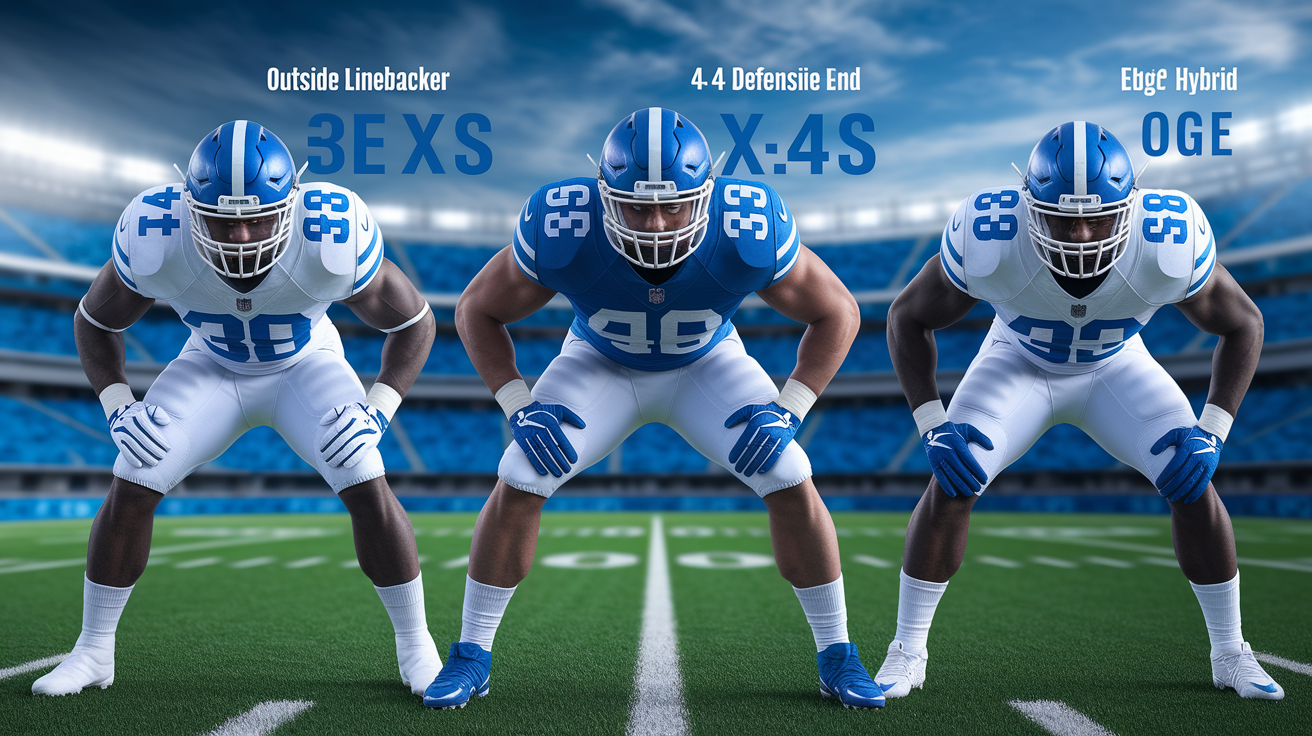
Scheme context defines how college defenders get coached, aligned, and tasked. That directly shapes which traits mature and which stay underdeveloped by draft day. PFF research confirms college pass-rush grades correlate 0.69 with NFL grades, while college pressures correlate 0.60 with NFL pressures. Those numbers are strong but not perfect. The gap between college and pro performance isn’t just physical development. It’s often exposure. Players from 3–4 bases may never learn to play in a stance. A 4–3 end might never drop into zone coverage or execute contain versus run-pass options. Hybrid fronts expose defenders to wider sets of responsibilities, similar to the “entropy” effect documented in running-back scheme translation, where balanced exposure to diverse concepts predicts smoother NFL adjustments.
College defensive coordinators vary widely in how they deploy edge rushers. Traditional 3–4 outside linebackers play more two-point stance, see coverage snaps, and must read keys before attacking. A 4–3 defensive end aligns in a three-point stance, fires off the snap, and plays downhill into run gaps. Hybrid systems blur these roles, asking edges to move inside on passing downs or drop as quasi-safeties on third down. That diversity matters. Scouts who ignore scheme context risk misreading production. A player with 12 sacks from a pure pass-rush alignment isn’t the same as one who posted 8 sacks while also setting the edge and covering tight ends.
From 2018 to present, NCAA run-game usage shifted. Zone blocking declined roughly 12 percent at the FBS level, meaning edges faced more pulling guards, varied gap looks, and disguised run fronts. Those changes force college defenders to process faster and handle wider responsibilities. Players accustomed to static reads against Inside Zone now must read Counter and Power schemes that create new angles and force quicker reactions. That evolution affects which traits scouts can reliably project.
Five scheme exposures most predictive for NFL translation:
Wide alignment experience (7‑tech, 9‑tech) that demands lateral speed and open-field tackling. Two-point stance reps versus three-point, showing stance versatility and coverage comfort. Regular stunt and twist participation, proving coordination and ability to process movement concepts. Run-fit variety against Gap, Zone, and Power schemes instead of one predictable blocking style. Inside rush repetitions on third down, testing power and ability to win versus guards.
College Scheme Traits That Transfer Most Clearly to Pro Edge Performance

Winning the first three steps off the snap is universal. Timing the snap, exploding forward, and closing distance before the tackle can reset is the single most repeatable college-to-pro trait. Scheme doesn’t change physics. An edge who consistently fires off the ball faster than the tackle will generate pressure at any level. That first-step quickness appears in all systems (3–4, 4–3, hybrid) and NFL coordinators design pressures around players who can win early. The difference between a pressure and a coverage sack often comes down to a half-step gained in the first yard.
Bend and the ability to flatten to the quarterback separate real corners from straight-line speed rushers. Wide college alignments (9‑tech in a 4–3 Under, for example) force edges to turn tight arcs without losing speed or balance. Players who can dip the shoulder, sink the hips, and maintain acceleration around the edge translate immediately. Edges who run past the pocket or round the corner too wide give quarterbacks a clean step-up lane. That flaw doesn’t improve in the pros. NFL tackles are longer and better at steering rushers upfield, so college corners who already show functional bend have a clear head start.
Hand usage and move variety are technical traits that require coaching and repetition. Violent, precise swipes, chops, clubs, and rips allow an edge to disengage from tackles mid-rush. A prospect with multiple counters (an initial speed move into a spin or club-rip) can adjust when the first move is stopped. Single-move college stars often hit a ceiling against NFL tackles who’ve seen every counter and have independent hands to re-punch. The best college edges deploy varied sequences within one rush, setting up tackles over a series rather than relying on one explosive win.
Speed-to-power conversion is the ability to turn momentum into a bull rush or anchor at the point of attack. An edge who runs the arc but can also knife inside and drive a tackle backward forces offensive coordinators to commit extra help. That versatility shows up in college when a rusher wins with a speed move early, then counters with power later in the game after the tackle oversets. NFL tackles adjust faster, so edges who can’t credibly threaten power become one-dimensional and easier to game-plan against.
Evaluating Fit for NFL Roles in 3–4, 4–3, and Hybrid Fronts
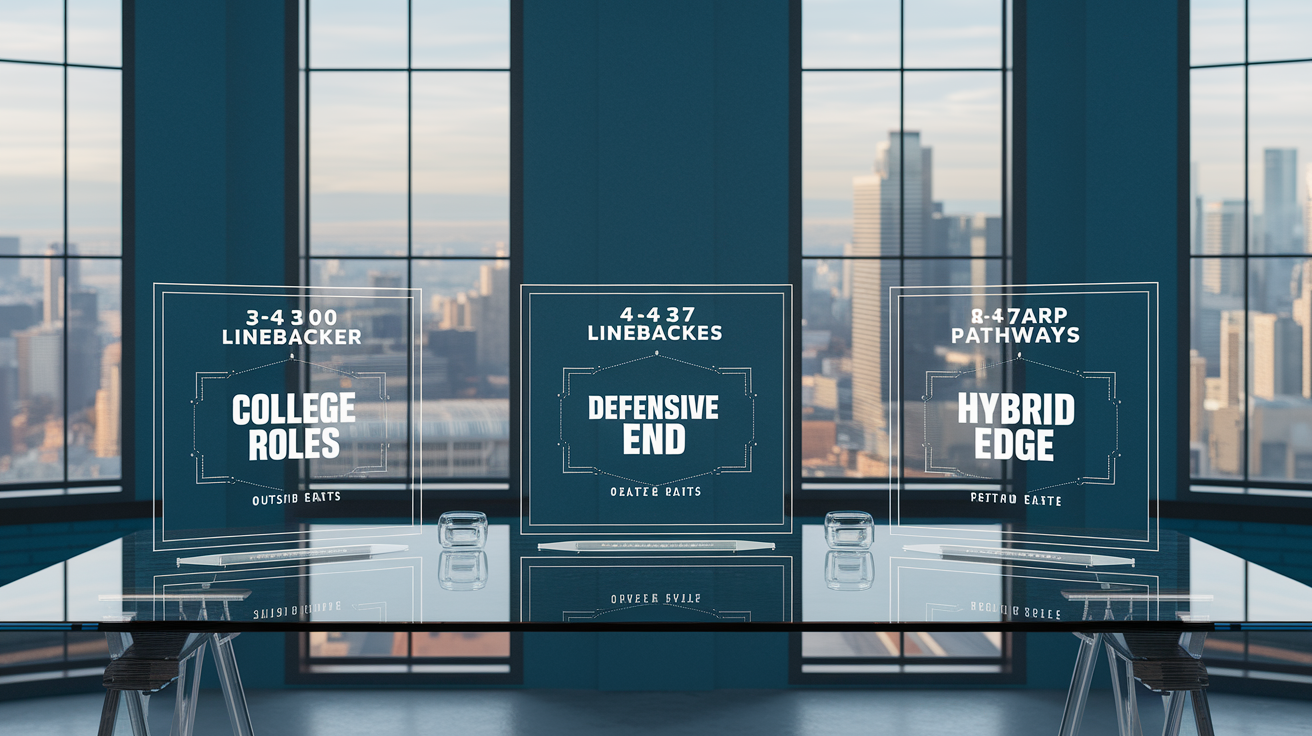
Scouts mapping college roles to NFL fronts start by identifying which technical traits and responsibilities a prospect has already mastered. A 3–4 outside linebacker must cover intermediate zones, set the edge versus outside runs, and rush from two-point alignments. That role rewards lateral agility, play recognition, and the ability to sink hips into coverage without losing explosiveness as a rusher. A 4–3 defensive end plays with a hand in the dirt, fires upfield on the snap, and anchors against down blocks and double teams. That role demands power at the point of attack, gap discipline, and the ability to disengage from in-line tight ends. Hybrid EDGE defenders move across the front (sometimes inside as a 3‑tech on third down, sometimes walked out over a slot) requiring scheme versatility and mental processing to handle multiple alignment cues.
NFL coordinators adjust fronts independent of a player’s college usage. Length, functional strength, and the ability to rush from multiple stances matter more than a label. A college 4–3 end with coverage skills can convert to a 3–4 outside linebacker if he shows hip fluidity and zone drops on tape. A 3–4 rusher with plus power and a consistent three-point stance may slide into a 4–3 end role. The best prospects offer multiple answers, letting coordinators move them around without loss of effectiveness.
| Role | Required Traits | Scheme Advantages |
|---|---|---|
| 3–4 Outside Linebacker | Two-point stance comfort, zone-drop ability, lateral agility, play recognition, edge-setting discipline | Flexible usage in sub-packages, easier to disguise pre-snap, can add coverage without substitution |
| 4–3 Defensive End | Three-point stance explosion, power at point of attack, ability to two-gap vs run, gap integrity, length to fight off tight ends | Predictable role clarity, consistent hand-in-dirt alignment, plays downhill with less pre-snap movement |
| Hybrid EDGE | Stance versatility, ability to rush inside on passing downs, mental processing for multiple fronts, functional strength and speed | Maximizes matchups, can move to create one-on-ones, difficult for offenses to game-plan against one alignment |
How Production Metrics Translate: Grades, Pressures, and Win Rates

College pass-rush grades predict NFL performance more reliably than raw sack totals. PFF’s correlation of 0.69 between college and NFL grades means roughly half the variance in pro pass-rush performance (given at least 250 NFL snaps) is explained by college grades alone. Pressures correlate at 0.60, and college grades correlate with NFL sacks at 0.69, all stronger than the 0.48 correlation of college sacks to NFL sacks. That gap reveals an important truth. Sacks are noisy outcomes influenced by coverage, quarterback movement, and opportunity, while grades and pressures capture process and consistency. Scouts who lean too hard on sack totals risk drafting players whose production came from scheme, competition level, or situational luck rather than translatable traits.
Combine metrics classify draft outcomes with 77.3 percent accuracy and an R-squared of 0.621 when predicting draft position. Broad jump and 40-yard dash time carry the most weight among measurables, but adding a prospect’s PFF college grade more than doubled the predictive R-squared for both draft pick and projected NFL grade. That improvement confirms what film study suggests. Athleticism opens the door, but technical execution and consistency determine who succeeds. Carl Lawson’s college tape showed elite grades despite falling to the fourth round in 2017. As a rookie he posted 59 total pressures and an 80.6 PFF grade in limited snaps, an example of production metrics correctly flagging NFL upside that traditional scouting undervalued.
Four translation metrics to prioritize when projecting college edges:
Per-snap PFF pass-rush grade over the final two college seasons, weighted toward Power Five or top-tier competition. Pressure rate (pressures per pass-rush snap) versus the same competition tier, isolating consistency from volume. Pass-rush win rate at multiple steps (2.5 seconds is the NFL standard, college charting should mirror that threshold where available). Combine explosiveness (broad jump, vertical) cross-referenced with on-field bend and change-of-direction on tape to confirm athletic traits translate to technique.
Run-Defense Responsibilities and Pro-Level Technique Expansion

Setting a firm edge is the baseline responsibility every NFL edge must handle, regardless of alignment or scheme. College defenders who overcommit to penetration, lose outside leverage, or fail to read backfield flow create cutback lanes and explosive runs. Pro offensive coordinators attack edges with misdirection, pullers, and zone-stretch concepts designed to test discipline. An edge who chases the first key without locating the ball will be out of position when the back cuts inside. That mistake is magnified in the NFL, where running backs process faster and offensive lines execute more complex combo blocks and second-level releases.
Gap integrity expectations are stricter at the pro level. A 4–3 end must hold the C gap versus down blocks and double teams, absorbing contact without surrendering ground. A 3–4 outside linebacker in a two-gap system may be responsible for both C and D gaps depending on the front call and offensive formation. Edges who play too far upfield lose the ability to squeeze runs back inside, and those who sit passively get washed down the line. The technique balance (attack the blocker’s outside shoulder, keep the inside arm free, locate the ball) requires repetition and coaching that not all college programs emphasize equally.
Pad level and leverage fundamentals determine who controls the point of attack. NFL tight ends and tackles are longer and stronger than most college opponents, so an edge who plays too tall will get driven backward or hooked outside. Winning with lower pad level, independent hands to shed blocks, and eyes on the backfield are teachable traits, but they must already be present on college tape. Edges who rely solely on athleticism to clean up plays downfield often struggle when asked to anchor and set edges consistently in the pros.
Mental Processing, Play Recognition, and Adapting to Pro Tackles

Successful edges rush with a plan. That means studying tackle tendencies, identifying protection weaknesses, and setting up counters over a series of snaps. A college rusher who wins with the same speed move every time will face NFL tackles who adjust mid-game, overcommitting to the edge and forcing the rusher to counter inside or with power. The best prospects already show that awareness on tape, using a speed move early, then hitting the same tackle with a club-rip or spin later when the set widens. They recognize when a tackle is leaning, when a guard is sliding late in protection, and when a screen is developing based on offensive line body language.
Play recognition directly improves sack-finish rates and reduces blown assignments. An edge who reads run too slowly will be late setting the edge. An edge who bites on play-action will vacate rush lanes or drop into coverage zones that are already covered. NFL offenses use more motion, shifts, and window dressing than most college systems, so processing speed and calm reactions under information overload separate future starters from special-teams contributors. Edges who can identify formation keys, track backfield action, and maintain gap discipline without hesitation translate faster.
Pro tackles use more refined hand sets and independent hands, meaning they can re-punch a rusher mid-move or redirect momentum without losing balance. College edges accustomed to winning with one swipe or chop will find NFL tackles countering those moves and re-establishing position before the quarterback’s drop is complete. Adapting requires faster hands, multiple counter moves within one rush, and the ability to process a tackle’s hand placement and weight distribution in real time. That skill set is partly innate but also reflects hundreds of practice reps against quality competition, another reason why edges from top-tier college programs with experienced offensive lines often project more reliably.
Conditioning, Strength, and Physical Development for NFL Edges

NFL edges must maintain pressure over longer drives and chase plays 10 to 15 yards downfield without losing effort. College rotations are deeper and series shorter, so many prospects have never played 60-plus snaps in a game at full effort. The jump to an NFL workload (especially for rookies fighting for roles) tests conditioning and technique retention under fatigue. Edges who lose pad level, round rushes, or miss tackles late in games show a conditioning gap that must be closed before they can handle starter snaps.
Strength programs for elite edges focus on functional power that translates to holding up at the point of attack, shedding blockers, and converting speed to bull rushes. Length and frame matter because they determine how much mass a player can carry without losing explosiveness. A 6’3″ edge with short arms will struggle to keep tackles off his chest. A 6’5″ edge with 34-inch arms can control space and disengage more easily. Weight and body composition targets vary by scheme (3–4 outside linebackers often play leaner, 245–260 pounds, for lateral movement, while 4–3 ends may carry 260–275 to anchor against double teams) but all must show the ability to add or maintain strength without sacrificing speed.
Technique retention under fatigue is the clearest sign of professional readiness. An edge who maintains hand placement, bend, and gap integrity in the fourth quarter of a college game will handle the same expectations in the NFL. One who fades, stands upright, or takes plays off when tired will need a full offseason program before he’s ready for a rotational role. Coaches watch late-game reps closely for that reason. Effort and discipline when gassed are better predictors of NFL staying power than highlight-reel plays in the first quarter.
Case Studies: Successful and Difficult Transitions from College Schemes
Carl Lawson entered the 2017 draft with an elite PFF college pass-rush grade but fell to the fourth round due to injury concerns and missed time. His college tape showed violent hands, a diverse move set, and consistent pressure generation against SEC offensive tackles. As a rookie with the Bengals he posted 59 total pressures and an 80.6 PFF grade despite limited snaps, proof that his college traits translated directly to NFL production. Lawson’s case illustrates how advanced metrics and film study can identify NFL-ready edges even when traditional scouting undervalues them due to draft position or narrative.
Players who struggled often came from single-scheme systems that hid weaknesses or allowed them to rely on one dominant trait. An edge from a college 4–3 who never dropped into coverage may fail a 3–4 tryout because he can’t sink his hips or read routes. A pure speed rusher who never faced pro-style pass sets will be neutralized by NFL tackles who understand how to redirect momentum. Those transitions aren’t impossible, but they require a full year of technique work and often result in limited rookie-year contributions.
Four representative cases:
Edge from hybrid college system with diverse alignment experience and coverage reps transitions smoothly to 3–4 OLB role, earns sub-package snaps as a rookie, becomes full-time starter by year two.
4–3 college end with plus power and verified three-point stance explosion moves to NFL 4–3, contributes immediately in run defense and rotational pass-rush, grows into starter by year three.
College stand-up rusher with elite athleticism but minimal hand-usage development drafted into 4–3 system, spends two years learning to play with hand in dirt, never wins consistent role.
Small-school edge with inflated sack totals versus lower competition fails to generate pressure against NFL tackles, lacks scheme versatility, cut after one season.
Special Teams, Depth Roles, and Early-Career NFL Pathways for Edge Rushers
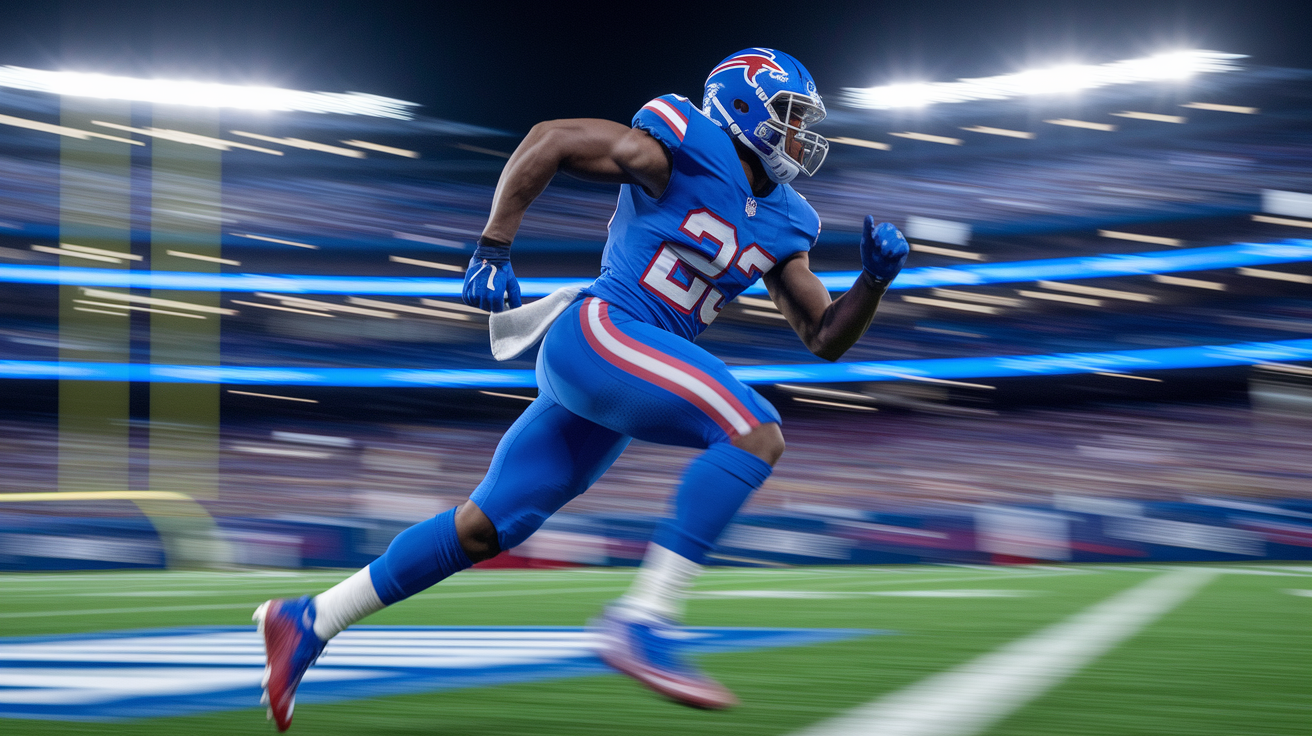
Non-starting edges often earn roster spots through special-teams contributions. Explosion off the line and length create value on field-goal block units, and speed plus pursuit discipline translate to kickoff and punt coverage roles. A rookie edge who can play 15 defensive snaps per game while contributing on three or four special-teams units provides more roster value than a pure pass-rush specialist who can’t cover kicks. That versatility buys time for technical development and keeps a player active on game days even when defensive snap counts are limited.
Preseason performance determines early-season roles. Edges who show consistent effort, gap discipline, and the ability to execute a coordinator’s calls in live situations earn rotational snaps in September. Those who freelance, miss assignments, or fade in the fourth quarter of preseason games may be inactive or practice-squad candidates. Rookie-year snap expectations vary by draft capital and team need, but most edges outside the first round begin in sub-packages (third down, obvious passing situations) before earning every-down roles.
Rotational pass-rush specialists carve out long careers by mastering a narrow set of skills. An edge who can win one-on-one matchups in third-and-long situations, rush from multiple alignments, and contribute on special teams can play eight to ten years without ever becoming a full-time starter. That path requires self-awareness, consistent effort, and the ability to stay ready when opportunities come in limited doses. Early-career success in those roles often leads to larger opportunities when injuries or contract decisions open up starting jobs.
Final Words
On the field, tape tells the story fast: scheme, traits and production shape the projection.
We covered how 3–4, 4–3 and hybrid systems change roles, which traits translate best (first step, bend, hand work), the value of pressures and grades, plus run‑defense, processing and conditioning needs.
Bottom line: knowing how college scheme translates to pro fit for edge rushers makes projection more reliable. Players with versatile exposure and the right traits tend to stick.
FAQ
Q: Who is the best edge rusher in the draft?
A: The best edge rusher in the draft depends on evaluators; generally it’s the top-ranked prospect who pairs an elite first step, bend, hand technique, length, and clear scheme fit over just raw sack totals.
Q: Can Shedeur Sanders go back to college if he doesn’t get drafted?
A: Shedeur Sanders can return to college only if he preserves NCAA eligibility — that means not signing a pro contract or accepting disqualifying benefits and meeting the NCAA/NFL withdrawal deadlines.
Q: What is the difference between a gap scheme and a zone scheme?
A: The difference between a gap scheme and a zone scheme is responsibility: gap defenders attack assigned gaps, while zone defenders cover areas and read plays, which alters edge rush angles and run‑fit duties.
Q: What makes a good edge rusher?
A: A good edge rusher is explosive off the snap, bends the corner, uses varied hand counters, converts speed to power, maintains gap discipline, reads plays quickly, and adapts across schemes.