

Could arbitration eligibility be the real spark behind late‑season trade and free‑agent gossip?
It sounds small, but when a player moves from pre‑arb pay to arbitration, his projected salary can jump by millions.
That raise, plus a hard tender deadline, forces teams into quick choices: tender, trade, or non‑tender.
Those choices leak to writers and agents, and they create the late‑fall rumor swirl.
Thesis: arbitration clocks compress roster and payroll decisions into a few weeks, and that compression is what powers most hot‑stove whispers.
How Arbitration Eligibility Shapes Late‑Season Contract and Trade Chatter

Arbitration eligibility doesn’t just determine how players get paid. It changes how teams look at their entire roster the second the season ends. Players sitting between 3.0 and 5.999 years of service stop costing league minimum, and their projected raises come with actual deadlines. That creates a chain reaction of questions: Can we afford this? Should we trade him now before we’re locked in? Or do we just non‑tender and move on? All of this gets compressed into a tight November through January window, which is basically the entire fuel source for hot stove rumors.
The gap between a pre‑arb player and an arbitration‑eligible one is stark. You can carry a talented pre‑arb guy at $780,000 and live with some roster clutter. Once he crosses into arbitration, his salary might spike to $3 million, maybe $7 million or higher. Suddenly every at‑bat, every inning, every defensive play from the prior season gets put under a microscope. Teams start running comparisons: what’s he cost versus a free agent? What’s our prospect timeline look like? Where did we think we’d be spending this money six months ago?
That re‑evaluation happens fast. And it happens in public. Beat writers, agents, front offices all know November 21 is the tender deadline. The moment the World Series wraps, teams with heavy arbitration exposure (think the Royals with 15 eligible players projected around $48 million total) start doing internal triage. Who’s a lock? Who might get traded? Who could we non‑tender to clear cash? Those internal debates leak out, and that’s what powers the October and November rumor mill.
Six things that turn arbitration status into rumor bait:
- Projected raises that blow past what the team thinks the player’s actually worth for 2026.
- Performance drops in the final season before eligibility, making non‑tender risk real.
- Too much depth at one spot, which makes an arb‑eligible player expendable and tradeable.
- Conflicting payroll goals, where keeping an arb guy means passing on a targeted free agent.
- Option years still on the books, which can make even marginal players useful for organizational depth.
- Super Two status, which kicks in a fourth arbitration year and adds cost uncertainty down the line.
Core Arbitration Rules and Service‑Time Structure

Players earn one year of service for every 172 days on an active major league roster. Hit three full years (3.000 service time) and you’re typically arbitration‑eligible for the first time. That opens a three‑year window covering your fourth, fifth, and sixth seasons. The setup rewards guys who’ve proven themselves in the big leagues while giving teams control through their prime years. A smaller group called Super Two qualifiers get in a year early if they land in the top 22 percent of players sitting between two and three years of service. Early entry stretches their arbitration window to four years (seasons four through seven), boosts total career arb earnings, but also makes roster planning messier for teams watching budgets.
The arbitration process is simple but brutal. If a team and player can’t agree on salary, each side submits a number and an arbitrator picks one. No split, no compromise. League minimum for 2026 is $780,000, and the current CBA lets a player’s salary drop up to 20 percent from the prior year or 30 percent from two years back in certain arb‑related moves. Those limits create a floor and ceiling that shape negotiations, which is why most arbitration cases settle before anyone steps into a hearing room.
How Tender Deadlines Create Late‑Season Free‑Agency and Trade Whispers
November 21 is the line. By that date, teams have to decide whether to offer each arbitration‑eligible player a contract for next season (called “tendering”) or decline and turn him into a free agent immediately. That yes‑or‑no choice, multiplied across hundreds of players leaguewide, creates one of the most concentrated decision points in baseball’s calendar. Tender a guy and you’re signaling you want to keep him or at least preserve his trade value. Non‑tender and you’re basically admitting the projected salary exceeds what you think he’s worth, opening a roster spot and payroll space in one move.
The tender deadline sits at the end of a chain of smaller November roster calls. Teams usually handle club and mutual options in the first week or two (stuff like the Royals’ $13.5 million club option for Salvador Perez or the Phillies’ $10 million mutual option for Harrison Bader). Those option outcomes shape payroll and depth before arbitration choices get finalized. The result is a two‑week sprint in mid‑November where front offices are clearing 40‑man space, protecting prospects from the Rule 5 draft, and running financial models on arbitration raises all at once. Trade talks heat up because everyone knows a non‑tender kills your leverage. If you’re moving a borderline player, you do it before the deadline while he’s still under control.
Non‑tendering also feeds free‑agency speculation in a specific way. A player cut loose in late November hits the market right when most teams have already spent their big free‑agent money but still have roster holes and leftover budget. That timing creates value opportunities and rumor spikes. Teams watch each other’s tender lists closely because a quality player released by one club might be exactly the affordable piece another needs. The speculation starts before the announcements even drop.
| Player Status | Late‑Season Impact | Resulting Rumor Type |
|---|---|---|
| Arbitration‑eligible, strong 2025 | Team tenders to preserve trade value or roster spot | Trade speculation; extension whispers; comparables debate |
| Arbitration‑eligible, weak 2025 | Team evaluates non‑tender to avoid paying projected raise | Non‑tender candidate lists; free‑agent fit speculation |
| Arbitration‑eligible, final arb year | Team weighs one‑year cost vs. long‑term extension or trade | Extension rumors; trade to contender rumors; qualifying offer talk |
Case Studies: Arbitration Battles That Sparked League‑Wide Speculation
Corbin Burnes went to arbitration after winning the 2021 NL Cy Young, and the hearing turned into a public mess. Burnes asked for $10.75 million. The Brewers filed at $10.01 million. The arbitrator sided with the team, awarding the lower number and saving the club $740,000. Burnes told reporters afterward he felt hurt by the process, especially hearing team officials argue he was worth three‑quarters of a million less than he believed. That emotional fallout, layered on top of the Brewers’ track record of trading stars before free agency, instantly fed speculation that Burnes would get moved before his final arb year or bolt the moment he could. The hearing didn’t just set his 2022 salary. It set the tone for two years of trade rumors that eventually came true when Milwaukee shipped him to Baltimore.
Nathaniel Lowe’s case with the Nationals shows how even smaller gaps get attention. Lowe and the team were about $800,000 apart heading into the hearing, and the club won with Lowe getting $10.3 million for 2025. The modest difference and the team’s decision to go to a hearing over it became a talking point across front offices. Was the relationship salvageable, or had the hearing soured things enough to make Lowe a trade candidate? That single hearing dropped Lowe into trade rumor cycles that wouldn’t have existed if both sides had just settled at a midpoint a few weeks earlier.
What arbitration hearings tell us about speculation patterns:
- Hearings are rare (only nine players went last offseason), so any case that goes through draws outsized attention and rumor volume.
- Public salary fights, even over small amounts, can damage player‑team relationships and speed up trade talk or free‑agent departure expectations.
- Teams that repeatedly go to hearings build reputations (the Brewers’ pattern with Burnes fed perceptions of the organization’s willingness to pay stars).
- Arbitration outcomes set public salary benchmarks that agents and teams use to anchor future negotiations, creating ripple effects across comparable players leaguewide.
Nationals’ Arbitration‑Eligible Players: How Their Profiles Shape Offseason and Free‑Agency Talk
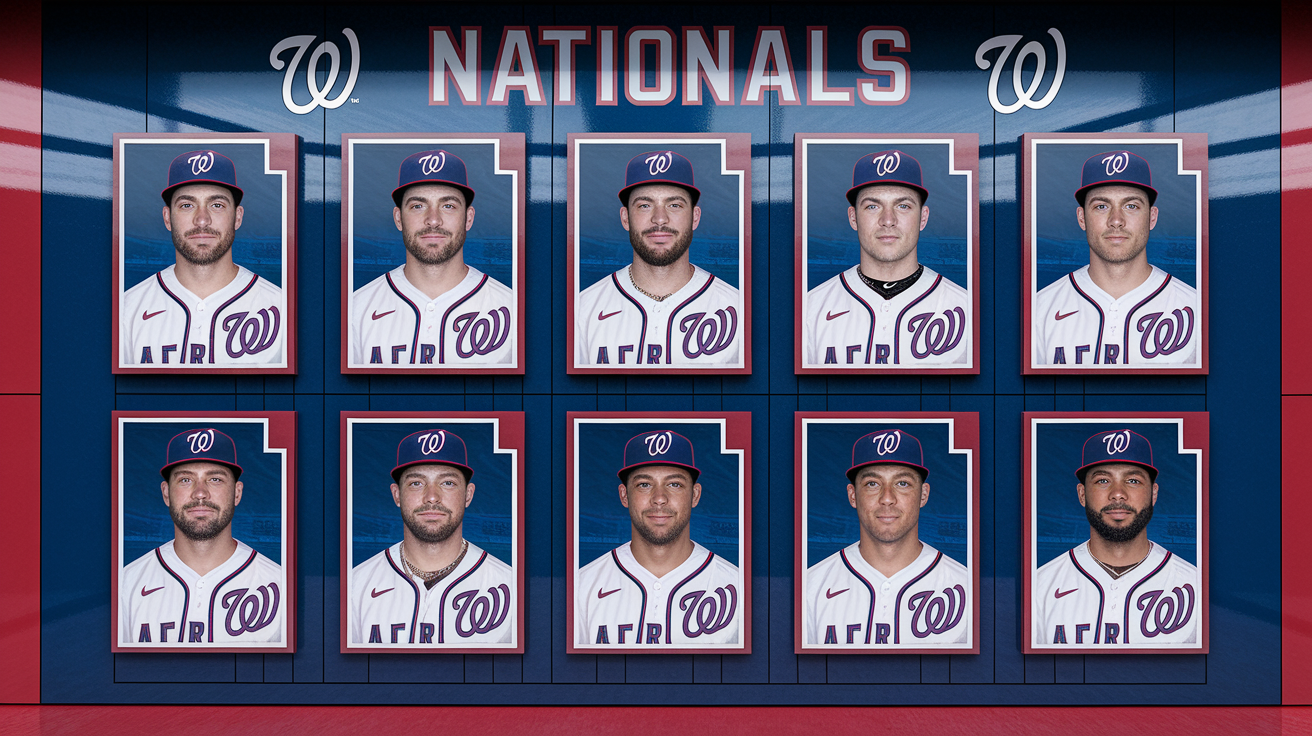
The Nationals head into the 2026 offseason with eight arbitration‑eligible players. Projected salaries run from roughly $1 million to over $6 million, and the roster calls tied to those numbers will shape not just Washington’s payroll but also the broader trade and free‑agent markets at multiple positions.
MacKenzie Gore
Gore’s entering his second arbitration year with 4.000 years of service after a 2025 season that included an NL All‑Star nod, 30 starts, 159.2 innings, a 4.17 ERA, and 2.9 fWAR. He made $2.89 million in 2025 after both sides avoided arbitration. Spotrac projects $6.5 million for 2026. MLB Trade Rumors says $4.7 million. The Nationals are expected to tender Gore without hesitation. Even if they explore trading him, tendering keeps leverage intact and signals any deal will require real return. Gore’s durability, upside, and controllability make him one of the winter’s more interesting arb‑driven trade candidates.
CJ Abrams
Abrams crosses into arbitration for the first time with 3.13 years of service after a 2025 run that delivered 144 games, a .257/.315/.433 line, 19 homers, 31 steals, 3.1 fWAR, and an All‑Star appearance. He earned $780,600 in 2025 and is projected to land between $5.5 million (Spotrac) and $5.6 million (MLBTR) for 2026. The team will tender him. Arbitration’s a short‑term cost question, and Abrams’ long‑term future in Washington is a separate strategic call that won’t get answered by a one‑year salary award.
Riley Adams
Adams is a Super Two qualifier entering his second of four arbitration years, with 3.171 years of service. He avoided arbitration in 2025 at $850,000 but posted a brutal .186/.252/.308 line with a 57 wRC+ and ‑0.6 fWAR across 83 games. Projections for 2026 range from $1.5 million (MLBTR) to $1.9 million (Spotrac). Adams has no remaining option years, and his defensive and offensive numbers both grade poorly. He’s a strong non‑tender candidate. The Nationals are unlikely to commit nearly $2 million to a backup catcher with no flexibility and negative production.
Jorge Alfaro
Alfaro signed late in 2025 at league minimum ($760,000) and got roughly $145,000 prorated for his time on the roster. He appeared in just 14 games for Washington, posting a 54 wRC+ in 39 plate appearances after the Brewers released him on September 1 following 82 Triple‑A games. Alfaro’s got 5.133 years of service and is in his likely final arb year, with projections at $1.0 million from both Spotrac and MLBTR. He’s 33 in 2026 and was a September desperation depth signing. The Nationals almost certainly won’t tender him. He’s replaceable catching depth at a cost that exceeds his marginal value.
Broader patterns you can see in arbitration‑eligible rosters:
- Teams with multiple non‑tender candidates at the same position (like the Nationals with catchers Adams and Alfaro) often use the tender deadline to clear roster and budget space at the same time.
- Players entering their first arb year with strong recent performance (Abrams) almost always get tendered, even if long‑term extension or trade talks remain unresolved.
- Super Two status (Adams, Irvin, Cavalli for Washington) increases total arb cost and can push marginal players into non‑tender territory earlier than standard three‑year arb guys.
- Veterans in their final arb year (Alfaro) face higher non‑tender risk if performance tanked or if they were late‑season signings with minimal organizational investment.
- Players with remaining minor league options (Jake Irvin has two) are likelier to get tendered because teams can stash them for depth without burning a 40‑man roster spot all season.
How Arbitration Costs Influence Team Payroll, Free‑Agency Plans, and Trade Strategies
The Royals face a projected $48 million bill for 15 arbitration‑eligible players against an expected 2026 payroll around $140 million. Six players already have guaranteed contracts or likely club options totaling roughly $81.7 million (Seth Lugo $21.5M, Michael Wacha $18M, Bobby Witt Jr. $14.1M, Carlos Estévez $10M, Cole Ragans $4.6M, and Salvador Perez’s expected $13.5M option). That leaves about $58 million to $60 million in remaining space, and the $48 million arb projection eats nearly all of it before the Royals add a single free agent or make a single trade pickup. The math forces a choice: either non‑tender multiple players to create financial flexibility, or accept a roster built almost entirely from internal arb and guaranteed commitments with minimal room for outside upgrades.
Teams in this spot (arbitration‑heavy, moderate payroll) become natural trade partners for clubs trying to shed salary or acquire controllable talent. The Royals have publicly acknowledged surplus pitching and catching depth, which makes moving an arb‑eligible arm or backstop an attractive way to free up dollars and add offense. That’s why arb‑eligible players on deep rosters become trade candidates even when their individual performance is solid. It’s not always about the player’s value. It’s about roster fit and the financial squeeze created by stacking multiple arb raises into a fixed budget.
The Phillies show the opposite end. Their arb‑eligible list includes players projected from roughly $925,000 (Garrett Stubbs) to $10.4 million (Jesus Luzardo), but the club also carries massive guaranteed salaries: Zack Wheeler at $42 million, Bryce Harper at $27.5 million, Trea Turner at $27.2 million, Aaron Nola at $24.5 million, and Taijuan Walker at $18 million. Those five guys alone eat about $139 million, leaving limited space for arb raises and free‑agent additions. When a team’s top commitments dominate the payroll, arbitration decisions become high‑leverage. Tendering Alec Bohm at a projected $10.3 million might mean passing on a free‑agent upgrade somewhere else, or it might mean exploring a trade that brings back a cheaper controlled piece. The arb number itself becomes the pivot point for broader roster construction.
Option Decisions, Rule 5 Protection, and Arbitration Timing as Drivers of Offseason Rumor Surges

Club and mutual options create binary calls that land before the arbitration tender deadline, squeezing roster planning into a short November window. Harrison Bader holds a $10 million mutual option with the Phillies after hitting .305 with an .824 OPS in 50 games. He’s expected to decline and chase a multi‑year deal on the open market, which means the Phillies lose a productive part‑time outfielder and have to replace him internally, via trade, or through free agency. All while managing 10 arb‑eligible players and deciding whether to pick up Jose Alvarado’s $9 million club option despite a PED suspension. Each call affects the next, and the compressed timeline amps up rumor activity because clubs are solving multiple roster puzzles at once.
Rule 5 protection adds another layer. Teams have to put prospects on the 40‑man by mid‑November to shield them from the Rule 5 draft, which happens on the final day of the Winter Meetings. The Royals currently have 36 players on their 40‑man, with room for four adds. Candidates include Ben Kudrna (considered a lock), Felix Arronde, Gavin Cross, and Frank Mozzicato. Adding those guys requires corresponding 40‑man moves, often designations for assignment or trades of fringe arb‑eligible players. The overlap between Rule 5 deadlines and arb tender deadlines creates a roster crunch that forces early‑November trades and non‑tenders purely to manage roster math, not player evaluation.
- Option calls typically wrap up in the first two weeks of November, setting baseline payroll and roster depth before arb tenders are due.
- Rule 5 protection and 40‑man roster management deadlines (mid‑November) often trigger trades or DFAs of arb‑eligible players to create space.
- The late‑November tender deadline (November 21) acts as the final gate, forcing clubs to commit or release arb‑eligible players and creating the biggest single‑day rumor spike of the offseason.
Rule 5 Protection Deadlines and Their Connection to Arbitration
The Rule 5 draft happens during the Winter Meetings, typically early December, but the protection deadline (adding players to the 40‑man) falls weeks earlier in mid‑November. That timing overlap with arb tenders isn’t random. It’s structural design that forces clubs to prioritize. Protecting a top prospect might mean non‑tendering a marginal arb‑eligible reliever. Keeping an arb‑eligible veteran might mean exposing a fringe prospect to the Rule 5 and hoping he goes unclaimed. These trade‑offs stay invisible to fans until the official tender and Rule 5 protection lists get published, but they drive confidential trade conversations and roster strategy all through November.
The Annual Speculation Cycle: How Arbitration Shapes Rumors from October Through Winter Meetings
The offseason rumor cycle follows a rhythm you can set your watch by, and arbitration deadlines provide the tempo. Each hard date forces decisions that generate leaks, reports, and speculation, creating distinct surges instead of a steady flow. The cycle kicks off the moment the World Series wraps and builds through the Winter Meetings, with arbitration acting as both the financial engine and the tactical clock.
The five‑stage arb‑driven rumor timeline:
- Early November (first two weeks): Club and mutual option decisions due. Exclusive free‑agent negotiating windows open. Teams lock in veteran roster spots and baseline payroll, producing early trade and re‑signing rumors. Example: Royals expected to pick up Salvador Perez’s $13.5M option. Phillies’ Harrison Bader likely declines $10M mutual option and tests free agency.
- Mid‑November (around Nov 15–17): Rule 5 protection deadline. Teams add prospects to 40‑man rosters and make corresponding moves, often DFAing or trading fringe arb‑eligible players to create space. Rumor focus shifts to roster crunch trades and non‑tender speculation.
- Late November (Nov 21–22): Arbitration tender deadline. The biggest single concentration of roster decisions. Non‑tenders create instant free agents. Tenders preserve control and trade value. Heavy rumor volume around borderline players (Riley Adams, Jorge Alfaro types).
- Early December (Winter Meetings week): Rule 5 draft occurs. Trade market peaks as teams finalize rosters post‑tender. Arb‑eligible players who got tendered often become trade chips during meetings. Clubs signal free‑agent and extension priorities.
- January–February: Arbitration salary filings (Jan 9 deadline) and hearings (Jan 26–Feb 20 window). Settled cases reduce uncertainty. Hearing cases generate tension and extension/trade speculation. Only nine players went to hearing last offseason, but those cases dominate coverage.
The cycle repeats every year, and the dates barely shift. That predictability lets agents, front offices, and reporters plan around the calendar, and it explains why arbitration eligibility drives the timing and intensity of late‑season and winter rumors more than any other contract status. The deadlines are hard, the financial stakes are clear, and the decisions are binary. That combo turns arbitration into the structural backbone of hot stove season.
Final Words
In the action, arbitration calendars, tender deadlines and projected raises turn routine roster moves into instant late-season buzz.
This piece ran through the core rules, how tender choices drive whispers, real arbitration showdowns, and Nationals’ player profiles to make the link clear.
If you want the short take: How arbitration eligibility feeds into late-season free agency whispers, it forces teams to balance payroll, non-tender risk and trade leverage — so expect the rumor mill to stay active through the tender deadline and Winter Meetings. More moves, more storylines.
FAQ
Q: Who was the first MLB player to earn $1,000,000 a year?
A: The first MLB player to earn $1,000,000 a year was Nolan Ryan, who reached a seven‑figure annual salary in the late 1970s after signing a major free‑agent deal, per contemporary reports.
Q: Why did Tarik Skubal go to arbitration?
A: Tarik Skubal went to arbitration because he and the Detroit Tigers couldn’t agree on his salary for an arbitration‑eligible season, so an arbitrator would set pay using performance and comparable pitchers.
Q: How many years of arbitration before free agency?
A: Players typically have three arbitration years before free agency (roughly service years 3.0–5.999); Super Two players qualify for a fourth arbitration year, giving them one extra pre‑free‑agent season.
Q: How much did Ohtani make in arbitration?
A: Ohtani’s arbitration salaries varied by year; he earned roughly $3 million in an early arbitration season, with larger settlements later—exact annual figures differ depending on the season and source.