

Think a title settles a rivalry? Not usually.
Championship rematches force teams and fighters to answer a simple question: who learned more since last time.
They remake tactics, expose mental edges, and can flip a legacy overnight.
From the Lakers and Celtics to Ali and Frazier and Federer and Nadal, these return trips to the big stage mix familiarity with new stakes, roster moves, tactical adjustments, and pressure that compounds.
This piece traces the most defining rematches and shows why a second meeting often matters more than the first.
Iconic Championship Rematches That Defined Sports History
A championship rematch does more than replay last year’s script. It tests how far each side has come since they last shared the stage. Every tactical tweak gets stress-tested. Every locker room speech gets measured against what actually happens when the whistle blows. And the story shifts from “who won” to “who learned more from losing.”
The psychological stakes run deeper because one side carries the weight of past defeat while the other tries to prove the first win wasn’t just timing or luck.
The Lakers and Celtics kept meeting in the Finals across decades. Bill Russell’s Boston teams dominated Jerry West’s Lakers in the 1960s. Then Magic and Bird reignited everything in the 1980s. Kobe faced Paul Pierce twice in 2008 and 2010. Ali and Frazier fought three times between 1971 and 1975, each rematch cranking up the personal intensity that started with the “Fight of the Century” and peaked in Manila. Federer and Nadal met repeatedly in Grand Slam finals, surface conditions and tactical adjustments reshaping their rivalry with each encounter. The Yankees and Dodgers faced off in the World Series over and over from the 1940s through the 1980s, their East Coast versus West Coast identity turning into a full cultural event after the Dodgers moved to LA.
Fans get hooked on these repeating finals because they deliver both familiarity and surprise. You know the players, you remember what happened last time. But the months or years in between open space for roster changes, new strategies, and personal evolution that can flip everything. Legacies hang on these moments. One championship can feel like circumstance. A rematch removes the excuses and forces the real question: who adapted better?
The historical record shows rematches rarely play out as carbon copies. The team or athlete who lost the first time often shows up sharper, hungrier, more prepared to exploit the cracks that got exposed.
Basketball Finals Rematches: Lakers vs. Celtics and Other Rivalries
The Lakers and Celtics met in the NBA Finals eight times between 1959 and 1987. The first wave of rematches came in the 1960s when Bill Russell’s Celtics beat Jerry West and Elgin Baylor’s Lakers six straight times. Boston won all six championship rounds that decade, including back to back Finals in 1962–63, 1965–66, and 1968–69. The consistent outcome reflected Boston’s defensive discipline and depth advantage. The Lakers kept falling short despite West’s individual brilliance. By the time Russell retired in 1969, the rivalry had set the template for how championship rematches could define entire eras.
The rivalry fired up again in the 1980s when Magic’s Lakers and Bird’s Celtics faced each other three times in four years. The 1984 Finals went seven games, Boston winning 4–3. But the 1985 rematch flipped the script as the Lakers took it 4–2 and Magic earned Finals MVP. The 1987 Finals saw the Lakers win again in six, closing the decade with a 2–1 edge in their 1980s meetings. The contrast between Bird’s versatile half court game and Magic’s fast break system gave each rematch its own tactical flavor. Both teams made roster moves between series. The Lakers added Mychal Thompson to counter Boston’s frontcourt depth. The Celtics dealt with aging legs and injury trouble by 1987.
| Year | Winner | Series Length | Turning Point |
|---|---|---|---|
| 1984 | Celtics | 4–3 | Game 7 defensive adjustment limited Magic’s passing lanes |
| 1985 | Lakers | 4–2 | Magic Johnson’s hook shot in Game 4 shifted momentum |
| 1987 | Lakers | 4–2 | Magic’s baby hook over Bird and Parish in Game 4 |
| 2008 | Celtics | 4–2 | Celtics’ defensive rotation held Kobe to 6-for-19 in Game 6 |
The Lakers–Celtics rivalry came back in the late 2000s when Kobe’s Lakers faced Paul Pierce’s Celtics in back to back Finals in 2008 and 2010. Boston dominated the 2008 series with a 4–2 win built on suffocating defense and balanced scoring. The Lakers got revenge in the 2010 rematch with a hard fought 4–3 win highlighted by a grinding Game 7 defensive battle that ended 83–79. The 2010 rematch showed how championship rematches reward tactical memory and roster continuity. The Lakers added Ron Artest to counter Pierce. The Celtics entered with an aging core that couldn’t sustain pace across seven games.
Other notable NBA Finals rematches include the Bulls–Jazz matchups in 1997 and 1998, both ending 4–2 in Chicago’s favor with series clinching shots by Steve Kerr (1997) and Michael Jordan (1998). The Spurs–Heat rematches in 2013 and 2014 saw Miami win in seven in 2013, but San Antonio dominated the 2014 rematch 4–1 and basically ended the Heat’s “Big Three” era. The Pistons–Lakers rematches in 1988 and 1989 showed the impact of injury. The Lakers won in seven in 1988 but got swept 4–0 in 1989 after Byron Scott and Magic Johnson went down with injuries that killed their depth. Each of these rematches proved the same lesson: psychological motivation matters way less than execution, roster health, and the ability to make tactical adjustments that shut down what worked before.
Heavyweight Boxing Rematches: Ali vs. Frazier and Rivalries That Shaped the Era
Ali and Frazier first met in the “Fight of the Century” on March 8, 1971. Frazier won by unanimous decision after 15 brutal rounds, handing Ali his first professional loss. The fight carried national symbolism. Ali was the brash anti-establishment figure. Frazier got cast as the working class hero despite both men being elite athletes with totally different styles. Frazier’s relentless pressure and left hook beat Ali’s speed and footwork. The result left Ali searching for a path back to the heavyweight title Frazier had just defended.
The rematch came on January 28, 1974, in New York. It wasn’t a title bout since Frazier had already lost the championship to George Foreman in 1973. Ali won the second fight by unanimous decision after 12 rounds, using better conditioning and sharper combinations to neutralize Frazier’s pressure. The tactical adjustment showed Ali had learned to control distance more effectively and avoid those extended exchanges in close quarters where Frazier’s power was most dangerous. The win restored Ali’s momentum and set up his path to reclaim the title from Foreman later that year. But the rivalry with Frazier stayed unfinished because neither man had dominated both meetings.
The trilogy peaked with the “Thrilla in Manila” on October 1, 1975. The fight’s widely considered one of the most punishing contests in boxing history. Ali kept his heavyweight title after Frazier’s corner stopped the fight before the 15th round. Frazier couldn’t see through swollen eyes after absorbing sustained punishment in the later rounds. The conditions in Manila were extreme. Temperatures topped 100 degrees inside the arena. Both fighters hit near-collapse levels of exhaustion. Ali later said the fight was the closest he came to death in the ring. Frazier’s physical decline after the bout marked the effective end of his elite competitive career. The “Thrilla in Manila” locked in the Ali–Frazier rivalry as the defining heavyweight rematch series of the 1970s and showed how rematches could push tactical and physical intensity way beyond the limits of the first meeting.
The Thrilla in Manila
The fight went down in the Philippine Coliseum in Quezon City. Oppressive heat and humidity turned it into a test of endurance as much as skill. Ali came out fast, building an early lead with sharp jabs and combinations. But Frazier surged back in the middle rounds with sustained body work and relentless forward pressure that had Ali visibly fatigued by the 10th. The final rounds saw Ali recover and land cleaner punches as Frazier’s face swelled to the point where his vision was shot. Eddie Futch, Frazier’s trainer, made the call to stop the fight before the 15th round despite Frazier’s protests.
The cultural weight of the “Thrilla in Manila” went beyond the immediate result. It symbolized the personal and stylistic clash that had defined the rivalry from the start. Ali’s speed and tactical adjustments met Frazier’s durability and relentless will. The fact that both men were physically compromised after the fight underscored the cost of their three encounters. The bout remains a reference point for how championship rematches can push competitors to extremes that single meetings rarely reach.
Tennis Grand Slam Rematches: Federer vs. Nadal and Era-Defining Finals
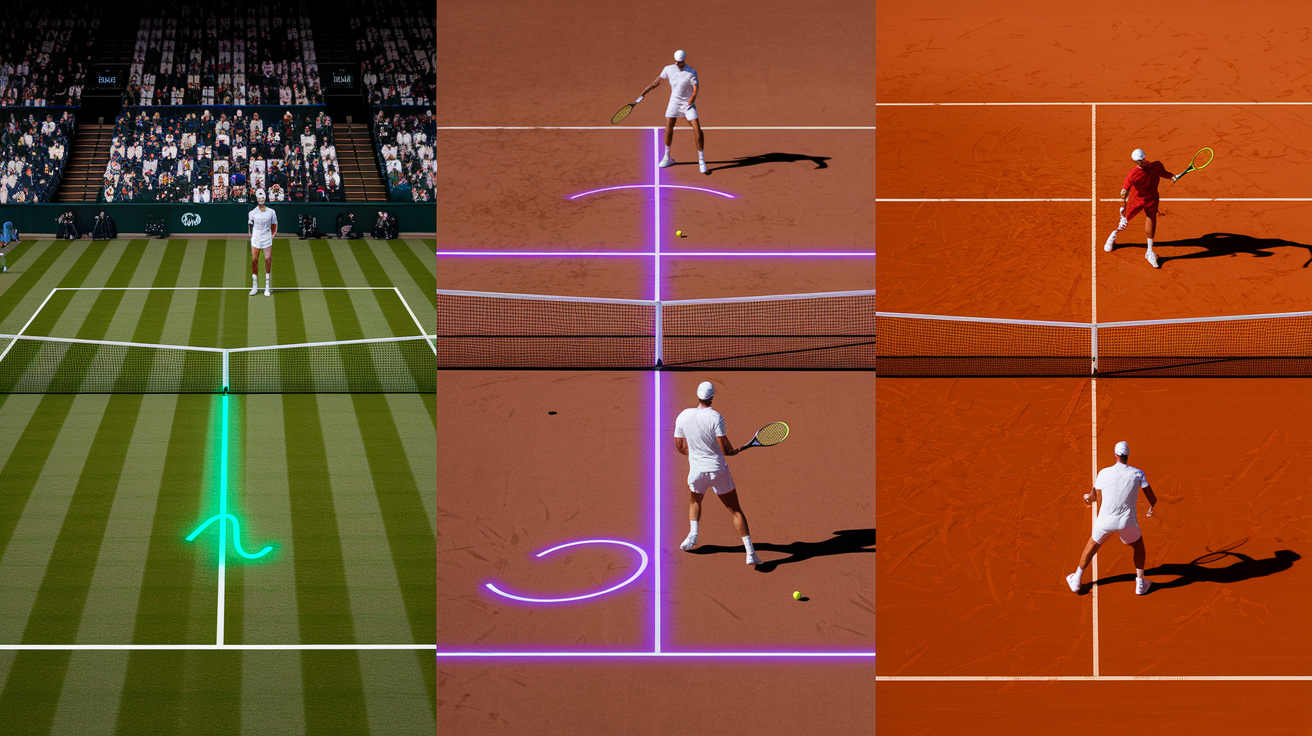
Federer and Nadal met in multiple Grand Slam finals between 2006 and 2011. Their rivalry produced some of tennis’s most memorable rematches across different surfaces. The 2006 Wimbledon final saw Federer win in four sets. Nadal reversed it in the 2007 rematch with a five set victory that proved he could compete on grass despite being most dominant on clay. The 2008 Wimbledon final became the most celebrated match in the rivalry. Nadal won 6–4, 6–4, 6–7, 6–7, 9–7 after four hours and 48 minutes in a contest that featured two rain delays and wrapped up in near darkness. Federer’s attacking precision met Nadal’s heavy topspin and superior movement. The match showed how surface conditions and mental endurance could shift outcomes even when both players were at peak form.
| Year | Tournament | Winner |
|---|---|---|
| 2006 | Wimbledon | Federer |
| 2007 | Wimbledon | Nadal |
| 2008 | Wimbledon | Nadal |
The Australian Open 2009 final was another big rematch. Nadal beat Federer in five sets to claim his first hard court Grand Slam title and complete a career Grand Slam. Federer had come in confident after winning the 2007 Australian Open. But Nadal’s improved movement on hard courts and his ability to sustain baseline rallies shut down Federer’s serve and volley variations. The psychological hit from the loss was visible in Federer’s emotional post-match speech, where he broke down in tears while acknowledging Nadal’s superiority that day.
The evolution of the Federer–Nadal rivalry across surfaces showed how Grand Slam rematches reward adaptability and physical prep. Nadal’s success on grass improved between 2006 and 2008 as he refined his serve and adjusted his positioning to handle Federer’s slice backhand. Federer made tactical shifts on clay by increasing his aggression and shortening points to minimize Nadal’s topspin advantage. The mental battles between the two often surfaced in post-match quotes. Nadal described the pressure of facing Federer as “playing against history.” Federer acknowledged that Nadal’s relentless intensity forced him to raise his level in ways no other opponent could. The repeated finals meetings between 2006 and 2009 defined an era in men’s tennis and showed how rematches on different surfaces could produce varied outcomes while keeping the same core tactical and psychological themes.
Baseball’s Repeating October Battles: Yankees vs. Dodgers and Other World Series Reunions
The Yankees and Dodgers met in the World Series 11 times between 1941 and 1981. The rivalry got more intense after the Dodgers moved from Brooklyn to Los Angeles in 1958. The early meetings in the 1940s and 1950s featured the Yankees’ dynasty under manager Casey Stengel facing the Dodgers’ scrappy Brooklyn squads led by Jackie Robinson and Duke Snider. The Yankees won most of those early matchups, including dominant runs in 1947, 1949, 1952, and 1953. But the Dodgers finally broke through in 1955 with a seven game win that ended Brooklyn’s championship drought and delivered the franchise’s first title.
The rivalry shifted after the Dodgers moved west. The 1963 World Series rematch showcased a different stylistic clash as Sandy Koufax and the Dodgers’ pitching staff swept the Yankees in four games. The contrast between the Yankees’ power hitting tradition and the Dodgers’ emphasis on pitching and speed became a defining element of their rematches. Managerial decisions and roster evolution shaped each encounter. The 1977 and 1978 rematches brought Reggie Jackson’s Yankees against Tommy Lasorda’s Dodgers. The Yankees won both series behind Jackson’s iconic three home run performance in Game 6 of the 1977 series and a four game comeback after falling behind 0–2 in 1978.
The recurring nature of the Yankees–Dodgers rivalry reflected deeper cultural and strategic shifts within Major League Baseball. The East Coast versus West Coast identity added media attention and fan investment. The differences in playing styles created tactical contrasts that evolved across decades. New York relied on power and the long ball. Los Angeles focused on pitching, defense, and small ball. Rematches built generational memory, with families passing down stories of specific games and moments that defined each era of the rivalry. The Yankees’ dominance in the early meetings gave way to more balanced competition after the 1960s. By the time the two teams met again in the 1981 World Series, the Dodgers got revenge for their 1977 and 1978 losses with a six game victory that closed the chapter on one of baseball’s most storied repeating October battles.
Final Words
The crowd rises as a shot swishes at the buzzer. That’s the kind of heartbeat this piece aimed to capture.
We walked through Lakers vs. Celtics, Ali vs. Frazier, Federer vs. Nadal, and Yankees vs. Dodgers, showing how style, stakes, and story make rematches special.
Historic finals rematches: when rivalries reignite, they’re more than repeat games. They settle scores, shape legacies, and keep fans coming back — and the best chapters are still ahead.
FAQ
Q: Who are the Boston Celtics biggest rivals? What is the biggest NBA rivalry?
A: The Boston Celtics’ biggest rivals are the Los Angeles Lakers. The Lakers–Celtics rivalry is widely considered the NBA’s top rivalry, built on multiple Finals, superstar matchups, and decades of playoff history.