

What if the move meant to win your team a title actually cost it years?
Contenders often make loud deadline bets, trading prospects, salary or role players to plug one weakness, then watch the new piece flop, the traded asset thrive elsewhere, or clubhouse chemistry snap.
These are the deadline calls that looked smart in July and cratered by October.
This piece breaks down why those trades happened, how they fell apart, and the long-term damage that turned a push for glory into a franchise setback.
Defining Notorious Deadline Missteps by Contenders

A trade deadline move turns notorious when a contending team gives up real assets, brings in new players to fix what looks like a weakness, and then watches everything fall apart before October’s over. Contenders don’t have time to wait. They think they’re one piece away, so they trade prospects, salary space, or current roster guys to chase a championship window that might slam shut the second the final out gets recorded.
What makes a deadline deal backfire usually comes down to one of three things. The new guy performs worse than whoever he replaced or just never fits. The traded asset, often a prospect or steady rotation piece, immediately outperforms expectations somewhere else. Or the move messes with chemistry, creates role confusion, or exposes something the front office missed—like a clubhouse personality clash or an injury history that resurfaces under postseason pressure.
The following case studies cover specific deadline decisions by teams that thought they were adding the final ingredient. Each deal had its own logic at the time. All of them ended with the contender either missing the playoffs completely, crashing out earlier than expected, or setting the franchise back in ways that lasted years past the initial transaction.
Case Study: The 2012 Dodgers Loading Up Too Early
The Dodgers entered late July 2012 sitting around .500, trailing both San Francisco and Arizona in the National League West. New ownership wanted to send a message, so the front office pulled off a blockbuster deadline deal with the Red Sox, importing Adrian Gonzalez, Carl Crawford, Josh Beckett, and Nick Punto in exchange for a package of prospects. The move was supposed to vault Los Angeles into contention right away, giving them multiple All-Star bats and an ace starter down the stretch.
The results were mixed at best. The club went 42-28 after the trade and finished second in the division, missing the playoffs entirely. The real damage showed up over the following seasons. Crawford battled injuries and posted a .274 on-base percentage in 2013. Beckett struggled to stay healthy. The financial commitments limited flexibility during years when the team was actually competitive.
The trade’s main failures:
- Carl Crawford played only 116 games over two seasons before being traded to Minnesota, producing a cumulative 1.0 WAR for the Dodgers.
- Josh Beckett posted a 5.19 ERA in 2013 and threw a no-hitter in 2014 before retiring, never recapturing his Boston form.
- Adrian Gonzalez was the lone productive piece, but the Dodgers gave up Rubby De La Rosa and other prospects who later contributed elsewhere.
- The enormous salary load forced the club to navigate luxury tax penalties and squeezed out mid-tier free agents who could’ve filled roster gaps.
Case Study: The 2015 Nationals’ Jonathan Papelbon Trade
Washington sat in first place in the National League East when they acquired closer Jonathan Papelbon from Philadelphia for Nick Pivetta and a minor league pitcher in late July 2015. The Nationals wanted bullpen depth and a veteran arm to pair with Drew Storen in high-leverage situations. Papelbon had a 2.13 ERA and 17 saves with the Phillies. The front office believed his postseason experience would stabilize October games.
Papelbon’s performance was adequate on paper, posting a 2.98 ERA in 24 appearances for Washington. The problem was everything else. He clashed immediately with teammates, publicly criticized Bryce Harper for not running out a pop fly, and physically attacked Harper in the dugout during a late September game. Manager Matt Williams suspended him for four games, and the incident fractured the clubhouse during the final weeks of a tight division race.
The Nationals won the division anyway, but the Papelbon chaos carried into October. They lost to the Dodgers in five games in the NLDS. The lasting image of the 2015 season wasn’t their 83 wins or Harper’s MVP campaign. It was Papelbon’s hands around Harper’s neck. The trade cost the team Nick Pivetta, who became a reliable starter for Philadelphia and eventually signed a multi-year deal with Boston after posting a 3.80 ERA across five seasons.
Case Study: The 2021 Cubs’ Fire Sale Impacting Their Contender Image
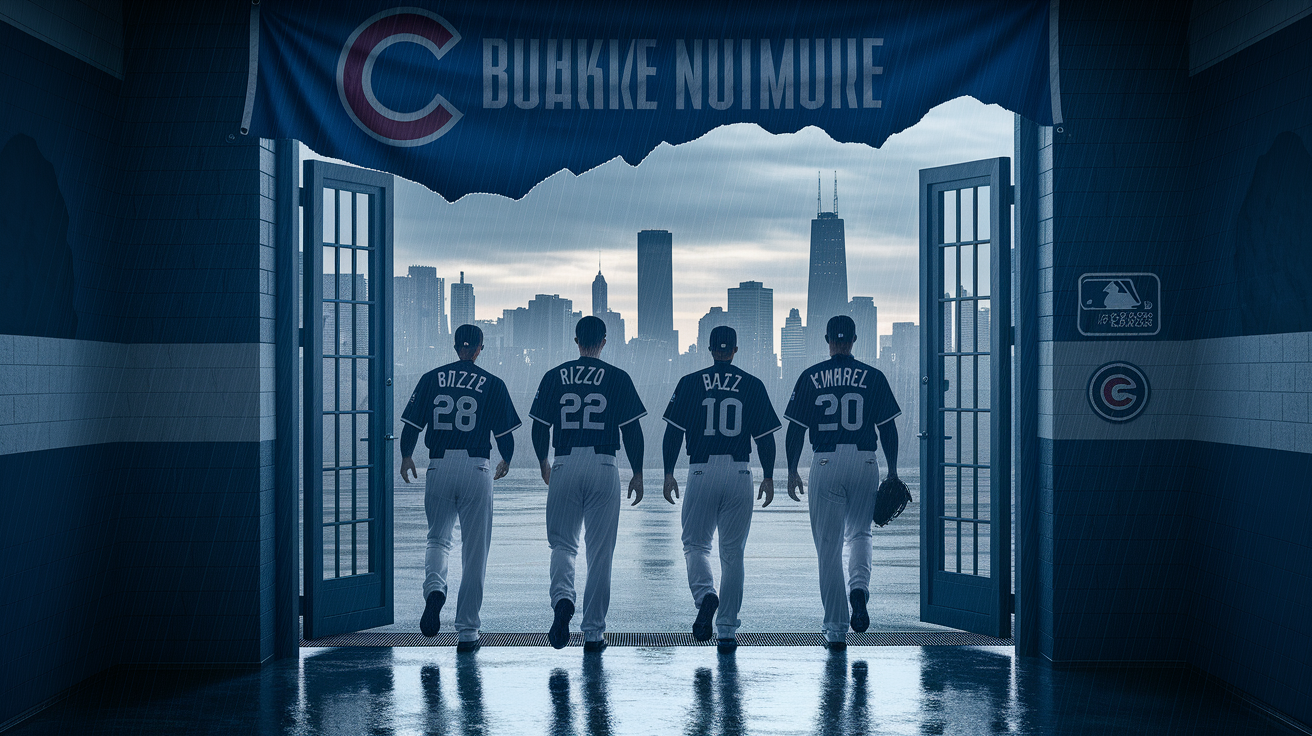
Chicago entered the 2021 All-Star break four games under .500 but still within reach of the expanded playoff format. Instead of adding, the front office dismantled the roster, trading Kris Bryant, Anthony Rizzo, Javier Báez, and Craig Kimbrel in separate deadline deals. The moves signaled that ownership viewed the competitive window as closed, even though the team had recent championship pedigree and controllable talent still in the system.
The Cubs went 24-36 after the deadline and finished 71-91, their worst record since 2012. The real damage was reputational. Free agents viewed Chicago as a franchise unwilling to commit to winning, and season ticket renewals dropped. The prospect return was underwhelming, with most of the acquired players failing to develop into impact big leaguers.
| Player Traded | Immediate Outcome |
|---|---|
| Kris Bryant | Signed with Colorado; Cubs received no long-term value from prospects acquired |
| Anthony Rizzo | Helped Yankees reach postseason; Cubs got minor-league arms with limited upside |
| Javier Báez | Played 47 games for Mets; Cubs’ return included Pete Crow-Armstrong, who debuted in 2023 |
Case Study: The 2004 Yankees Trading for Esteban Loaiza
The Yankees entered late July 2004 with a 56-44 record and clear playoff positioning but needed rotation help behind Mike Mussina and Jon Lieber. They acquired right-hander Esteban Loaiza from the White Sox for José Contreras and cash, believing Loaiza’s 2003 All-Star season would translate into postseason reliability. Loaiza had posted a 2.90 ERA the prior year and was viewed as a veteran upgrade over the inconsistent Contreras.
Loaiza made nine regular season starts for New York and posted a 5.70 ERA with opponents batting .315 against him. He allowed 66 hits in 53.2 innings and gave up 12 home runs, failing to provide any stability in the middle of the rotation. The Yankees still won 101 games and the AL East, but Loaiza’s collapse forced manager Joe Torre to rely heavily on his bullpen during the ALCS against Boston.
The long-term consequence was worse. José Contreras rebounded in Chicago, posting a 3.61 ERA over four seasons with the White Sox and winning 15 games during their 2005 World Series championship run. The Yankees got zero postseason innings from Loaiza and released him after the season. The trade showed how contenders overvalue recent performance without accounting for underlying metrics that suggested Loaiza’s 2003 season was an outlier.
Case Study: The 2014 Athletics Acquiring Jon Lester
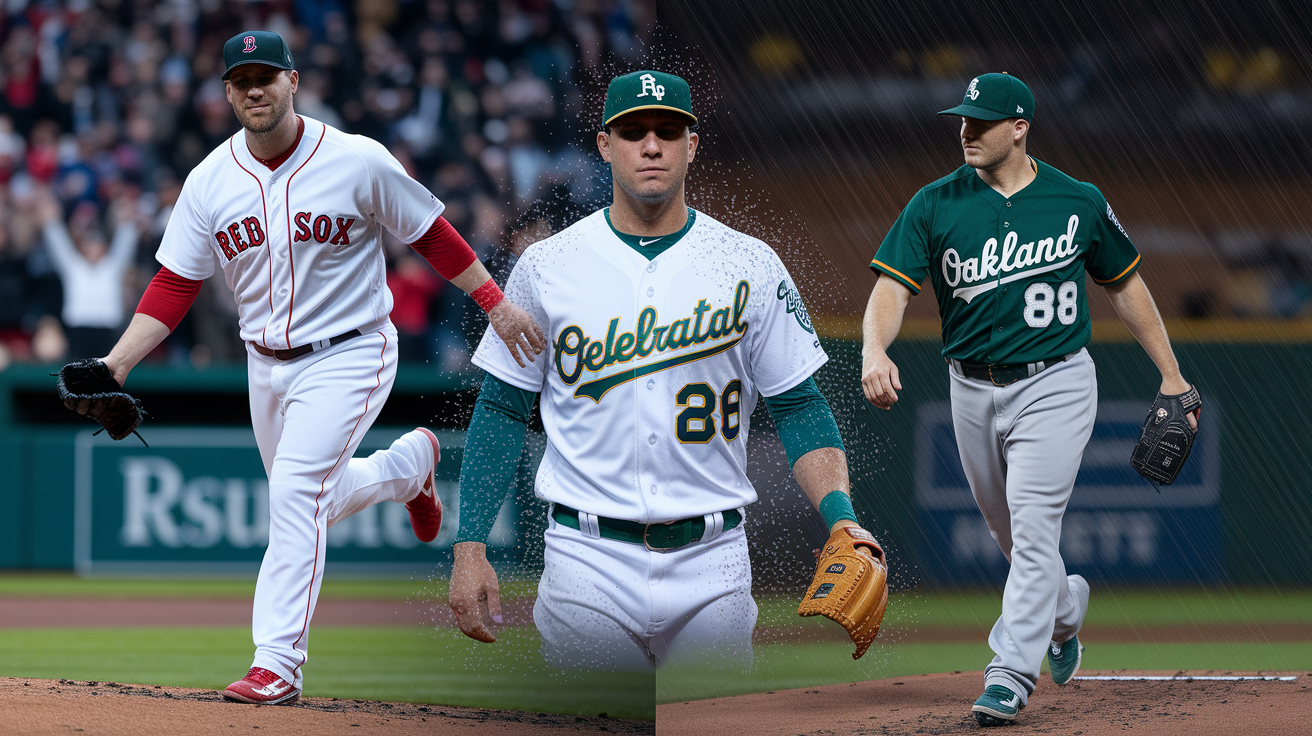
Oakland led the American League West by four games in late July 2014 when general manager Billy Beane traded outfielder Yoenis Cespedes to Boston for ace left-hander Jon Lester. The A’s believed Lester, a two-time World Series champion with playoff experience, would anchor their rotation through October. Cespedes had been Oakland’s most productive hitter, slashing .260/.316/.499 with 17 home runs, but Beane prioritized pitching in a division race against the Angels.
Lester went 6-4 with a 2.35 ERA in 11 starts for the Athletics, delivering exactly what the front office expected. The problem was everything else. Oakland went 21-18 after the trade and collapsed in September, losing eight of their final ten games to surrender the division to the Angels. The lineup never adjusted to losing Cespedes’s middle of the order production, and the bullpen faltered in close games down the stretch.
The deal’s consequences extended into the postseason:
- The A’s won the Wild Card game but were swept by Kansas City in the ALDS, scoring only seven runs in three games.
- Cespedes finished the season with a .916 OPS for Boston and signed a four-year deal with Detroit, while Lester left Oakland in free agency without re-signing.
- The trade signaled to the clubhouse that no player was untouchable, contributing to a culture shift that saw Oakland rebuild rather than reload the following winter.
Case Study: The 2017 Cavaliers Trading Kyrie Irving
Cleveland entered the 2017 offseason coming off a Finals loss to Golden State but still positioned as the clear favorite in the Eastern Conference. When Kyrie Irving requested a trade in July, the Cavaliers faced a binary choice: convince him to stay or extract maximum value before the season started. General manager Koby Altman traded Irving to Boston for Isaiah Thomas, Jae Crowder, Ante Žižić, and the Brooklyn Nets’ 2018 first-round pick, believing the package would keep the championship window open.
The deal backfired immediately. Isaiah Thomas’s hip injury was worse than disclosed, and he played only 15 games for Cleveland before being traded again. Jae Crowder shot 32 percent from three and never fit the defensive scheme. The Cavaliers went 50-32 and reached the Finals, but the roster instability created by the Irving trade forced LeBron James to carry an unsustainable load. He left for Los Angeles in free agency three months later, ending Cleveland’s competitive window entirely.
The assets acquired in the Irving trade:
- Isaiah Thomas played 15 games, posted a -2.0 Box Plus/Minus, and was traded to the Lakers for Jordan Clarkson and Larry Nance Jr.
- Jae Crowder appeared in 55 games and was flipped to Utah at the deadline without producing a single playoff win for Cleveland.
- Ante Žižić logged 59 career games for the Cavaliers and was out of the NBA by 2020.
- The Nets’ pick became Colin Sexton, who played three seasons in Cleveland before being traded to Utah in the Donovan Mitchell deal.
Case Study: The 2023 Maple Leafs’ Deadline Overload
Toronto entered the 2023 trade deadline as the second seed in the Atlantic Division and added three veteran forwards: Ryan O’Reilly from St. Louis, Jake McCabe from Chicago, and Noel Acciari and Sam Lafferty in separate deals. General manager Kyle Dubas believed adding depth and playoff experience would finally break the Leafs’ first-round curse. The moves cost Toronto multiple draft picks and prospect Erik Gustafsson, but ownership approved the all-in approach.
The additions created immediate role confusion. O’Reilly was inserted into the second-line center spot, pushing Calle Järnkrok and David Kämpf down the depth chart. McCabe took minutes from Timothy Liljegren, and the extra bodies compressed ice time for younger players who’d been producing all season. Toronto went 10-6-2 after the deadline but looked disjointed, with line combinations changing almost nightly as coach Sheldon Keefe tried to fit everyone into meaningful roles.
The Maple Leafs lost to Florida in five games in the second round, their earliest exit since 2019. O’Reilly posted one assist in 11 playoff games and left in free agency for Nashville without re-signing. The club surrendered a 2023 first-round pick, a 2024 third-rounder, and multiple mid-tier prospects for rental pieces that contributed nothing in the playoffs. The overload strategy exposed a flaw in deadline thinking: more isn’t always better when the core group has played together all season and the new additions disrupt established chemistry.
Final Words
We jumped straight into what makes a deadline move a real disaster for contenders: player flop, lost assets, or ruined chemistry.
Then we walked through case studies from the 2012 Dodgers to the 2023 Maple Leafs and the Cavs’ Kyrie trade, showing how rushed or mismatched deals can cost a season.
These controversial trade deadline calls that backfired for contenders show one clear route forward: vet fit, protect depth, and value clubhouse balance. Learn the lesson and expect smarter moves next time.
FAQ
Q: Can you trade after the MLB trade deadline?
A: You can trade after the MLB trade deadline, but only through waiver claims and minor roster moves; standard non-waiver trades aren’t allowed until the offseason, so most big deals end at the deadline.