
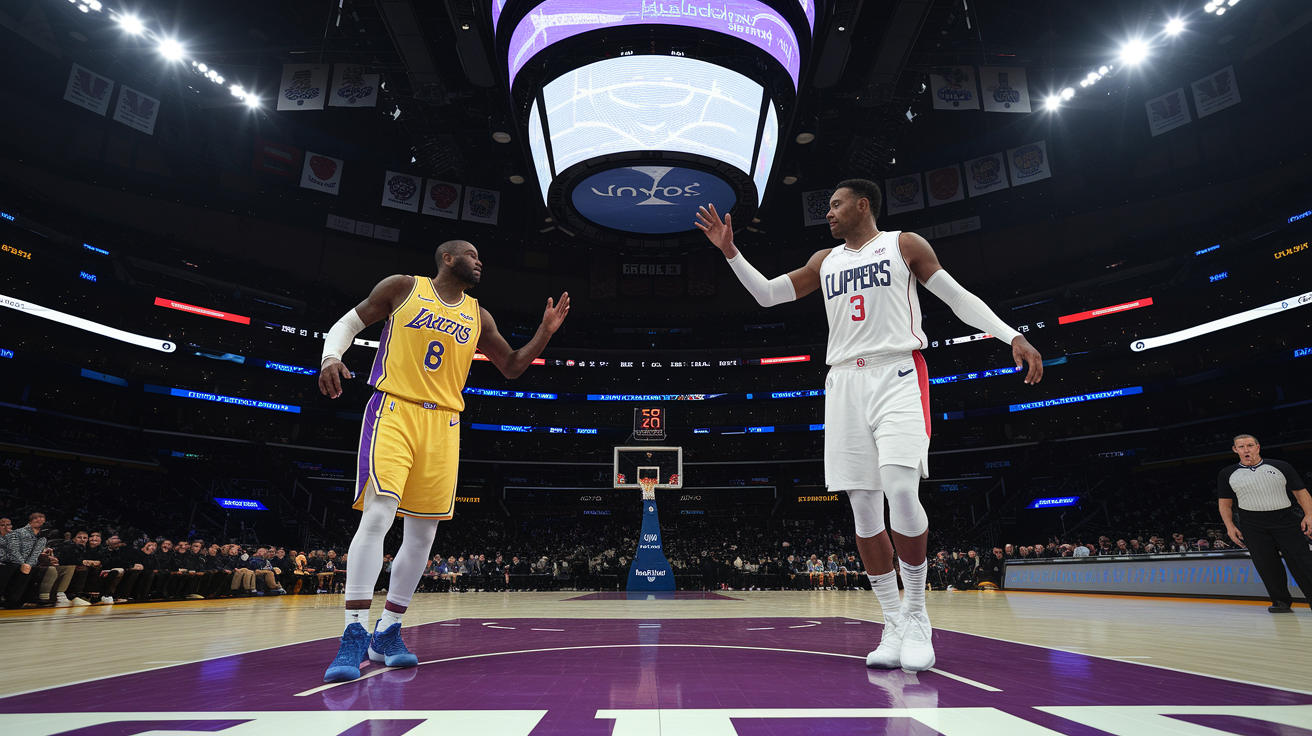

What if Kawhi Leonard doesn’t play, and the season series suddenly tips to the Lakers?
The teams are tied, but injuries and slumps have swung momentum both ways.
Clippers’ late surge meets Lakers’ hot road form.
Kawhi’s status, James Harden’s three-point drought, and LA’s rebounding edge are the big levers.
Throw in LeBron and Davis pick-and-rolls versus Clippers’ isolation-heavy scoring and minute management, and you get the series’ deciding themes.
Thesis: who stays healthy and forces the other’s game plan will win most of these matchups.
Full Clippers–Lakers Season Series Breakdown and Key Matchups Overview
The Clippers and Lakers meet Thursday, January 22 at 7:00 p.m. PST with the season series tied and their trajectories moving opposite directions. The Clippers beat the Lakers by 15 at Intuit Dome back on December 20, and both teams have shifted hard since then. Los Angeles sits at 25–16 with a ridiculous 14–8 road record, fifth in the West after a recent win. The Clippers crawled out of a 6–21 disaster start, winning 13 of their last 16, including two separate six-game streaks, to get to 19–24. Prime Video’s got the broadcast from Intuit Arena in Inglewood, and this one sets the tone for what’s left of their regular season meetings.
Injury questions define this series. Kawhi Leonard’s questionable with a knee thing after missing three games, and whether he plays is basically everything. When healthy, he’s putting up 28.2 points, 6.6 assists, and 2.2 steals with multiple recent 30-point performances. James Harden’s healthy but can’t hit threes right now, converting just 11 of his last 56 attempts over six games. That’s 19 percent. The Lakers are missing three wing defenders: Austin Reaves (calf strain), Bogdan Bogdanovic (hamstring), and Derrick Jones Jr. (Grade 2 MCL sprain). That thins perimeter depth and dumps heavier defensive assignments on LeBron and role players. Bradley Beal’s out for the season after hip surgery for the Clippers.
If Leonard sits or plays limited minutes, the Lakers have a clear edge. Better defense under JJ Redick (they held Toronto to 93 points and Denver to 36 second-half points recently), strong road form, and the Clippers’ 22nd-ranked defensive rating (116.8) all tip things toward LA. If Kawhi plays and looks right, the Clippers’ recent run and offensive firepower make them the favorite despite defensive issues.
Primary matchups to watch:
- Kawhi Leonard’s isolation scoring vs. Lakers’ shorthanded wing rotation
- James Harden’s playmaking and shooting efficiency vs. Lakers’ perimeter pressure
- LeBron James’ two-way workload vs. Clippers’ switching defense
- Drew Timme’s expanded role and interior scoring vs. Ivica Zubac and Clippers’ frontcourt
- Rebounding battle—Clippers rank 29th at 40.3 boards per game, creating a structural advantage for LA
Star Matchups Driving the Clippers–Lakers Rivalry This Season
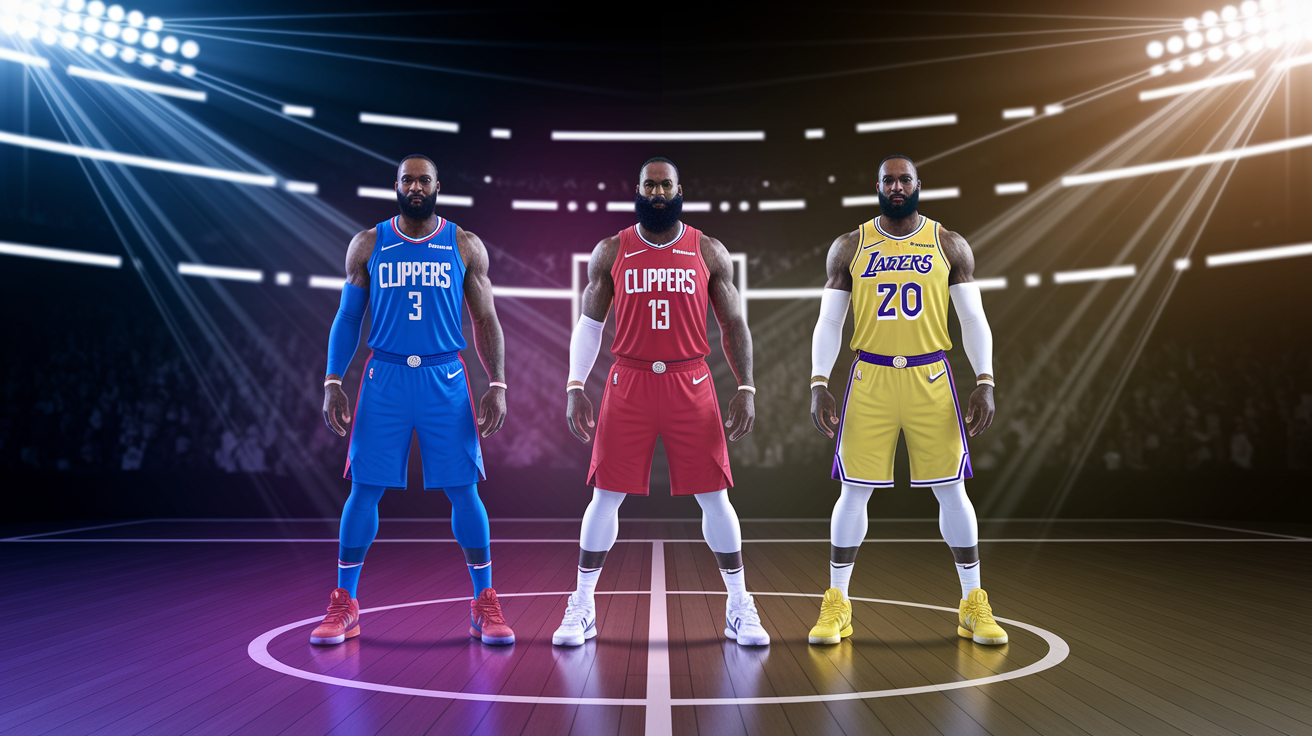
Kawhi Leonard’s been dominant when he’s available, averaging 28.2 points, 6.6 assists, and 2.2 steals per game while posting multiple recent 30-point outings before this knee issue showed up. His mid-range game, post isolations, and two-way versatility force the Lakers into uncomfortable coverage decisions, especially without wing defenders. LeBron James counters with a different profile. His 19-point, 9-rebound, 8-assist line from the most recent road win shows he’s still running everything, orchestrating late-clock offense and quarterbacking transition. The head-to-head boils down to who dictates tempo: if Kawhi hunts matchups in the half-court and controls possessions, the Clippers slow the game and limit Laker transition chances. If LeBron pushes pace and forces Leonard into help rotations on defense, LA builds rhythm.
James Harden’s averaging 26 points and 8 assists but his recent shooting slump has removed a foundational spacing advantage. Anthony Davis presents the counter: his 21.4 points, 8 rebounds, and 1.8 blocks per game anchor the Lakers’ defense and provide pick-and-roll verticality that Harden must navigate. Harden’s effectiveness against switching big men like Davis will determine whether the Clippers can generate clean looks late in the shot clock. When Harden’s stuck settling for contested step-backs instead of layups and free throws, the Lakers’ defensive rating improves dramatically.
The usage-rate battle between these stars also shapes substitution windows. Leonard and Harden share ball-handling duties, meaning the Clippers rarely have a true secondary creator when one sits. LeBron carries enormous usage too, but the Lakers’ depth chart (even with injuries) can lean on Drew Timme’s emerging interior presence and role players to generate offense during LeBron’s rest. Whichever coaching staff manages star minutes more efficiently across the series gains a cumulative edge.
Clutch Time Star Dynamics
The final five minutes of close games magnify every star matchup. The Lakers lean heavily on LeBron–AD pick-and-roll or post-up actions, where Davis seals smaller defenders and LeBron probes for kickouts or lobs. The Clippers counter with pure isolation efficiency. Leonard’s mid-post fadeaways and Harden’s step-back threes create tough, low-assist shots that don’t require ball movement. Historical trends favor the team that forces the other into help rotations: if the Clippers can isolate and score without extra passes, the Lakers’ improved half-court defense loses its switching advantage. If LA forces contested looks and converts in transition off misses, LeBron’s pace control wins possessions.
Backcourt and Perimeter Matchups to Watch in the Season Series
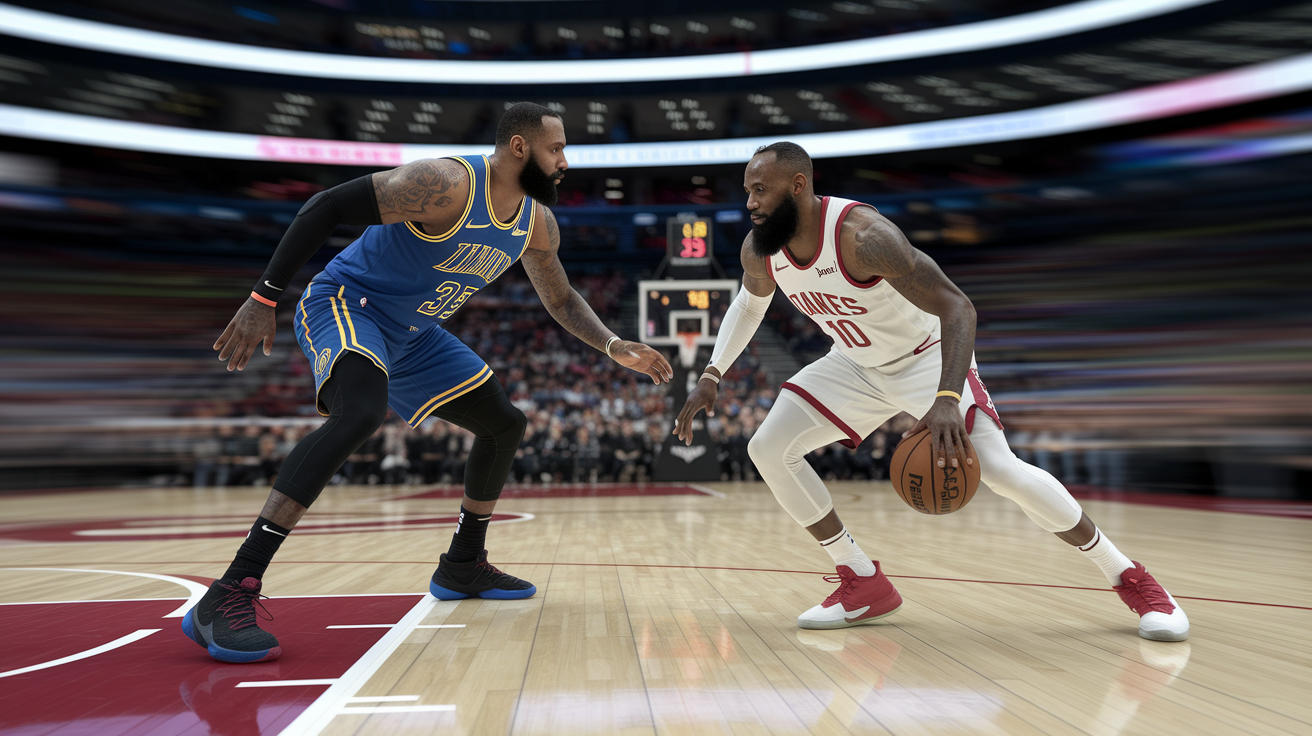
James Harden’s shooting slump (11-for-56 on threes over his last six games) has turned what was supposed to be a spacing strength into a glaring vulnerability. Teams are sitting deeper in the paint now and daring him to shoot, which clogs driving lanes for Kawhi Leonard and limits kick-out opportunities. The Lakers rank 25th in the NBA in three-point percentage (33.3 percent) and dead last in made threes per game (10.9), so neither team enters this series with confidence beyond the arc. The Clippers do rank 13th in three-point percentage overall, but recent form tells a different story. Harden’s volume and inefficiency have dragged the offense into contested mid-range territory.
Perimeter defense becomes the deciding factor when neither backcourt is lighting it up from deep. The Lakers are missing Austin Reaves, Bogdan Bogdanovic, and Derrick Jones Jr., removing three rotation wings who typically defend opposing guards and forwards. That forces LeBron into more defensive possessions and asks less versatile role players to navigate Harden pick-and-rolls and Kawhi isolations. The Clippers’ backcourt depth is healthier, but their defensive rating shows they struggle to get consistent stops. Whichever team forces more contested perimeter shots and limits open corner threes will control possessions.
| Team | Key Perimeter Advantage | Injury/Availability Note | Shooting Trend |
|---|---|---|---|
| Clippers | Healthier guard rotation; Harden playmaking when not settling for threes | Kawhi Leonard questionable (knee); Bradley Beal out for season | 13th in 3PT% but Harden 11-of-56 in last six games |
| Lakers | LeBron’s ability to probe and create; improved perimeter defense under Redick | Reaves (calf), Bogdanovic (hamstring), Jones (MCL) all out | 25th in 3PT%; league-worst 10.9 3PM per game |
Frontcourt Battles: Size, Mobility, and Rim Protection in Clippers–Lakers Matchups
The Clippers rank 29th in rebounding at just 40.3 boards per game. That’s a glaring structural weakness the Lakers can exploit on both ends. Ivica Zubac recently posted a career-best 33 points and 17 rebounds, showing he can dominate smaller or less physical frontcourts, but consistency’s been an issue and the Lakers bring size. Drew Timme’s expanded role gives LA another interior scoring option. He dropped 21 points in an earlier game against Portland and followed with 9 points and 3 rebounds in the most recent road win. Timme’s ability to post up, finish around the rim, and set solid screens adds a dimension the Clippers must account for, especially when Anthony Davis shifts to help defense.
Anthony Davis remains the most impactful big man in this series, averaging 21.4 points, 8 rebounds, and 1.8 blocks per game. His rim protection and ability to switch onto perimeter players in pick-and-roll coverage disrupt the Clippers’ spacing and force difficult finishes. Andre Drummond has contributed 12.5 points and 8.7 rebounds over his last ten games with a 50.4 percent field-goal percentage, giving the Lakers a rebounding advantage when he shares the floor with Davis. The Clippers’ lack of frontcourt depth (Bradley Beal’s season-ending surgery removed another playmaking option) means Zubac and reserve bigs must stay out of foul trouble and crash the glass at higher rates than their season average suggests they will.
Paint scoring, second-chance points, and rim protection will decide close games in this series:
- Paint scoring: Lakers hold the edge with Davis, Drummond, and Timme all capable of scoring inside; Clippers must rely on Zubac and opportunistic cuts from wings.
- Rim protection: Davis’ 1.8 blocks per game and help-side rotations anchor the Lakers’ improved defense; Clippers lack a consistent shot-blocker and rank 22nd defensively.
- Second-chance points: Clippers’ 29th-ranked rebounding creates offensive rebound opportunities for the Lakers and limits the Clippers’ ability to generate extra possessions.
Coaching Strategy, Adjustments, and Rotation Choices Shaping the Series
JJ Redick’s emphasized defensive improvements that show up in recent results. The Lakers held the Raptors to 93 points and limited Denver to just 36 second-half points in a crucial road win. Over the last two games, LA allowed the third-fewest opponent points and the third-fewest opponent free-throw attempts, signaling a shift in philosophy: control contact, limit fouls, and eliminate second-chance opportunities. The problem is personnel. Missing three wing defenders forces Redick into smaller, less versatile lineups that struggle to switch across positions. Expect more zone looks and aggressive help rotations to compensate, but those schemes leave corner shooters open if the Clippers knock down threes.
The Clippers’ offense runs almost entirely through Kawhi Leonard and James Harden, and their 13th-ranked offensive rating depends on those two creating quality looks in isolation or pick-and-roll. When Harden’s three-point shot isn’t falling (19 percent over the last six games), the offense bogs down and forces Kawhi into tougher mid-range attempts. Head coach Tyronn Lue will likely deploy more ball movement and off-ball screens to get Harden easier looks, but the Lakers’ improved half-court defense and rim protection from Davis make that difficult. Rotation depth becomes critical: the Clippers need productive minutes from role players and can’t afford long stretches with both stars on the bench.
Substitution patterns will create mini-matchups within the game. The Lakers historically lean on high-energy defenders who can run pick-and-roll and make simple reads when LeBron sits. The Clippers counter with a deeper wing rotation when healthy, but Kawhi’s questionable status and the lack of secondary shot creation beyond Harden means LA’s bench units could tilt games. Whichever coaching staff wins the non-star minutes gains cumulative possessions and easier late-game rotations.
Defensive Switching vs. Matchup Coverage
The Lakers’ ability to switch pick-and-rolls depends entirely on personnel availability. With wing defenders out, they’ll struggle to switch Harden’s pick-and-pops without giving up open threes or forcing Davis into uncomfortable perimeter coverage. The alternative (drop coverage or hard shows) invites Harden into mid-range pull-ups, which he converts efficiently even during shooting slumps. Kawhi Leonard’s mid-post isolations present a different problem: he doesn’t need screens, so switching becomes irrelevant and the Lakers must trust single coverage from whoever draws the assignment. Expect Redick to mix coverages possession-to-possession, using zone to disrupt rhythm and man-to-man when rotations allow, but the Clippers’ star talent will eventually force mismatches the Lakers can’t solve with scheme alone.
Statistical Comparison and Advanced Metrics for the Clippers–Lakers Season Series
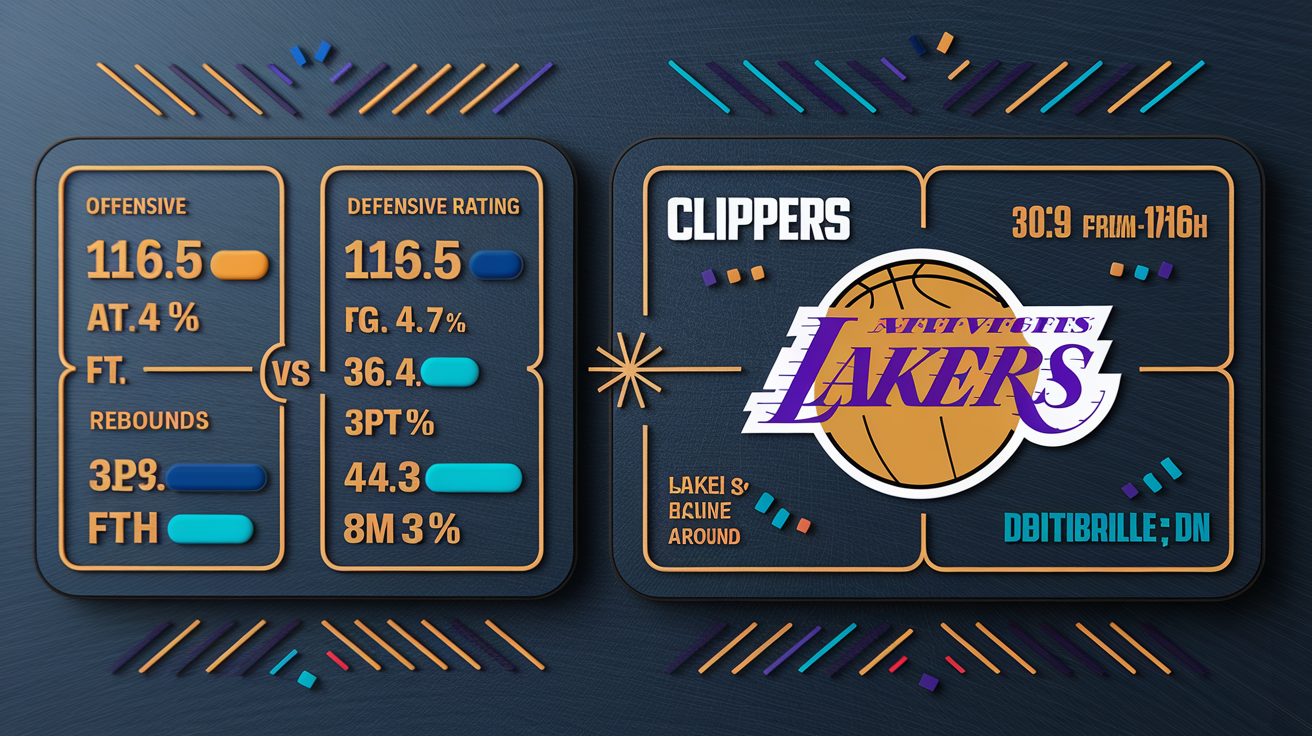
The Clippers enter with a 13th-ranked offensive rating (115.5) and a 22nd-ranked defensive rating (116.8), a profile that suggests they can score but struggle to get consistent stops. Their shooting splits tell a more nuanced story: 9th in field-goal percentage (47.4 percent), 13th in three-point percentage (36.4 percent), and first in free-throw percentage (84.5 percent). They rank last in field-goal attempts per game (82.9), meaning they’re efficient per shot but don’t generate enough volume. That’s a byproduct of their slow pace and reliance on isolation scoring. They also rank 27th in points per game (112.3) and 29th in field goals made (39.3), which points to a shallow margin for error: when shots don’t fall, the offense stalls.
The Lakers’ recent defensive surge stands in sharp contrast. Over their last two games, they’ve allowed the third-fewest opponent points and the third-fewest opponent free-throw attempts, reflecting a commitment to limiting easy baskets and controlling the foul line. Their league-worst three-point shooting creates obvious spacing issues. They compensate with interior scoring, transition opportunities, and defensive rebounds that fuel fast breaks. The contrast is clear: the Clippers need to win in the half-court through star scoring and efficiency; the Lakers win by controlling tempo, dominating the paint, and forcing turnovers.
Advanced metrics highlight the Clippers’ rebounding crisis and the Lakers’ shooting limitations. The Clippers’ 29th-ranked rebounding total is a structural flaw the Lakers can attack on both ends. Offensive rebounds create extra possessions, and defensive rebounds start transition opportunities where LA thrives. The Lakers’ inability to space the floor from three invites help defense and clogs driving lanes, but their size and athleticism allow them to punish smaller lineups inside. Whichever team imposes its style (Clippers’ half-court efficiency or Lakers’ pace and paint dominance) will dictate the series outcome.
| Metric | Clippers Value | Lakers Value | Matchup Impact |
|---|---|---|---|
| Offensive Rating | 115.5 (13th) | [Current-season data] | Clippers’ efficiency edge depends on star availability and shot-making variance |
| Defensive Rating | 116.8 (22nd) | [Current-season data] | Lakers’ recent surge suggests momentum shift |
| 3PT% / 3PM per game | 36.4% (13th) / [data not provided] | 33.3% (25th) / 10.9 (last) | Neither team shoots well from deep; variance in Harden’s slump and Lakers’ volume creates unpredictability |
| Rebounds per game | 40.3 (29th) | [Current-season data] | Huge Lakers advantage; Clippers’ inability to rebound opens second-chance points and transition |
| Field Goal Attempts | 82.9 (last) | [Current-season data] | Clippers’ low volume limits margin for error; Lakers can win possession battle through pace |
Injury Landscape and Availability Outlook Impacting the Season Series
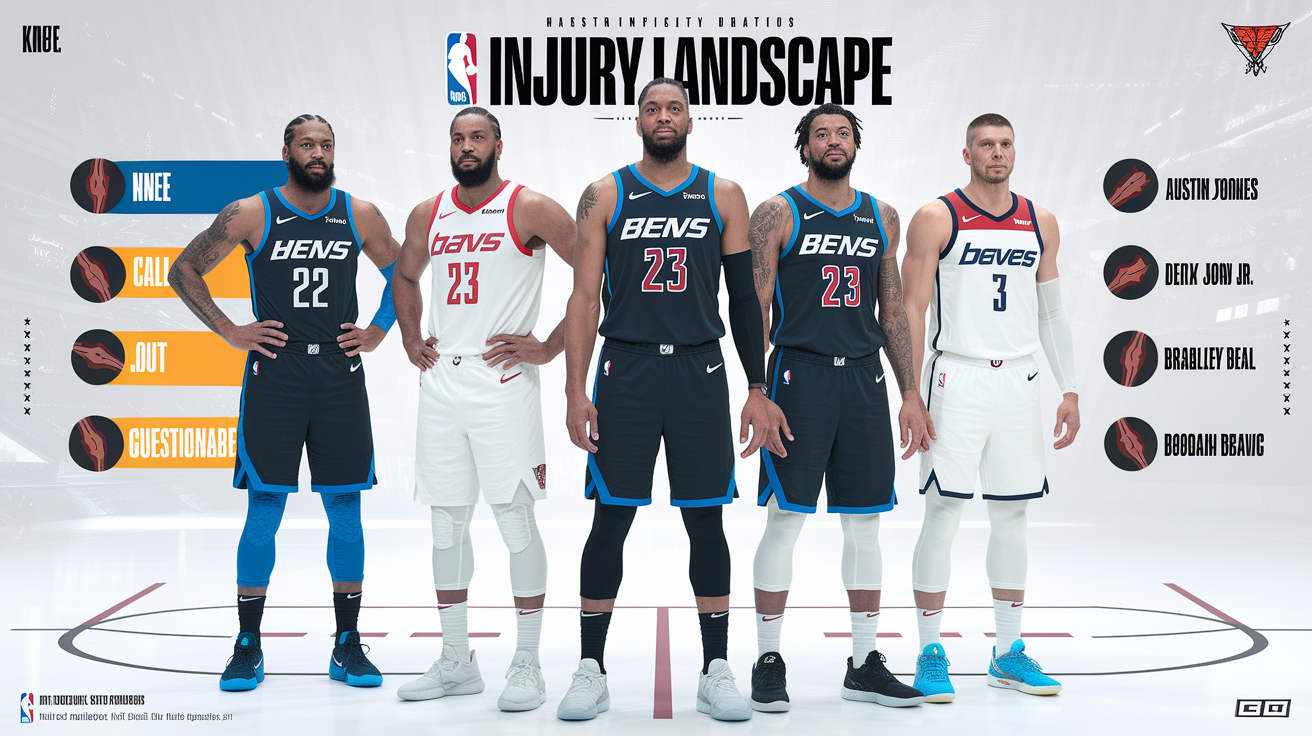
Kawhi Leonard’s knee injury is the single most important availability question for this series. Listed as questionable for the January 22 meeting after missing three games, his status shifts the entire matchup: when he plays, the Clippers have a 28.2-point, 6.6-assist, 2.2-steal two-way force who creates mismatches and controls late-game possessions. When he sits, the offense collapses into James Harden isolation, and the defensive versatility disappears. Bradley Beal’s out for the season following hip surgery, removing another veteran playmaker who could’ve helped manage possessions when Harden and Kawhi rest.
The Lakers are missing three rotation wings who directly impact their ability to defend the Clippers’ perimeter stars. Austin Reaves, Bogdan Bogdanovic, and Derrick Jones Jr. are all ruled out, forcing LeBron James and less experienced role players to absorb heavier defensive assignments. Adou Thiero’s also unavailable, further thinning depth. The result is a shorthanded wing rotation that struggles to switch or stay in front of Kawhi and Harden without help, which opens driving lanes and forces Anthony Davis into more perimeter coverage than ideal.
Matchup effects tied to specific injuries:
- Kawhi Leonard (knee, questionable): If out, Clippers lose primary isolation scorer and best perimeter defender; Lakers become favorites. If active, Clippers regain half-court control and late-game shot creation.
- Austin Reaves (calf, out): Lakers lose a secondary ball-handler and perimeter defender who typically guards opposing shooting guards; forces LeBron into more minutes and heavier two-way workload.
- Derrick Jones Jr. (MCL, out): Removes a versatile wing defender and transition threat; Lakers lose length and athleticism on the perimeter.
- Bradley Beal (hip, out for season): Clippers lose a veteran playmaker who could’ve provided secondary creation and stabilized bench units.
- Bogdan Bogdanovic (hamstring, out): Lakers lose a floor-spacing shooter who helps offset their league-worst three-point volume; further clogs interior spacing.
Historical Trends and Rivalry Context for Clippers–Lakers Season Series
The Clippers won the December 20 meeting by 15 points at Intuit Dome, controlling the game with balanced scoring and taking advantage of the Lakers’ perimeter shooting struggles. That result gave the Clippers the early edge in the season series, but their 6–21 start to the season suggested sustained success would be difficult. Since then, they’ve won 13 of their last 16 games, including two separate six-game win streaks, showing dramatically improved play once Kawhi Leonard returned to health and James Harden found rhythm. The Lakers have posted a strong 14–8 road record and sit fifth in the Western Conference, demonstrating consistent road performance that makes them dangerous in enemy arenas.
Historical context from other recent matchups shows the Lakers won three straight games against the Clippers dating back to last season, though that streak doesn’t include this year’s December loss. The rivalry’s been defined by star availability and home-court advantages. Whichever team has its best players healthy and playing at home typically controls the result. The Clippers’ recent surge and the Lakers’ improved defensive identity under JJ Redick set up a more competitive second half of the season series than the early records suggested, with every remaining game likely to be decided by single possessions and late-game execution.
Final Series Forecast and Analytical Projection for Clippers vs Lakers
The season-series outcome hinges on three variables that create divergent paths: Kawhi Leonard’s availability, perimeter shooting variance, and rebounding margin. If Leonard sits or plays limited minutes due to the knee issue, the Lakers hold a clear advantage. Their improved defense, strong road record, and the Clippers’ 22nd-ranked defensive rating tip the matchup in LA’s favor. The Clippers’ offense depends too heavily on Leonard and James Harden to survive extended absences, and Harden’s current three-point slump removes a critical spacing element. Without Kawhi, the Clippers lack the two-way versatility and late-game shot creation to consistently beat a healthy Lakers squad.
If Kawhi Leonard plays and looks like the 28.2-point, 6.6-assist version who posted multiple 30-point games before the injury, the Clippers become the favorites. Their recent momentum (13 wins in their last 16 games) combined with offensive firepower from Leonard and Harden creates enough half-court scoring to overcome defensive weaknesses. The Lakers’ shorthanded wing rotation leaves them vulnerable to perimeter isolations and forces LeBron into heavier defensive minutes, which could fatigue him late in close games. The Clippers’ ability to slow the pace and hunt mismatches in the half-court plays to their strengths, especially if Harden’s shooting improves even marginally from his recent slump.
Three key predictors for the series outcome:
- Kawhi Leonard’s health and availability: His presence shifts the series from Lakers-favored to Clippers-favored; every game he misses is a likely Lakers win.
- Perimeter shooting variance: If Harden corrects his 19 percent slump and the Lakers remain stuck at 10.9 made threes per game, the Clippers gain a structural spacing advantage that opens driving lanes and post-ups.
- Rebounding margin: The Clippers rank 29th at 40.3 boards per game; if the Lakers consistently dominate the glass and generate 10+ more rebounds per game, they control possessions and tempo, limiting the Clippers’ half-court opportunities and fueling transition offense where LA thrives.
Final Words
The season series is still up for grabs and plays out like a live chess match. Clippers hold the Dec. 20 win, but the Jan. 22 game and Kawhi’s knee will tilt things either way. Harden’s cold shooting and L.A.’s thin wing depth matter every night.
Focus on availability, three-point variance, and the paint battle. Those decide the set.
For a quick catch-up, this Clippers vs Lakers season series preview: matchups to watch lays out the stakes. Should be a fun rivalry to follow.
FAQ
Q: Who is predicted to win the Lakers vs. Clippers?
A: The predicted winner of the Lakers vs. Clippers is conditional: Lakers are favored if Kawhi Leonard sits, but the Clippers are favored if Kawhi plays, given their recent surge and Harden’s shooting variance.
Q: Why wouldn’t the refs give the Lakers the ball?
A: The reason refs wouldn’t give the Lakers the ball is that officials assign possession by rules — jump-ball results, the alternate-possession rule, or foul/violation calls — not by favoring one team.
Q: Why do Lakers jerseys have 44 on them?
A: The reason Lakers jerseys have 44 on them is usually a tribute or special-edition design; teams add numbers or patches to honor a player, anniversary, or campaign, so check the Lakers’ announcement for specifics.
Q: Is Snoop Dogg a Lakers or Clippers fan?
A: Snoop Dogg is a Lakers fan, a long-time supporter who frequently appears at games and publicly backs the team, tying him closely to Lakers culture for years.