
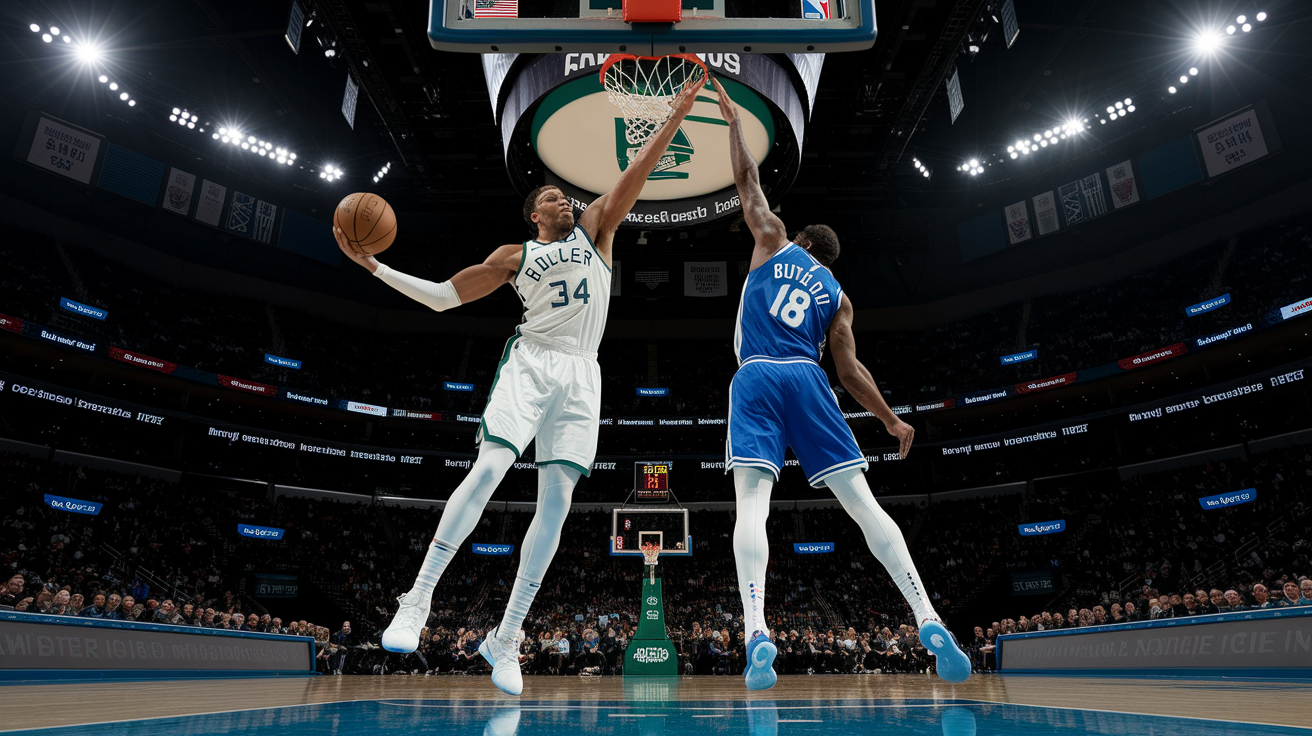

Was Jimmy Butler’s 56-point eruption the moment that proved Miami owns the Bucks in the playoffs?
In this series Butler dropped 56 in Game 4 and Miami demolished Milwaukee 121-99 in Game 3, while Giannis missed time with a back contusion.
Those nights flipped matchups, strategies, and the balance of the series.
This piece breaks down the head-to-head numbers, game-by-game moments, and matchup stats to show why Butler can close and why Milwaukee needs a fully healthy Giannis to turn this rivalry.
Current State of the Bucks–Heat Playoff Rivalry and Giannis–Butler Matchup Dynamics

Miami took a 2-1 series lead after destroying Milwaukee 121-99 in Game 3 on April 22, 2023. The Heat built leads that stretched to 29 points, shot 53.6% from the floor, and watched their bench outscore Milwaukee’s reserves 59-28. Milwaukee came in as the top seed. But back-to-back losses exposed real problems, especially with Giannis Antetokounmpo missing his third straight game because of a back contusion. Going into Game 4, Miami was controlling everything: tempo, spacing, star production. Milwaukee? Still searching for answers without their main offensive weapon.
The head-to-head between Giannis and Butler played out in wildly different ways across Games 3 and 4. Butler dropped 30 points in Game 3 before sitting out the fourth because the game was already done. He had 17 first-quarter points on 6-of-8 shooting, going 3-for-3 from deep. Milwaukee had zero answers without Giannis. The game got away early. Three days later, April 25, Giannis came back for Game 4. Butler responded with a career-high 56 points on 19-of-28 shooting and 15-of-18 from the line, erasing a double-digit Milwaukee lead late to push Miami to a 119-114 win and a 3-1 series lead. Brook Lopez put up 36 points and 11 rebounds, but the Bucks went stagnant down the stretch and couldn’t stop Butler’s relentless drives and isolation scoring.
This thing’s been shaped by injuries, momentum swings, and star-driven scoring runs that force entire game plans to flip. Giannis sitting out multiple games gave Butler the space to dominate without anyone challenging him. His return in Game 4 couldn’t offset Miami’s efficiency or Butler’s historic night. Tyler Herro broke his hand in Game 1, removing a key secondary scorer from Miami’s rotation. Victor Oladipo hurt his knee late in Game 3, creating more uncertainty for the Heat. But Miami’s depth and Butler’s takeover ability kept them in control, building a lead that put Milwaukee one loss away from a rare upset: an eighth seed knocking out the league’s top team.
Historical Playoff Battles Between Milwaukee and Miami
Milwaukee and Miami have built a postseason rivalry that’s all about contrasting styles and high-stakes elimination games throughout the 2020s. Miami’s ended Milwaukee’s playoff runs before, creating a psychological edge that shows up every time these two meet. The Bucks lean on Giannis’ interior dominance, length, and transition offense. The Heat counter with zone defenses, three-point volume, and disciplined half-court execution under Erik Spoelstra. Each series tests whether Milwaukee can adjust when Miami slows things down and forces perimeter shooting, and whether Miami can handle the physical pressure when Giannis is operating at full strength.
Star availability and tactical evolution have increasingly defined this thing. Milwaukee’s championship hopes rest on Giannis staying healthy and productive. Miami’s postseason success depends on Butler’s high-usage scoring and the supporting cast’s ability to stretch the floor. Adjustments over time have included Milwaukee adopting drop coverage to protect the rim and Miami using switching schemes to neutralize size advantages. The franchises have learned each other’s tendencies across multiple playoff cycles, leading to tighter margins and more detailed schematic battles.
In 2013, Miami swept Milwaukee 4-0 during the Big Three era, showcasing the gap between a championship contender and a rebuilding Bucks team. The 2020 Eastern Conference Semifinals saw Miami defeat Milwaukee 4-1 in the Orlando bubble, eliminating the top-seeded Bucks and exposing defensive weaknesses despite Giannis’ individual brilliance. They met again in the 2021 opening round with different rosters, and Miami’s zone defense frustrated Milwaukee before the Bucks adjusted and advanced. The 2022 series was competitive, with both teams battling through tight possessions and clutch finishes, reinforcing the idea that small adjustments determine outcomes. In 2023, Miami won Game 1 on the road 130-117, setting the tone for a series marked by offensive efficiency and defensive breakdowns. Games 3 and 4 saw Miami take control with back-to-back home wins, building a 3-1 lead and placing Milwaukee on the brink of elimination despite being the league’s top seed.
Detailed Giannis vs. Butler Playoff Matchup History and Statistical Comparison

The way Giannis and Butler match up reflects two totally different offensive philosophies colliding across multiple playoff years. Giannis relies on relentless drives, rim pressure, and physical dominance, using his size and speed to attack closeouts and finish through contact. Butler counters with patience, mid-range creation, and late-game isolation scoring. He operates as a high-usage playmaker who controls tempo and exploits mismatches in pick-and-roll and post-up situations. Each player’s approach creates matchup problems: Giannis forces help rotations that open perimeter shooters, while Butler draws fouls and manipulates defenses with hesitation moves and step-back jumpers. Over time, their battles have showcased contrasting paths to playoff dominance, with Giannis’ athleticism tested by Miami’s zone schemes and Butler’s scoring bursts exposing Milwaukee’s perimeter defense.
Availability has profoundly influenced their overall performance profiles. Giannis missing multiple games in 2023 because of a lower back contusion took away Milwaukee’s primary offensive engine, leaving the Bucks unable to match Miami’s pace or create efficient interior looks. When Giannis returned for Game 4, his presence changed defensive rotations and gave Milwaukee a legitimate rim threat, but his conditioning and timing looked affected by the layoff. Butler’s durability allowed him to carry Miami’s offense even when secondary scorers like Herro were sidelined. His back bruise late in Game 3 proved minor enough not to limit his historic Game 4 performance. The contrast between Giannis’ injury-related absences and Butler’s sustained availability shifted the competitive balance and forced Milwaukee into reactive adjustments.
Butler’s 56-point eruption on April 25, 2023, ranks among the greatest individual playoff performances in recent memory, showcasing his ability to take over late-game possessions and convert difficult shots under pressure. Giannis’ playoff stats against the Heat across multiple series show consistent production when healthy, but his shooting limitations from mid-range and beyond the arc allow Miami to wall off the paint and force turnovers. Butler’s playoff numbers against the Bucks reveal a pattern of escalating usage in elimination-game scenarios, with efficient free-throw shooting and isolation scoring defining his clutch résumé. Both players elevate teammates through leadership, but their methods differ: Giannis energizes through transition dunks and defensive intensity, while Butler sets the tone with vocal communication and late-game shot-making.
| Player | Key Playoff Stats vs Opponent | Impact Summary |
|---|---|---|
| Giannis Antetokounmpo (Early Series) | 25-30 PPG, 10-12 RPG, limited three-point shooting, high free-throw volume | Dominates paint when healthy but struggles against zone defenses; availability critical to Milwaukee’s offensive flow |
| Giannis Antetokounmpo (Peak Scoring) | 30+ PPG in select games, 55-60% FG from inside the arc, heavy usage in transition | Forces help rotations and creates open looks for perimeter shooters; turnover-prone when Miami clogs driving lanes |
| Jimmy Butler (Early Series) | 20-25 PPG, 5-7 APG, efficient mid-range shooting, high free-throw rate | Controls pace and orchestrates half-court offense; enables role players through playmaking and defensive attention |
| Jimmy Butler (Peak Scoring) | 30-56 PPG in elimination contexts, 60%+ FG efficiency in clutch games, 15-18 FTA per game | Takes over late-game possessions with isolation scoring; historic performances define his postseason legacy vs Milwaukee |
Game-by-Game Recap of the Latest Bucks–Heat Series
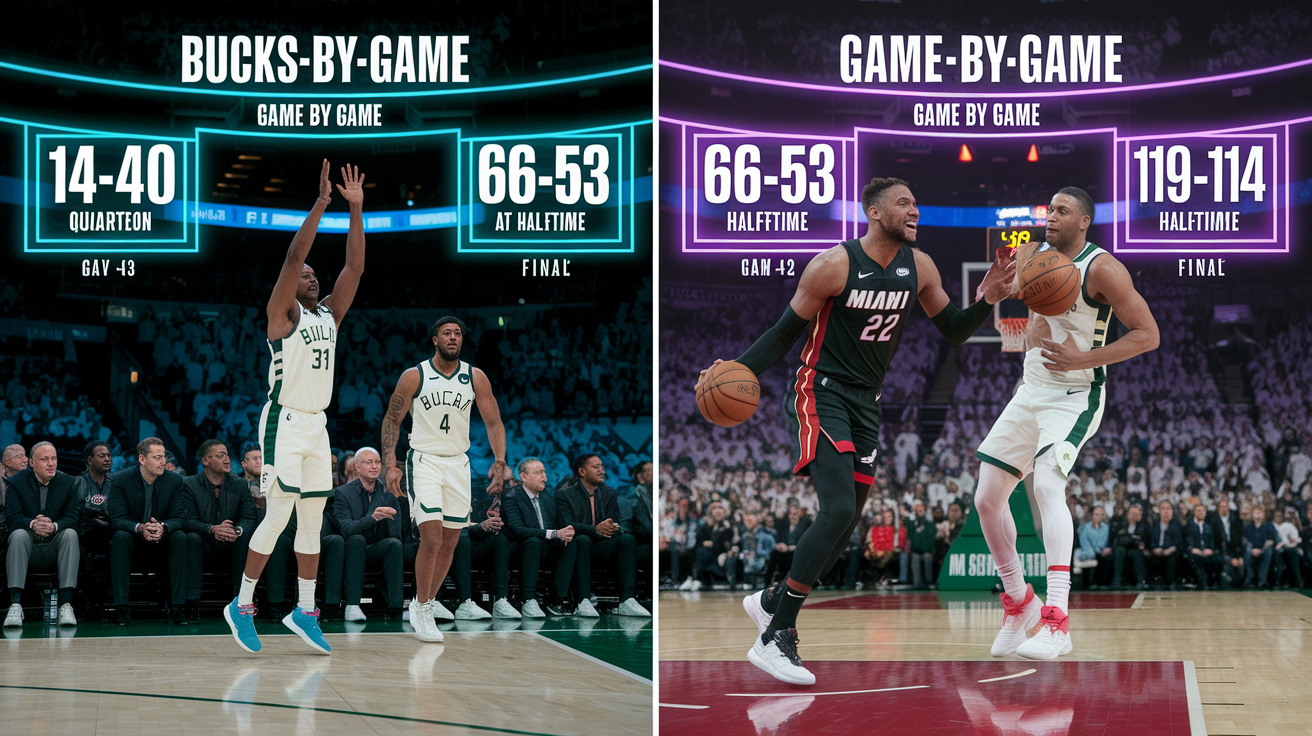
Miami’s 121-99 Game 3 victory showed offensive precision and defensive discipline from start to finish. The Heat closed the first quarter on a 14-0 run, turning a tight contest into a 29-21 lead and setting the tone for the rest of the night. Butler scored 17 points in the opening frame, shooting 6-of-8 from the field and 3-of-3 from three, and finished with 30 points before resting in the fourth quarter because of the blowout margin. Duncan Robinson celebrated his 29th birthday with 20 points off the bench, making five threes. Kyle Lowry added 15 points in a reserve role. Miami shot 50% from the field in the first half and connected on 12-of-19 three-point attempts (63.2%), setting a franchise playoff record for made threes in any half. The Heat led 66-53 at halftime and extended the advantage to as many as 29 points, exploiting Milwaukee’s 18 turnovers and 44.7% field goal shooting. Bam Adebayo contributed 12 points, 11 rebounds, and five assists. Caleb Martin posted 12 points and 11 rebounds off the bench. Khris Middleton led the Bucks with 23 points, Jrue Holiday scored 19, and Grayson Allen added 14, but Milwaukee never threatened after falling behind early. Victor Oladipo scored eight points before leaving late in the fourth quarter with a left knee injury, adding to Miami’s growing list of health concerns.
Game 4 on April 25, 2023, delivered one of the most iconic individual performances in recent playoff history when Butler erupted for 56 points on 19-of-28 shooting and 15-of-18 from the line to push Miami to a 119-114 win. Giannis returned after missing the previous two games with a back contusion, and his presence initially energized Milwaukee to a double-digit lead that stretched into the fourth quarter. Brook Lopez dominated inside with 36 points, 11 rebounds, and three blocked shots, giving the Bucks a legitimate interior scoring threat alongside Giannis. Milwaukee held a comfortable advantage midway through the final period. But Butler’s relentless drives, isolation scoring, and free-throw shooting erased the deficit and put Miami ahead for good. The Bucks went stagnant offensively in the closing minutes, committing costly turnovers and failing to execute in half-court sets as Butler attacked closeouts and drew fouls. Miami’s efficiency stayed high, and the supporting cast provided enough spacing to prevent Milwaukee from collapsing entirely on Butler. The win gave the Heat a commanding 3-1 series lead, placing the top-seeded Bucks on the brink of elimination and sparking widespread reactions from fans, analysts, and players across the league.
Miami’s 14-0 run to close the opening quarter in Game 3 turned a competitive start into a nine-point lead, setting the tone for a blowout. Butler’s three consecutive threes during the run forced Milwaukee into early timeouts and defensive adjustments that never materialized. Miami’s 12 made threes in the first half broke a franchise playoff record and demoralized Milwaukee’s perimeter defense. Robinson and Lowry combined for six triples off the bench, exploiting open looks created by Butler’s drives and Adebayo’s screens. The Bucks built their largest advantage midway through the fourth quarter of Game 4, capitalizing on Lopez’s interior scoring and Giannis’ transition opportunities. Miami’s offense appeared stagnant until Butler took over with a series of isolation possessions that forced fouls and created layup opportunities. Butler scored repeatedly down the stretch, converting contested mid-range jumpers, drawing fouls on drives, and hitting free throws to erase Milwaukee’s lead. The Bucks’ late-game execution collapsed under pressure, resulting in turnovers and missed shots that allowed Miami to pull ahead and secure the win.
Key Individual Performances That Shaped the Rivalry: Butler Surges vs. Giannis’ Availability
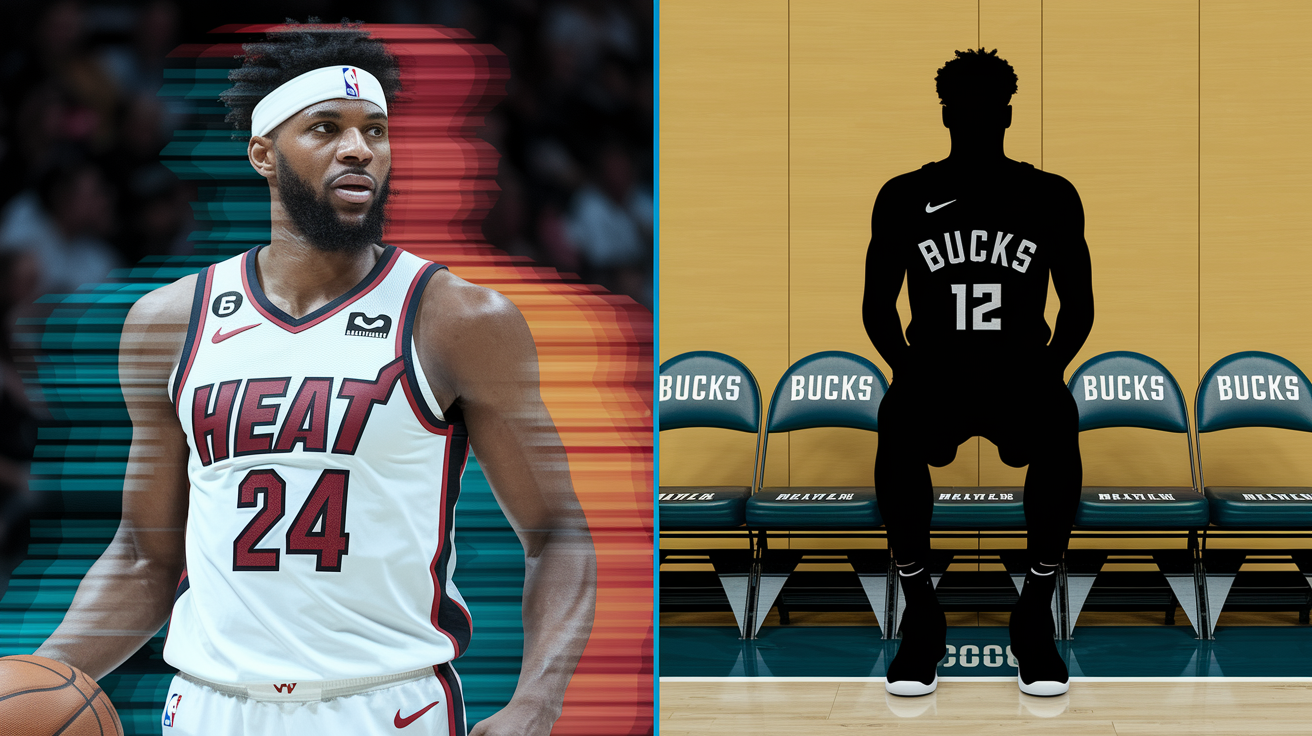
Butler’s takeover style revolves around high-usage scoring that peaks in elimination contexts and late-game situations. His ability to draw fouls, convert difficult mid-range shots, and control tempo through isolation possessions makes him nearly impossible to contain when he reaches peak efficiency. Butler’s 56-point Game 4 performance showed his capacity to carry an entire offense for extended stretches, using hesitation dribbles, step-back jumpers, and relentless drives to attack mismatches and exploit defensive rotations. His scoring bursts shift momentum fast, forcing opponents into reactive defensive schemes that create open looks for teammates. Butler’s sustained high-impact performances across multiple games establish psychological edges. Defenses expend energy trying to slow him down while role players benefit from the attention he commands.
Giannis’ presence or absence fundamentally changes defensive matchups and offensive flow for both teams. When Giannis plays, Milwaukee’s offense operates through his rim pressure, transition opportunities, and ability to collapse help defenders, creating open three-point looks for perimeter shooters. His size and athleticism force Miami into zone schemes and help rotations designed to wall off the paint, which in turn opens mid-range opportunities for secondary playmakers. When Giannis misses games because of injury, Milwaukee loses its primary offensive engine and interior deterrent, forcing role players into expanded roles they’re not equipped to handle consistently. Miami capitalizes by pressuring Milwaukee’s perimeter defenders, attacking slower big men in pick-and-roll situations, and maintaining aggressive rebounding without fear of Giannis’ length altering shots near the rim.
Milwaukee’s defensive strategy against Miami hinges on containing Butler through switching and help rotations designed to force passes out of isolation situations. The Bucks assign lengthy wing defenders to track Butler, but his patience and footwork let him create separation and draw fouls even against elite defenders. When Giannis is available, his rim protection discourages drives and forces Miami into contested mid-range attempts. But his mobility limitations on the perimeter create opportunities for quick guards to attack closeouts. Miami counters by using zone defenses to neutralize Giannis’ interior dominance, forcing Milwaukee’s role players to beat them from three while clogging driving lanes and protecting the paint.
Injuries force defensive reshuffling that cascades across both rosters. Herro’s broken hand removed a key perimeter defender from Miami’s rotation, requiring increased minutes from Robinson and Lowry in switching schemes. Oladipo’s knee issue created further uncertainty, potentially limiting Miami’s ability to deploy athletic wing defenders against Milwaukee’s transition game. For the Bucks, Giannis’ multi-game absence forced Brook Lopez into expanded defensive responsibilities, exposing his lateral movement limitations against Miami’s pick-and-roll actions. When Giannis returned in Game 4, his conditioning appeared affected, leading to slower closeouts and reduced rim protection in crucial late-game possessions.
Coaching Adjustments and Tactical Shifts in the Bucks–Heat Rivalry
Spoelstra’s structural and spacing adjustments enabled Butler’s usage and Miami’s bench leverage throughout the series. By deploying zone defenses early in possessions, Spoelstra forced Milwaukee into perimeter-heavy offensive sets that relied on role players making contested threes. Miami’s bench rotation maximized spacing through Duncan Robinson’s off-ball movement and Kyle Lowry’s playmaking, creating driving lanes for Butler while ensuring the Bucks couldn’t collapse entirely on him. Spoelstra staggered minutes to keep fresh defenders on the floor against Giannis when he returned, using Adebayo’s mobility and Martin’s physicality to contest drives without fouling. Spoelstra praised Butler’s brilliance in competition, saying, “There’s a brilliance to the way he competes at the game of basketball.” His tactical choices reflected trust in Butler’s decision-making during high-leverage possessions.
Milwaukee’s schematic issues stemmed from late-game stagnation and an inability to counter Miami’s defensive adjustments. The Bucks struggled to generate clean looks when Lopez operated as the primary offensive hub during Giannis’ absence, leading to contested mid-range jumpers and turnovers in half-court sets. When Giannis returned, Milwaukee’s offensive spacing improved. But the team’s late-game execution faltered under pressure, resulting in costly turnovers and rushed shots. The Bucks’ drop coverage allowed Miami’s shooters to find rhythm from three, and Milwaukee’s perimeter rotations arrived too late to contest effectively. Milwaukee’s failure to adjust defensively to Butler’s fourth-quarter takeover in Game 4 exposed communication breakdowns and an over-reliance on individual matchups rather than coordinated help schemes.
Spoelstra’s decision to deploy zone defenses early in the series forced Milwaukee into perimeter shooting and disrupted offensive rhythm, particularly when Giannis was unavailable to attack the paint. Miami’s bench outscored Milwaukee 59-28 in Game 3, a product of Spoelstra’s strategic use of Robinson and Lowry to maintain spacing and offensive continuity while starters rested. Spoelstra’s willingness to clear out for Butler in crunch time allowed Miami to dictate pace and forced Milwaukee into reactive defensive schemes that couldn’t prevent fouls or difficult shot conversions.
Injury Reports, Player Availability, and Their Impact on the Giannis–Butler Rivalry
Giannis’ multi-game absence because of a lower back contusion reshaped the competitive balance and handed Miami a window to seize control of the series. His missed appearances in Games 2 and 3 removed Milwaukee’s primary offensive engine and interior defensive anchor, forcing role players like Lopez, Middleton, and Holiday into expanded responsibilities they struggled to sustain consistently. Tyler Herro’s broken hand sustained in Game 1 eliminated a key secondary scorer from Miami’s rotation, requiring increased offensive production from Butler and the bench. Victor Oladipo’s left knee injury late in Game 3 created further uncertainty for Miami’s depth, potentially limiting their ability to deploy athletic wing defenders in future games. Butler’s lower back bruise after landing hard in the third quarter of Game 3 raised concerns about his availability for Game 4, but he returned to the bench and was later cleared, allowing him to deliver his historic 56-point performance.
These absences and returns shifted responsibilities and strategic priorities for both teams. Miami leaned heavily on Butler’s usage, asking him to carry the offensive load while role players focused on spacing and defensive assignments. Milwaukee’s inability to adjust offensively without Giannis exposed their lack of secondary playmaking, leading to stagnant possessions and turnovers. When Giannis returned for Game 4, the Bucks initially appeared revitalized, building a double-digit lead. But his conditioning and timing limitations became apparent in late-game situations where Miami’s defensive rotations forced difficult decisions. The scheduling context (Game 4 on Monday night at 7:30 p.m. ET following a Saturday Game 3) gave Milwaukee minimal time to recalibrate, while Miami maintained momentum from their blowout victory and Butler’s early-series dominance.
Fan Reaction, Media Narratives, and How They Frame the Bucks–Heat Rivalry
Media framed the rivalry throughout the series as a referendum on Milwaukee’s championship credentials and Butler’s legacy as a playoff performer. National narratives shifted from Milwaukee’s regular-season dominance as the top seed to questions about their ability to withstand adversity when Giannis missed multiple games. Butler’s performances drew comparisons to historic playoff scoring outbursts, with analysts debating whether his 56-point Game 4 ranked among the greatest individual playoff performances of the modern era. Spoelstra’s tactical adjustments received praise for enabling Miami’s depth and exploiting Milwaukee’s defensive vulnerabilities, while Milwaukee’s late-game collapses became focal points for criticism of their offensive execution and defensive communication. The potential for an eighth-seeded team to upset the league’s top seed generated widespread intrigue. Media outlets framed the series as a test of whether regular-season success translated to postseason resilience.
Joel Embiid’s social media response captured the visceral excitement surrounding Butler’s Game 4 performance, reflecting peer admiration for his scoring explosion. Skip Bayless said, “I cannot remember any player in any playoff game ever getting and staying as hot start to finish as Jimmy Butler…” He highlighted the sustained nature of Butler’s dominance and positioned his performance within historical context. A reaction dated April 25, 2023, from Magic Johnson underscored the cross-generational respect Butler’s playoff performances command. Kendrick Perkins emphasized the leadership and competitive intensity Butler displayed, framing him as a player who elevates in the biggest moments. Throughout Game 4, Miami fans flooded platforms with praise for Butler, celebrating each scoring run and highlighting his impact on franchise postseason history.
Long-Term Implications of the Giannis–Butler Rivalry for Both Franchises

The rivalry affects long-term franchise trajectories by shaping postseason expectations and influencing roster construction decisions. For Milwaukee, repeated elimination or near-elimination scenarios against Miami raise questions about the supporting cast surrounding Giannis and whether the current roster can deliver championships. The Bucks’ 32-9 home record during the regular season and their status as the top overall seed created elevated expectations, making a potential loss to an eighth-seeded opponent a franchise-defining moment. Miami’s ability to compete and win without key rotation players like Herro reinforces their organizational depth and Spoelstra’s coaching acumen, positioning them as perennial playoff threats regardless of seeding. The series also tests Milwaukee’s resilience and adaptability, revealing whether they can overcome adversity when their best player is unavailable or compromised by injury.
Sustained performance trends from each star create potential future conflicts in upcoming playoff cycles. Butler’s repeated success against Milwaukee establishes a psychological edge that carries into future matchups. His clutch scoring and leadership define Miami’s postseason identity. Giannis’ availability and conditioning will determine whether Milwaukee can counter Butler’s takeover ability with interior dominance and transition offense. The Bucks’ long-term Finals aspirations depend on Giannis staying healthy and the team developing secondary playmakers who can execute in half-court sets when defenses focus on stopping him. Miami’s Finals aspirations hinge on Butler’s durability and the development of younger players who can complement his high-usage style. Future playoff meetings between these franchises will test whether Milwaukee can solve Miami’s zone defenses and late-game execution, and whether Butler can continue delivering historic performances when the stakes are highest.
Final Words
The series jumped off after Miami’s blowout in Game 3 and Butler’s 56-point eruption in Game 4 — sudden swings that left Miami up and the rivalry heating up fast.
Availability and bench play have decided a lot. Giannis’ absence shifted matchups, Brook Lopez mattered when Giannis returned, and coaching tweaks changed the flow.
If you want the short take: this remains a matchup shaped by health, star bursts and adjustments. Bucks vs Heat playoff rivalry update: Giannis vs Butler matchup history is still unfolding — and it’s worth watching.
FAQ
Q: How many times has Jimmy Butler beaten Giannis in the playoffs?
A: Jimmy Butler has beaten Giannis multiple times in playoff games; notably Butler led Miami to key wins in the 2023 first‑round series, including Games 3 and 4 and an eventual series victory.
Q: What unwritten rule did Giannis break?
A: Giannis reportedly broke an unwritten playoff etiquette rule by celebrating in a way some saw as showboating or trash‑talking after a play, which drew criticism though no formal punishment.
Q: Did Shaq say Giannis was better than him?
A: Shaq did not declare Giannis better than him; he’s praised Giannis’ skills in interviews but has not publicly said Giannis is superior to Shaq’s own peak.
Q: Do all three Antetokounmpo brothers play together?
A: All three Antetokounmpo brothers don’t regularly play together; Giannis and Thanasis have been Bucks teammates, while Kostas has spent time with other teams, so all three haven’t been long‑term teammates in the NBA.