
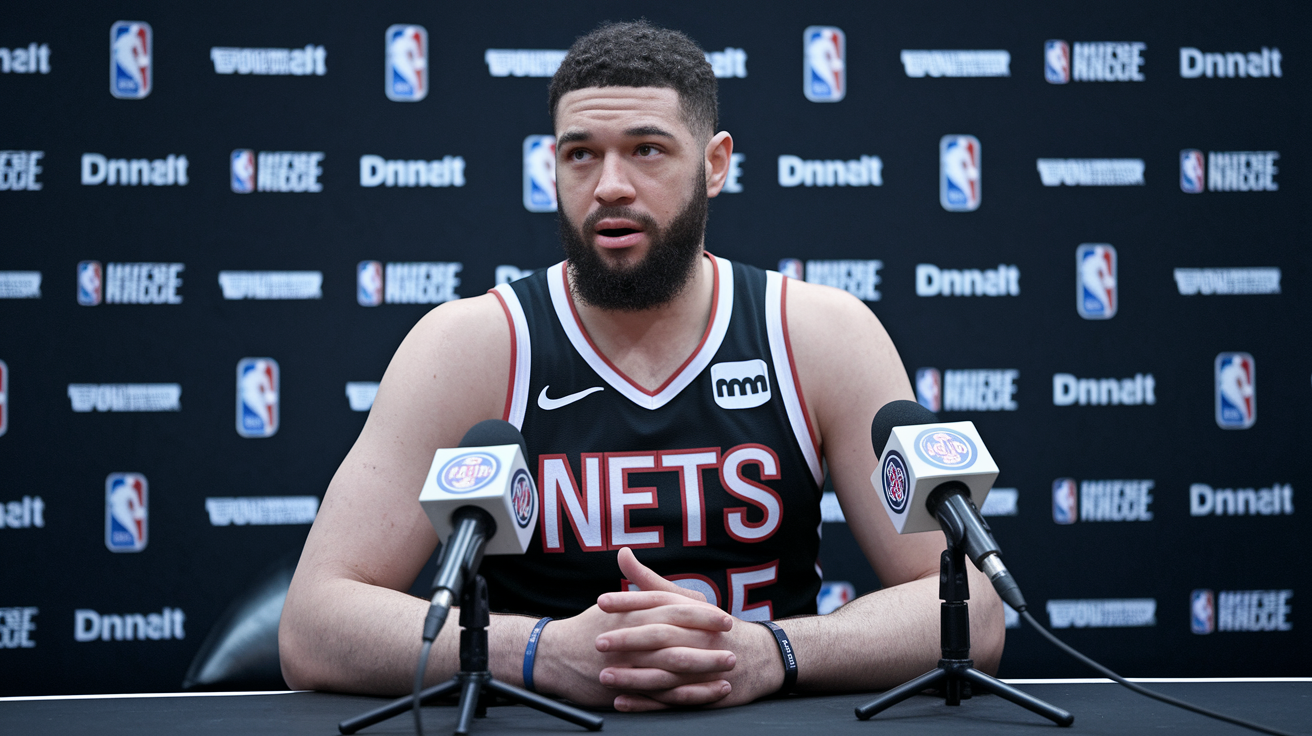

Did a quiet press room comment just reignite the Nets–Knicks rivalry?
It happened March 20, 2026, at Barclays Center after a 93-92 Nets loss, when Josh Minott grabbed a mic and said former teammate Karl‑Anthony Towns “shies away from physicality.”
No team, player or the league has officially responded, and social media ran with it.
This piece breaks down the timeline, the reactions, the NBA’s likely move, and what the remark could mean for rotations, chemistry and the next Nets–Knicks meetings.
Full Breakdown of the Nets–Knicks Off‑Court Incident Timeline
The whole thing went down on March 20, 2026, at Barclays Center in Brooklyn, right after a tight 93-92 Nets loss to the Knicks. The game itself was physical. Brooklyn played solid defense all night. But the real story started in the postgame press room when Josh Minott, the Nets’ forward wearing number 00, grabbed the mic.
Minott had landed in Brooklyn maybe 10 games earlier through a trade deadline deal from Boston, where he’d been Karl-Anthony Towns’ teammate. Still figuring out his new role and getting used to pronouncing his last name for local media, Minott used his postgame slot to air out some frustrations. He said Towns “shies away from physicality” and hoped his comments would get under the Knicks center’s skin enough to motivate him. The fact that these words came from someone who actually knew Towns made them sting harder.
As of publication, nobody had said anything official. Not the Nets, not the Knicks, not the NBA, not any of the players involved. The lack of response left the comments just hanging there, getting amplified by social media and sports talk shows but not addressed by any front offices or league people.
- Date and time: March 20, 2026, postgame at Barclays Center following a 93-92 Nets loss
- Individuals involved: Josh Minott (Nets forward, #00) and Karl-Anthony Towns (Knicks center, former teammate)
- What was said: Minott publicly claimed Towns shies away from physicality and expressed hope his comments would motivate him
- Immediate media reaction: Outlets picked up the story fast, framing it as potential fuel to reignite the Nets–Knicks rivalry
- Absence of official statements: No responses from either team, the NBA, or players involved were on record as of publication
Nets–Knicks Off‑Court Reactions and Team Responses
The silence from both organizations was pretty noticeable. The Nets didn’t issue a statement distancing themselves from Minott’s remarks or backing them up, and the Knicks offered no public rebuttal or even acknowledgment. This hands-off thing is pretty common when teams want to avoid making a war of words worse or pulling more media attention.
Minott’s comments did spark instant conversation on social media, though. Fans on both sides reacted how you’d expect. Knicks supporters dismissed the whole thing as desperate trash talk from a fringe rotation player. Nets fans celebrated finally having someone willing to “rep the team” publicly. The media story came together quickly around the idea that Minott had breathed life into a dormant crosstown rivalry, whether his comments were accurate or not.
- Nets organization: No official comment or internal discipline announcement made public; coaching staff probably addressed the remarks privately
- Knicks organization: Didn’t release a statement; no public defense of Towns or acknowledgment of Minott’s claims
- Social media amplification: Clips of Minott’s press conference circulated widely within hours, with hashtags like #NetsKnicks and #MinottVsTowns trending briefly
- Media narrative: Analysts framed the incident as a potential turning point for fan engagement and rivalry intensity rather than a disciplinary matter
NBA Discipline Outlook for the Nets–Knicks Off‑Court Situation

The chances of the NBA slapping Minott with any discipline for his postgame remarks are pretty low. The league usually saves fines and suspensions for stuff that violates the player code of conduct through threats, physical altercations, or language that crosses way beyond competitive trash talk. Looking at history, players can publicly criticize opponents without triggering formal penalties as long as the commentary stays within sports rivalry bounds.
If the NBA were going to act, the expected window would be 48 to 72 hours from the incident. That gives league officials time to review video, talk with both teams, and figure out whether the remarks created a hostile environment or violated any conduct standards. In this case, the lack of any announcement in the days after March 20 suggested the league viewed Minott’s comments as provocative but permissible.
| Incident | Outcome | Relevance |
|---|---|---|
| Kevin Garnett trash-talking opponents publicly (various seasons) | No fines or suspensions; league viewed comments as competitive banter | Shows NBA tolerance for strong words when they don’t threaten or demean protected classes |
| Draymond Green calling out opponents in press conferences (2015–2023) | Occasional technical fouls on court; no postgame discipline for verbal remarks alone | Indicates league draws line at on-court conduct, not media availability commentary |
| Patrick Beverley postgame criticism of opponents (2021–2024) | No league action; teams occasionally intervened internally | Demonstrates that team-level responses can occur without NBA involvement |
Impact of the Off‑Court Incident on Nets–Knicks Roster Dynamics and Upcoming Games
Minott’s comments landed at a moment when both teams were navigating rough stretches. The Nets had lost 10 of their last 12 games overall, though they’d shown some defensive progress earlier in December. The Knicks had dropped 9 of their last 11 and were dealing with Karl-Anthony Towns’ shooting struggles plus Jalen Brunson’s ankle sprain. The added emotional edge from Minott’s remarks was probably going to influence how intense their next meetings would be.
For the Nets, the incident could shake up short-term rotations. Minott had been earning minutes through strong 3-point shooting and defensive instincts. His willingness to publicly challenge a rival star might make him more appealing to coaches looking for players who embody team identity. If his on-court performance keeps justifying increased playing time, the comments become part of a bigger story about Brooklyn building a scrappy, vocal roster instead of just a distraction.
The Knicks face a different calculation. Towns was already under scrutiny for inefficient shooting and reported friction with head coach Mike Brown. Minott’s public jab could work as added motivation, or it could pile onto existing frustrations. Brunson’s ankle injury limits his ability to dominate the ball, so the Knicks’ offensive rhythm depends heavily on whether Towns can assert himself physically. That’s the exact area Minott questioned.
- Projected short-term lineup impacts: Minott may see slightly increased minutes if coaches reward his vocal presence; Nets probably continue deploying full-court pressure defenders on Brunson
- Emotional intensity in upcoming matchups: Expect heightened physicality and more frequent on-court exchanges when these teams meet again
- Towns and Brunson considerations: Towns faces added pressure to respond physically; Brunson’s injury timeline will determine how much backcourt firepower the Knicks can deploy in rivalry games
- Chemistry implications: Nets risk locker-room division if teammates view public callouts as counterproductive; Knicks must manage any internal frustration Towns feels without letting it affect team cohesion
Legal and Investigative Context for Nets–Knicks Off‑Court Incidents
No criminal or police involvement got reported in connection with Minott’s postgame remarks. The incident stayed entirely within the realm of competitive sports commentary. No allegations of physical confrontation, threats, or conduct that would get law enforcement interested. This is a critical distinction, because NBA investigations and potential discipline ramp up sharply when incidents involve video evidence of altercations or require witness statements from security or arena personnel.
Typical investigative procedures in off-court NBA incidents include reviewing all available video footage, interviewing players and staff present at the time, consulting with arena security, and coordinating with local law enforcement if criminal conduct is alleged. None of those steps were necessary here. Minott’s comments were made in a controlled press environment and didn’t cross legal or safety thresholds.
- What would trigger a formal NBA investigation: Physical altercations on or off court, credible threats of violence, conduct that endangers public safety, or violations of the league’s anti-discrimination policies
- Evidence typically collected: Security camera footage, cell-phone video from bystanders, official witness statements from arena staff, phone or social-media records if harassment is alleged
- Law-enforcement coordination: NBA investigators consult local police when incidents occur in public spaces or when criminal charges are filed; parallel legal proceedings can extend the timeline for league discipline announcements
Media Coverage and Public Narrative Around the Nets–Knicks Off‑Court Exchange

Media outlets framed Minott’s remarks as a gift to the rivalry conversation rather than some disciplinary crisis. National and local sports networks ran segments dissecting whether his comments were justified, whether Towns would respond on the court, and whether the Nets finally had a player willing to give fans something to rally behind. The lack of official statements from either team or the league left analysts to fill airtime with speculation, which made the story’s reach bigger.
Fan engagement spiked immediately. Social platforms lit up with debates about Minott’s credibility, Towns’ toughness, and the health of the Nets–Knicks rivalry. No network interrupted regular programming. No emergency league announcements got made. No broadcast partners issued formal commentary. The incident stayed in the sports-news cycle, not the broader news cycle, which kept the tone focused on competition instead of controversy.
How the Rivalry Narrative Is Being Rebuilt
Analysts grabbed onto Minott’s words as evidence that the Nets–Knicks rivalry, dormant for years, might be ready for a reboot. Commentators pointed to Brooklyn’s need for identity and fan engagement, noting that a superstar acquisition would help but that vocal, relatable players who “rep the team” can generate buzz in the meantime. Minott’s willingness to publicly challenge a former teammate gave the media a storyline to carry into future matchups, whether the on-court product justified the hype or not. The narrative became less about whether Minott was right and more about whether his comments could spark the kind of sustained intensity that fills arenas and drives ratings.
What’s Next: Outlook for Both Teams After the Nets–Knicks Off‑Court Flashpoint
The immediate short-term stuff is media-driven. Expect bigger coverage and fan interest when the Nets and Knicks meet again, with cameras and microphones tracking every interaction between Minott and Towns. If Minott’s on-court role keeps growing, his comments will get absorbed as part of Brooklyn’s evolving identity. If his minutes shrink, the remarks risk looking like noise from a fringe player.
Long-term rivalry revival depends way more on roster construction than on a single postgame soundbite. The Nets need to land or develop a superstar and surround that player with complementary pieces who can compete at a high level and embody the franchise’s voice. The Knicks need to address Towns’ shooting slump and Brunson’s injury timeline if they want to keep championship aspirations alive. Minott’s flashpoint can light a spark, but sustained fire requires talent, health, and consistent on-court success.
| Timeframe | Expected Development | Likelihood |
|---|---|---|
| 48–72 hours post-incident | No official NBA discipline announced; teams issue brief internal statements or maintain public silence | Very high |
| Next 1–2 weeks | Increased media attention around upcoming Nets–Knicks games; possible on-court exchanges or heightened physicality | High |
| Rest of season | Minott’s role expands if shooting and defense continue; rivalry intensity sustains if both teams remain competitive | Medium |
| Offseason | Nets pursue superstar acquisition and identity-building moves; incident becomes footnote if roster changes significantly | Medium to high |
Final Words
In the action, Josh Minott’s March 20 postgame comments at Barclays Center, after a 93-92 loss, kicked off the timeline we laid out.
We walked through the minute-by-minute sequence, team silence, likely league response, roster effects, and how media shaped the rivalry angle.
Nets vs Knicks off-court incidents explained and what’s next: expect more heat online and extra edge in upcoming matchups, but formal discipline looks unlikely. Watch the courts. The best answer will come on game night.
FAQ
Q: Do Jay Z still own the Nets?
A: Jay-Z does not own the Nets outright; he was part of a minority ownership group tied to Joe Tsai’s 2019 purchase, holding a small stake rather than controlling the team.
Q: How likely are the Knicks to win a championship?
A: The Knicks’ chance of winning a championship depends on health, trades, and matchups; they’re a serious contender but not a top favorite, so title odds are realistic yet modest.
Q: Why is the Knicks pick forfeited?
A: The Knicks’ pick is forfeited because of league penalties, tampering rulings, or prior trade protections that remove or convert the pick; check the NBA’s official notice for the exact reason.
Q: Why do teams cut down the Nets?
A: Teams cut down the nets to celebrate winning a championship or tournament; players and staff take pieces as keepsakes — a long-standing victory tradition after a title-clinching game.