

Think film is the only thing that matters?
The NFL Combine regularly proves it isn’t.
Prospects walk into Indianapolis with resumes, and one drill can reshape those resumes overnight.
This piece explains how drills, from the 40-yard dash and explosive jumps to bench testing and short shuttles, produce hard metrics scouts use to bump players up or drop them down—sometimes by multiple rounds.
We’ll show which numbers move boards, why teams care, and what a big or bad day at the Combine really means for a prospect.
Immediate Draft-Stock Effects of Key NFL Combine Drills
Every February, about 250 prospects head to Indianapolis for the NFL Combine. Same venue since 1987. It’s a week-long evaluation where teams get standardized athletic testing, medical exams, interviews, and position drills to add context to the film they’ve already watched. Because franchises are betting millions on high draft picks, the Combine exists to cut down uncertainty. When a prospect crushes the drills or bombs them, his projected draft slot can move multiple rounds before the day’s over.
Six drills anchor everything. The 40-yard dash comes from the 1940s, when the average punt traveled around 40 yards with a hang time near 4.5 seconds. Made sense to test field coverage at that distance. Teams also run a 225-pound bench press for reps, vertical jump, broad jump, 20-yard shuttle (the 5-10-5), and three-cone drill. Modern scouts break the 40 into splits now: 0–10 yards for acceleration, 10–30 for top speed, full 0–40 for the headline number. Most of those splits never get published. Speed positions like receiver, corner, and running back see the biggest stock swings from sprint times. Offensive and defensive linemen rise or fall on explosiveness drills and body measurements that show whether they can move despite their size.
Stock changes start the second testing ends. A receiver who posts a 4.28 forty and a 42-inch vertical can jump from a third-round projection into the late first. A linebacker whose shuttle time trails the position average by three-tenths of a second, or an edge rusher flagged for a degenerative knee during medicals, might slide an entire day. Interviews and psych evals add another layer. Quarterbacks get cognitive testing to check decision-making under pressure, and any red flag in leadership or scheme comprehension can wipe out strong athletic numbers.
Common draft-stock movements after Combine week:
- Explosive riser – Lesser-known guy runs a top-three positional forty, gains two rounds overnight.
- Confirmer – High-profile player posts expected numbers, validates first-round projection, nothing changes.
- Minor slider – Tests slightly below average in agility drills, falls five to ten picks in the same round.
- Medical faller – Clean film but chronic injury history surfaces in doctor exams, drops a full round or more.
- Measurement surprise – Hand size, arm length, or wingspan comes in outside expected range, triggers position change or multi-round adjustment.
- Interview casualty – Strong testing but poor scheme recall or character concerns in team meetings, removed from early-round boards.
The 40-Yard Dash and Speed Metrics That Move Draft Boards

The 40-yard dash gets more attention than any other drill because straight-line speed translates directly to field advantage at skill positions. Teams care less about the headline time than how an athlete generates it. The NFL captures splits at 10 and 20 yards using laser timing, but those intermediate marks rarely show up in public rankings. A 4.28 final can come from elite acceleration with a modest top end, or average acceleration with a blazing flying phase. Two identical times can look completely different when you break them into 0–10 (pure power and first-step explosion) and 10–30 (maximum velocity and stride mechanics). Scouts who ignore splits risk misjudging whether a receiver can separate at the line or only on deep routes.
Receivers, corners, and running backs see the steepest draft movements from the forty. A receiver projected in the second round who runs 4.35 after filming at 4.50 speed will climb into late-first consideration because NFL offenses want vertical threats who can stress Cover 2 shells. Corners have to match those receivers, so a 4.60 time can eliminate a prospect from starting consideration even if his college tape shows excellent technique. Running backs benefit when a sub-4.40 clocking proves they’ve got home-run speed that didn’t always show on tape because of scheme or offensive-line quality. For edge rushers and linebackers, the ten-yard split matters more than the final number. Closing on a quarterback happens in short bursts, not forty-yard sprints.
| Split Type | What It Measures | Draft Impact |
|---|---|---|
| 0–10 yards | Acceleration, lower-body power, first-step explosion | Critical for edge rushers, linebackers, running backs who need instant burst |
| 10–30 yards | Top-end speed, stride efficiency, maximum velocity | Key for wide receivers and cornerbacks in deep-ball situations |
| 0–40 yards (full time) | Overall straight-line speed, headline metric for media and fans | Moves draft boards when exceptionally fast or slow; less predictive without split context |
Explosive Power Drills: Vertical Jump, Broad Jump, and RSI
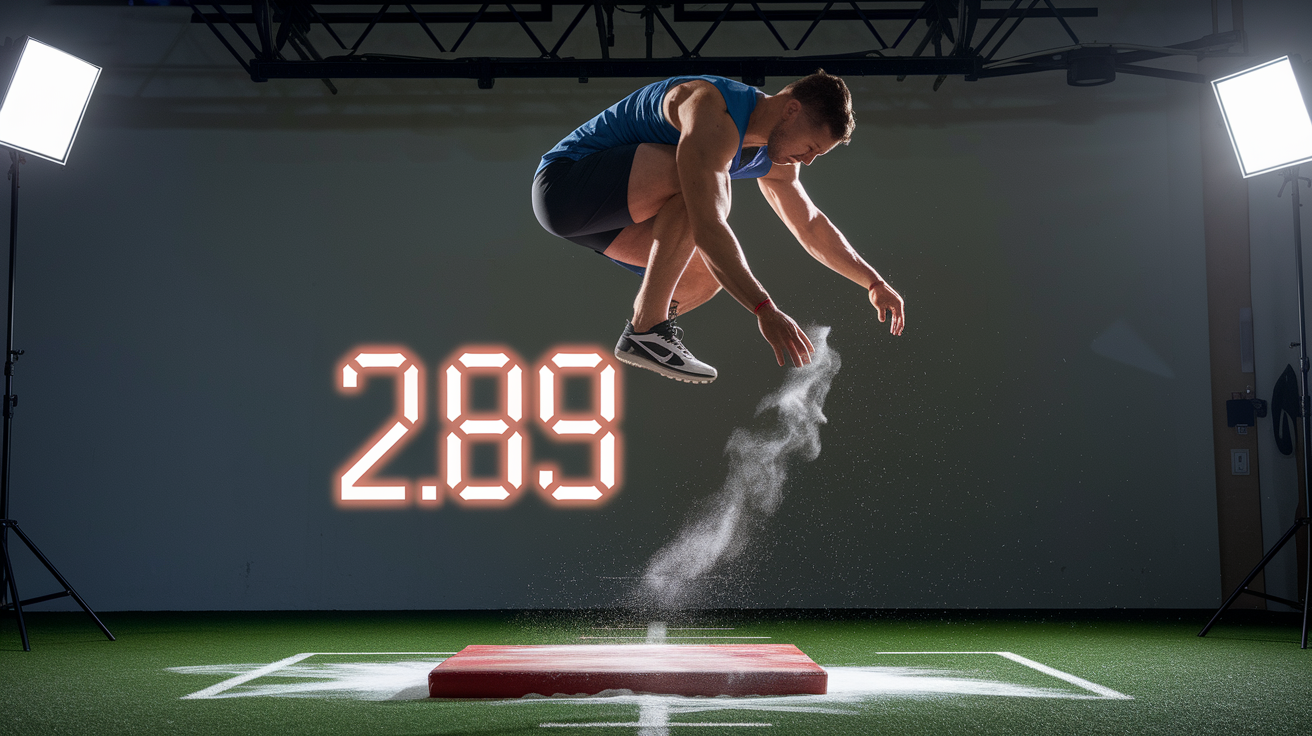
Traditional vertical-jump testing asks an athlete to reach as high as possible while standing flat-footed, then leap and tap a Vertec vane rack. The difference between standing reach and jump touch becomes the reported number, but you can game the measurement. A prospect with exceptional shoulder flexibility and long arms inflates his standing reach, shrinking the apparent jump even when his actual lower-body power is elite. Performance scientists now push for replacing the vertical with Reactive Strength Index testing. RSI divides jump height by ground-contact time during a box drop jump, producing a ratio that captures the efficiency of the stretch-shortening cycle. How quickly can an athlete absorb force and redirect it upward? An RSI of 2.89 at 300 pounds signals that a massive lineman can generate elite reactive power in minimal time, a trait that translates directly to hand punch and re-direction on the field.
The broad jump measures horizontal explosion and stays in most proposed Combine updates because it’s harder to game. An athlete stands on a line, swings his arms, and leaps forward for maximum distance. No adjustable standing reach, no flexibility trick. The result reflects pure lower-body power and coordination. Defensive linemen and linebackers who post broad jumps beyond 10 feet show the kind of explosive hip extension needed to shed blocks and close on ball carriers. A receiver with an 11-foot broad jump suggests he can explode out of breaks and generate separation even when his forty time sits in the mid-4.4 range.
Receivers, defensive backs, and defensive linemen all gain or lose draft stock based on these power metrics, though the emphasis shifts by role. A corner with a 40-inch vertical and an RSI above 2.5 can mirror jump-ball threats at the catch point and recover from poor position faster than film alone might suggest. A defensive tackle who broad-jumps 9 feet 6 inches but carries 330 pounds shows limited explosive hip drive, raising questions about whether he can penetrate or just occupy space. Teams cross-reference these numbers with ten-yard splits and short-shuttle times to build a composite picture of how an athlete generates and redirects force.
What explosive drills reveal:
- Lower-body power and hip extension quality (broad jump).
- Reactivity and stretch-shortening cycle efficiency (RSI from drop jumps).
- Vertical explosion and catch-point ability for pass catchers and defensive backs (vertical jump).
- Coordination and timing of arm swing, knee drive, and triple extension.
- Whether mass and power coexist or whether size comes at the cost of explosiveness (especially for linemen and linebackers).
Strength and Upper-Body Power: Bench Press vs Velocity-Based Testing
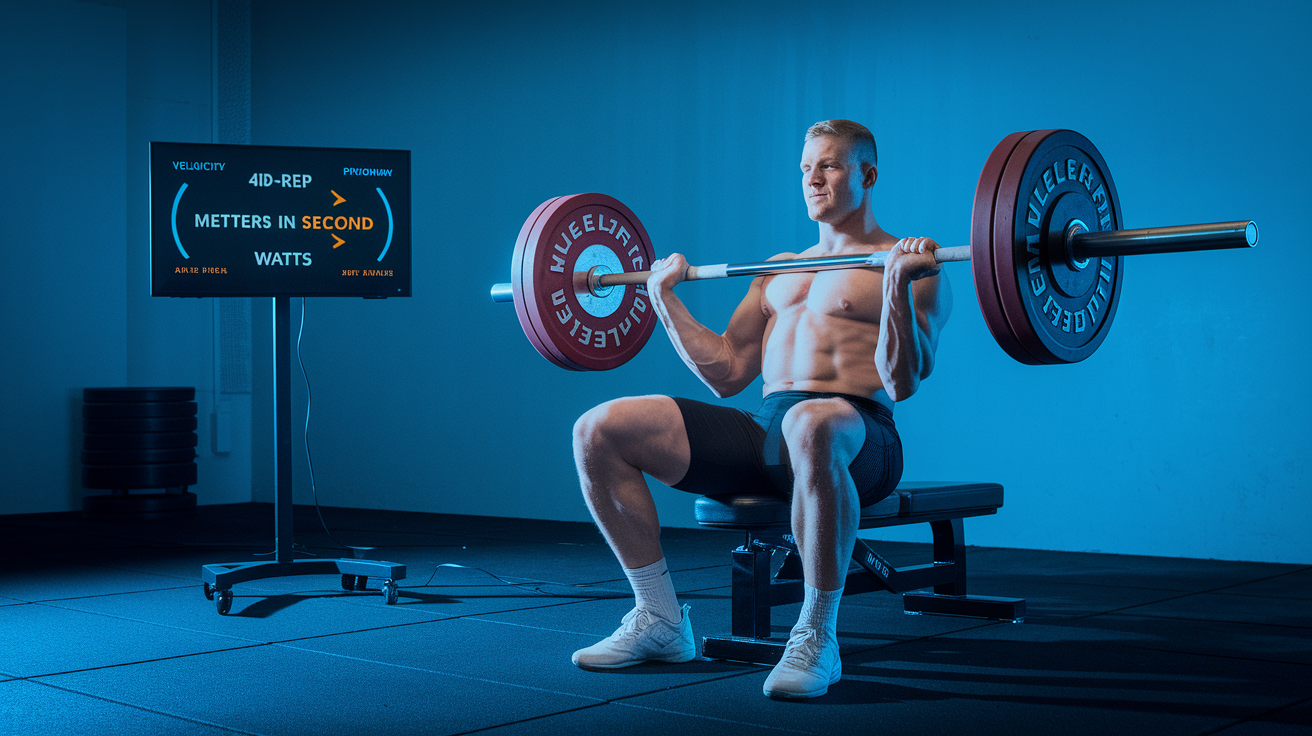
The 225-pound bench press for max reps has been a Combine staple for decades, but the drill draws criticism from biomechanists and team performance staffs. Many offensive linemen and edge rushers now complete twenty or more reps, turning the test into an endurance challenge rather than a strength or power evaluation. Time under tension during a high-rep bench set can run twelve times longer than the average football play, making the test a poor analog for on-field demands. Injury risk also enters the conversation. Pectoral tears during Combine bench testing have ended careers before they begin, and the act of pushing to failure under fatigue raises questions about whether the data gained justifies the risk.
A proposed alternative replaces max reps at 225 with a three-rep set using the athlete’s bodyweight on the bar, measured with a linear-position transducer that captures bar velocity and calculates power output in watts. This approach produces a more position-relevant snapshot because a 320-pound offensive tackle and a 250-pound edge rusher would each lift their own mass, and the velocity reading reveals how explosively they can move that load. Higher bar speed correlates with the kind of hand punch and extension speed that matters when an offensive lineman fires off the snap or a pass rusher swipes a blocker’s hands. The shift to velocity-based testing also reduces injury exposure because three reps at moderate load generate far less cumulative fatigue than twenty-plus reps at a fixed weight.
Most meaningful strength indicators teams extract from updated testing:
- Peak bar velocity (meters per second) – Reflects explosive intent and fast-twitch fiber recruitment; critical for hand fighting and punch delivery.
- Average power output (watts) – Combines velocity and load to quantify total force production; separates strong-but-slow athletes from powerful movers.
- Bodyweight-relative performance – Ensures the test scales appropriately across positions and body types, preventing unfair comparison between a guard and a safety.
- Consistency across reps – A prospect whose velocity drops sharply from rep one to rep three may lack the conditioning or motor control to sustain effort through a four-quarter game.
Agility and Change-of-Direction: Three-Cone and Shuttle Reimagined

The three-cone drill remains one of the most respected tests in the Combine battery because it blends acceleration, deceleration, and curved running into a single timed sequence. An athlete sprints five yards to the first cone, returns to the start, sprints back to the first cone and around it, weaves a figure-eight around the second and third cones, then finishes through the start line. The drill exposes an athlete’s ability to sink his hips, plant, and redirect without losing speed. Exactly the movement pattern a linebacker uses to mirror a running back in the flat or a receiver employs to separate at the top of a route. Teams treat three-cone times as a proxy for football agility, and prospects who post elite marks (sub-6.7 for linebackers, sub-6.5 for defensive backs) often see their draft stock rise even if their forty times are just average.
The 20-yard shuttle, also called the 5-10-5 or pro agility drill, uses three lines spaced five yards apart. The athlete starts in the middle, sprints five yards to one side, reverses and sprints ten yards to the opposite line, then reverses again and sprints five yards back through the start. The test measures short-area quickness and the ability to change direction twice under fatigue. Proposed updates replace the predetermined left-right-left sequence with a reactive version: the athlete waits at the start line while a screen displays either “L” or “R,” triggering the first movement. After completing the initial five-yard touch, a second screen cue directs the ten-yard phase, and the drill concludes with a 45-degree cut into a Y-shaped finish corridor monitored by timing gates. This reactive format injects decision-making and unpredictability, better simulating the read-and-react demands of live coverage or run fits.
Corners, receivers, linebackers, and edge rushers rely most heavily on agility metrics because their roles demand instant re-direction in response to offensive or defensive keys. A corner who runs a 4.10 shuttle but a 6.95 three-cone may struggle in off-man coverage where rounded breaks matter more than linear stops. An edge rusher with a 4.25 shuttle and a 6.85 three-cone profile suggests he can bend the edge and counter inside when the tackle sets wide. When these drills reveal a mismatch between straight-line speed and agility, teams have to decide whether the gap is a teaching opportunity or a functional ceiling.
Traits teams evaluate from agility metrics:
- Hip sink and ankle stiffness, how low an athlete can drop his center of gravity without losing power.
- Deceleration control, ability to brake at full speed without choppy steps or balance loss.
- Plant-foot mechanics, whether an athlete can redirect force efficiently through the ball of the foot.
- Spatial awareness and body control during curved runs or tight turns.
- Reactive processing speed, how quickly an athlete reads a cue and initiates movement (reactive shuttle).
- Fatigue resistance across multiple direction changes within a single drill.
Positional Fit and Measurables: How Measurements Shift Draft Projections
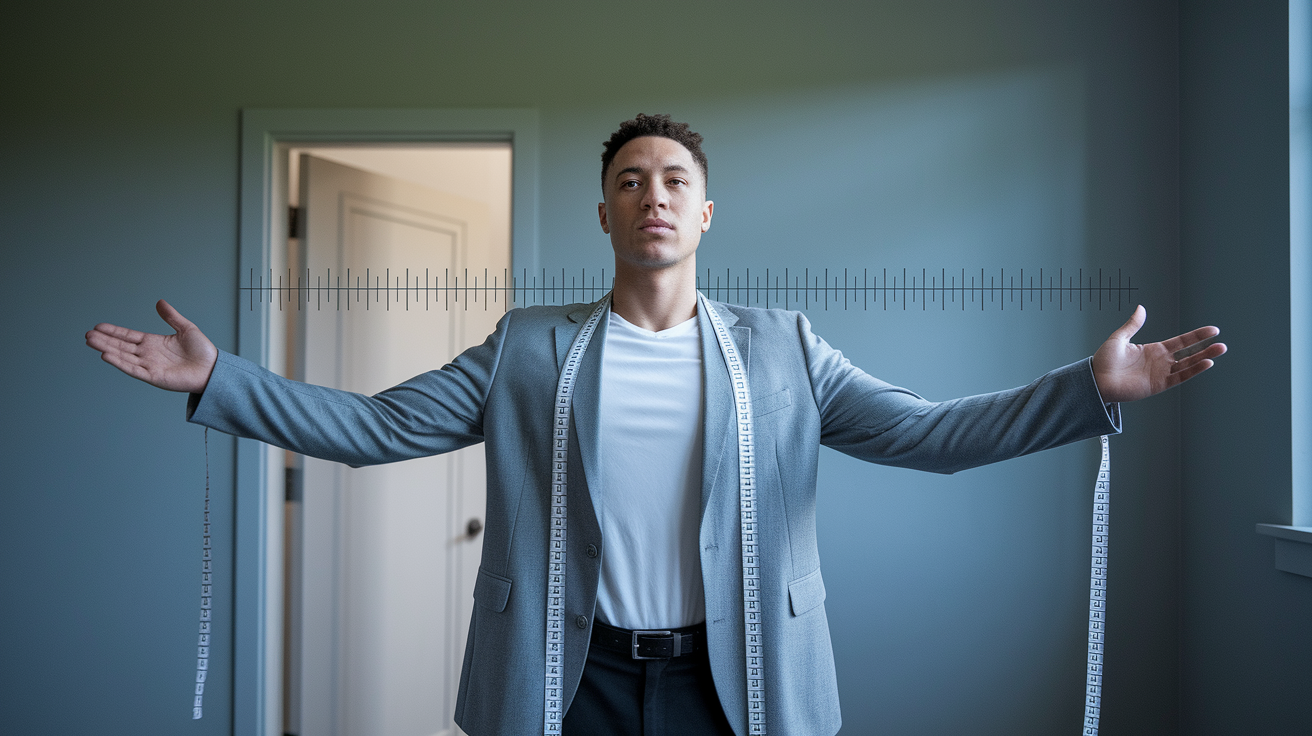
Height, weight, arm length, hand size, and wingspan often exert more influence on draft stock than any single drill time. These static measurements determine whether a prospect fits a team’s positional archetype and can perform the specific techniques a scheme requires. A defensive tackle who weighs 290 pounds but measures a 34-inch wingspan may lack the length to keep offensive linemen off his frame, limiting his pass-rush upside despite strong explosion numbers. A safety with a 76-inch wingspan can disrupt passing lanes and make plays on the ball outside his frame, adding value that a forty time alone can’t capture. Teams use these measurements to project ceiling and positional versatility, and when a number falls outside expected ranges, draft boards shift immediately.
Quarterbacks face intense scrutiny over hand size because smaller hands correlate with higher fumble rates in cold or wet conditions and difficulty gripping the ball on deep throws. The widely cited concern threshold sits at 9.0 inches, measured from thumb tip to pinkie tip with the hand fully stretched. Offensive linemen, particularly tackles, must possess sufficient arm length to engage edge rushers at distance and sustain blocks without allowing penetration. The ideal tackle arm length hovers around 34 inches, and many scouting departments set a floor at 33 inches. A prospect who measures shorter often projects to guard, a position change that can cost him ten or more draft slots even if his tape suggests he can handle edge speed.
Jalen Milroe Measurement Impact
At the Senior Bowl, quarterback Jalen Milroe’s hand size measured 8¾ inches, landing below the 9.0-inch threshold that triggers red flags across the league. Combined with an uneven week of practice, that measurement removed Milroe from second-round consideration and pushed him into day-three conversations. When he arrived at the NFL Combine weeks later, the official measurement came back at 9¾ inches, a full inch larger than the Senior Bowl reading. That one-inch swing reopened second-round dialogue because it cleared the concern threshold and suggested the earlier number may have been the result of measurement error or inconsistent hand positioning during the process. The discrepancy also raised reliability questions, prompting teams to schedule private workouts where they could re-measure under controlled conditions. Milroe’s draft projection moved from late third round back into the second-to-third border, showing how a single measurement can override weeks of film study when it sits near a widely accepted positional cutoff.
Will Campbell Arm-Length Effect
Offensive tackle Will Campbell entered the Combine as a potential top-five selection after a dominant college career, but his arm-length measurement of 32⅝ inches landed well short of both the 34-inch ideal and the 33-inch floor many teams prefer for the position. That 1⅜-inch gap below the ideal and ⅜-inch shortfall from the minimum triggered immediate positional projection discussions. Scouts began debating whether Campbell’s elite college tape could overcome the length deficit or whether his future lay at guard, where shorter arms are less problematic because the player works inside and doesn’t face the same edge-speed challenges. The position change carries significant draft capital implications. A top-five tackle becomes a top-ten guard at best, and Campbell’s range widened from a near-certain top-five lock to a possible slide out of the top five if teams viewed the arm length as disqualifying for tackle. His stock now hinges on interviews and private visits, where teams will assess his willingness to start at tackle with a plan to move inside, or whether they view him as a day-one guard despite the positional value loss.
Film vs Testing: How Teams Balance Numbers and On-Field Production

Game film remains the foundation of every draft evaluation because it shows a prospect executing his position under live competition, processing information in real time, and sustaining performance across four quarters and multiple opponents. No drill can replicate the cognitive load of diagnosing a blitz pre-snap, the physicality of shedding a block at the second level, or the discipline required to maintain gap integrity on third-and-short. Teams invest millions in first and second-round picks, and the surest way to protect that investment is to study how a player actually plays football when schemes, stakes, and fatigue are all in play. Combine testing exists to reduce uncertainty, not replace evaluation.
Testing clarifies ceiling, confirms or challenges assumptions, and exposes risks that film can obscure. A receiver who dominates on tape against lesser competition but runs a 4.60 forty may lack the speed to separate against NFL corners, capping his upside as a complementary target rather than a true number-one option. A linebacker whose film shows reliable tackling and effort but whose three-cone and shuttle times trail the position average raises questions about whether he can cover modern pass-catching backs or tight ends in space. Medical exams surface durability concerns that college trainers may have managed quietly, and psychological evaluations reveal learning styles or tendencies that don’t show up on cut-ups. When testing and film align, a prospect’s grade solidifies. When they conflict, teams have to decide which data set to trust.
Teams override film when measurements or testing expose a fundamental mismatch between what a prospect did in college and what the NFL role demands. A small-school edge rusher with thirty sacks may have dominated because of superior athleticism relative to competition, but if he posts a 7.5-second three-cone and a twenty-eighth-percentile shuttle, his tape becomes less predictive because NFL tackles possess the agility to mirror his moves. A prospect with inconsistent film who delivers top-five positional numbers in every athletic test can rise because teams believe they can coach technique and effort more easily than they can teach speed and explosion. Medical red flags often carry the most weight. A running back with clean tape but degenerative cartilage in both knees will fall regardless of testing numbers because the injury history suggests a shortened career and high re-injury risk that no amount of film excellence can offset.
Notable Combine Risers and Fallers: Historical Patterns and Recent Examples
Combine week produces a predictable set of winners and losers each year. Receivers and defensive backs benefit most from elite speed and explosion testing because those traits translate directly to their core responsibilities, creating and closing separation. Offensive and defensive linemen see the largest stock swings from measurements and short-area agility drills that clarify whether size comes with the movement skills NFL blocking and pass-rush technique require. Medical evaluations cause the steepest falls because injury history introduces risk that teams can’t coach away, and when a prospect’s medicals raise long-term durability questions, his draft range can collapse by two full rounds in a matter of hours.
Combine Risers
A Division II receiver entered Combine week projected as a fourth-round pick after a productive but low-visibility college career. His 4.31 forty ranked second among all receivers, and his 42-inch vertical led the position group. Those numbers proved his speed translated beyond weaker competition, and teams began projecting him as a vertical threat capable of stressing safeties in Cover 2 and Cover 3 shells. By the end of the week, his range had climbed into the late second round. “Before Combine week, most mocks had him going between picks 105 and 125. After posting a 4.31 and leading all receivers in the vert, he jumped into the 55-to-70 range.”
An edge rusher from a run-heavy scheme posted modest sack totals on tape, leading evaluators to question whether his pass-rush skills were NFL-ready. At the Combine, he ran a 6.73 three-cone (elite for his position and size) and paired it with a ten-yard split that ranked in the ninety-fifth percentile. Those marks suggested he possessed the change-of-direction ability and explosive first step needed to beat tackles even though his college role hadn’t showcased it. His projection moved from the third round into the second. “The three-cone at 6.73 and that ten-yard burst changed how teams saw his upside. He went from a run-down specialist in round three to a potential every-down edge in the late second.”
A safety who played in a deep-zone role throughout college arrived with questions about his man-coverage ability. His 4.38 forty and 4.01 short shuttle erased those concerns, demonstrating he could match speed with slot receivers and running backs in space. Teams that initially viewed him as a single-high-only player began projecting him into more versatile roles, and his draft range tightened from the third-to-fourth border into the solid third round. “Once he ran that shuttle and showed he could flip his hips, the man-coverage worries disappeared. He became a top-100 lock.”
Combine Fallers
A projected first-round linebacker posted a 7.18 three-cone and a 4.52 short shuttle, both well below average for the position. His film showed instincts and tackling, but the testing suggested he lacked the lateral agility to cover in space or mirror ball carriers on outside runs against NFL speed. Teams downgraded him from the late first round into the second, citing concerns that his college dominance came against slower competition. “The agility numbers were a problem. Teams that loved the tape started wondering if he could stay on the field in nickel packages.”
An offensive tackle measured 32¼-inch arms at the Combine, falling short of the 33-inch floor most teams require. Despite clean film and strong testing in the bench and vertical, the arm-length deficit pushed him toward a guard projection. That position change dropped him from a top-fifteen tackle into the late first or early second round as a guard, a slide driven entirely by measurements. “Thirty-two and a quarter just doesn’t work at tackle for most teams. He’s probably a really good guard, but that’s a different draft value.”
A running back entered the week as a second-round projection but disclosed a prior ACL reconstruction and a labrum repair during medical exams. Follow-up imaging revealed cartilage thinning in the repaired knee, raising red flags about long-term durability and re-injury risk. Teams downgraded him into the fourth round despite strong testing numbers, prioritizing medical outlook over athletic traits. “The medicals killed him. Even with a great Combine, teams couldn’t get past the cartilage concerns and the history. He fell two full rounds.”
| Player | Drill/Measurement | Result | Before Projection | After Projection |
|---|---|---|---|---|
| Division II WR | 40-yard dash | 4.31 (2nd among WRs) | Round 4 (picks 105–125) | Late Round 2 (picks 55–70) |
| Edge Rusher | Three-cone drill | 6.73 (elite for position) | Round 3 | Late Round 2 |
| Linebacker | Short shuttle / three-cone | 4.52 / 7.18 (below avg) | Late Round 1 | Round 2 |
| Offensive Tackle | Arm length | 32¼ inches | Top 15 (tackle) | Late Round 1 / Early Round 2 (guard) |
| Running Back | Medical exam | Cartilage thinning, prior ACL | Round 2 | Round 4 |
Final Words
At the Combine, a fast 40 or big broad jump can flip a prospect’s draft range overnight. We covered the Big 6 drills, explosive and strength testing, agility updates, and how measurements like arm length and hand size nudge positions.
This piece showed how tests feed into film study and medical checks, creating immediate risers and fallers. Knowing how nfl combine drills change a prospect’s draft stock helps you read the board and spot value. Stay tuned. The next Combine will shift the story again.
FAQ
Q: Why is the NFL Scouting Combine important for draft prospects?
A: The NFL Scouting Combine is important because it gives teams standard athletic tests, medical exams and interviews; strong results can boost a prospect’s visibility while bad testing or medical flags can cause draft slides.
Q: Who benched 225-49 times?
A: The player who benched 225 pounds 49 times was Stephen Paea at the 2011 Combine, a standout performance that signaled elite upper-body power to NFL evaluators.
Q: Is 4.52 a good 40-yard dash time?
A: A 4.52 40-yard dash is solid for linebackers and tight ends, average for running backs, and generally slow for wide receivers and cornerbacks; position and game speed matter most.
Q: What do NFL teams look for in combine drills?
A: NFL teams look for position-specific traits — speed and acceleration, explosiveness, change-of-direction, strength and durability — plus consistency, medical clarity and whether numbers match a player’s film.