

Think one draft can fix every team’s mess? Think again.
Free agency in 2025 shuffled cornerbacks and tackles like musical chairs, leaving starters aged or unproven and plenty of roster holes that one class won’t fully cover.
This team-by-team 2026 draft needs analysis ranks positions and pinpoints roster gaps for every club,
so you can see who needs an immediate starter, who can wait, and which picks matter most on draft night.
League-Wide 2026 Draft Needs Overview
Free agency in 2025 created a mess. Defensive backs and offensive tackles switched teams at rates nobody’s seen before, leaving rosters with holes that one draft can’t fix. The Seahawks lost four defensive backs in a single offseason. The Lions cut Taylor Decker after years as their starter. And the Dolphins… well, they spent over $50 million to move on from Tua Tagovailoa, then handed Malik Willis a $67.5 million deal despite him completing just 70 passes over two seasons. Desperation does strange things to front offices.
Premium positions got more expensive as teams started accepting that NFL careers don’t last as long as they used to. Offensive tackle is the biggest need across the league. Nineteen teams are heading into 2026 with at least one tackle spot filled by either a 30-plus-year-old veteran or an unproven second-year player. Edge rusher and cornerback climbed right alongside tackle, mostly because hybrid defenses need longer, more athletic defenders who can cover tight ends and still set an edge against the run. Think Sonny Styles’s projected versatility or David Bailey’s three-down profile.
Aging rosters and contract cycles compressed rebuild windows. The 49ers are managing a roster with Trent Williams at 38, Jake Brendel at 34, and George Kittle recovering from an Achilles tear at 32. The Patriots lost a Super Bowl with 35-year-old Morgan Moses at right tackle. The Vikings signed Kyler Murray on a discount but still lean on 37-year-old Harrison Smith at safety. These teams need immediate contributors who can also develop into long-term replacements. It’s a balancing act that doesn’t favor top-10 gambles.
Five League-Wide Positional Shortages Projected for 2026:
- Offensive tackle, with aging starters and limited proven depth across both conferences
- Cornerback, especially boundary corners capable of shadow coverage in nickel-heavy defenses
- Interior defensive line, as run-stuffing nose tackles become harder to find and retain
- Safety, particularly single-high free safeties who can manage post coverage in two-high shells
- Guard, where veteran contracts are expiring and teams are prioritizing cheaper, younger interior linemen
AFC East Team Draft Needs Breakdown
Buffalo Bills
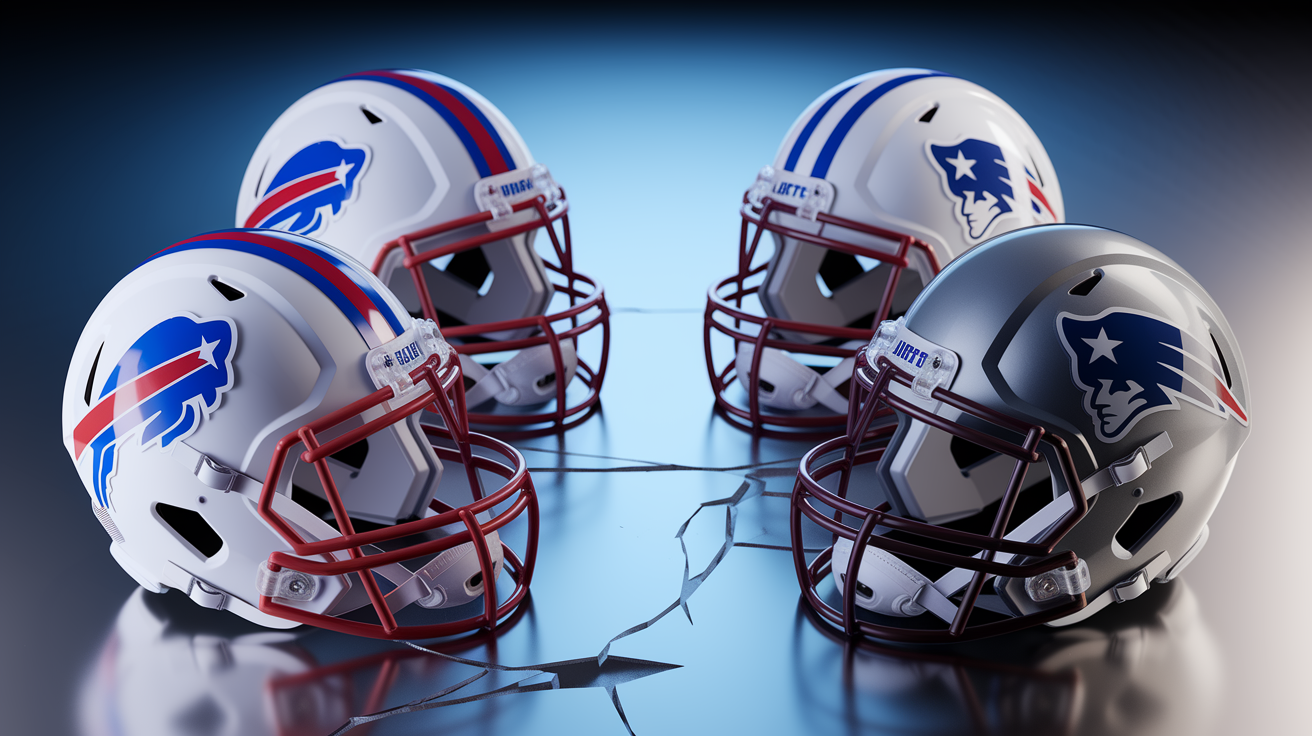
Buffalo traded for DJ Moore and now has just one pick inside the top 100. That limits what they can fix in a single draft. Their defense under Jim Leonhard needs specific traits. Nickel rushers who can kick inside on third down. A true nose tackle who can anchor against the run. The offense is mostly set, but the interior offensive line has aging veterans and depth questions behind short-term solutions.
- Edge rusher with nickel package versatility and speed-to-power conversion
- Interior defensive line, specifically a nose tackle who can two-gap and collapse pockets
- Guard depth behind aging starters and unproven second-year players
- Linebacker with sideline-to-sideline range for Leonhard’s zone-match concepts
Harold Landry and Dre’Mont Jones are both 29. Neither has a contract past 2027. The edge rotation lacks a young, high-upside rusher who can eventually bookend the defense long-term. Interior defensive line is similarly thin. No proven nose tackle under 28 on the roster heading into camp.
Cashius Howell and R Mason Thomas both fit Buffalo’s nickel-rusher archetype. Speed off the edge, flexibility to kick inside on passing downs. Kayden McDonald provides the run-stuffing anchor the Bills need at nose tackle, especially against AFC East ground games. Limited top-90 capital means Buffalo will likely trade down from 26 or package later picks to move up on Day 2.
Miami Dolphins
Miami cut Tua and signed Malik Willis to a $67.5 million contract despite minimal starting experience. The rebuild accelerated. They now hold seven picks in the first three rounds, giving them the capital to address receiver, corner, safety, tight end, and guard all within the first 100 selections. The roster is young and unproven at most skill positions. The offensive line features multiple one-year veterans on prove-it deals.
- Wide receiver with separation quickness and vertical speed to replace Jaylen Waddle
- Cornerback capable of playing press-man on the boundary in single-high coverages
- Safety with range to play center field and support against deep crossers
- Tight end who can win on seam routes and create mismatches in two-tight personnel
Jaylen Waddle got traded to Denver. That leaves the Dolphins without a proven downfield threat opposite Tyreek Hill’s potential successor. The secondary lost multiple starters in free agency. The current depth chart relies heavily on second and third-year players who haven’t proven they can handle full-time starting roles.
With picks 11 and 30 in the first round, Miami can target safe, high-trait players like Spencer Fano at safety, Mansoor Delane at corner, and Carnell Tate at receiver. The draft strategy will prioritize players who can contribute immediately in 2026 while offering long-term upside as the roster matures around Malik Willis. Kenyon Sadiq could also be in play at tight end if Miami wants to give Willis a reliable chain-mover on third down.
New York Jets
The Jets became the first NFL team in a 16-plus-game season without a 400-yard receiver and the first since 1933 without an interception. Historic offensive collapse. The front office traded away Sauce Gardner and Quinnen Williams for draft capital. New York now holds picks 2 and 16, along with seven additional selections spread across the middle rounds. The roster is barren at receiver, edge, and interior defensive line. The quarterback situation remains unresolved.
- Edge rusher with first-step explosion and bend to replace lost production
- Quarterback, either as a developmental backup or potential starter depending on how the offseason unfolds
- Wide receiver with contested-catch ability and route refinement to create separation underneath
- Interior defensive line to replace Quinnen Williams’s interior disruption and run-stopping anchor
The Jets traded Sauce Gardner to the Colts and Quinnen Williams to the Cowboys. Massive voids on a defense that was already struggling to generate pressure and prevent explosive plays. The offensive line is stable, but the skill-position group offers almost nothing in terms of proven NFL production.
David Bailey from Texas Tech is widely viewed as the best edge prospect in this class. The Jets are likely to take him at No. 2 if they pass on a quarterback. Pick 16 could target a receiver like Omar Cooper Jr. or KC Concepcion, or pivot to tight end Kenyon Sadiq if the Jets believe they can address receiver on Day 2. New York’s rebuild will take multiple years. The front office appears willing to accumulate young talent rather than force short-term fixes.
New England Patriots
New England’s Super Bowl loss to Seattle exposed the offensive line. Right tackle in particular, where 35-year-old Morgan Moses was overwhelmed in pass protection. The Patriots also need edge-rusher depth, receiver help, and tight end reinforcement after losing Austin Hooper in free agency. With 11 total picks, New England has the capital to attack multiple positions. But limited top-90 selections mean the Patriots may need to package picks to move up for specific targets.
- Edge rusher with length and quickness off the snap to complement the current rotation
- Wide receiver with route polish and hands to provide a consistent target opposite the top option
- Tight end capable of creating mismatches in the seam and blocking effectively in 12 personnel
- Offensive tackle who can step in immediately at right tackle and eventually succeed Moses
Morgan Moses turns 36 before the season. The Patriots have no proven successor on the roster. Harold Landry and Dre’Mont Jones are both entering the final years of their deals. Neither has played a full 17-game season in the past two years. The tight end room is thin. The receiver depth chart lacks a proven chain-mover on third down.
R Mason Thomas and Cashius Howell both offer the speed and bend New England prefers off the edge. Either could be available in the second round. Max Iheanachor and Caleb Lomu are offensive tackle prospects who fit the Patriots’ zone-blocking scheme. Both have experience kicking out to right tackle. New England’s draft will prioritize immediate contributors who can help the offense rebound after a Super Bowl loss.
AFC North Team Draft Needs Breakdown
Baltimore Ravens
Baltimore signed Trey Hendrickson from Cincinnati after controversially reversing the Maxx Crosby trade with the Raiders. But the team still lost All-Pro center Tyler Linderbaum to Las Vegas on a record contract. The Ravens now need interior offensive line reinforcement, receiver depth, tight end help, and rotational pieces along the defensive line. With 11 total picks, Baltimore can take the best available athlete at 14 and fill depth needs on Day 2.
- Center or guard to replace Tyler Linderbaum’s anchor and communication at the line of scrimmage
- Guard capable of pulling in outside zone concepts and handling one-on-one matchups inside
- Wide receiver with vertical speed and contested-catch ability to stretch the field
- Interior defensive line or edge rusher to rotate and keep the front seven fresh late in games
Tyler Linderbaum’s departure leaves a void at the most important position on the offensive line. The Ravens have no proven replacement currently on the roster. The receiver room is thin beyond the top option. Tight end depth is a question mark heading into camp. Defensive line is strong, but the Ravens need rotational bodies to sustain their physical, gap-sound approach across a full season.
At pick 14, Baltimore can target best-available prospects like Rueben Bain Jr., Mansoor Delane, Spencer Fano, Kenyon Sadiq, Carnell Tate, or Jordyn Tyson depending on how the board falls. Caleb Downs is less likely given the Ravens’ recent investments at safety, but the organization values athletic versatility and could pivot if Downs slides. Baltimore’s draft will prioritize Day 2 depth, using their 11 total picks to reload the roster after losing key contributors in free agency.
Cincinnati Bengals
The Bengals allowed the worst rushing defense in the NFL at 147 yards per game. Catastrophic failure that undermined an otherwise competent roster. Joe Burrow missed half of the 2025 season. Cincinnati traded Trey Hendrickson to Baltimore in a cost-cutting move. The Bengals now pick at 41 in the second round after acquiring DT Dexter Lawrence II. The roster needs cornerback help, edge-rusher depth, and interior offensive line reinforcement.
- Cornerback with press-man ability and recovery speed to handle vertical routes
- Edge rusher who can set the edge against the run and convert speed to power as a pass rusher
- Inside linebacker with downhill instincts and gap discipline to anchor the middle of the defense
- Offensive guard with power in the run game and lateral quickness to handle stunts and twists
The run defense collapsed in 2025. Teams controlled the clock and shortened games. Cincinnati’s secondary is aging. The team lacks young cornerback depth behind short-term veterans. The offensive line is stable, but guard depth is thin. The team has no proven long-term answer at the position.
Chris Johnson, Chase Bisontis, and Keylan Rutledge are all Day 2 cornerback targets who could step in and contribute immediately. Cincinnati may also target an edge rusher or inside linebacker in the third round to rebuild the front seven after the Hendrickson trade. The Bengals are one year away from contention if Burrow stays healthy. The front office will prioritize safe, pro-ready prospects who can play in 2026.
Cleveland Browns
Cleveland has the worst quarterback, receiver, and offensive line group in the NFL. A trifecta of failure that has left the Browns searching for answers at the most important positions. Shedeur Sanders is competing with Deshaun Watson, who has suffered multiple Achilles tears and carries a $46 million cap hit. The Browns hold picks 6 and 24 in the first round after trading Travis Hunter. The roster needs help at tackle, receiver, corner, and tight end.
- Offensive tackle capable of protecting either edge and starting immediately in Year 1
- Wide receiver with separation ability and hands to give the quarterback a reliable target
- Cornerback with length and speed to play press-man on the boundary
- Tight end who can win on seam routes and create mismatches in the middle of the field
Deshaun Watson’s health and performance are the biggest unknowns in Cleveland. The Browns can’t build around him with any confidence. The offensive line is old and ineffective. The receiver room offers almost nothing in terms of proven production. The defense is better than the offense, but cornerback depth is a concern heading into camp.
Carnell Tate and Francis Mauigoa are likely choices at 6. Tate offering immediate receiver help and Mauigoa providing tackle depth or interior versatility. Kadyn Proctor and Monroe Freeling are also linked to Cleveland as tackle prospects who could start on Day 1. The Browns may trade down from 6 to accumulate picks, or package their two first-rounders to move up if a quarterback or elite tackle falls.
Pittsburgh Steelers
The Steelers have a quarterback crisis. Mason Rudolph and Will Howard are both on the roster, but neither is viewed as a long-term solution. New head coach Mike McCarthy inherited 12 picks, the most in the league, giving Pittsburgh the flexibility to address multiple needs. The roster lacks starting-caliber talent at left guard, tackle depth, and receiver. The defense needs secondary reinforcement.
- Quarterback, either as a developmental project or potential starter depending on the team’s evaluation
- Left guard who can anchor in pass protection and create movement in the run game
- Offensive tackle depth to provide insurance and competition across both edge spots
- Wide receiver with route polish and separation ability to complement the current group
Mason Rudolph has never proven he can be a starting-quality NFL quarterback. Will Howard is an unknown at the next level. The offensive line is aging. The Steelers have no clear succession plan at left guard or right tackle. Receiver is a need, but not as urgent as the trenches and quarterback.
Pittsburgh is unlikely to take Alabama’s Ty Simpson at 21. Instead focusing on offensive line or receiver in the first round. With five picks between 76 and 135, the Steelers can target quarterback on Day 2 while addressing the trenches early. McCarthy’s offensive system requires a physical offensive line and a quarterback who can operate under center. The Steelers will draft accordingly.
AFC South Team Draft Needs Breakdown
Houston Texans
Houston has the best defense in the AFC. But the offensive line struggled to protect C.J. Stroud during the playoffs, exposing weaknesses at guard and tackle. The Texans signed Braden Smith from the Colts to add flexibility. The front office upgraded from C.J. Gardner-Johnson to Reed Blankenship at safety. Houston picks at 28 in the first round. The roster needs interior defensive line depth, offensive line reinforcement, and inside linebacker help as current starters enter contract years.
- Interior defensive line to rotate and keep the front four fresh across four quarters
- Offensive line depth, particularly at guard and tackle, to protect Stroud and open lanes in the run game
- Inside linebacker with coverage ability and range to play in nickel and dime packages
- Wide receiver depth to provide options if injuries hit the current group
Defensive tackles and linebackers are entering the final years of their contracts. Houston can’t afford to lose multiple starters in one offseason. The offensive line is better than last year, but the Texans still need depth behind short-term veterans like Wyatt Teller and Braden Smith. Receiver is stable, but the team lacks a proven fourth option.
At pick 28, Houston can draft ahead of immediate needs, targeting prospects like Max Iheanachor or Blake Miller to develop as offensive line depth. The Texans may also consider a linebacker or interior defensive lineman to maintain roster flexibility as contract decisions approach. Houston’s window is open now. The front office will prioritize players who can contribute in 2026 while offering long-term upside.
Indianapolis Colts
The Colts traded their 2026 and 2027 first-round picks to the Jets for Sauce Gardner. That leaves Indianapolis without a selection until the second round at pick 47. The roster lost Kwity Paye to the Raiders and traded Zaire Franklin to Green Bay, creating holes at inside linebacker and edge rusher. The Colts also need safety depth, receiver help, and right tackle insurance behind an aging starter.
- Inside linebacker with sideline-to-sideline range and coverage ability in nickel packages
- Safety capable of playing single-high and supporting against vertical routes
- Wide receiver with separation quickness to provide a third option in the passing game
- Right tackle depth to eventually replace the current aging starter
Zaire Franklin’s departure leaves a void at inside linebacker. The Colts have no proven replacement on the roster. Kwity Paye’s exit to the Raiders weakens the edge-rusher rotation. Indianapolis lacks young depth behind the current starters. Safety and receiver are secondary needs, but both could become urgent if injuries hit during camp or the regular season.
Texas Tech’s Jacob Rodriguez is an ideal fit at inside linebacker. He offers the range and coverage ability Indianapolis needs to defend tight ends and running backs in space. The Colts will likely target linebacker or edge rusher at 47, then address safety and receiver on Day 3. Indianapolis’s draft capital is limited. The front office can’t afford to miss on early picks.
Jacksonville Jaguars
Jacksonville holds 11 picks, including three in the third round, after sending its first-rounder to Cleveland for Travis Hunter. The Jaguars signed only one external free agent, Chris Rodriguez Jr., despite being a Super Bowl contender. The roster needs inside linebacker, running back, interior defensive line, edge rusher, and safety depth. With four picks inside the top 100, Jacksonville can take developmental players or safe, pro-ready contributors depending on board value.
- Inside linebacker with downhill instincts and gap discipline to anchor the middle of the defense
- Running back depth to provide insurance and rotation behind the current starter
- Interior defensive line to rotate and collapse pockets in passing situations
- Edge rusher with length and bend to eventually replace aging starters
Jacksonville’s linebacker room is thin. The team lacks a proven three-down starter who can play in all situations. Running back depth is a concern. The Jaguars need a second option who can handle short-yardage and goal-line work. Defensive line is strong, but the team needs rotational bodies to sustain its physical approach across a full season.
Jacksonville can take higher-risk developmental players like Caleb Banks or safe, scheme-fit prospects like CJ Allen with its multiple third-round picks. The Jaguars are well-positioned to address multiple needs without forcing first-round gambles. The front office will prioritize versatility and depth over ceiling. Jacksonville’s roster is talented. The draft will focus on filling gaps rather than swinging for stars.
Tennessee Titans
The Titans are opening a new stadium in 2027 and brought in six former Jets and Giants players under new head coach Robert Saleh and offensive coordinator Brian Daboll. Tennessee signed Wan’Dale Robinson to $19 million per year, but the roster still needs running back help with Tony Pollard and Tyjae Spears both entering final contract years. The Titans pick at 4 in the first round. The team is open to trading down if the right offer materializes.
- Running back with three-down ability and goal-line power to replace aging starters
- Edge rusher with length and speed-to-power conversion to complement the current rotation
- Interior offensive line depth to provide competition and eventual starting options
- Wide receiver depth to give the quarterback multiple reliable targets
Tony Pollard and Tyjae Spears are both in the final years of their deals. The Titans have no proven long-term answer at running back. The offensive line is stable, but Tennessee lacks depth behind the current starters. Receiver is strong after signing Wan’Dale Robinson, but the team could use a vertical threat to stretch the field.
Jeremiyah Love, Arvell Reese, and Sonny Styles are all potential fits at 4. Love offering the running back upside Brian Daboll covets after his success with Saquon Barkley in New York. Tennessee would prefer to trade down and accumulate picks, as the team only holds three selections inside the top 100. The Titans are building for 2027. The draft will prioritize long-term fits over immediate contributors.
AFC West Team Draft Needs Breakdown
Denver Broncos
Denver traded its first-round pick for Jaylen Waddle and cut Dre Greenlaw one year after signing him from the 49ers. That leaves the roster thin at safety, linebacker, and interior defensive line. The Broncos also lost linebacker Alex Singleton to testicular cancer during the season, a devastating blow to the locker room and depth chart. Denver picks at 62 in the second round. The team has only one selection inside the top 100.
- Safety with range to play single-high and support against deep crossers and over routes
- Linebacker with coverage ability and downhill instincts to replace Singleton and Greenlaw
- Interior defensive line to rotate and provide run-stopping anchor in base packages
- Running back depth after missing out on Travis Etienne and losing depth to injuries
Dre Greenlaw’s release and Alex Singleton’s illness left the Broncos without proven starters at linebacker. Safety is a need. The defensive line lacks rotational depth behind the current starters. Running back is a luxury pick, but the team could use insurance if injuries continue.
Eli Stowers is a safety prospect who fits Denver’s single-high scheme. The Broncos may trade up from 62 to secure him if they believe he’s a long-term answer. Linebacker and defensive line will likely be addressed on Day 3. Denver’s limited draft capital means the front office must hit on every selection. The Broncos are competitive. The draft will focus on filling gaps rather than chasing upside.
Kansas City Chiefs
The Chiefs endured a six-win season after Patrick Mahomes tore his ACL. The organization traded Trent McDuffie to the Rams for four picks, including No. 29. Kansas City signed Kenneth Walker III to a big contract, but the roster still needs cornerback help, receiver depth, edge-rusher reinforcement, tackle insurance, and safety depth. With picks 9 and 29, the Chiefs can address two premium positions in the first round.
- Cornerback with press-man ability and recovery speed to replace McDuffie’s production
- Wide receiver with separation quickness and contested-catch ability to provide Mahomes reliable targets
- Edge rusher to rotate and eventually replace aging starters as contracts expire
- Offensive tackle depth, particularly if Josh Simmons’s health remains uncertain and Jaylon Moore enters a contract year
Trent McDuffie’s trade to the Rams created a void at cornerback. The Chiefs have no proven replacement on the roster. Wide receiver is thin beyond the top option. The team needs a young receiver who can grow with Mahomes. Edge rusher is a need. Tackle depth is uncertain with Jaylon Moore in a contract year.
Kenyon Sadiq could be the Travis Kelce successor at tight end. The Chiefs may target him at 9 if they believe he’s a generational talent. Carnell Tate, Jordyn Tyson, Spencer Fano, Rueben Bain Jr., Mansoor Delane, and Caleb Downs are all possible fits at 9 or 29 depending on board value. Kansas City’s draft will prioritize long-term fits who can contribute immediately while developing into stars.
Las Vegas Raiders
The Raiders hold the No. 1 overall pick and are locked on Indiana quarterback Fernando Mendoza. But the team lost the No. 14 pick in the reversed Maxx Crosby trade with Baltimore. Las Vegas signed All-Pro center Tyler Linderbaum to a record contract and reunited Georgia linebackers Quay Walker and Nakobe Dean. The Raiders need defensive tackle, offensive tackle, and defensive back depth. The team holds 10 total picks with selections at 35, 67, and three fourth-rounders.
- Quarterback at No. 1, with Fernando Mendoza the clear consensus choice
- Defensive tackle to rotate and provide interior pressure alongside the current starters
- Offensive tackle depth to protect Mendoza and open lanes in the run game
- Defensive back with versatility to play corner, nickel, or safety depending on package
Fernando Mendoza is widely expected to be the top pick. The Raiders will build around him immediately. The offensive line is strong after signing Tyler Linderbaum, but tackle depth is a concern. Defensive tackle is thin. The secondary needs reinforcement after losing starters in free agency.
Las Vegas will use picks 35, 67, and three fourth-rounders to add offensive line and defensive tackle depth around Mendoza. The Raiders are rebuilding. The front office will prioritize safe, high-floor prospects who can contribute in Year 1 while developing into long-term starters. Mendoza’s development timeline will dictate the pace of the rebuild.
Los Angeles Chargers
Justin Herbert took the most hits in the NFL during 2025. A troubling stat that reflects the Chargers’ offensive line struggles. New head coach Mike McDaniel brings a zone-blocking scheme that requires athletic, quick-footed linemen. The roster needs guard reinforcement, edge-rusher depth, interior defensive line help, tight end insurance, cornerback depth, and receiver options. Los Angeles picks at 22. The team holds only five total selections.
- Guard with lateral quickness to pull in outside zone concepts and anchor in pass protection
- Edge rusher to rotate and provide depth behind aging starters
- Interior defensive line to collapse pockets and anchor against the run
- Tight end depth to provide mismatches and blocking help in 12 personnel
Justin Herbert’s health is the top priority. The Chargers must improve the offensive line to protect their franchise quarterback. Edge rusher and defensive line are needs. The team lacks depth behind the current starters. Tight end and receiver are secondary concerns, but both could become urgent if the Chargers want to maximize McDaniel’s offense.
Peter Woods and Kayden McDonald are defensive line candidates at 22. Both fit the Chargers’ scheme. KC Concepcion is a receiver who could rise on the board with Mike McDaniel’s arrival. Los Angeles may pivot to offense if the right player falls. The Chargers have limited picks. The front office will prioritize players who fit McDaniel’s system and can contribute immediately.
NFC East Team Draft Needs Breakdown
Dallas Cowboys
The Cowboys traded Micah Parsons to the Packers and signed Rashan Gary and Kenny Clark from Green Bay. But the roster still needs inside linebacker, edge rusher, and cornerback depth. Daron Bland had two foot surgeries in two years, creating uncertainty at corner. Dallas holds picks 12 and 20 in the first round. The team explored moving up for Arvell Reese or taking Sonny Styles as a Micah Parsons replacement.
- Inside linebacker with coverage ability and range to play in nickel and dime packages
- Edge rusher to rotate and eventually replace aging starters as contracts expire
- Cornerback with press-man ability and recovery speed to complement Bland if he returns healthy
- Safety depth to provide insurance and special teams contribution
Micah Parsons’s trade to Green Bay left a void at linebacker. The Cowboys have no proven replacement on the roster. Edge rusher is a need. Cornerback depth is uncertain given Daron Bland’s injury history. The defense is strong, but Dallas needs young depth to sustain its aggressive, turnover-forcing scheme.
Dallas could target Arvell Reese or Sonny Styles at 12. Both offer the versatility and athleticism the Cowboys value. Multiple Ohio State prospects are under consideration. The Cowboys may also explore veteran trades at inside linebacker if the draft board doesn’t fall their way. Dallas’s two first-rounders give the team flexibility to address multiple needs or package picks to move up.
New York Giants
The Giants hold picks 5 and 10 under new head coach Jim Harbaugh, who is building the trenches first. Running back is surprisingly critical despite being a low-value position. The roster needs inside linebacker, receiver, interior defensive line, and interior offensive line help. New York lost multiple starters in free agency. The depth chart is thin across both lines.
- Inside linebacker with downhill instincts and gap discipline to anchor the middle of the defense
- Wide receiver with separation ability and hands to give the quarterback reliable targets
- Interior defensive line to rotate and provide run-stopping anchor in base packages
- Interior offensive line depth at guard or center to protect the quarterback and open lanes
Jim Harbaugh’s offense requires a physical running game. The Giants may target a running back early despite conventional wisdom suggesting the position is overvalued in the draft. Inside linebacker is a clear need. Sonny Styles fits perfectly. Receiver and defensive tackle are secondary concerns, but both could become urgent if the Giants want to compete in 2026.
Sonny Styles is the likely choice at 5, offering the inside linebacker help Harbaugh values. Carnell Tate or Jordyn Tyson could be receiver targets at 10. Francis Mauigoa is a possibility if the Giants want to invest in the offensive line early. New York’s two first-rounders give Harbaugh the flexibility to build the roster his way.
Philadelphia Eagles
The Eagles are potentially losing Lane Johnson to retirement and Brandon Graham may retire for a second time. That creates massive holes on the offensive line. Philadelphia also lost offensive line coach Jeff Stoutland and edge rusher Jaelan Phillips left for Carolina. The Eagles pick at 23. The roster needs edge rusher, offensive tackle, guard, safety, and tight end depth.
- Edge rusher to replace Jaelan Phillips and provide depth behind aging starters
- Offensive tackle to succeed Lane Johnson and provide insurance across both edge spots
- Guard depth to rotate and eventually replace current starters as contracts expire
- Safety with range to play single-high and support against vertical routes
Lane Johnson turns 36 and may retire. The Eagles have no proven successor on the roster. Jordan Mailata is 29. Philadelphia needs to develop tackle depth behind both starters. Edge rusher is a need after Jaelan Phillips’s departure. Safety is thin behind the current starters.
Monroe Freeling and Kadyn Proctor are offensive tackle prospects the Eagles are evaluating heavily, given Lane Johnson’s age and the importance of protecting the quarterback. Edge rusher could be addressed on Day 2. Philadelphia’s draft will prioritize offensive line depth and defensive reinforcement. The Eagles are contenders. The front office will target players who can contribute immediately.
Washington Commanders
The Commanders are getting Jayden Daniels weapons and building front-seven depth after a promising 2025 season. Washington picks at 7 and would prefer to trade down, as the team has limited picks with the next selection at 71 and the third-rounder at 147. The roster needs edge rusher, cornerback, receiver, and linebacker depth.
- Edge rusher with length and bend to complement the current rotation
- Cornerback capable of playing press-man on the boundary and supporting in run defense
- Wide receiver to provide Jayden Daniels another reliable target
- Linebacker with coverage ability and downhill instincts to anchor the middle
Washington’s limited draft capital makes trading down attractive. The Commanders could package pick 7 to move back and acquire additional selections. Edge rusher and cornerback are the top needs. The team lacks depth behind the current starters. Receiver is a need, but not as urgent as the defense.
Sonny Styles or Jeremiyah Love are potential fits at 7 if Washington stays put. But the Commanders would prefer to trade down and target players later in the first round or on Day 2. Washington’s rebuild is ahead of schedule. The front office will prioritize depth over ceiling.
NFC North Team Draft Needs Breakdown
Chicago Bears
The Bears led the NFL with 23 interceptions in 2025. But the defense needs edge-rusher depth and safety reinforcement. Chicago traded DJ Moore to Buffalo and signed center Garrett Bradbury from New England after Drew Dalman’s surprising retirement. The Bears pick at 25. The roster needs edge rusher, safety, receiver, offensive tackle, and interior defensive line help.
- Edge rusher with length and power to bookend opposite the current starter
- Safety with range to play single-high and support against vertical routes
- Wide receiver depth to replace DJ Moore’s production and provide options
- Offensive tackle insurance after Ozzy Trapilo’s torn patellar tendon and Braxton Jones’s short-term re-sign
The Bears are seeking a long, athletic edge rusher to complement the current rotation. Prospects like Keldric Faulk and Zion Young are under consideration. Left tackle is a concern after Ozzy Trapilo tore his patellar tendon. Braxton Jones is only signed short-term. Safety and receiver are secondary needs, but both could become urgent if injuries hit during camp.
Chicago will likely target edge rusher or safety at 25, then address receiver and offensive line on Day 2. The Bears are contenders in the NFC North. The front office will prioritize players who can contribute immediately while offering long-term upside. Chicago’s defense is strong. The draft will focus on maintaining that strength.
Detroit Lions
The Lions have only Penei Sewell remaining from their dominant 2024 offensive line. The team released longtime starter Taylor Decker. Detroit may move Sewell from right to left tackle, creating a need at right tackle. The roster also needs edge rusher, inside linebacker, cornerback, and running back depth. Detroit picks at 17. The team holds nine total selections.
- Offensive tackle to start at either right or left tackle depending on Sewell’s position
- Edge rusher with speed-to-power conversion and bend to complement the current rotation
- Inside linebacker with coverage ability and range to play in nickel packages
- Cornerback depth to provide insurance and competition behind the current starters
Penei Sewell is the only remaining starter from Detroit’s 2024 dominant offensive line. The Lions must reinvest in the trenches to protect their franchise quarterback. Edge rusher is a need. Inside linebacker depth is uncertain behind the current starters. Cornerback is thin. Running back could be addressed on Day 3.
Monroe Freeling or Kadyn Proctor are likely tackle targets at 17. Both offer the ability to start immediately at either spot. Akheem Mesidor is an edge-rusher option if the top tackles are gone, though his injury history and age (25) are concerns. Detroit’s draft will prioritize offensive line depth and defensive reinforcement.
Green Bay Packers
The Packers traded their
Final Words
In the action, we mapped league-wide trends and walked through every team’s roster priorities heading into 2026.
You saw how 2025 free agency, aging cores, OL shortages, rising CB value, and hybrid defender roles reshape draft strategy. Each division section flagged contract risks, depth holes, and best prospect fits.
This team-by-team 2026 draft needs analysis gives you a clear starting point for the offseason. If teams draft smart, the weak spots now can turn into real strengths next season.
FAQ
Q: What are the top league-wide positional needs for the 2026 NFL draft?
A: The top league-wide positional needs for the 2026 NFL draft are offensive tackle, cornerback depth, edge rushers, interior offensive line, and versatile hybrid defenders, driven by 2025 departures and aging units.
Q: How did 2025 free agency affect 2026 draft needs?
A: The 2025 free agency affected 2026 draft needs by creating concentrated gaps at tackle, corner, and pass rush, forcing teams to prioritize youth and depth in those spots during the draft.
Q: Why is offensive tackle becoming more valuable in 2026?
A: Offensive tackle is more valuable in 2026 because league-wide shortages, veteran retirements, and tougher pass-rushing matchups mean teams need protectors for QBs and long-term linemen sooner.
Q: Why is cornerback depth increasing in importance?
A: Cornerback depth is increasing in importance because pass-heavy offenses demand more coverage, injuries and contract churn exposed thin secondaries, and versatile CBs help multiple defensive schemes.
Q: What are hybrid defenders and why do teams want them?
A: Hybrid defenders are players who can play defensive end, outside linebacker, or safety roles; teams want them for matchup flexibility, creating mismatches, and plugging pass-rush and coverage holes without extra personnel.
Q: How do aging cores and contract cycles shape the 2026 draft landscape?
A: Aging cores and contract cycles shape the 2026 draft landscape by creating predictable windows where veterans aren’t affordable, so teams aim to add younger starters at key spots through the draft.
Q: Which divisions show the biggest roster exposure entering 2026?
A: The divisions showing the biggest roster exposure entering 2026 appear to be those with aging offensive lines and WR contract expirations—especially divisions that lost starters in 2025 free agency.
Q: What types of prospects will rise in value for the 2026 draft?
A: Prospects who will rise in value for the 2026 draft include athletic offensive tackles, long-armed corners, edge rushers with pass-rush traits, and multi-role defensive players who fit hybrid schemes.
Q: How should teams balance drafting for immediate need versus long-term rebuilds in 2026?
A: Teams should balance drafting for immediate need versus rebuilds by drafting best-available starters in premium spots early, then targeting developmental depth and scheme fits later to sustain future flexibility.
Q: What should fans watch in the 2026 draft for quick roster fixes?
A: Fans should watch early picks for tackles, edge rushers, and corners, mid-rounds for offensive line and secondary depth, and late rounds for hybrid defenders who can start quickly in niche roles.
Q: How will QB development timelines affect 2026 draft strategy?
A: QB development timelines will affect 2026 draft strategy by pushing teams with uncertain QBs to prioritize offensive line and weaponry early, while stable-QB teams can focus on defensive upgrades and depth.
Q: How can teams plug gaps from 2025 departures before the 2026 draft?
A: Teams can plug gaps from 2025 departures before the 2026 draft by re-signing veterans short-term, making trades, shifting schemes to hide weaknesses, or signing low-cost veterans to mentor rookies.