

Think tight ends won’t move the needle in 2025? Think again.
This class isn’t top-heavy, but it’s deeper and more usable than most expect, including two legit first-round talents, a cluster of Day-2 starters, and several Day-3 projects with real upside.
We rank the top 12 prospects and break down testing, scheme fit, and role-based tiers so you can tell who can start right away, who needs time, and who’s a matchup weapon.
This guide gives practical, scout-focused TE rankings, not round guesses.
Full 2025 Tight End Draft Board & Rankings Overview
The 2025 tight end class isn’t top-heavy like some years, but it’s got depth. You’re looking at two legit first-round talents, a solid group of Day 2 starters with different skill sets, and enough developmental guys on Day 3 to keep things interesting.
There’s 12 core prospects worth tracking. The top two are consensus. After that, it gets messy. Seven guys in the middle tiers could realistically become TE1s if the coaching and scheme fit line up right. That’s where evaluation gets tricky, because tight end success depends so much on what you’re asking them to do.
This breakdown leans into role-based evaluation instead of just slapping round grades on everybody. Some of these guys will start Year 1. Others need two or three seasons before they’re ready to handle a full workload.
Here’s the full top-12:
- Tyler Warren, Penn State
- Colston Loveland, Michigan
- Harold Fannin Jr., Bowling Green
- Elijah Arroyo, Miami
- Mason Taylor, LSU
- Gunnar Helm, Texas
- Terrance Ferguson, Oregon
- Mitchell Evans, Notre Dame
- Jake Briningstool, Clemson
- Oronde Gadsden II, Marshall
- Thomas Fidone II, Nebraska
- Luke Lachey, Iowa
Scouting breakdowns, combine numbers, tier analysis, and scheme fits all follow below.
Scouting Profiles for Top 2025 Tight End Prospects
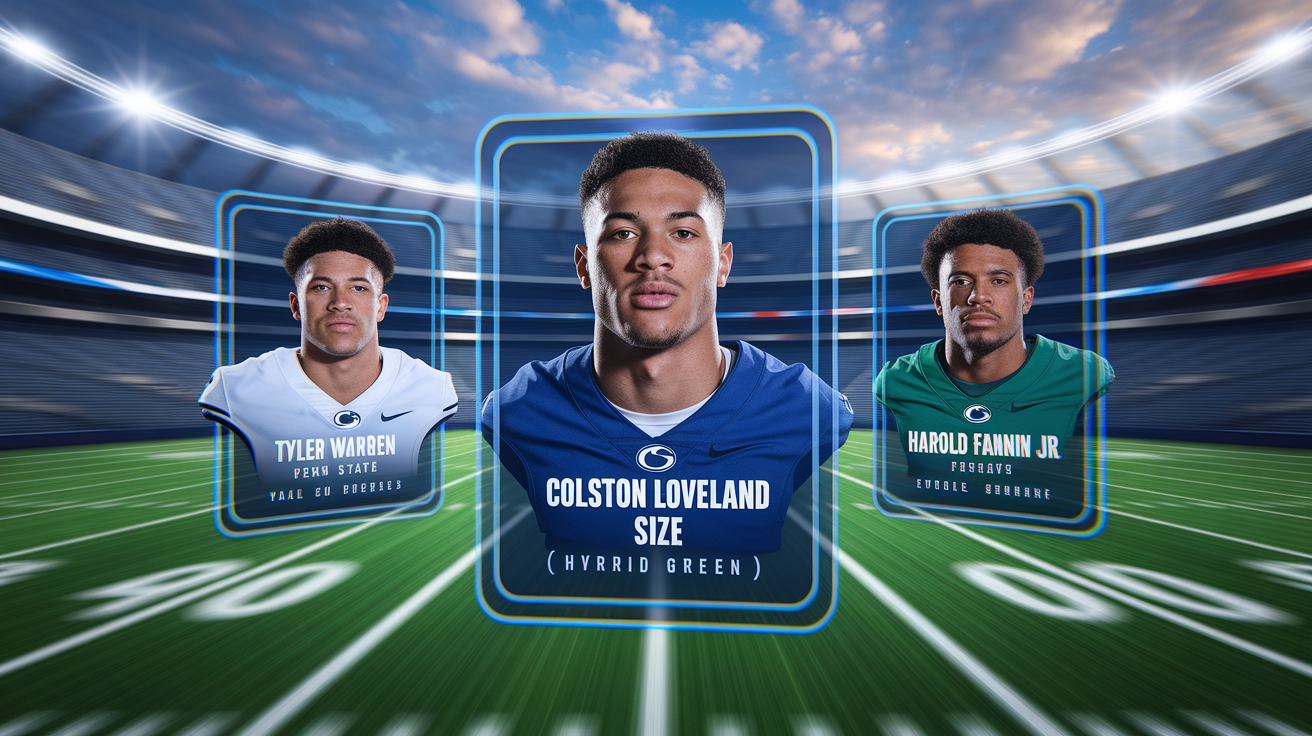
Tyler Warren out of Penn State is the most complete tight end prospect we’ve seen in a while. 6’5½, 256 pounds. He’s got that rare combo of elite after-catch ability and natural hands, plus he plays physical. Penn State moved him all over the formation, which translates directly to the next level. He’s not perfect though. Route detail needs work. Blocking consistency isn’t where it needs to be yet. But his receiving ability alone is enough to justify a first-round pick.
Colston Loveland from Michigan comes in at two with a profile built around size, speed, and natural pass-catching. 6’5¾, 248 pounds. He’s got the straight-line speed to threaten vertically and the body control to win contested catches in tight windows. Blocking technique? Still learning. He’ll need to add functional strength to hold up against NFL edge rushers. But the upside as a move tight end who can flex wide or work the seam is obvious. If he’s still there late in the first, teams should think about trading up.
Harold Fannin Jr. is one of the draft’s most productive pass catchers despite being undersized for the position. 6’3¼, 241 pounds. He’s light for traditional in-line work, but Bowling Green used him as a hybrid H-back and he thrived. Posted a historic 2024 season with exceptional ball skills and YAC ability. His lighter frame and developmental blocking will probably limit his early role to situational packages and move-TE concepts.
Quick NFL comparisons:
- Tyler Warren → David Njoku (athletic receiving TE with YAC upside who grew into blocking)
- Colston Loveland → Pat Freiermuth (size/speed vertical threat still learning to finish blocks)
- Harold Fannin Jr. → Evan Engram (undersized flex weapon who wins with movement and hands)
2025 TE Rankings by Tiers (Role‑Based Evaluation)
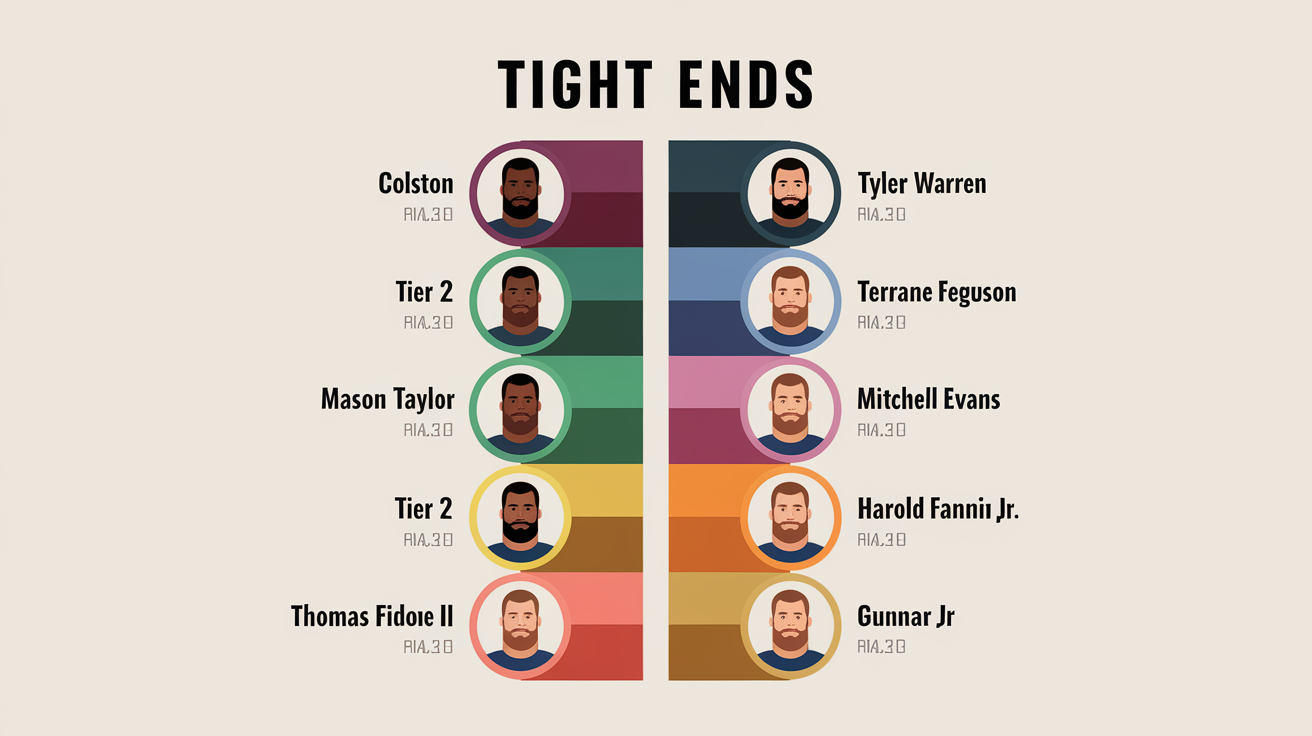
Evaluating tight ends by projected NFL role instead of strict draft grades gives you a clearer picture of how these guys will actually contribute. Some TEs step into immediate starting roles. Others need two or three seasons to develop blocking technique, route refinement, or positional versatility before they hit their ceiling.
| Tier | Player | College | Core Strength |
|---|---|---|---|
| Tier 1 — Top 8–10 by Year 3 | Colston Loveland | Michigan | Size/speed vertical receiving threat |
| Tier 2 — Starting TE with limitations | Tyler Warren | Penn State | Versatile YAC weapon, multi-role |
| Tier 2 — Starting TE with limitations | Mason Taylor | LSU | High football IQ, steady hands |
| Tier 2 — Starting TE with limitations | Elijah Arroyo | Miami | Explosive vertical/YAC ability |
| Tier 3 — Low TE1 / High TE2 | Terrance Ferguson | Oregon | Balanced athlete, versatile alignment |
| Tier 3 — Low TE1 / High TE2 | Mitchell Evans | Notre Dame | Physicality, run-block flashes |
| Tier 3 — Low TE1 / High TE2 | Ben Yurosek | Georgia | Early-career ball skills (injury setback) |
| Tier 3 — Low TE1 / High TE2 | Harold Fannin Jr. | Bowling Green | Production, hybrid H-back role |
| Tier 4 — Backup / Role Players | Thomas Fidone II | Nebraska | Violent style, upside despite ACLs |
| Tier 4 — Backup / Role Players | Gunnar Helm | Texas | Dependable hands, high floor |
Tight end is one of the hardest positions to project from college to the NFL. Guys who dominate as move weapons in spread offenses sometimes struggle when you ask them to dig out edge rushers on run downs. Physical blockers who shine in pro-style systems often lack the route polish to threaten vertically against NFL safeties.
Teams should prioritize prospects who show competency in both phases over one-dimensional specialists, unless you already have a complementary piece on the roster. A Tier 2 player like Mason Taylor offers a safer long-term bet than a Tier 1 prospect who might never develop the blocking technique to stay on the field for third downs. The difference between a true TE1 and a situational receiving weapon usually comes down to blocking consistency and positional versatility. Those traits take years to develop.
Combine & Pro Day Measurables for 2025 TE Prospects

The DraftBuzz athleticism chart for 2025 tight ends plots 40-yard dash times on the Y-axis against weight on the X-axis. “Athletic freaks” show up in the top-right quadrant where players combine elite straight-line speed with legit NFL size. Terrance Ferguson and Jake Briningstool earned strong marks for their testing profiles. Gunnar Helm saw his stock slide toward Day 3 after posting underwhelming numbers across multiple drills.
The five most predictive measurables for tight end prospects:
- 40-yard dash time (straight-line speed to threaten vertically and create separation at top of routes)
- Three-cone drill (short-area quickness and ability to sink hips out of breaks)
- Wingspan and hand size (catch radius and ability to box out defenders on contested targets)
- Weight and playing strength (functional power to hold blocks and finish after contact)
- Broad jump (explosiveness off the line and YAC ability in open space)
| Player | Weight | Testing Notes |
|---|---|---|
| Tyler Warren | 256 lbs | Strong YAC metrics, good short-area burst |
| Colston Loveland | 248 lbs | Size/speed combo, above-average 40 time |
| Terrance Ferguson | 247 lbs | Top athletic testing, versatile movement |
| Gunnar Helm | 241 lbs | Athletic testing lowered stock to Day 3 |
| Jake Briningstool | 241 lbs | Long frame, strong vertical athleticism |
Draft Range & Stock Movement for 2025 Tight Ends
Tight end draft stock shifted pretty significantly throughout the 2024 season and into the pre-draft process. Injuries, athletic testing, and scheme-fit conversations reshaped evaluations. Tyler Warren and Colston Loveland entered the cycle as clear first-round considerations, though neither is a lock to hear their name called in the top 32. Warren’s versatility and immediate starter projection make him the safer bet to go early. Loveland’s upside as a dynamic receiving weapon could push a tight-end-needy team to trade up.
Elijah Arroyo’s injury history dropped him from first-round consideration into the Day 2 conversation despite his elite vertical and YAC ability. Teams that prioritize upside over injury risk might still consider him at the end of Round 1, but most evaluators peg him as a Round 2 target who needs time to add strength and refine his route detail. Mason Taylor and Terrance Ferguson both sit comfortably in the Round 2 range as high-floor prospects with clear starter potential. Harold Fannin Jr.’s historic production could push him into Round 3 despite his undersized frame.
Projected draft range tiers:
- Round 1 consideration: Tyler Warren (Penn State), Colston Loveland (Michigan)
- Day 2 targets (Rounds 2–3): Elijah Arroyo (Miami), Mason Taylor (LSU), Terrance Ferguson (Oregon), Harold Fannin Jr. (Bowling Green)
- Mid-Day 2 to early Day 3 (Rounds 3–5): Mitchell Evans (Notre Dame), Jake Briningstool (Clemson), Gunnar Helm (Texas)
- Day 3 upside plays (Rounds 5–7): Thomas Fidone II (Nebraska), Oronde Gadsden II (Marshall), Luke Lachey (Iowa), Ben Yurosek (Georgia)
- Potential UDFA with reclamation upside: Ben Yurosek (Georgia), Jackson Hawkes (Georgia Tech)
Scheme Fits & Positional Roles for 2025 TE Prospects
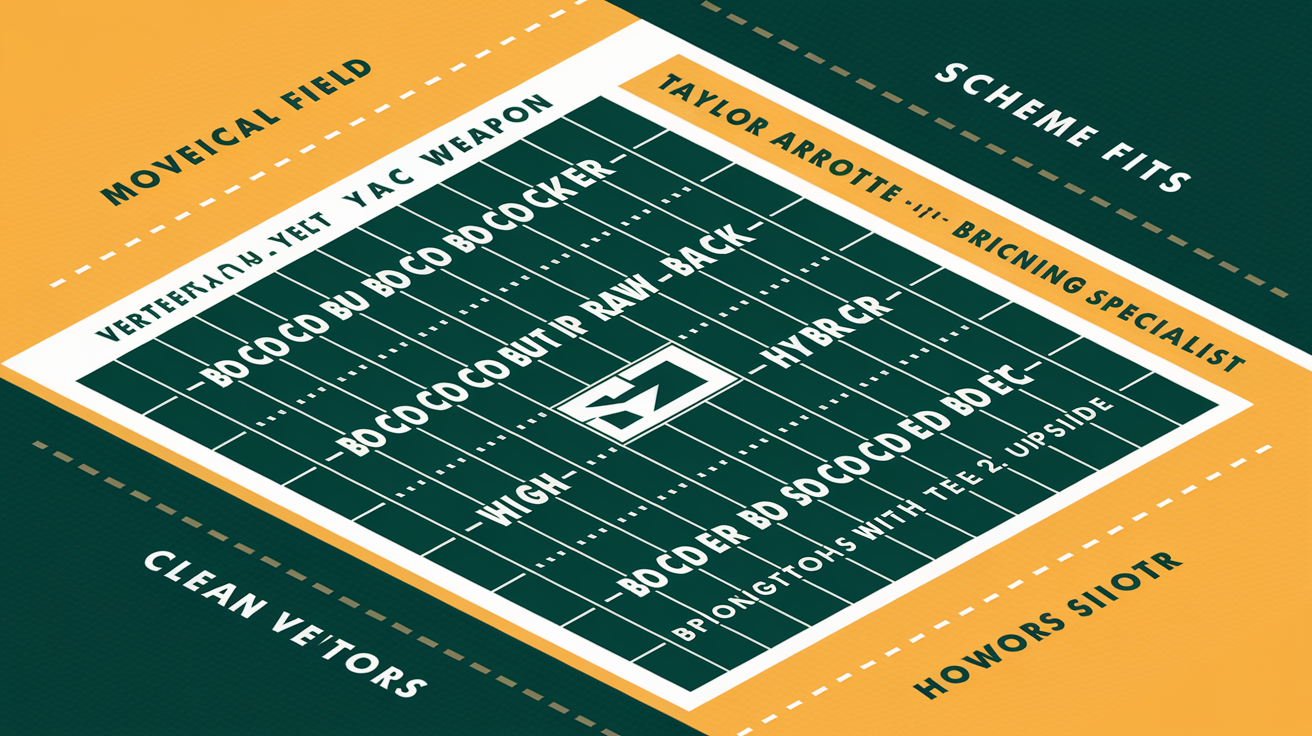
Modern NFL offenses deploy tight ends across a spectrum of roles. You’ve got traditional in-line blockers who set the edge in 21 personnel. Then you’ve got move weapons who align in the slot and threaten defenses vertically. The best tight ends offer versatility to contribute in multiple alignments, but most prospects entering the draft project more clearly into one archetype or another based on their college film and physical profile.
Teams running 12 personnel as their base offensive package need tight ends who can handle blocking assignments while still offering enough receiving upside to keep defenses honest. Offenses built around spread concepts and empty formations prioritize pass-catching ability and route versatility over traditional in-line blocking. That creates natural landing spots for lighter, more athletic prospects who struggle to hold blocks against NFL edge defenders.
Positional archetypes and ideal scheme fits:
- Move/Flex TE (Loveland, Taylor): Spread offenses with frequent 11 personnel, slot/flex alignments, and vertical passing concepts
- Vertical/YAC Weapon (Arroyo, Fannin Jr.): Offenses that feature seam routes, play-action deep shots, and design touches in space
- Balanced but raw blocker (Ferguson, Briningstool): 12 personnel systems willing to develop blocking technique while using their athleticism early
- Hybrid H-back (Fannin Jr.): Motion-heavy offenses that create mismatches with pre-snap movement and manufactured touches
- Blocking specialist (Hawkes): Power-run teams looking for a traditional Y tight end who can set edges and dig out linebackers
- High-floor backup with TE2/TE1 upside (Taylor, Helm): Teams with established starters looking for insurance and developmental depth
FAQ: Everything About the 2025 NFL Draft Tight End Rankings

Who is the top tight end in the 2025 NFL Draft?
Tyler Warren from Penn State sits atop most rankings thanks to his versatility, YAC ability, and immediate multi-role starter projection. But Colston Loveland’s elite upside makes the top spot a legit debate.
Why do analysts rank tight ends so differently compared to other positions?
Tight end rankings vary wildly because evaluators weight production, injuries, athletic testing, blocking skill, and scheme fit differently. And the position requires competency in both receiving and blocking to succeed at the NFL level.
What measurables matter most when scouting tight ends?
Speed (40 time), short-area quickness (three-cone), catch radius (wingspan/hands), functional strength (weight/power), and explosiveness (broad jump) form the core athletic evaluation checklist for tight end prospects.
Which 2025 tight end prospects have serious injury concerns?
Elijah Arroyo (prior injury setbacks), Mitchell Evans (worrying injury history), Thomas Fidone II (two ACL tears), and Ben Yurosek (serious injuries that stalled production) all carry medical red flags.
How important is blocking for tight ends in the modern NFL?
Blocking remains critical for every-down playing time, but teams increasingly value receiving upside and positional versatility over traditional in-line blocking. That’s created roster spots for move tight ends who contribute primarily as pass catchers.
What’s the difference between a Tier 2 and Tier 3 tight end in this class?
Tier 2 prospects project as legit starters with clear pathways to TE1 roles despite some developmental needs. Tier 3 players are more likely to settle into high-end TE2 or situational roles unless everything breaks right with their development.
Final Words
Right in the action: this piece dropped the full 2025 TE draft board, updated rankings, deep scouting on the top three, a role‑based tier breakdown, combine takeaways, and projected draft ranges.
You saw why Tyler Warren, Colston Loveland and Harold Fannin Jr. rank where they do, how measurables shift stock, and which archetypes fit NFL schemes. The FAQ and profiles give quick answers for what matters.
Treat these 2025 nfl draft te rankings as a working map — plenty of upside here, and a few players ready to rise.
FAQ
Q: Who’s the best tight end in the 2025 NFL draft and who are the top tight end prospects?
A: The best tight end in the 2025 draft and top prospects are Tyler Warren and Colston Loveland, followed by Harold Fannin Jr., Elijah Arroyo, Mason Taylor, Terrance Ferguson, Mitchell Evans, Thomas Fidone, Gunnar Helm, Benjamin Yurosek.
Q: Who are the top 10 tight ends in the NFL right now?
A: The top 10 tight ends in the NFL right now include Travis Kelce, George Kittle, Mark Andrews, T.J. Hockenson, Kyle Pitts, Dallas Goedert, Darren Waller, Pat Freiermuth, David Njoku, Gerald Everett.
Q: Who is the smartest toughest NFL draft prospect in 2025?
A: The smartest toughest NFL draft prospect in 2025 is reportedly Tyler Warren, praised by scouts for on-field IQ, competitive toughness, and reliable hands; Colston Loveland and Harold Fannin Jr. also draw similar praise.
Q: How do analysts rank tight ends differently?
A: Analysts rank tight ends differently by weighing college production, athletic testing, blocking skill, injury history, and scheme fit differently, which produces varied boards and draft grades.
Q: Which measurables matter most for tight ends?
A: The most important tight end metrics are 40-yard dash for speed, three-cone shuttle for route quickness, vertical leap for contested catches, catch radius/arm length, and blocking footwork.
Q: How are injuries affecting tight end draft stock?
A: Injuries affect tight end draft stock by pushing prospects down rounds or changing medical risk; Arroyo, Evans, Fidone and Yurosek are examples whose health concerns trimmed early-round chances.