


Think the Combine is just a timed sprint? Think again.
The 2026 NFL Combine runs Feb. 26–Mar. 1 at Lucas Oil Stadium in Indianapolis.
This post gives the dates and location, walks through the drills, medicals, and team interviews, and names the top prospects to watch — Caleb Downs, Drew Allar, Brenen Thompson, and Francis Mauigoa.
We’ll also flag notable snubs and invite trends that could reshape the 2026 draft board.
Key Details About the 2026 NFL Combine Event
The 2026 NFL Combine runs February 26 through March 1, 2026, at Lucas Oil Stadium in Indianapolis. It’s the same venue the league’s used for decades, and the indoor setup means every drill happens under identical conditions. Six days, hundreds of college prospects, measurements and testing and medical exams and interviews with all 32 teams. Each position group takes the field on designated days while scouts rotate through interview rooms and medical stations.
You can track results in real time through embedded spreadsheets and official NFL sources that update as soon as athletes finish each test. The week’s structured to cover every dimension that matters for draft prep:
- Weigh-ins and body measurements on arrival. Official height, weight, arm length, hand size.
- Medical exams where team physicians review injury histories, perform physicals, identify recheck needs.
- Formal interviews lasting 15 minutes per team. Some prospects meet all 32. Topics cover background, football IQ, character.
- On-field drills like the 40-yard dash, bench press, vertical jump, broad jump, shuttle runs, three-cone drill, plus position-specific workouts.
- Positional sessions where quarterbacks throw scripted routes, defensive backs run coverage patterns, linebackers cover and blitz, linemen demonstrate hand technique.
- Real-time data tracking via live spreadsheets that update with official and unofficial times as NFL Network confirms each result.
NFL Network broadcasts position workouts, drill results, and analyst breakdowns as each session wraps. Streaming options mirror the television schedule, so fans and analysts get immediate access to every measurable as it posts.
2026 NFL Combine Invitation List and Position Group Breakdown
The NFL invites around 300 to 330 draft-eligible players each year. Selection criteria include draft projection, positional need, medical concerns that require league evaluation, and feedback from team scouts. The invitation list is the league’s first public signal of who’s considered draftable. Omissions spark debate about snubs and overlooked talent. Position group totals shift year to year depending on depth at each spot and the number of underclassmen who declare early.
2026 invite breakdown by position:
- Quarterbacks (15 invites) – Drew Allar (Penn State), Carson Beck (Miami), Fernando Mendoza (Indiana), Garrett Nussmeier (LSU), Cade Klubnik (Clemson), Luke Altmyer (Illinois), Taylen Green (Arkansas), Haynes King (Georgia Tech), Behren Morton (Texas Tech), Diego Pavia (Vanderbilt), Sawyer Robertson (Baylor), Ty Simpson (Alabama), Jalon Daniels (Kansas), Joe Fagnano (UConn), Cole Payton (North Dakota State).
- Running Backs (21 invites, lowest since pre-COVID) – Jeremiyah Love (Notre Dame), Nicholas Singleton (Penn State), Kaytron Allen (Penn State), Mike Washington Jr. (Arkansas), Jadarian Price (Notre Dame), Demond Claiborne (Wake Forest), Jonah Coleman (Washington), Desmond Reid (Pittsburgh), Le’Veon Moss (Texas A&M), CJ Donaldson (Ohio State), Emmett Johnson (Nebraska).
- Wide Receivers (above five-year average) – Zachariah Branch (Georgia), Barion Brown (LSU), Denzel Boston (Washington), Aaron Anderson (LSU), Carnell Tate (Ohio State), J. Michael Sturdivant (Florida), Colbie Young (Georgia), Brenen Thompson (40-yard leader).
- Tight Ends (27 invites, up from 21 last year) – Oscar Delp (Georgia), Dallen Bentley (Utah), Marlin Klein (Michigan), Michael Trigg (Baylor). Strong depth even if blue-chip TE count is limited.
- Offensive Line (at five-year average after last year’s dip) – Francis Mauigoa (Miami), Kadyn Proctor (Alabama, 366 lbs), Drew Shelton (Penn State), Isaiah World (Oregon), Monroe Freeling (Georgia, 6’7″ 315 lbs), Max Iheanachor (Arizona State, 6’5″ 325 lbs), Spencer Fano (Utah).
- EDGE rushers (volume on par with recent years) – David Bailey (Texas Tech), Rueben Bain Jr. (Miami, 33.5 tackles for loss in 38 games), Dani Dennis-Sutton (Penn State), Patrick Payton (LSU), Akheem Mesidor (Miami), Tyreak Sapp (Florida), Gabe Jacas (11 sacks in 2025).
- Defensive Tackles (29 invites, above five-year average) – Peter Woods (Clemson), Caleb Banks (Florida, 6’6″ 335 lbs), Cameron Ball (Arkansas), Rayshaun Benny (Michigan), Christen Miller (Georgia, 6’4″ 321 lbs), Kayden McDonald (Ohio State, 6’3″ 326 lbs), Dontay Corleone (Cincinnati).
- Linebackers (29 invites, matches last year and five-year average) – Arvell Reese (Ohio State, leading the class), Sonny Styles (Ohio State, 43.5″ vertical at 6’5″ 246 lbs), Harold Perkins Jr. (LSU), Lander Barton (Utah), Jacob Rodriguez (Texas Tech, Nagurski/Bednarik/Butkus winner).
- Cornerbacks (34 invites, tied for lowest since 2020) – Mansoor Delane (LSU), Domani Jackson (Alabama), Lorenzo Styles Jr. (Ohio State), Davison Igbinosun (Ohio State), Marcus Allen (North Carolina), D’Angelo Ponds (Indiana, 5’9″ 173 lbs), Avieon Terrell (Clemson, 8 forced fumbles).
- Safeties (20 invites, below recent norms but solid top-end talent) – Caleb Downs (Ohio State, consensus No. 1 overall prospect), Dillon Thieneman (Oregon, 4.35 forty, 1.52 10-yard split, 41″ vertical), Kamari Ramsey (USC), Bud Clark (TCU), Zakee Wheatley (Penn State).
Invite trends show a running back class that’s the smallest since before COVID, a defensive tackle group that returned to normal after an unusually large 2025 total, and cornerback and safety groups showing thinner overall depth. Notable snubs include Mark Gronowski (QB, Iowa) despite extensive starting experience and a strong Shrine Bowl showing, Jaydn Ott (RB, Oklahoma), Chip Trayanum (RB, Toledo), several Senior Bowl wide receivers such as Tyren Montgomery and Lewis Bond, and a handful of offensive linemen including Giovanni El‑Haadi (Michigan) and Nolan Rucci (Penn State). These omissions don’t eliminate draft chances, but they shift the burden to Pro Days and private workouts to prove athleticism and answer medical or character questions that may have influenced the league’s decision.
2026 NFL Combine Drill Guide and Measurement Explanations
Every Combine measurement and drill result gets recorded in a standardized glossary that lets scouts, analysts, and fans compare prospects across years and position groups. The official tracker uses abbreviations for each column. Understanding these labels is essential for interpreting raw data accurately. Pre-combine measurements marked with an asterisk come from NFL.com’s database and get replaced once athletes register and undergo official weigh-ins at Lucas Oil Stadium.
The measurement glossary defines each column clearly. COMB # is the official player combine number assigned at registration. UC flags underclassmen who declared early. ASG notes participation in All-Star games like the Senior Bowl or East-West Shrine Bowl. POS lists the position label the league assigns for testing purposes. HGT and WGT capture height and weight as measured on-site, and ARM and HANDS record arm length and hand size in inches, critical for evaluating linemen and receivers. The 40-yard dash is tracked three ways: 40 (1) and 40 (2) represent first and second attempts shown during NFL Network coverage, while 40 (O) is the official time posted by NFL.com once all reviews are complete. 10 (1) and 10 (2) capture the 10-yard split for each 40 attempt, a key measure of explosion off the line. 225 counts reps on the bench press at 225 pounds, a test of upper-body strength and endurance. VERT records the best vertical jump in inches, and BJ logs the best broad jump in feet and inches, both measuring lower-body explosion. 20S and 60S capture the best times in the 20-yard and 60-yard shuttle drills, which test short-area change of direction. 3C measures the best three-cone drill time, another agility and body-control benchmark.
Drill and Measurement Reference Table
| Metric | Definition | Source |
|---|---|---|
| COMB # | Official player combine number | NFL registration |
| HGT / WGT | Height and weight measured on-site | Official weigh-in |
| ARM / HANDS | Arm length and hand size in inches | Official measurement station |
| 40 (1) / 40 (2) / 40 (O) | First, second, and official 40-yard dash times | NFL Network coverage / NFL.com |
| 10 (1) / 10 (2) | 10-yard splits for each 40 attempt | NFL Network coverage |
| 225 | Reps of 225-pound bench press | On-field drill station |
| VERT | Best vertical jump in inches | Jump station |
| BJ | Best broad jump in feet and inches | Jump station |
| 20S | Best 20-yard shuttle time | Agility station |
| 60S | Best 60-yard shuttle time | Agility station |
| 3C | Best three-cone drill time | Agility station |
| Asterisk (*) | Pre-combine measurement from NFL.com | Updated after official weigh-in |
Teams use these measures to build predictive models for on-field success, comparing a prospect’s raw athleticism to historical data at the same position. A cornerback with a slow three-cone time might struggle to mirror quick receivers in man coverage. A defensive tackle with short arms could have trouble holding blocks against longer offensive linemen. Explosive jumps and fast 10-yard splits signal first-step quickness that translates directly to pass rush and route separation. Bench press reps offer a proxy for play strength and durability across a 17-game season.
Top 2026 NFL Combine Performers and Notable Metrics
Speed dominated headlines across nearly every position group. Multiple prospects posted sub-4.4 times in the 40-yard dash, and several edge rushers and linebackers combined elite size with rare explosiveness. Brenen Thompson led all participants with a 4.26-second 40, the fastest mark of the week and a time that’ll keep him in draft conversations despite limited college production. Mike Washington Jr. ran a 4.33 at 220-plus pounds, the fastest time ever recorded by any player over 220 pounds and a result that immediately boosted his stock into the early-round conversation. Zachariah Branch posted a 4.35, reinforcing his reputation as a dynamic deep threat. Dillon Thieneman matched that 40 time and added a 1.52 10-yard split and a 41-inch vertical jump, a triple threat of speed, explosion, and short-area burst that confirmed his standing as one of the draft’s top safeties.
| Athlete | Position | Key Metric | Measurement |
|---|---|---|---|
| Brenen Thompson | WR | 40-yard dash | 4.26 seconds |
| Mike Washington Jr. | RB | 40-yard dash (220+ lbs) | 4.33 seconds |
| Dillon Thieneman | S | 40 / 10-split / Vertical | 4.35 / 1.52 / 41″ |
| Sonny Styles | OLB | Vertical at 6’5″ 246 lbs | 43.5 inches |
| Caleb Banks | DT | Size + Arm length | 6’6″ 335 lbs, 35″ arms |
These results will influence draft rankings significantly, particularly for players who entered the week with questions about their straight-line speed or explosiveness. Mike Washington Jr. moved from a mid-round projection into Day 2 consideration based on his 40 time alone. Dillon Thieneman’s triple-test performance cemented his place as a top-15 pick in most mock drafts. On the flip side, Cassius Howell’s 30 1/4-inch arm length raised concerns about his ability to shed blocks at the next level, and several prospects who skipped drills or posted slower-than-expected times will need strong Pro Day showings to recover lost momentum.
2026 NFL Combine Quarterback, RB, WR, and Skill Position Notes
The skill-position landscape at the 2026 Combine revealed depth at wide receiver and tight end, a historically thin running back class, and a quarterback group that leaned heavily on accuracy and processing speed rather than pure arm strength. Fifteen quarterbacks received invites, a total that aligns with the league’s need to run position-specific drills without overcrowding the throwing sessions. Several mid-round prospects used their on-field workouts to climb boards. Wide receiver invite totals came in above the five-year average, and the tight end group ballooned to 27 invitees, signaling a draft class with reliable receiving options at both spots even if true blue-chip talent remains limited.
Quarterbacks
The 15-man quarterback group featured Drew Allar, Carson Beck, Fernando Mendoza, Garrett Nussmeier, and Cade Klubnik among the top-tier names. Mendoza emerged as the consensus top passer after a polished throwing session that showcased rhythm, timing, and anticipation. His accuracy on intermediate and deep outs reinforced evaluations that he lacks elite arm strength but compensates with advanced poise and decision-making. Ty Simpson’s workout session also impressed, confirming his standing as the No. 2 quarterback in the class and quieting concerns about mechanical consistency under pressure. Mark Gronowski’s omission from the invite list surprised many analysts, given his extensive starting experience at Iowa and a strong Shrine Bowl performance. The snub will push him to prove his athleticism and arm talent at Iowa’s Pro Day.
Running Backs
With only 21 running backs invited, the 2026 class represents the smallest Combine RB group since before COVID. It’s a reflection of declining positional value and teams’ willingness to find backs in the mid-to-late rounds. Mike Washington Jr. stole the show with his 4.33 40-yard dash, the fastest time ever recorded by a player over 220 pounds. That result immediately elevated his draft stock into the second-round conversation. Jeremiyah Love, labeled the best offensive prospect in the class, reinforced his explosiveness with strong testing across the board. Jadarian Price’s 4.49 time and three career kickoff-return touchdowns on 22 opportunities added special-teams value to his draft profile. Jaydn Ott and Chip Trayanum were notable snubs. Both players still considered draftable but forced to rely on Pro Days to demonstrate the speed and burst that led to their college production.
Wide Receivers & Tight Ends
Zachariah Branch paced the wide receiver group with a 4.35 40-yard dash. Denzel Boston’s 6’4″, 209-pound frame combined with 20 touchdowns over two seasons made him a red-zone projection despite modest testing numbers. Brenen Thompson’s 4.26 time led all participants, though questions about route refinement and contested-catch ability will follow him through the draft process. The 27-man tight end group offered depth but lacked a clear top-tier prospect. Oscar Delp, Dallen Bentley, Marlin Klein, and Michael Trigg all tested well enough to secure mid-round selections. Several Senior Bowl wide receivers, including Tyren Montgomery, Cyrus Allen, and Lewis Bond, didn’t receive Combine invites. That’ll require strong Pro Day performances to maintain draft positioning.
Skill-position testing shapes early-round draft debates by clarifying which prospects offer legitimate home-run speed, which receivers can separate at the top of routes, and which tight ends provide in-line blocking with pass-catching upside. This year’s depth at wide receiver and tight end will allow teams to find value on Day 2, while the thin running back class may push a few backs higher than expected if playoff contenders prioritize durability and special-teams contributions.
2026 NFL Combine Offensive and Defensive Line Evaluation
Trench testing at the Combine carries unique importance because size, length, and explosion define success at offensive and defensive line more than any other position group. A tackle with 34-inch arms can keep edge rushers at bay. A defensive tackle with a 10-inch vertical jump will struggle to penetrate gaps and collapse pockets. Scouts prioritize arm length, hand size, vertical jump, broad jump, and the three-cone drill when evaluating linemen, using these measures to project how a college starter will hold up against NFL speed and power.
Kadyn Proctor’s 366-pound frame drew immediate attention, raising questions about whether his size offers dominant anchor strength or creates lateral mobility concerns. Monroe Freeling measured 6’7″ and 315 pounds, a prototypical left tackle build with the arm length and foot speed to mirror speed rushers. Max Iheanachor’s 6’5″, 325-pound frame and clean agility drills positioned him as a safe Day 2 interior option. On the defensive side, Gabe Jacas led the Big Ten with 11 sacks in 2025, combining length with relentless motor. Rueben Bain Jr. posted 33.5 tackles for loss across 38 collegiate games, a production rate that translated to explosive testing numbers. Caleb Banks measured 6’6″ and 335 pounds with 35-inch arms and 10 3/4-inch hands, rare size for an interior player. His seven-game absence in 2025 due to a fractured foot and surgery will require medical re-checks before draft night.
Offensive and defensive line traits evaluated at the Combine:
- Arm length benchmarks – offensive tackles need 33+ inches to mirror edge speed, guards and centers function well at 32+ inches.
- Vertical and broad jump – explosion off the line correlates directly to pass-rush effectiveness and run-block displacement.
- Three-cone and shuttle times – agility drills reveal whether a lineman can redirect and recover when beaten on initial contact.
- Bench press reps – 225-pound reps signal upper-body endurance and play strength over four quarters.
- Hand size minimums – defensive linemen need 10+ inch hands to control blockers, offensive linemen use hand size to sustain blocks.
- 10-yard split – first-step quickness separates elite pass rushers from solid college producers who lack NFL burst.
Line groups will dominate first-round projections because playoff contenders and rebuilding teams alike prioritize trench talent. This year’s class offers reliable starting options across the offensive line while defensive tackle and edge rusher depth falls slightly below recent years. Several non-invites, including Giovanni El‑Haadi (Michigan) and Cian Slone (NC State), will need dominant Pro Day showings to secure Day 3 selections. Teams hunting for developmental tackles and interior rushers will wait until late April to finalize their boards.
2026 NFL Combine Defensive Back Testing and Coverage Traits

Defensive back evaluation at the Combine hinges on speed, short-area quickness, and the ability to flip hips and mirror route breaks without losing ground. The 2026 cornerback group drew 34 invites, tied for the lowest total since 2020, while the safety class brought 20 prospects, a number below recent norms but anchored by elite top-end talent. Thin overall depth at both spots suggests that teams hunting for starting-caliber secondary help will need to invest early-round capital or accept developmental projects on Day 3.
Coverage Metrics That Matter
Three-cone drill times measure a cornerback’s ability to break down, plant, and redirect without false steps. That skill translates directly to man coverage at the top of routes. Shuttle times test lateral burst and recovery speed when beaten inside or outside. 40-yard splits reveal whether a defensive back can run stride-for-stride with vertical threats. Teams also track vertical jump and broad jump to project ball skills and closing burst on contested targets, knowing that even a small advantage in explosion can turn a breakup into an interception. Hand size matters less for defensive backs than for linemen, but longer arms help cornerbacks extend into press coverage and disrupt releases.
D’Angelo Ponds measured 5’9″ and 173 pounds, undersized even by slot-corner standards. His testing numbers in the three-cone and shuttle drills will determine whether teams view him as a nickel specialist or a practice-squad candidate. Avieon Terrell averaged roughly 50 tackles over two seasons and generated eight forced fumbles, five in his most recent year. That’s a ball-disruption rate suggesting aggressive hands and football instincts even if straight-line speed remains a question. Dillon Thieneman’s 4.35 40-yard dash, 1.52 10-yard split, and 41-inch vertical jump positioned him as the draft’s most explosive safety, a prospect who can erase deep threats in single-high coverage and trigger downhill to blow up run fits. Caleb Downs entered the Combine as the consensus No. 1 overall prospect, a safety with the highest floor in the class and immediate starter projection. His testing confirmed NFL-ready speed and coverage range.
Notable snubs at defensive back include Jalen Catalon (Missouri), Cole Wisniewski (Texas Tech), Ceyair Wright, Fred Davis II, and Devon Marshall. All players who’ll need strong Pro Day performances to answer questions about their athleticism and medical history. Thin depth at cornerback and safety means Day 2 selections will carry higher risk than usual. Teams may reach for coverage talent in the third and fourth rounds to avoid settling for project players who lack the testing profile to start in Year 1.
How to Read the 2026 NFL Combine Results Tracker
The live results tracker embeds a multi-tab spreadsheet that updates in real time as athletes complete drills and measurements are confirmed by NFL Network and NFL.com. Each position group occupies a separate page within the spreadsheet, accessible via tab navigation located at the bottom of the embedded frame. Scroll down to find the row of tabs (Quarterbacks, Running Backs, Wide Receivers, etc.) and click the relevant position to load that group’s data. The tracker uses the same column glossary defined earlier in this article, with abbreviations running across the top row and player names listed in alphabetical or numerical order depending on how the sheet is sorted.
Pre-combine measurements carry an asterisk (*) next to the height and weight columns. That marker tells you those numbers came from NFL.com’s database before the athlete arrived in Indianapolis. Once a player completes official weigh-in and measurement stations, the asterisk is removed and the new figures replace the old. This system ensures the tracker always reflects the most current data, but it also means early visitors to the page may see incomplete rows until all athletes finish registration. Times and drill results populate in stages as well. 40 (1) and 40 (2) appear first based on NFL Network’s live coverage, followed by the official 40 (O) time once the league confirms the measurement. 10-yard splits, vertical jump, broad jump, shuttle times, and three-cone results follow the same pattern, updating throughout the day as each position group rotates through drill stations.
Common mistakes when reading the tracker:
- Misreading pre-combine numbers – asterisked measurements are placeholders. Always check back after official weigh-ins for updated figures.
- Ignoring official vs unofficial times – 40 (1) and 40 (2) reflect what NFL Network broadcast live, but 40 (O) is the league’s confirmed result and the number used in scouting reports.
- Missing the tab navigation – the tracker defaults to one position, you have to scroll to the bottom and click tabs to view other groups.
- Comparing across different measurement systems – arm length and hand size use inches, broad jump uses feet and inches, vertical jump uses inches. Always convert when comparing.
- Forgetting to report errors – the site asks readers to flag any mistakes so corrections can be made quickly. If a number looks wrong, double-check against NFL.com and report discrepancies.
The 2026 NFL Scouting Combine Results Tracker remains the most reliable way to verify current live numbers. Bookmarking the page lets fans and analysts check updated results multiple times per day as drills conclude and official measurements post. The tracker’s real-time structure means patience is required early in the week, but by the final day all columns should be populated and asterisks removed, leaving a complete dataset for cross-position comparisons and historical benchmarking.
2026 NFL Combine Prospects to Watch Moving Forward
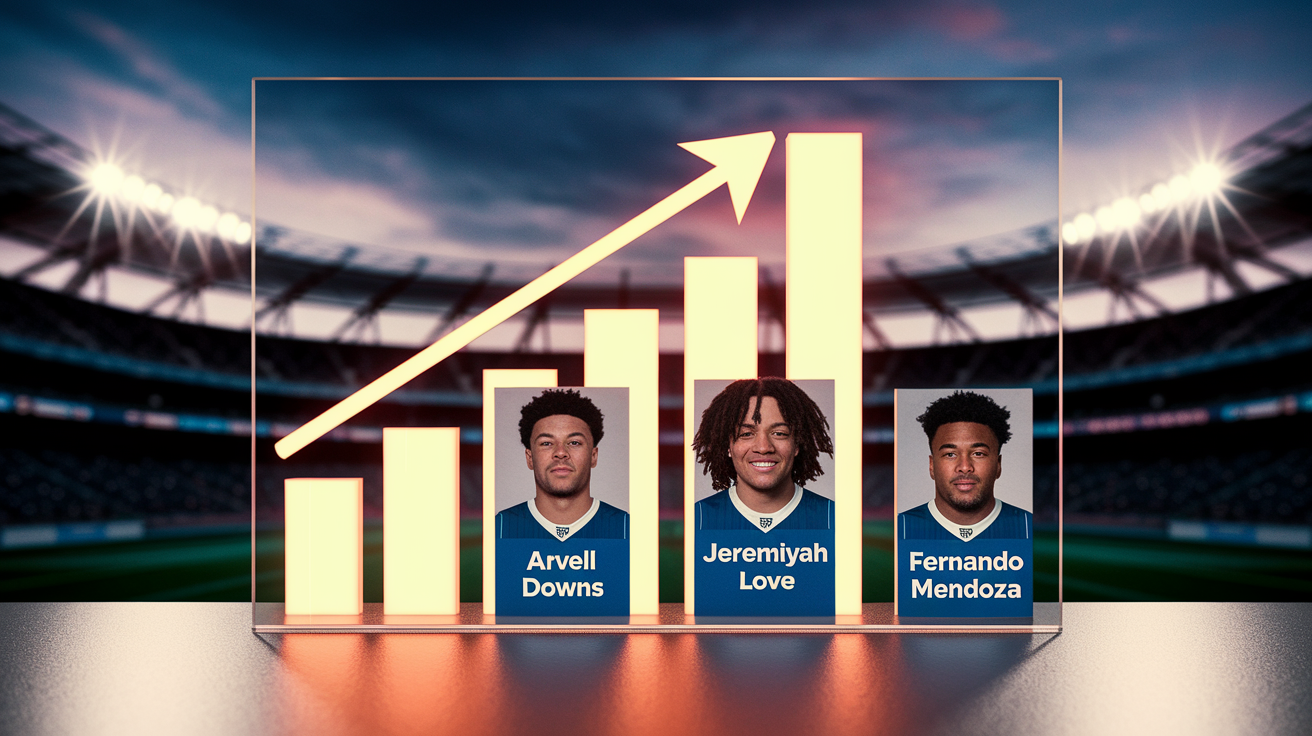
Several prospects entered the Combine with question marks about their athleticism, injury history, or positional fit. Their performances over the week either answered those concerns or added new ones that’ll follow them through Pro Days and private workouts. Caleb Downs solidified his standing as the No. 1 overall prospect, a safety with the highest floor in the class and immediate starter projection at either free or strong safety depending on scheme. Arvell Reese’s elite testing at 6’5″ and 246 pounds drew Micah Parsons comparisons, a rare blend of size, speed, and versatility that allows him to rush the passer, cover tight ends, and trigger downhill in the run game. Jeremiyah Love earned the label of best offensive prospect in the class, a running back whose explosiveness and receiving ability make him a three-down weapon even in an era of devalued backs. Fernando Mendoza’s polished throwing session reinforced his standing as the top quarterback, a prospect whose accuracy and processing speed compensate for average arm strength. David Bailey’s edge-rush toolkit and relentless motor positioned him as the best pure pass rusher in the draft.
Medical and Interview Watchlist
Caleb Banks missed seven games in 2025 due to a fractured foot and subsequent surgery, a significant absence that’ll require medical re-checks and conversations with team doctors before any club commits a high pick. Jermod McCoy sat out the entire 2025 season recovering from an ACL tear. While his Combine testing suggested full recovery, teams will request updated imaging and functional movement assessments during private workouts. Jordyn Tyson’s injury history across three seasons raised durability questions. His interview schedule will likely include detailed discussions about conditioning, training habits, and how he manages soreness during a long season. Cassius Howell’s 30 1/4-inch arm length and 32.5-inch vertical jump created concerns about his ability to disengage from blocks and convert speed to power at the next level, pushing him toward teams that value motor and effort over raw measurables.
Breakout and sleeper candidates trending upward after the Combine:
- Mike Washington Jr. (RB, Arkansas) – 4.33 forty at 220+ pounds makes him the fastest big back ever tested. Mid-round projection jumped to Day 2 consideration.
- Dillon Thieneman (S, Oregon) – 4.35 forty, 1.52 10-yard split, 41-inch vertical. Confirmed top-15 pick status and erased any lingering speed concerns.
- Dani Dennis-Sutton (Edge, Penn State) – strong week moved him into second-round conversations after entering as a third-round projection.
- Ty Simpson (QB, Alabama) – throwing session reinforced his standing as the No. 2 quarterback and quieted mechanical concerns.
- Jacob Rodriguez (ILB, Texas Tech) – Nagurski, Bednarik, and Butkus awards combined with a strong Combine week boosted his stock into the third round.
- Keldric Faulk (young prospect turning 21 in September) – age and upside make him a developmental favorite for teams willing to stash a project.
Pro Days and private workouts represent the final evaluation opportunities before the draft. Many prospects will use those settings to re-run drills, demonstrate positional technique in more controlled environments, and sit for extended interviews with coaching staffs. Teams that passed on inviting a player to Indianapolis will schedule individual visits to fill gaps in their evaluations. Medical staffs will conduct follow-up exams for anyone flagged during Combine physicals. The next six weeks will determine final draft positioning for dozens of prospects, and this year’s thin depth at running back, cornerback, and safety means every private workout and Pro Day performance carries extra weight.
Final Words
Right in the action: the Combine hits Indianapolis Feb. 26–Mar. 1 at Lucas Oil Stadium, with weigh-ins, drills, medical checks, interviews and a live results tracker updating in real time.
We broke down the invite lists, walked through the measurement glossary and drill guide, highlighted the fastest times and trench testing, and flagged prospects and snubs that could move on draft boards.
Keep an eye on the 2026 nfl combine — it’ll steer early draft chatter and give fans clear names to follow into pro day season.
FAQ
Q: Where is the NFL Combine in 2026?
A: The NFL Combine in 2026 is in Indianapolis at Lucas Oil Stadium, held Feb. 26–Mar. 1, 2026, with on-site drills at Lucas Oil and a live results tracker updating measurements in real time.
Q: Has the 2026 NFL combine happened?
A: The 2026 NFL Combine has happened; it ran Feb. 26–Mar. 1, 2026, in Indianapolis, and official measurements and drill data are available via the live tracker.
Q: What time is the NFL Combine in 2026?
A: The session times for the 2026 NFL Combine varied by day and drill during Feb. 26–Mar. 1, and specific start times aren’t centralized here, so check the NFL’s official schedule or NFL Network for drill-by-drill timing.
Q: Who is in the 2026 NFL combine?
A: The 2026 NFL Combine invite list includes draft-eligible prospects across all positions: 15 QBs, 21 RBs, 27 TEs, typical OL and EDGE counts, 29 DTs, 29 LBs, 34 CBs, and 20 safeties.