

Think the bench press decides tackle prospects? Think again.
A decade-plus of Combine data shows the tests that actually predict NFL production aren’t upper-body reps.
Straight-line speed, quick change of direction, and lower-body explosion matter most.
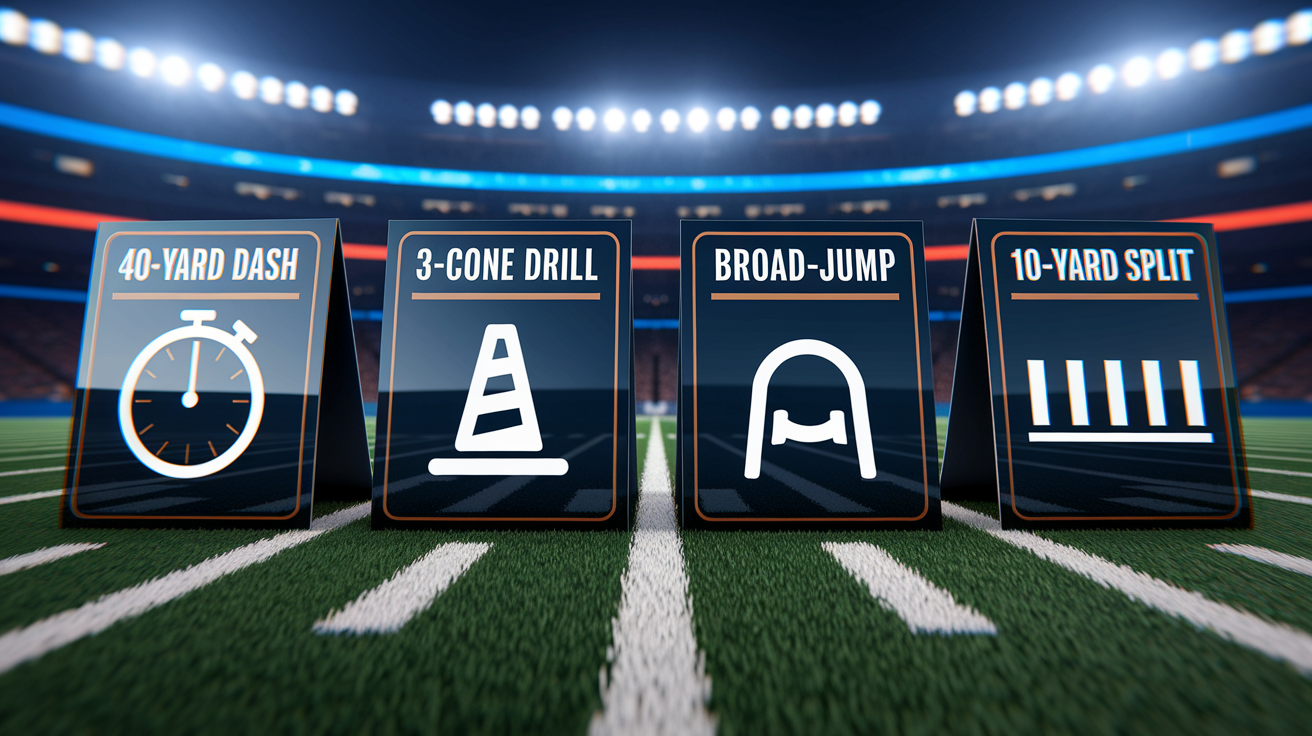
That means the 40-yard dash, 3-cone, broad jump and the 10-yard split are the drills to watch.
We’ll rank those four, explain why weight-adjusted times tilt the scale for bigger tackles, and show what each drill actually tells you about on-field success.
Ranking the Most Important Combine Drills for Offensive Tackles
Looking at NFL Combine data from 2010 through 2021, offensive tackles produced at least two workouts that hit R-squared values of 0.130 or higher when you stack them up against four-year Approximate Value totals. The study used 0.100 as the floor for anything that actually matters. The top tackle drills cleared that bar pretty comfortably. What shows up? Straight-line speed, change of direction, and lower-body pop matter more than anything else when you’re trying to project how a tackle will perform over his rookie deal.
Weight-adjusted numbers also play a role here in ways they don’t for guards or centers. When you compare raw times to weight-adjusted scores, heavier tackles who keep elite speed and agility marks tend to outperform lighter guys with similar numbers. Elite productive tackles landed in the 93rd percentile or better in the 40-yard dash. That group includes Terron Armstead, Lane Johnson, Trent Williams, Tristan Wirfs, Taylor Lewan, Brian O’Neill, Rashawn Slater, and Tyron Smith. Those eight players racked up 19 First-Team and Second-Team All-Pro nods between them, which pretty much proves the point.
The top four combine drills for offensive tackles, ranked by what actually predicts success and where elite players show up:
40-yard dash — straight-line explosion and first-step speed you need to get hands on edge rushers and mirror wide pass-rush arcs
3-cone drill — lateral agility and tight-area direction change that looks exactly like pass-protection footwork
Broad jump — hip explosion and initial burst you use in the first strike of a block
10-yard split — first-step efficiency and how fast you get out of your stance, which tells you how quickly a tackle can reach his landmark in pass sets
Why the 40-Yard Dash and 10-Yard Split Matter for Offensive Tackles
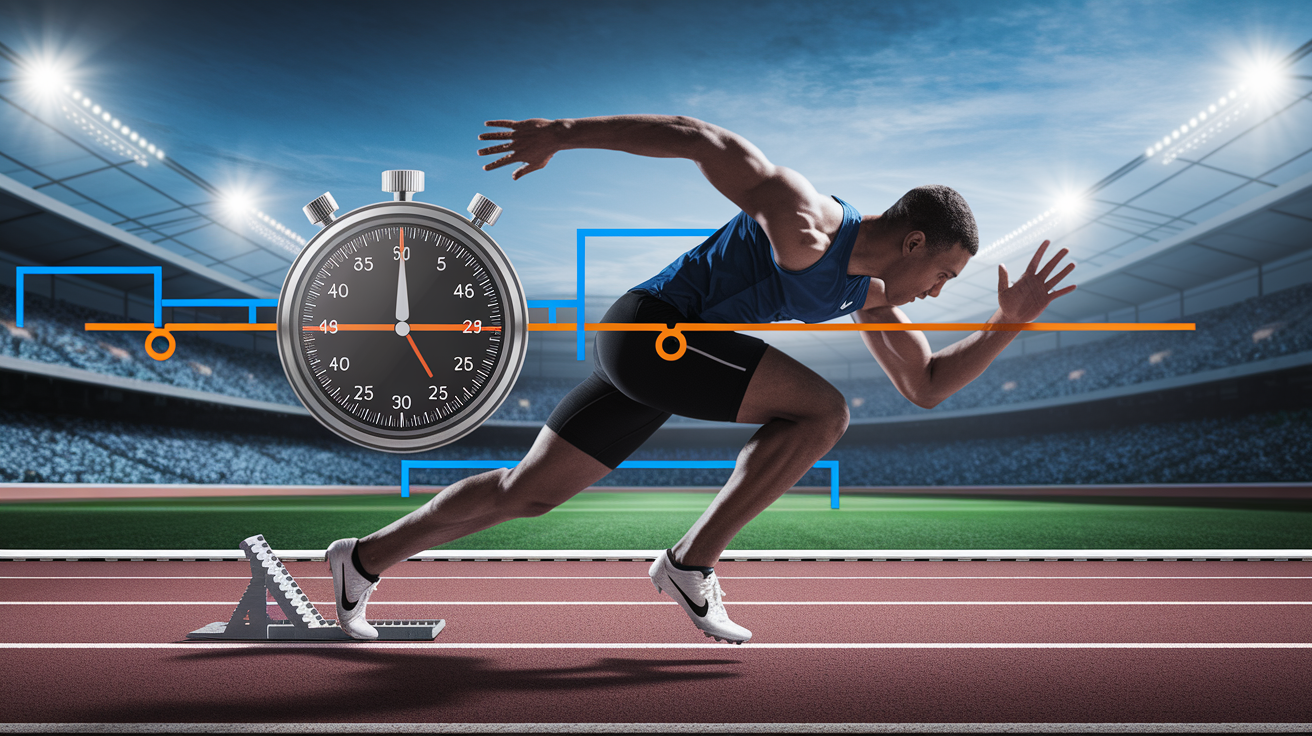
The 40-yard dash is the single best combine workout for projecting offensive tackles. It consistently hits R-squared values above 0.130 in correlation studies. Multiple elite NFL tackles reached the 93rd percentile or higher here, and that pattern keeps showing up. Weight-adjusted 40 times also correlate strongly with four-year Approximate Value. So you need to account for both raw speed and speed relative to body mass when you’re comparing prospects who don’t weigh the same.
The 10-yard split isolates first-step explosion and acceleration out of your stance. That determines how fast a tackle can reach his pass-set landmark and engage an edge rusher before the guy crosses the line. This measurement projects the efficiency of a tackle’s initial pop and hip drive. Both are essential for controlling the edge and stopping speed-to-power conversions. Productive tackles benefit from strong 10-yard splits because the first two steps of a pass set usually decide whether you keep leverage through the whole rep.
| Drill | Reason It Matters |
|---|---|
| 40-yard dash (full time) | Measures sustained speed and ability to mirror wide pass-rush arcs over distance, plus overall explosiveness baseline |
| 10-yard split | Isolates first-step quickness and acceleration out of stance, projecting how fast a tackle can engage edge rushers |
| Speed-to-power application | Straight-line speed converts to functional power when tackles can use momentum to deliver initial strikes and redirect rushers |
| Weight-adjusted results | Heavier tackles who maintain elite speed scores often outperform lighter prospects with similar raw times, accounting for functional mass advantage |
How the 3-Cone Drill Predicts Lateral Agility and Pass Protection Success
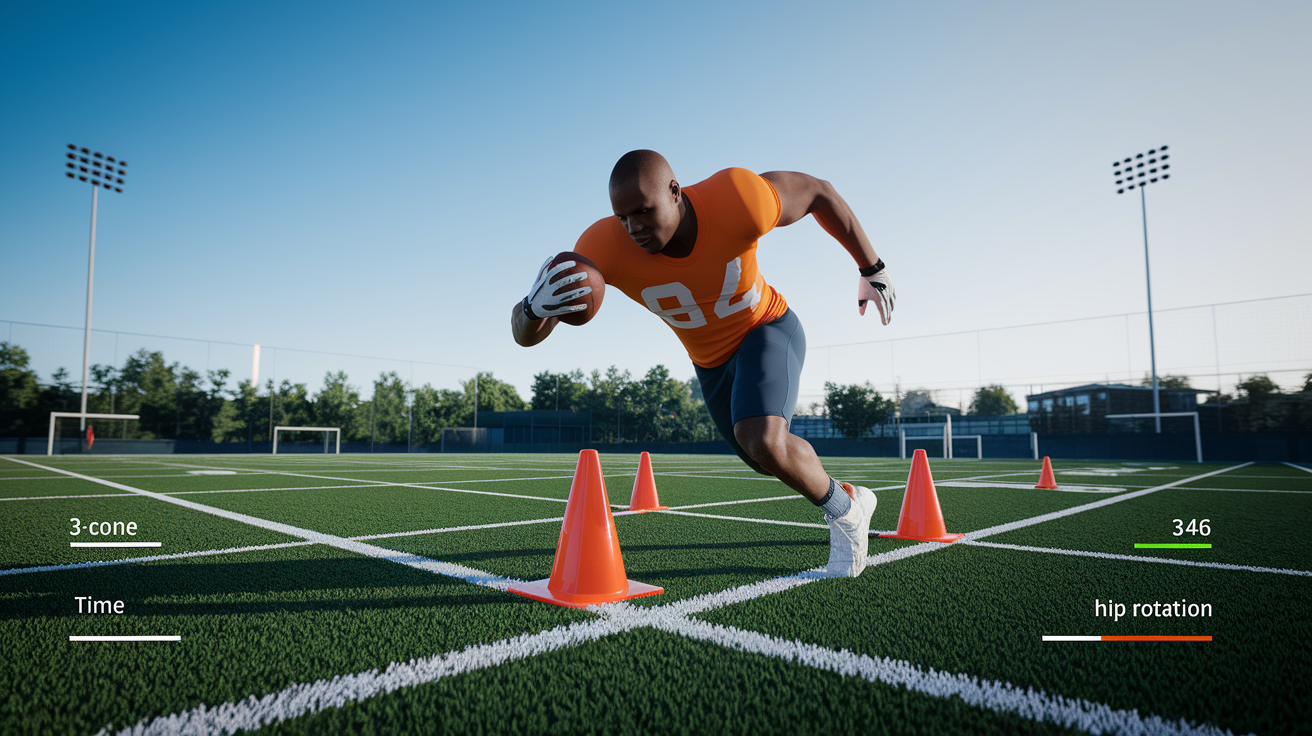
The 3-cone drill ranked as one of only two combine workouts to crack an R-squared correlation of 0.130 for offensive tackles in the 2010–2021 dataset. This test measures lateral agility and short-area change of direction. Those movement patterns line up closely with what pass protection actually demands. When a tackle executes a kick slide at a 45-degree angle and has to react to a counter move, the hip flexibility and direction change required mirror what the 3-cone drill evaluates.
Productive tackles grade highly here because edge pass protection requires constant reactive adjustments in a narrow corridor. A tackle who tests poorly in the 3-cone often can’t flip his hips and recover when a pass rusher changes direction at the top of the rush arc. The drill’s predictive value stays consistent whether you’re looking at left tackles who face elite speed rushers or right tackles handling power-speed hybrids.
Position-specific combine drills like the Pass Protection Mirror Drill reinforce the connection between 3-cone performance and what happens on Sundays. That 16-second reactive drill tests the same lateral tracking and sustained bend mechanics the 3-cone captures in a timed setting. You get two data points measuring overlapping skills.
The Broad Jump and Lower-Body Explosion for Offensive Tackles

The broad jump ranks among the most predictive explosive tests for offensive tackles. It outperformed the vertical jump in correlation studies measuring four-year Approximate Value. Productive tackles averaged higher broad-jump percentiles than less successful peers, which reflects how important horizontal hip explosion is in blocking mechanics. The broad jump measures the same hip drive and leg extension tackles use to deliver initial strikes and anchor against bull rushes.
Hip explosion determines how much force a tackle can generate in the first moment of contact. That often decides whether you control the line or absorb backward displacement. Tackles who produce elite broad-jump distances typically convert that explosive power into functional first-strike force during pass sets and down blocks. The measurement also correlates with acceleration efficiency, since the same hip mechanics that drive horizontal distance also drive speed out of your stance.
Measurable thresholds scouts use when evaluating broad-jump results for tackle prospects:
Above-average range: 9 feet 0 inches to 9 feet 6 inches, functional explosion for NFL blocking demands
High-end range: 9 feet 7 inches to 10 feet 0 inches, plus hip power and first-strike capability
Elite range: 10 feet 1 inch and above, exceptional lower-body explosion that translates to dominant anchor strength and initial pop
Bench Press and Strength Metrics in Tackle Evaluation
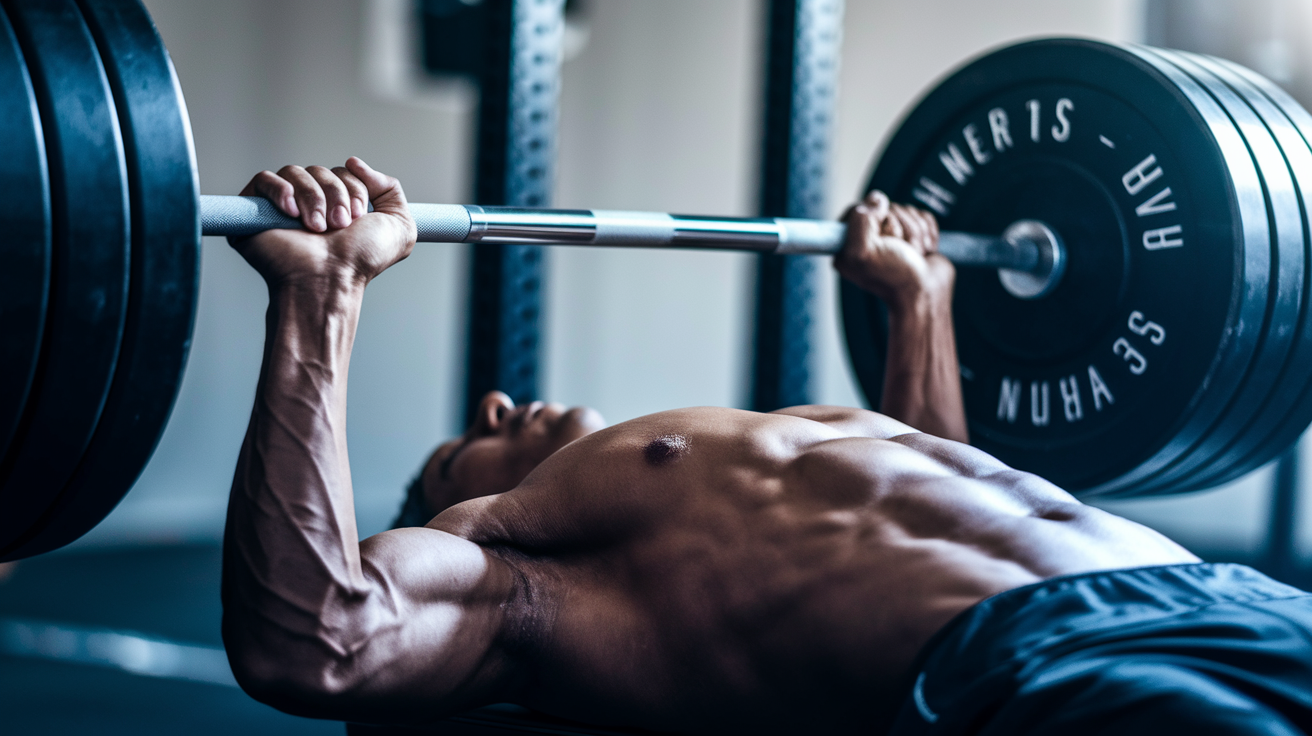
Bench press reps at 225 pounds show lower predictive value in correlation studies for offensive tackles compared to agility and explosion metrics. The Approximate Value correlation for bench press fell below the 0.100 meaningful threshold. Raw upper-body endurance measured in this drill doesn’t reliably project tackle performance over a rookie contract. Functional strength shown on film outweighs bench results when scouts project a tackle’s ability to sustain blocks and control defenders through contact.
The disconnect between bench press numbers and on-field success comes from the difference between pushing a barbell in a controlled plane and applying force against a moving, reactive defender. Tackles who post modest bench totals but show excellent hand placement, leverage, and core strength on tape frequently outperform prospects who dominate the bench press but struggle with technique and timing. High-performing interior offensive linemen show more statistical signal here than tackles, probably because guards and centers engage in more sustained, phone-booth-style blocks where upper-body endurance plays a bigger role.
Scouts still note when a tackle prospect produces above-average bench totals because the drill offers a baseline measure of work capacity and upper-body development. A tackle who completes 25 or more reps demonstrates functional endurance that supports hand fighting and sustained contact, even if that number alone doesn’t predict success. The key is blending bench data with other strength indicators like broad jump, film evidence of anchor ability, and position-specific drills that test functional power application.
Measurement Benchmarks Used by Scouts Evaluating Offensive Tackles
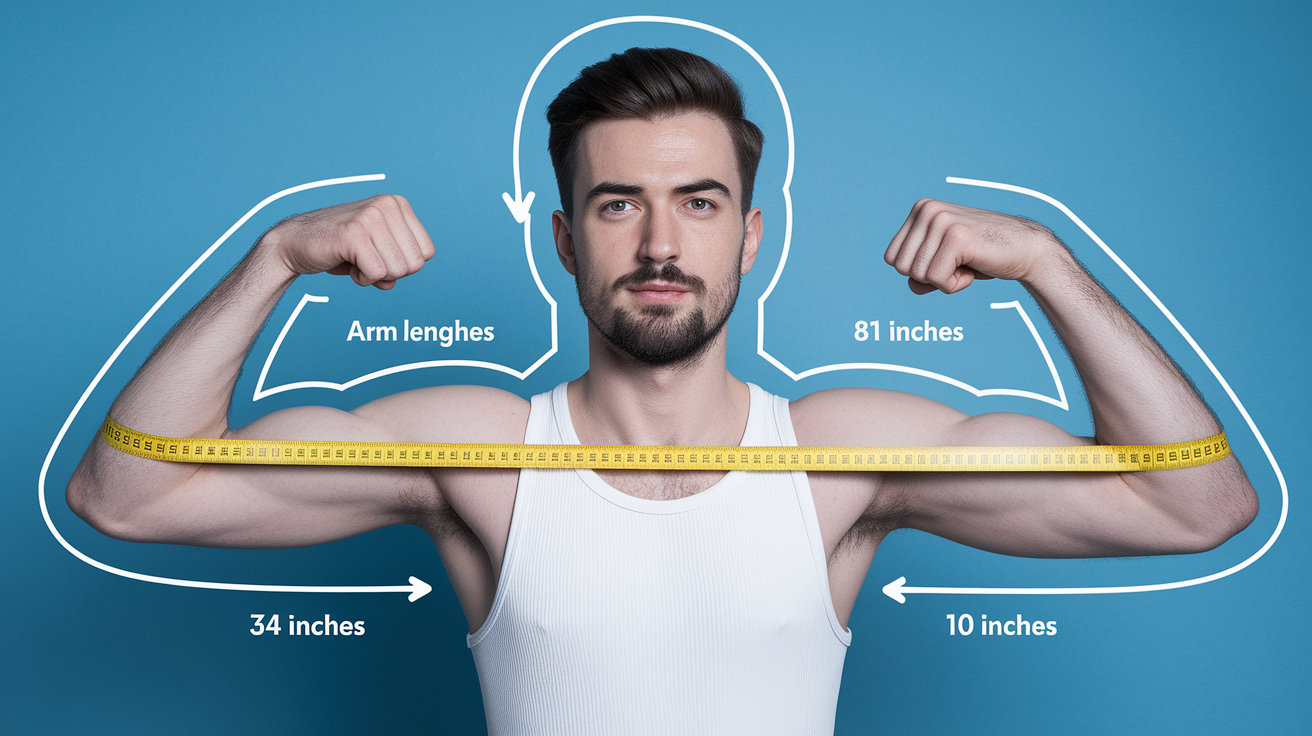
Scouts emphasize arm length, wingspan, and overall size when evaluating offensive tackles because these measurements directly affect a blocker’s ability to control edge rushers at the point of attack. Arm length above 34 inches is often preferred for left tackles who face elite speed-to-power converters. Longer arms let you engage defenders before they close distance and establish inside leverage. Wingspan measurements provide additional context by accounting for shoulder width and overall reach. Those determine how much space a tackle can control during pass sets.
Height and weight benchmarks vary by system and scheme, but most NFL evaluators prefer tackles who measure at least 6-foot-4 and 310 pounds to handle the size and power of modern edge defenders. Weight-adjusted metrics matter more for tackles than for interior linemen. A 320-pound tackle who runs a 4.95-second 40-yard dash projects differently than a 310-pound tackle with the same raw time. The heavier prospect with equivalent speed carries functional mass that translates to anchor strength and displacement resistance in the run game.
Key measurement benchmarks scouts apply when evaluating offensive tackle prospects:
Arm length: 34 inches or longer preferred for left tackles, 33 to 33.5 inches acceptable for right tackles or zone-scheme fits
Wingspan: 81 inches or greater signals elite reach and control radius for engaging defenders before they threaten the pocket
Hand size: 10 inches or larger helps with grip strength and controlling defender chest plates during hand fighting
Height/weight floor: 6-foot-4 and 310 pounds minimum for traditional outside-zone and gap schemes, lighter builds acceptable in wide-zone systems that prioritize movement over size
Left Tackle vs. Right Tackle: Combine Priorities Compared
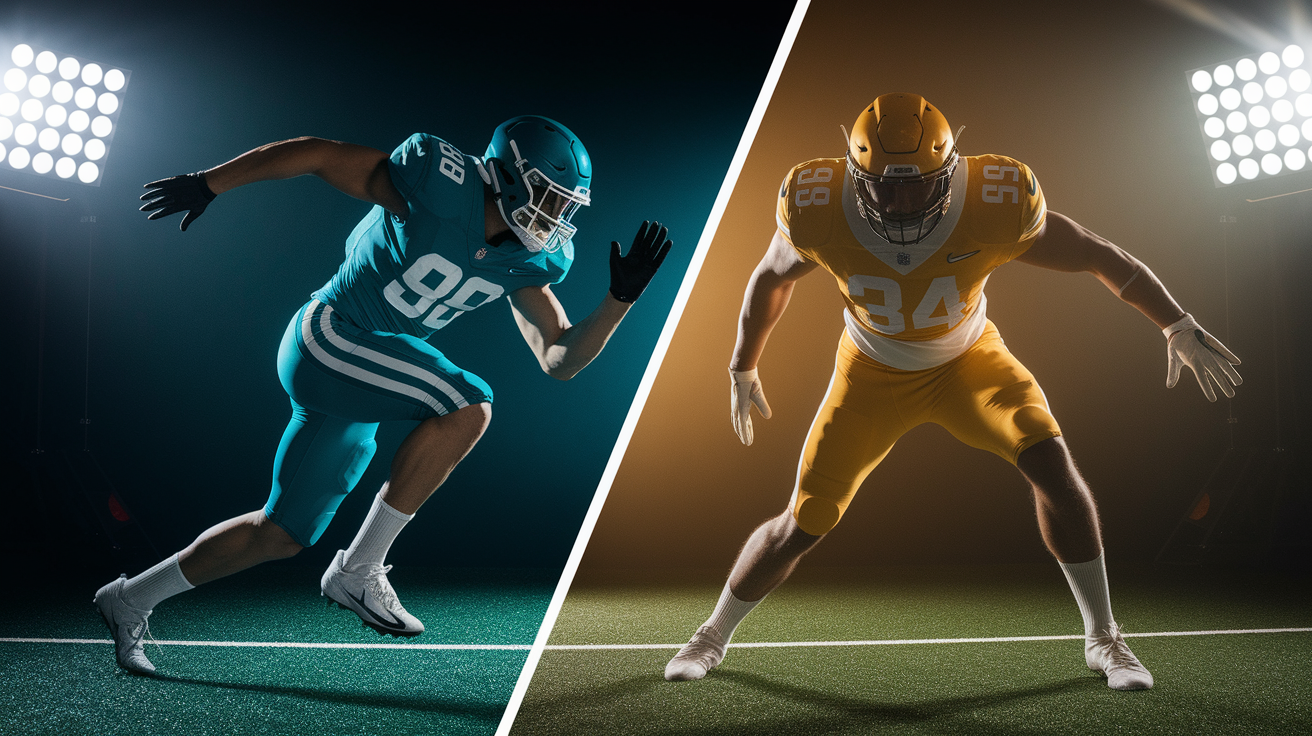
Left tackles often require elite agility and speed traits that match the high 40-yard dash and 3-cone percentile patterns you see in productive tackle samples from 2010 through 2021. Teams that invest premium draft capital in left tackles typically prioritize prospects who test in the 90th percentile or higher in straight-line speed and change-of-direction drills. Those athletes project to handle the league’s best edge rushers on the quarterback’s blind side. Right tackles may prioritize power and explosion over pure speed, but broad jump and short-shuttle results still matter because right-side blockers face athletic edge defenders and must execute reach blocks in outside-zone schemes.
The productive tackle samples analyzed in the study favor general athleticism on both sides of the line. Scouts shouldn’t overweight positional distinctions when evaluating combine results. A right tackle prospect who tests poorly in the 40-yard dash and 3-cone will likely struggle with the same mirror and recovery demands that limit a left tackle with similar scores. The practical difference lies in how teams allocate resources and risk tolerance, not in the underlying athletic requirements of the position.
Positional athletic priorities break down like this:
Left tackles: elite 40-yard dash (sub-5.0 seconds preferred) and 3-cone (sub-7.5 seconds) to mirror speed rushers and recover from counters
Right tackles: strong broad jump (9-foot-6 or better) and acceptable 40 times (5.0 to 5.1 range) to handle power-speed hybrids and execute reach blocks
Both positions: above-average short shuttle and 10-yard split results to project lateral quickness and first-step efficiency
Scheme fits: wide-zone systems prioritize straight-line speed and lateral agility for both tackle spots, gap and power schemes tolerate slightly slower 40 times if broad jump and anchor strength grade highly
Position-Specific On-Field Drills That Complement Combine Metrics
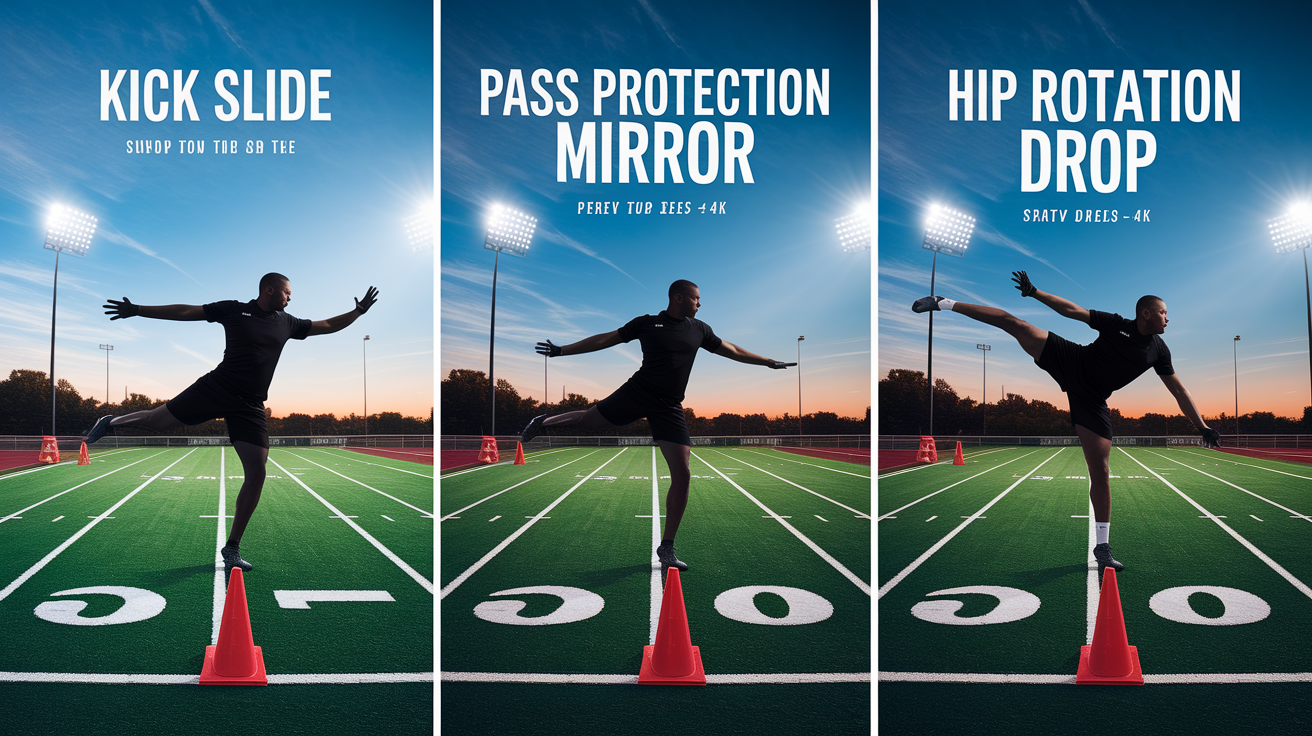
The Kick Slide drill is the most important offensive lineman drill at the combine. It gives you a direct look at the pass-protection movement scouts want to see from tackle prospects. Each player gets two attempts, one from a two-point stance and one from a three-point stance. You open to a 45-degree angle before executing a controlled kick slide toward a cone or bag placed roughly 12 yards back to represent the quarterback. Scouts evaluate hip and knee bend, balance during the slide, punch timing, hand placement, and the ability to turn with the inside arm and finish by running the defender past the dummy.
The Pass Protection Mirror Drill lasts about 16 seconds and tests a tackle’s ability to maintain bend while reacting to lateral changes initiated by a “rabbit” or mirror partner. The lineman pops up into pass-protection footwork on the coach’s signal and takes lateral steps to keep the mirror directly in front. That movement pattern evaluates reactive tracking and sustained flexibility under fatigue. This drill complements 3-cone results by measuring the same change-of-direction and hip-flip mechanics in a football-specific context.
The Hip Rotation Drop uses a 10-yard-wide lane formed by two parallel rows of four cones spaced 10 yards apart, creating a 30-yard-long corridor. The lineman begins facing backward toward a coach, chops his feet in place, then swivels his hips and shuffles down the lane when the coach points a football in a direction. You flip your hips three times at 10-yard intervals before the coach cues a 90-degree turn into a full-speed sprint downfield. That tests transverse-plane hip movement and the transition from shuffle to sprint.
| Drill | Key Trait | Why It Complements Combine Data |
|---|---|---|
| Kick Slide | Pass-set footwork and punch timing | Validates 10-yard split and 3-cone results by showing how a tackle applies acceleration and lateral agility in a game-speed pass set |
| Pass Protection Mirror | Reactive tracking and sustained bend | Confirms 3-cone lateral agility scores by testing the same hip-flip and direction-change mechanics under sustained movement for 16 seconds |
| Hip Rotation Drop | Transverse-plane hip fluidity and sprint transition | Reinforces broad jump and 40-yard dash results by measuring hip smoothness and the ability to convert shuffle movement into full-speed sprint |
Athletic Testing vs. Game Film: How Scouts Balance Both for Tackles
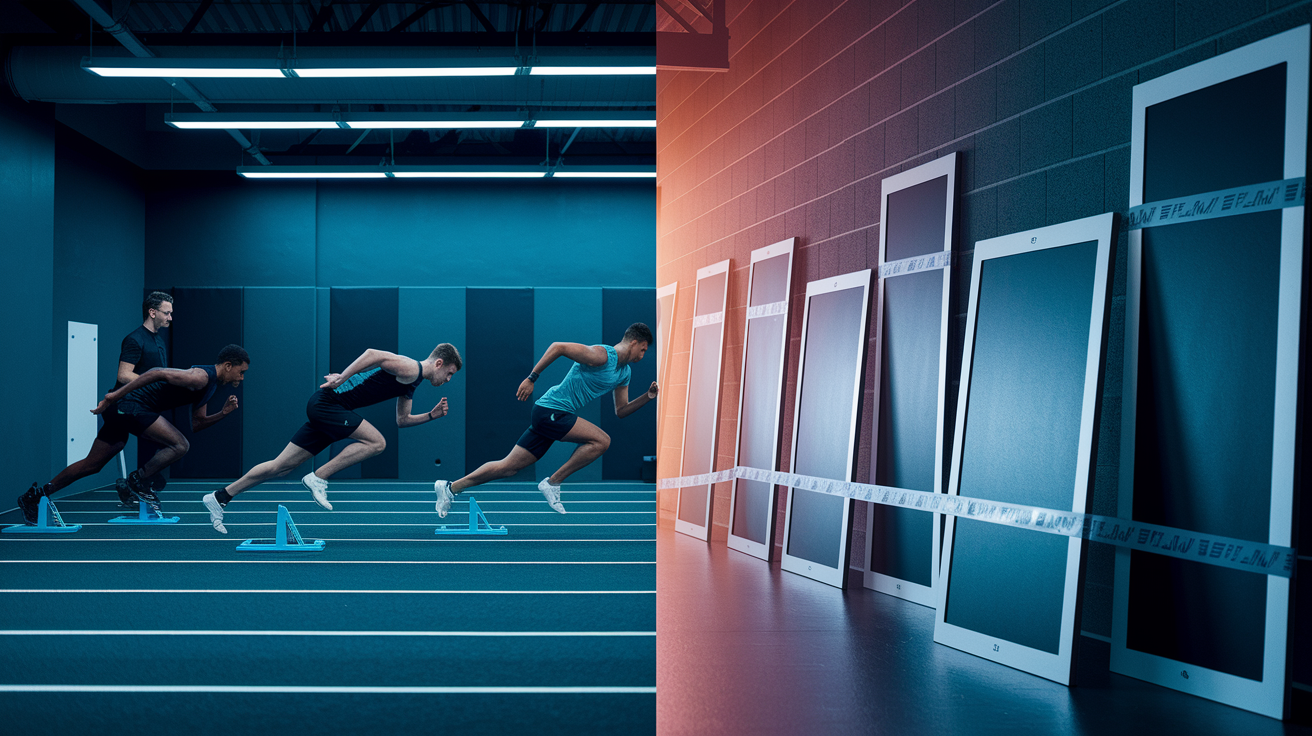
Approximate Value correlates more with playing time and availability than pure on-field excellence. That’s a limitation that affects how scouts interpret combine data. The 2010–2021 study noted at least one tackle who “bombed” the combine but still posted productive four-year AV totals. Combine results function as one input among film evaluation, medical reviews, and position-specific drill performance. Athletic testing provides a measurable baseline for traits like speed, agility, and explosion. But it can’t capture technique, football IQ, hand usage, or competitive temperament.
Scouts prioritize film when projecting a tackle’s ability to sustain blocks, recognize stunts, and adjust to in-game variables that combine drills can’t replicate. A prospect who grades poorly in the 40-yard dash but demonstrates excellent mirror ability, hand placement, and anchor strength on tape may still project as a starting-caliber tackle if his film shows functional athleticism in context. The inverse is also true. A tackle who posts elite combine numbers but plays high, struggles with hand timing, or fails to sustain blocks through the whistle will drop on draft boards despite measurable advantages.
The most effective scouting methodology treats combine testing as a confirmation tool rather than a standalone evaluation. When a tackle’s film shows elite lateral quickness and the 3-cone drill confirms that trait with a top-percentile result, scouts gain confidence in the projection. When testing and tape diverge, evaluators must determine whether the film sample is too small, whether the testing environment failed to capture the player’s functional athleticism, or whether concerns about translatable speed and agility are legitimate enough to outweigh positive tape.
Final Words
In the action, the numbers make it clear: the 40-yard dash, 3-cone and broad jump top the list, with correlations ≥0.130 and several elite tackles in the 93rd+ percentiles.
Weight-adjusted speed and percentile benchmarks separate likely starters from long-shots, while bench reps add less predictive value.
If you’re asking which combine drills matter most for offensive tackles, focus on straight-line speed, change-of-direction, and lower-body explosion – then let film confirm it. These metrics give prospects a clear path forward.
FAQ
Q: What are the best exercises for offensive tackles?
A: The best exercises for offensive tackles are hip-drive and power movements like trap-bar deadlifts, sled pushes, broad jumps, and single-leg work, plus 3-cone/agility drills and hip mobility for explosion and pass-set quickness.
Q: What do NFL teams look for in combine drills?
A: NFL teams look for straight-line speed, change-of-direction, and explosion in combine drills — especially 40, 3-cone, and broad jump results, plus weight-adjusted metrics and film that show functional translate to game play.
Q: What are the best offensive line combine performances?
A: The best offensive line combine performances are elite 40, 3-cone, and broad-jump marks (typically 90th–93rd+ percentiles); top examples include Terron Armstead, Lane Johnson, Trent Williams, Tristan Wirfs, and Taylor Lewan.
Q: What is the 5 10 5 drill at the NFL Combine?
A: The 5-10-5 drill at the NFL Combine is the short-shuttle (pro agility): five yards each direction from a center cone — 5 out, 10 back, 5 across — measuring short-area burst, lateral quickness, and change-of-direction.