

What if the best NFL players are the ones teams didn’t draft?
Teams race to sign undrafted free agents in the minutes and hours after the final pick, turning a messy scramble into a disciplined strategy as they prep lists, make late Round 6 calls, and use small signing bonuses and roster math to win priority targets.
This post breaks down that post-draft playbook, how clubs scout, prioritize positions, move fast, and sell opportunity, so you can see exactly how hidden talent gets found and turned into roster value.
Core Post-Draft Approach NFL Teams Use to Build an Undrafted Free Agent Strategy
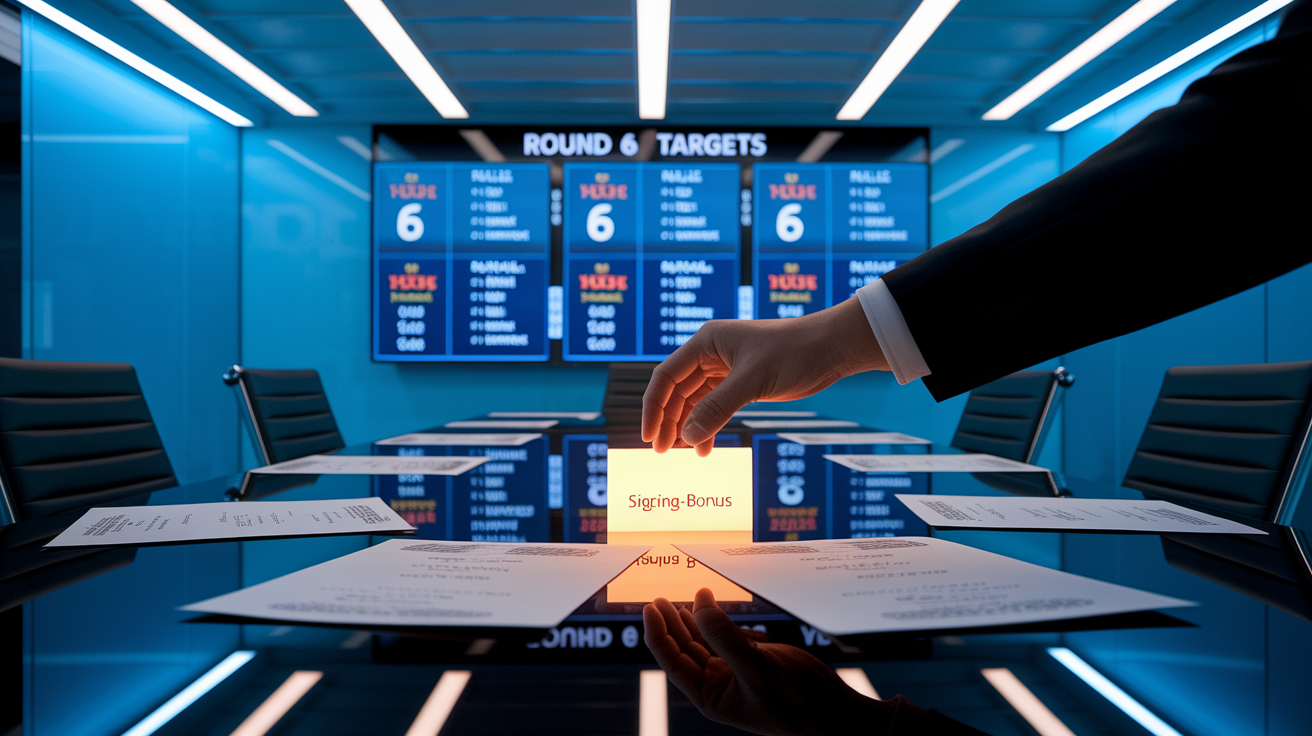
Teams start calling undrafted prospects around the late sixth round, sometimes while the draft’s still going. This lets personnel staffs test interest and lock in verbal agreements before Round 7 wraps. Once the final pick gets announced, everything turns into a scramble. Most clubs finalize their UDFA haul within a couple hours, burning through depth chart holes and availability windows at top speed. Getting ahead during Round 6 matters because it helps teams secure their priority guys before other front offices can jump in.
The rapid decision making works through parallel evaluations across multiple position groups. Scouts compare depth chart fit, roster math, and signability intel in real time. One staffer might get clearance to offer a $10,000 signing bonus for a running back while the cap analyst validates rookie pool space for three more deals. Verbal commitments carry weight during this window, but they’re risky. A late Round 6 verbal can fall apart if another team uses a seventh rounder on that same player, forcing personnel departments to pivot targets in minutes.
The speed and execution of this process have produced serious results. Tony Romo, Doug Baldwin, James Harrison, Wes Welker, and two time MVP Kurt Warner all entered the league as undrafted free agents. Austin Ekeler’s signing by the Chargers shows the strategy in action. After a strong pro day, Ekeler got recruited about a month before the 2017 draft. The Chargers stayed in touch, checked his fit, and locked him up the second the draft ended. That early relationship building turned a non drafted running back into one of the league’s most productive dual threat weapons.
Five Key Fast Action Steps Teams Take in the First Two Hours Post Draft:
• Trigger pre planned calls to top UDFA targets. Scouts and personnel staff dial prospects on pre approved priority lists, often with verbal offers ready.
• Cross reference depth charts to validate positional need. Decision makers confirm which positions need additional bodies for camp competition and long term depth.
• Authorize signing bonus amounts on a player by player basis. Cap analysts and GMs approve bonus structures in real time to stay within rookie pool limits.
• Monitor agent communication for competing offers. Teams track which players are getting multiple offers and adjust their pitch or bonus amounts accordingly.
• Finalize verbal commitments and submit paperwork. Legal and contract staff convert verbal agreements into signed UDFA contracts before the window closes.
How Teams Prioritize Positions in Their Undrafted Free Agent Strategy

Positional demand follows a clear supply and demand pattern shaped by depth chart math and roster construction needs. Offensive line, wide receiver, defensive back, and defensive line consistently pull the highest UDFA signing volumes. In 2025, multiple teams signed five to ten offensive linemen as undrafted rookies, reflecting both the positional scarcity in the draft and the developmental value of camp competition. Teams use a practical rule when planning recruitment: to sign two running backs, they might need to recruit five. This ratio accounts for competition from other clubs, player preferences, and the reality that not every verbal commitment converts into a signature.
Special teams value drives a big portion of positional prioritization. A defensive back who projects as a core special teams contributor holds more roster appeal than a linebacker with higher athletic grades but limited coverage unit upside. Teams check whether a player can contribute on kickoff, punt, and punt return units during his first season. Players who offer special teams versatility earn longer evaluation windows in camp and preseason, even if their positional depth chart climb looks blocked. This explains why punters, kickers, and long snappers get selective but strategic attention as UDFAs, with only clubs facing immediate need or long term uncertainty at those spots committing roster space.
| Position | UDFA Signing Priority Reason | Typical Volume (2025 Trends) |
|---|---|---|
| Offensive Line | Developmental depth, injury protection, camp competition across multiple interior and tackle spots | 5–10 per team |
| Wide Receiver | Special teams value, return ability, scheme specific route fits, inexpensive depth | 3–6 per team |
| Defensive Back | Coverage unit contributors, positional versatility (safety/corner), low draft supply for slot specific fits | 4–7 per team |
| Defensive Line | Pass rush development, rotational depth, position flex (edge/interior), high attrition during camp | 3–6 per team |
| Linebacker | Scheme specific fits (3-4 vs. 4-3), special teams tackling, coverage ability in sub packages | 2–5 per team |
| Running Back / Tight End | Situational roles, blocking ability, return/special teams crossover, low financial commitment | 1–3 per team |
Inside the Undrafted Player Evaluation Process Used by NFL Personnel Departments
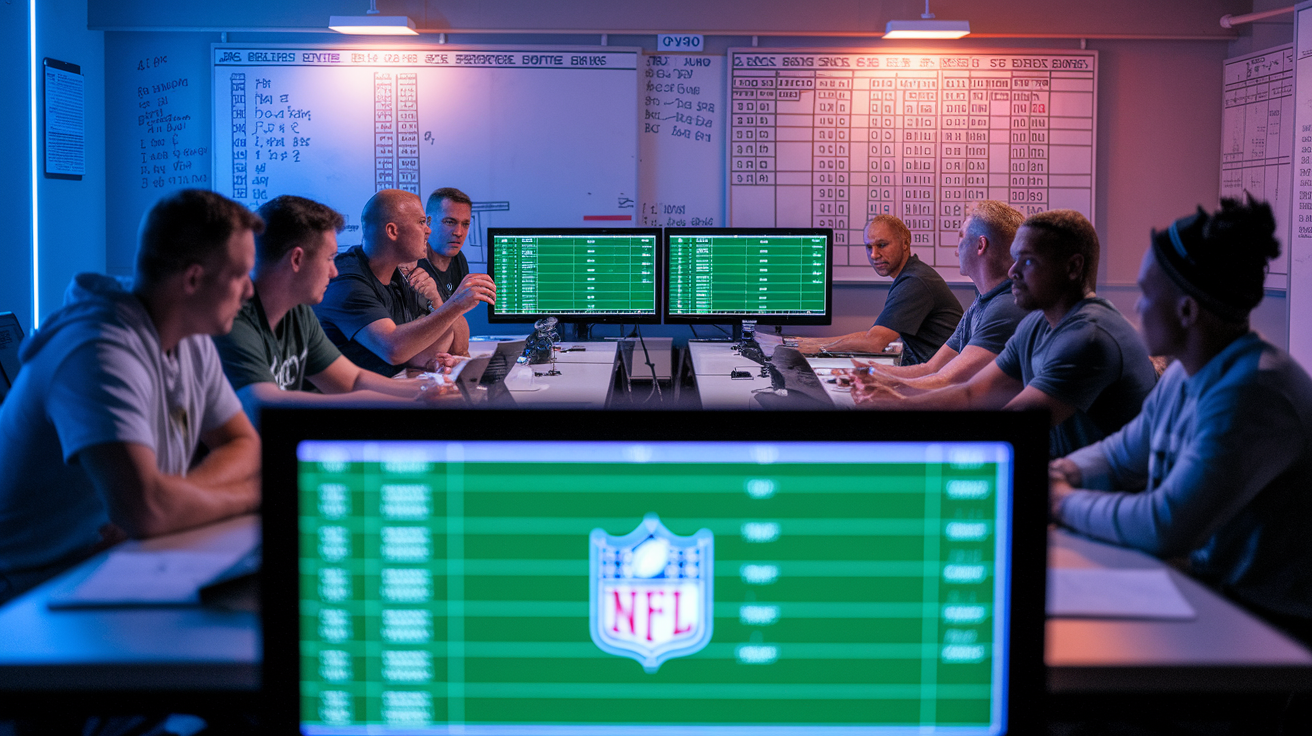
Film, analytics, and pro day performance come together into one unified evaluation framework before the draft starts. Scouts log hundreds of hours on college tape, grading technique, athleticism, and positional traits. Analytics models add speed, explosiveness, and production metrics, creating composite scores that rank prospects against historical comparables. Pro day workouts provide the final input. Austin Ekeler’s standout pro day elevated his profile and triggered recruiting outreach from the Chargers about a month before the 2017 draft. Teams reposition players on draft boards by position as new information comes in, making sure UDFA shortlists reflect the latest film cuts, testing numbers, and injury updates.
During the draft, information flows through a structured pipeline involving about seven coaches and six to seven scouts. Position coaches report on scheme fit and immediate roster impact. Area scouts provide updated signability intelligence, tracking which prospects have drawn interest from rival clubs and which remain under recruited. This real time collaboration lets decision makers adjust UDFA targets as drafted players come off the board. If a team drafts a safety in Round 4, the personnel staff may shift UDFA focus away from that position and toward edge rusher or running back, where depth remains thin.
Pre draft signability projections and competitive intelligence shape every UDFA shortlist. Scouts check whether a prospect will likely receive multiple offers, which influences whether the team should use a seventh round pick to eliminate competition or wait and pursue the player as a UDFA. For example, if a target already holds five offers from other clubs, the risk of losing him in the post draft scramble may justify spending a late pick. A player with limited buzz becomes a high probability UDFA signing, letting the team save draft capital. Agents provide updated information throughout draft weekend, giving clubs a clearer picture of where each prospect stands in the marketplace and which verbal commitments hold the most weight.
Contract and Budget Strategy for Undrafted Free Agents Across the NFL

Each NFL club operates within a rookie pool allotment, a capped budget that funds all drafted and undrafted rookie contracts. UDFA deals draw from this same pool, but the financial commitment is minimal compared to drafted players. Contracts typically involve small signing bonuses and limited base salary guarantees, keeping the team’s exposure low while still offering enough compensation to compete for a player’s signature. Teams may authorize a $10,000 signing bonus to secure a priority target, a modest sum that can tip the balance when multiple clubs pursue the same prospect. The cap analyst validates each bonus amount in real time, making sure the team stays within its rookie pool limit while maintaining flexibility for additional signings.
Undrafted free agents hold a unique advantage in contract negotiations because they can choose the best roster fit rather than being assigned to a team through the draft. A defensive back projected as a special teams contributor may pick a club with an open depth chart and a special teams coordinator known for developing young players. This dynamic gives UDFAs leverage to prioritize playing time, scheme alignment, and developmental resources. Teams respond by emphasizing opportunity and coaching continuity in their recruiting pitch, rather than relying only on bonus dollars. The result is a contract structure that balances financial efficiency with competitive roster building, letting clubs sign multiple players without exhausting their rookie pool.
Four Core Components of a Typical UDFA Contract:
-
Signing Bonus. A one time payment ranging from $5,000 to $25,000, depending on competition and positional priority, paid immediately upon signing.
-
Guaranteed Portion. Limited guaranteed base salary, often zero or a small percentage of the first year salary, protecting the team from long term cap liability if the player is released.
-
Camp Incentives. Performance based bonuses tied to making the 53 man roster, accruing a certain number of game day activations, or earning a role on core special teams units.
-
Practice Squad Elevation Pay. Standard weekly compensation for players elevated from the practice squad to the active roster, governed by league wide minimums but occasionally supplemented by team specific agreements.
Practice Squad, Development, and Long Term Planning in UDFA Strategy

Teams churn undrafted rookies throughout the spring and summer, frequently waiving or releasing players within weeks of their initial signing. This rapid turnover reflects the competitive nature of roster evaluation. A defensive lineman signed in early May may be released by late May if he struggles in rookie minicamp or fails to demonstrate special teams upside. The practice squad serves as the primary development hub for players who show long term potential but lack immediate 53 man roster value. Clubs allocate practice squad spots to UDFAs who project as scheme fits or positional insurance, then track progression data throughout the season to identify candidates for future roster promotion.
Long term retention probability modeling helps personnel departments decide which UDFAs warrant extended developmental investment. Scouts and coaches check whether a player’s skill set, work habits, and coachability suggest he can grow into a rotational contributor within two seasons. Practice squad players receive daily reps against the active roster, creating a controlled environment for skill refinement and scheme absorption. Teams monitor how quickly a player adapts to NFL speed, processes coaching feedback, and competes for scout team roles that simulate upcoming opponents. This information feeds into offseason planning, helping the front office decide which practice squad players to re sign, which to protect from rival poaching, and which to release in favor of new UDFA classes.
Reps Allocation and Development Cycles
Reps get assigned based on positional depth, injury status, and developmental trajectory. A UDFA offensive lineman may receive first team reps during practice if a starter is managing a minor injury, giving coaches a live evaluation of his readiness for game action. Teams use internal tracking systems to log every rep, categorizing them by situation (red zone, third down, two minute drill) and opponent simulation. This data reveals which players excel in high leverage situations and which struggle with complexity or speed.
Development cycles typically run in six week increments. Coaches set specific technical goals for each player, such as improving hand placement for an edge rusher or mastering route adjustments for a receiver. At the end of each cycle, position coaches and coordinators review film and rep logs to assess progress. Players who meet their benchmarks earn expanded roles in the next cycle, while those who plateau face increased roster pressure. This structured approach makes sure developmental resources go to players with the highest probability of long term roster impact, rather than spread evenly across all practice squad members.
How Rookie Minicamp Tryouts Fit Into an NFL Team’s UDFA Strategy
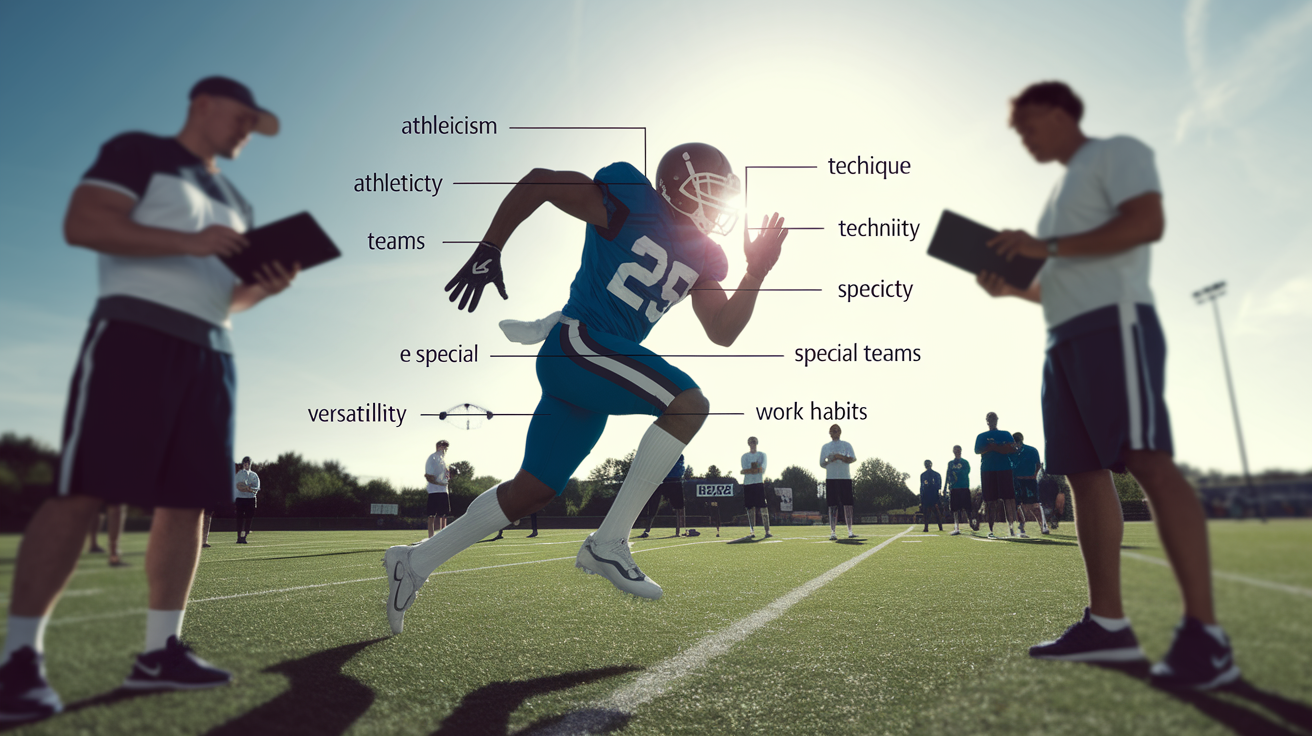
Rookie minicamp tryouts let teams evaluate street free agents alongside signed UDFAs, creating a competitive environment that surfaces hidden talent. Many UDFA signings happen immediately after these tryouts, with teams replacing early release UDFAs with tryout standouts who demonstrate better positional fit or special teams value. Tryout players receive limited reps, often concentrated in individual drills and seven on seven sessions, but these short windows provide enough data for scouts to assess athleticism, coachability, and scheme alignment. A cornerback who runs clean routes in coverage drills and shows instinctive ball skills may earn a contract within hours of the tryout’s conclusion.
Five Tryout Evaluation Factors Teams Prioritize:
• Athleticism relative to position benchmarks. Coaches compare speed, change of direction, and explosiveness against internal thresholds for each position, often using hand timed drills and on field movement patterns.
• Technique polish and coaching responsiveness. Evaluators watch how quickly a player adjusts hand placement, footwork, or leverage after receiving real time coaching cues during individual drills.
• Special teams projection and versatility. Scouts check whether a tryout player can contribute on multiple coverage units, return squads, or as a gunner, which increases his roster value.
• Positional scarcity and current depth chart gaps. Teams prioritize tryout players at positions where the current UDFA class lacks depth or where injuries have created immediate need.
• Work habits and professionalism during short windows. Personnel staff observe how tryout players interact with coaches, handle instruction, and compete in drills, using these behaviors as proxies for long term roster fit and locker room culture.
Real Examples of Successful Undrafted Free Agents and the Strategies Behind Their Signings
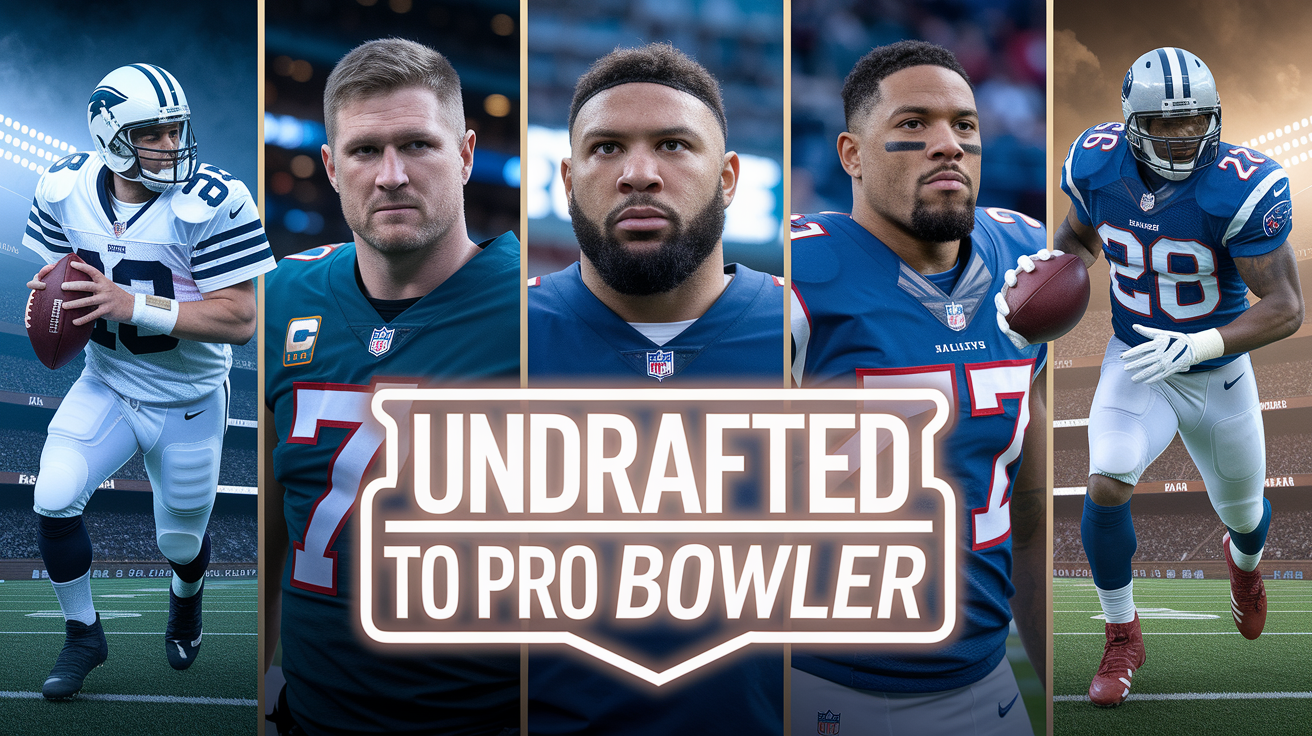
Tony Romo, Doug Baldwin, James Harrison, Wes Welker, and Kurt Warner all entered the league as undrafted free agents, showing that elite talent exists outside the draft. Their signings illustrate the importance of scheme fit and open depth charts. Romo joined the Cowboys as a third string quarterback, benefiting from a franchise willing to develop him over multiple seasons. Baldwin signed with Seattle after the Seahawks identified a need for route running precision and competitive toughness in their receiver room. Harrison’s path with the Steelers reflected positional need at outside linebacker and a defensive scheme that maximized his pass rush skills.
These success stories share common threads. Teams identified specific traits that matched their offensive or defensive systems, offered depth chart opportunities that allowed for gradual development, and committed coaching resources to long term player growth. Warner’s signing by the Rams occurred after multiple NFL stops and arena football experience, underscoring how unconventional paths can yield MVP caliber production when the right team recognizes overlooked ability. The lesson for personnel departments is clear. UDFA strategy succeeds when clubs prioritize scheme alignment and developmental patience over raw draft pedigree.
| Player | Position | Signing Insight | Long Term Outcome |
|---|---|---|---|
| Tony Romo | Quarterback | Cowboys valued developmental upside and carried three QBs, allowing multi year growth behind veteran starters | Four time Pro Bowler, franchise career passing leader |
| Doug Baldwin | Wide Receiver | Seahawks targeted route precision and competitive toughness to complement physical outside receivers | Two time Pro Bowler, key contributor to Super Bowl championship |
| James Harrison | Linebacker | Steelers identified pass rush traits that fit 3-4 edge role, retained him despite multiple early releases | Five time Pro Bowler, NFL Defensive Player of the Year, two time Super Bowl champion |
| Kurt Warner | Quarterback | Rams signed Warner after arena football success, recognizing arm talent and quick decision making in complex offense | Two time NFL MVP, Super Bowl champion, Hall of Fame inductee |
Scouting Workflow After the Draft and How Teams Manage the UDFA Cycle
Film and information workflows shift into high gear once UDFA signings arrive at the facility. Coaches and scouts produce cut ups that isolate each player’s reps from rookie minicamp and OTAs, organizing footage by down and distance, formation, and opponent simulation. These cut ups let position coaches assess technical consistency and decision making under varied conditions. Scouts update player profiles with combine style measurables, injury notes, and coaching feedback, creating a living database that informs every roster decision from spring through the final cutdown.
Preseason churn cycles follow a predictable rhythm. Teams evaluate UDFAs during rookie minicamp in May, make initial cuts by late May or early June, and revisit the roster after OTAs. A second wave of releases happens following training camp practices in July and August, as coaches narrow the competition to players who demonstrate roster worthy traits. Decision checkpoints align with preseason games, giving personnel departments live game film to assess in game performance, special teams execution, and situational awareness. Players who survive the first preseason game earn extended evaluation windows, while those who struggle face immediate release to create space for waiver claims or additional tryout signings.
Waiver claims and multi week evaluation windows extend the UDFA cycle into September. Teams monitor the waiver wire for recently released UDFAs from other clubs, targeting players who fit positional needs or offer special teams value. A defensive back waived by one team may be claimed by another if his skill set aligns with a specific coverage scheme or if injuries have thinned the secondary. These claims carry minimal financial risk, as waived UDFAs retain their original contract terms. The practice squad serves as the final sorting mechanism, letting teams retain developmental prospects who lack immediate 53 man roster value but project as future contributors.
Creating Training Camp Competition Using Undrafted Free Agents
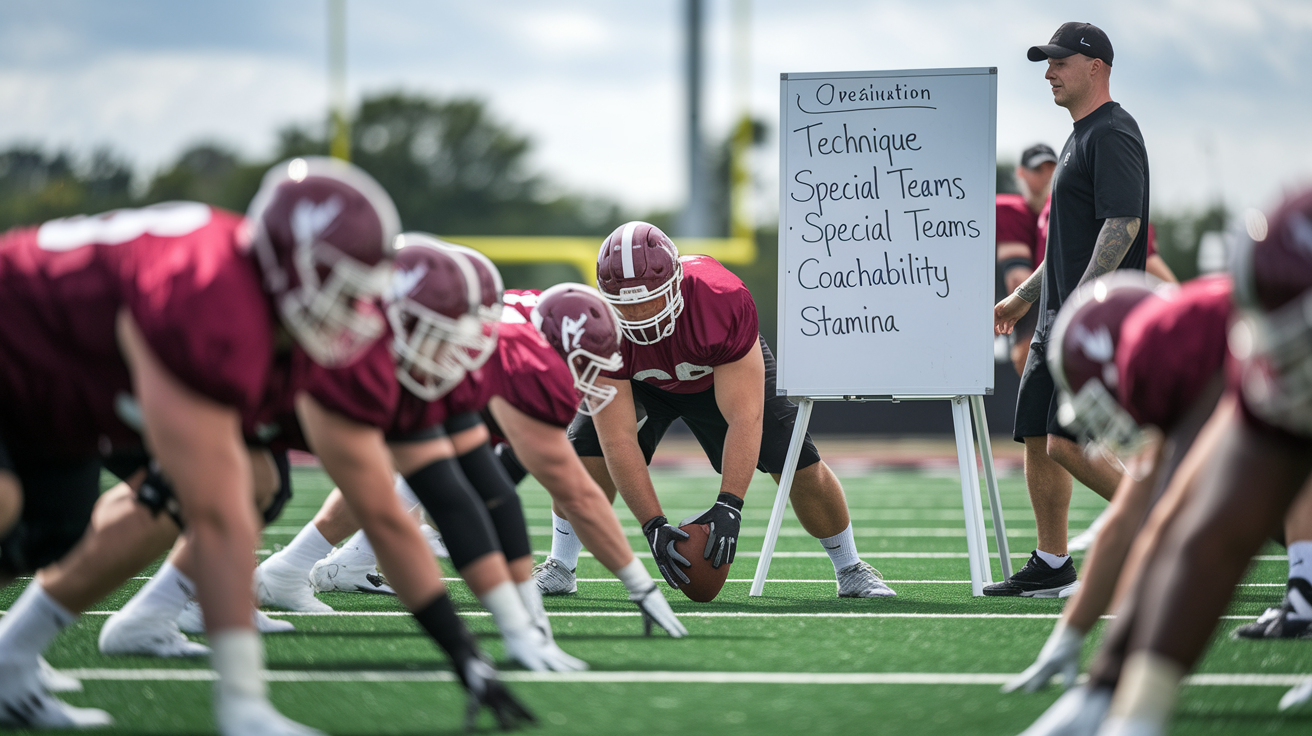
Teams use undrafted free agents to broaden competition across multiple position groups, making sure veterans and drafted rookies face legitimate roster challenges. This competition driven approach surfaces the best performers while identifying which UDFAs offer enough upside to warrant practice squad spots. A running back room that includes two veterans, one drafted rookie, and three UDFAs creates pressure on every player to earn reps through performance rather than draft pedigree. Coaches evaluate consistency, adaptability, and competitive response under this structure, using daily practice film and preseason games to separate camp bodies from long term roster candidates.
Four Coaching Evaluation Criteria for UDFA Fit in Training Camp:
• Technique consistency across multiple practice sessions. Coaches track whether a player maintains proper hand placement, footwork, and leverage when fatigued or facing different opponent looks.
• Special teams execution and willingness. Evaluators prioritize players who embrace special teams roles, execute assignments cleanly, and demonstrate physicality on coverage and return units.
• Coachability and adjustment speed. Position coaches check how quickly a UDFA processes feedback, corrects mistakes, and applies new concepts in subsequent reps.
• Competitive stamina and performance under roster pressure. Personnel staff observe whether a player’s effort and execution improve or decline as roster cuts approach, using this data to predict long term reliability and mental toughness.
Risk Assessment in Undrafted Free Agent Strategy

Injury history gets close scrutiny during UDFA evaluations, as teams weigh the probability of recurring issues against the low financial commitment. A player with multiple soft tissue injuries in college may be passed over in favor of a prospect with a clean medical record, even if the injured player shows higher athletic upside. Medical staffs review imaging, surgical history, and rehab notes, then provide probability assessments to help decision makers understand the likelihood of future missed time. This risk versus reward calculus is central to UDFA strategy, because teams can afford to take calculated risks on players with injury concerns as long as the financial exposure remains minimal.
Character and interview scoring provide additional layers of risk assessment. Teams conduct background checks, review social media activity, and interview college coaches to evaluate maturity, work ethic, and locker room fit. A UDFA with off field concerns may be flagged for additional monitoring or excluded entirely if the risk outweighs his on field potential. Age and maturity considerations also factor into these decisions. A 24 year old UDFA offers less long term developmental runway than a 21 year old, which may influence whether the team invests a practice squad spot or opts for a younger alternative. The balance between risk and low cost upside defines the entire UDFA process, letting teams pursue high ceiling players while maintaining flexibility to release them without cap penalties if red flags emerge.
Using Analytics to Strengthen Undrafted Free Agent Strategy After the Draft
Analytics models now support player ranking boards by quantifying traits that predict NFL success. Teams build proprietary algorithms that weigh college production, athletic testing, positional scarcity, and historical comparables to generate composite scores for every UDFA prospect. These scores help personnel departments prioritize which players to recruit when the post draft scramble begins. A wide receiver with elite speed metrics and strong hands rate may rank higher than a receiver with better college statistics but average athleticism, reflecting the model’s emphasis on traits that translate to the professional level.
Special teams snap projections form a core component of many UDFA analytics frameworks. Models estimate how many coverage snaps, return opportunities, or punt team reps a player will likely earn based on his athleticism, positional versatility, and historical performance in similar roles. A safety who projects for 200 plus special teams snaps in his rookie season holds significantly more roster value than a safety projected for fewer than 100 snaps, even if both players grade similarly on defense. This quantification of special teams impact lets teams justify roster spots for players who may never start on defense but provide critical coverage unit production.
Key Metrics Teams Track
Speed and explosiveness testing benchmarks include 40 yard dash times, 10 yard splits, vertical jump, and broad jump results. Teams compare these numbers against positional thresholds to identify outlier athletes who may have been overlooked in the draft. A linebacker who runs a 4.5 second 40 yard dash and posts a 40 inch vertical jump flags as a potential special teams contributor or situational pass rusher, even if his college production was modest.
Injury probability models use machine learning to predict the likelihood of specific injury types based on college injury history, playing style, and positional wear patterns. Teams assign risk scores to each UDFA, helping decision makers understand whether a player’s injury profile justifies a roster spot or practice squad investment. Long term retention modeling estimates the probability that a UDFA will remain on the roster beyond his rookie contract, using variables such as draft class strength at his position, current depth chart composition, and historical retention rates for similar players. This forward looking analysis makes sure developmental resources go toward players with the highest chance of multi year roster tenure.
Final Words
In the action, the draft ends and teams shift to an auction-like scramble, with sixth-round outreach, instant offers, and verbal commitments. This post covered timing, positional priority, rapid signing steps, and quick decision rules teams use.
We also walked through evaluation, contract tactics, minicamp tryouts, practice-squad planning, and the analytics that sharpen choices.
If you’re mapping an undrafted free agent strategy for NFL teams after the draft, watch for fast outreach, depth-chart math, special-teams value, and development focus. Plenty of UDFAs become long-term contributors.
FAQ
Q: What happens if Shedeur Sanders is not drafted?
A: If Shedeur Sanders is not drafted, he becomes an undrafted free agent able to sign with any team, likely getting quick post-draft offers, a small signing bonus, rookie minicamp tryouts, and a roster or practice-squad shot.
Q: What is the average salary of an undrafted free agent in the NFL?
A: The average salary of an undrafted free agent in the NFL is usually the rookie minimum if they make the 53-man roster; signing bonuses often run about $1,000–$20,000, with practice-squad pay much lower.
Q: What NFL team is not owned by a billionaire?
A: The NFL team not owned by a billionaire is the Green Bay Packers, which are publicly owned by many shareholders and run as a nonprofit community organization rather than by a private billionaire owner.
Q: Who was the greatest undrafted NFL player?
A: The greatest undrafted NFL player is often considered Kurt Warner because of his Hall of Fame career, Super Bowl MVP, and two NFL MVPs; other standout UDFAs include Tony Romo, Wes Welker, and James Harrison.