

Think the 2025 pitching market will be quiet?
Think again.
MLB free agency whispers point to multiple true frontline starters changing addresses this winter — not just depth arms.
With 29 pitchers in FanGraphs’ top 50 free agents, clubs can chase proven workhorse innings or high-upside swing-and-miss guys.
That matters because teams want pitchers under 33 who can log 150+ innings, creating clear money tiers where names like Framber Valdez, Dylan Cease and Brandon Woodruff should draw the loudest interest.
Early Outlook on MLB Free Agency Whispers and Front-Line Starters Likely to Move

The starting pitching market heading into winter 2025 looks deep. But there’s no singular ace who defines everything.
With 29 pitchers showing up in FanGraphs’ top 50 free agents, teams hunting rotation upgrades will find options across different risk profiles and price tiers. The class features proven workhorses, comeback candidates returning from injury, and mid-rotation arms who delivered consistent innings. Unlike position players, where only Kyle Tucker commands true franchise money, the pitching market offers genuine bidding competition across multiple tiers.
Several front-line starters are basically guaranteed to switch teams this winter based on contract situations and performance trends. Framber Valdez leads the market as a 32-year-old groundball specialist with four straight 175-inning seasons, projected to land somewhere between $150 million and $180 million over four to six years. Dylan Cease appears certain to reject his qualifying offer despite a 4.60 ERA, banking on elite underlying metrics that include a career-best 30.6% strikeout rate and a 3.52 FIP that suggests he pitched better than his surface numbers. Brandon Woodruff is returning from 2023 shoulder surgery with velocity trending upward, posting a 2.22 ERA across 28 1/3 innings with a 35.6% strikeout rate before hitting free agency at age 32.
Key pitchers expected to change teams:
Framber Valdez – Astros lefty with 2.83 ERA, leading MLB with 60.9% ground ball rate, projected $150M to $180M
Dylan Cease – Padres righty with career high strikeout metrics, durability track record (165 starts since 2020)
Ranger Suárez – Phillies southpaw averaging 6 1/3 innings per start, carries back injury concerns
Brandon Woodruff – Brewers ace returning from surgery, fastball velocity climbing back toward 94 mph
Zac Gallen – Diamondbacks workhorse predicted for short term high AAV deal despite late market availability
Lucas Giolito – Bounce back candidate with 3.41 ERA across 145 innings, late elbow soreness complicates market
Competitive bidding will probably intensify around pitchers who can both eat innings and miss bats. Especially those without qualifying offer complications. Early whispers suggest big market teams are prioritizing pitchers under 33 who’ve logged at least 150 innings in 2025, creating natural tiers where Valdez and Cease command premium dollars while Suárez and Woodruff settle into the next bracket down. Teams burned by short term veteran gambles in recent years appear willing to extend term for proven durability.
Market Positioning of MLB Free Agency’s Top Ace-Level Starters

Ace level pitchers separate themselves from mid-rotation arms through sustained excellence, demonstrated postseason reliability, and the ability to anchor a staff for 200 plus innings annually. True aces command average annual values above $25 million and term stretching five years or longer, reflecting their dual value as both performance assets and organizational cornerstones. The gap between this tier and quality third starter types has widened in recent years as front offices increasingly prioritize ceiling over floor when allocating rotation payroll.
This winter’s ace market reflects a realistic step down from the Justin Verlander and Gerrit Cole megadeals that reset benchmarks in previous cycles.
Framber Valdez projects as the clear headliner with a four to six year deal in the $150 million to $180 million range, banking on his groundball mastery and workhorse consistency to secure the longest guaranteed term. Dylan Cease enters negotiations with a higher ceiling but more uncertainty. His projection hinges on whether teams believe his swing and miss gains offset the elevated ERA. Think five to six years with opt out structures built in rather than straight guaranteed money. Brandon Woodruff presents the classic high risk, medium term play, his comparison to Nathan Eovaldi’s three year, $75 million deal reflecting both post surgery performance and the reality that he’ll turn 32 before Opening Day.
| Name | Projected Years | Projected Contract Value |
|---|---|---|
| Framber Valdez | 4-6 years | $150M-$180M |
| Dylan Cease | 5-6 years | Variable with opt-outs |
| Brandon Woodruff | 3-4 years | ~$75M (Eovaldi comp) |
MLB Free Agency Whisper Candidates: Performance Trends Driving Movement
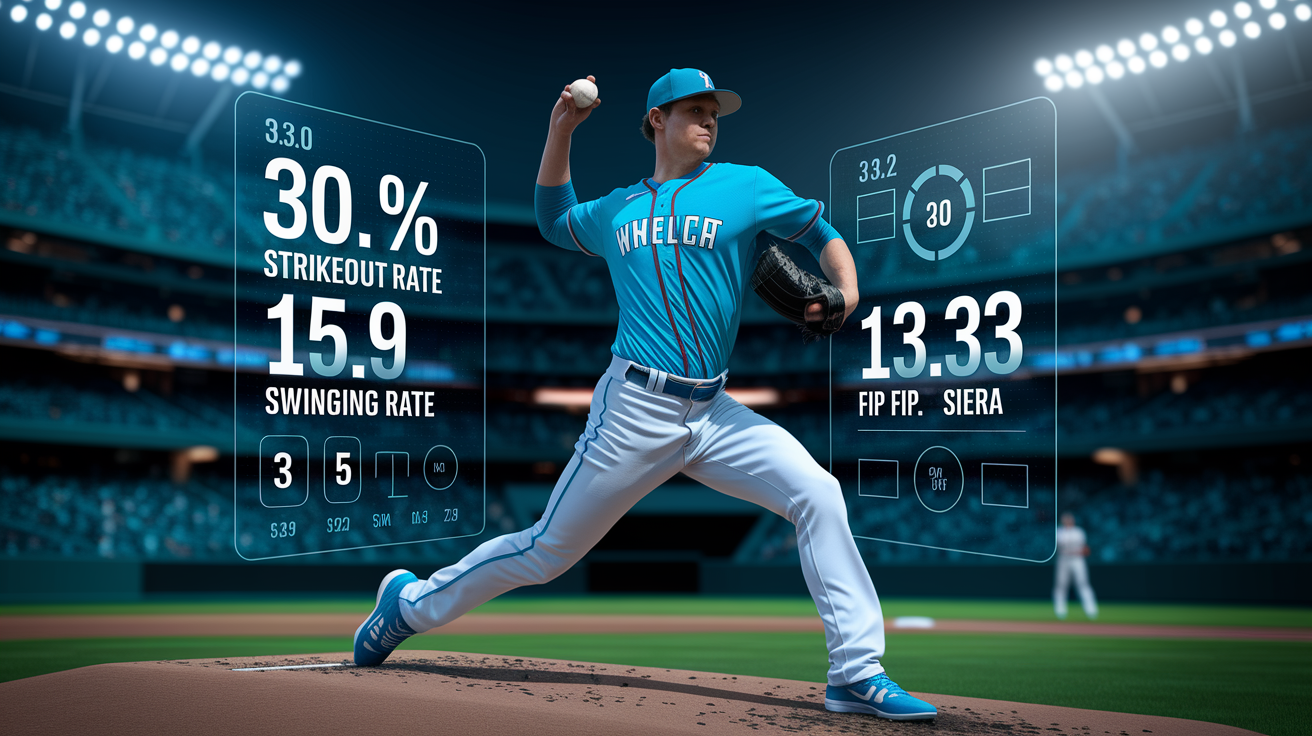
Performance metrics reveal why certain starters command premium offers while others settle for prove it deals. Dylan Cease posted a career best 30.6% strikeout rate alongside a 15.9% swinging strike rate, generating elite bat missing ability even as his 4.60 ERA suggested control inconsistencies. His 3.52 FIP and 3.33 SIERA paint a pitcher who dominated batted ball quality and sequencing despite occasional command lapses. Exactly the profile that analytics driven front offices target for market inefficiency.
Ranger Suárez represents the opposite archetype, relying on a 51.5% ground ball rate and pitch to contact approach that produces steady 2.94 ERA results without overpowering stuff. Teams evaluating Suárez must weigh his proven track record of nearly 6 1/3 innings per start against recurring lower back issues that have sent him to the IL three times in four years.
Health and durability considerations separate winter winners from spring bargain bin shoppers. Brandon Woodruff’s fastball velocity climbing from 93.2 mph in his initial return to 94 mph average in his most recent start signals genuine recovery from 2023 shoulder surgery, not just functional arm health. His pre injury track record of 2.93 ERA across nearly 600 innings from 2019 to 2023 gives teams confidence they’re buying proven performance, not speculative upside.
Tyler Mahle presents a riskier durability case despite posting a 2.18 ERA across 86.2 innings after returning from Tommy John surgery. His 92 mph fastball velocity and two start audition create both intrigue and skepticism about whether he can handle 170 inning workloads again.
Postseason performance hasn’t factored heavily into this year’s free agent class since several top arms missed October entirely or logged limited playoff innings. That absence of high leverage showcase moments may actually help pitchers like Cease avoid the premature hype that inflates December asking prices beyond sustainable levels. Teams hunting rotation upgrades can focus purely on regular season body of work rather than overreacting to small sample postseason dominance. A more rational evaluation framework that should produce better long term value alignment between player and club.
Team-by-Team Rotation Needs Shaping MLB Free Agency Whispers

American League contenders face the most urgent rotation building pressure heading into winter meetings. The Baltimore Orioles need a proven frontline arm to pair with their young core, having lost rotation depth to injuries and underperformance in 2025. They’ve surfaced repeatedly in Zac Gallen rumors and make natural sense for Framber Valdez if they’re willing to stretch payroll.
The Boston Red Sox are hunting multiple starting pitchers after ranking in the bottom third of rotation ERA, with Alex Bregman rumors suggesting they’re willing to spend aggressively across multiple positions. The New York Yankees need to replace departed innings even after Cody Bellinger’s re-signing consumed significant payroll, creating pressure to find cost efficient starters who can deliver 160 plus frames.
National League contenders are pursuing different rotation building strategies based on their competitive windows. The Los Angeles Dodgers never stop adding pitching depth despite carrying baseball’s deepest staff. Their model of stockpiling six to seven viable starters creates constant free agent interest across all price tiers. The Chicago Cubs have been connected to multiple frontline arms including early Gallen predictions, their window for contention around a young position player core making 2026 a logical year for rotation investment.
The Philadelphia Phillies need to replace any potential Ranger Suárez departure while maintaining their veteran heavy win now roster construction, creating urgency around proven starters who can handle October pressure.
Rebuilding teams seeking innings present a different market dynamic, typically pursuing shorter term veteran deals that provide stability without blocking prospects. The Los Angeles Angels need rotation depth after years of failed veteran gambles, though their lack of contention timeline limits how aggressively they’ll bid for premium arms. The San Francisco Giants have pitched money at veteran starters repeatedly over the past three offseasons with mixed results. Their ballpark and organizational reputation make them a logical landing spot for bounce back candidates like Lucas Giolito who value defensive support and pitcher friendly environments.
How these needs align with specific pitchers creates natural pairing possibilities heading into December. Valdez makes perfect sense for Baltimore or Boston based on their need for innings eating lefties who induce ground balls in spacious AL East parks. Cease fits the Dodgers’ model of buying controllable upside on pitchers whose peripherals exceed surface stats. Woodruff offers the Cubs exactly what they need. A proven October performer willing to bet on himself with a shorter term deal that doesn’t block their next wave of homegrown arms.
Teams most likely to initiate bidding wars:
Boston Red Sox hunting multiple rotation pieces after Bregman signing
Los Angeles Dodgers continuing their depth stockpiling model
New York Mets with payroll flexibility after Tucker and Bichette acquisitions
Baltimore Orioles finally ready to spend on proven frontline starter
Chicago Cubs looking to maximize competitive window around young core
Contract Structures Fueling MLB Free Agency Whispers Among Top Starters

Modern free agent contracts increasingly feature creative structures that defer risk and create flexibility for both sides. Deferred money has emerged as a go to mechanism for teams managing competitive balance tax thresholds, with Zac Gallen’s predicted deal including $14.025 million deferred on a one year, $22.025 million contract if he ultimately settles for a short term return to Arizona.
Justin Verlander’s projection of one year, $12 million with $6 million deferred at age 43 shows how veterans accept present value haircuts in exchange for guaranteed money beyond their playing days. Opt out clauses have become standard for pitchers signing four plus year deals in their early thirties, allowing Cease and others to bet on themselves re-entering the market if they post ace level results in years one or two.
The qualifying offer creates a draft pick penalty that significantly shapes bidding behavior and contract values. Set at $22.025 million for one year, the QO forces teams pursuing attached free agents to surrender draft capital. A cost that effectively reduces what they’re willing to guarantee in years and dollars. Dylan Cease will receive and reject a qualifying offer, meaning any team signing him forfeits draft picks while Cease banks an extra negotiating chip by demonstrating the market values him above the one year threshold.
Framber Valdez faces the same QO reality, though his age and durability profile should overcome the draft pick penalty more easily than relievers or injury comeback starters carrying similar restrictions.
Four contract features influencing movement:
Deferred payments reducing present day competitive balance tax impact
Opt out clauses after year two or three allowing pitchers to re-test the market
Qualifying offer draft pick forfeiture depressing initial bidding for attached free agents
Performance and innings based incentives protecting teams against injury or decline
How MLB Winter Meetings and Hot Stove Season Drive Front-Line Starter Rumors
The winter meetings serve as the unofficial start of serious free agent negotiations, transforming vague interest into concrete offers once general managers gather in person. Teams typically arrive with specific rotation targets based on months of advance scouting and internal evaluation. But direct conversations during the December meetings accelerate decision timelines and create urgency among competing bidders.
Early aggressors like the Cubs, Red Sox, Dodgers, and Mets historically use the meetings to establish market frameworks. Their opening offers set baseline expectations that shape negotiations through January. Dylan Cease, Framber Valdez, and Brandon Woodruff surface consistently in early rumor cycles because their contract situations and team needs align with winter meetings timing. Players expected to sign quickly once serious bidding begins.
Late winter signings typically reflect earlier negotiations that stalled over specific contract terms rather than genuine last minute market discoveries. A pitcher like Zac Gallen remaining unsigned deep into the offseason suggests either unrealistic asking prices from his camp or teams waiting for domino effects from earlier signings to reshape available payroll.
The gap between winter meetings and spring training creates natural pressure points where both sides reassess market realities. Pitchers who expected five years accepting four. Teams who hoped for $20 million AAV stretching to $25 million when preferred alternatives sign elsewhere. Understanding this timeline helps explain why whispers intensify in December but actual signatures often wait until late January or early February once the full market hierarchy establishes itself.
Under-the-Radar MLB Free Agency Whisper Starters with Breakout or Bounce-Back Appeal

Mid tier starters who delivered innings in 2025 present value opportunities for teams priced out of the Valdez, Cease, Woodruff tier. Tyler Mahle posted a 2.18 ERA across 86.2 innings after returning from Tommy John surgery. His 92 mph fastball velocity and strike throwing ability suggest he’s regained functional arm strength despite the limited sample.
Zack Littell logged 186.2 innings across two teams making 32 starts. The kind of workhorse durability that gets rewarded with two year guarantees in the $24 million range even without flashy strikeout rates. Chris Bassitt delivered 170.1 innings with a 3.96 ERA for the Blue Jays, his veteran savvy and pitch to contact approach offering rotation stability for contenders seeking a reliable fourth starter rather than frontline upside.
Lucas Giolito represents the classic rebound candidate whose 3.41 ERA across 145 innings in 2025 erases memories of his 2024 struggles. His late season elbow soreness complicates the market profile since teams must weigh recent performance against injury risk, probably pushing him toward a two year deal with performance escalators rather than the three to four year security he might have commanded with clean health.
These pitchers won’t generate headline grabbing bidding wars. But they’ll shape the broader market by setting price floors for proven innings. Once Bassitt signs for one year at $16 million, comparable veterans know their baseline value heading into final negotiations.
Bounce back and proven depth arms to watch:
Tyler Mahle (2.18 ERA post Tommy John, 92 mph fastball velocity)
Zack Littell (186.2 innings across 32 starts, durable innings eater)
Chris Bassitt (170.1 IP, 3.96 ERA, veteran pitch to contact specialist)
Lucas Giolito (3.41 ERA rebound, late elbow concerns cap upside)
Final Words
in the action, the winter looks stacked: Valdez, Cease, Suárez, Woodruff and Gallen head the chatter, with Dodgers, Mets, Orioles and Cubs ready to bid. We covered the pitching landscape, performance trends, injury flags, contract shapes (QO, opt-outs, deferred money) and how teams fit starters into rotations.
If you’re tracking MLB free agency whispers: which front-line starters could change teams this winter, watch health, strikeout upside and payroll strategy — that mix will decide who moves. Expect smart fits and some real upgrades for contenders.
FAQ
Q: Who was the first MLB player to earn $1,000,000 a year?
A: The first MLB player widely credited with earning $1,000,000 a year is Nolan Ryan, after a late-1970s contract pushed his annual pay into seven figures.
Q: Who are the best unsigned free agents in the MLB / What free agents are still unsigned?
A: The best unsigned free agents and notable unsigned starters include Framber Valdez, Dylan Cease, Ranger Suárez, Brandon Woodruff, Zac Gallen, Tyler Mahle, and Lucas Giolito.
Q: Who turned down $400 million in MLB?
A: No player is publicly confirmed to have turned down a fully guaranteed $400 million offer; talks at that scale are usually private and reports vary without definitive on-record refusals.