
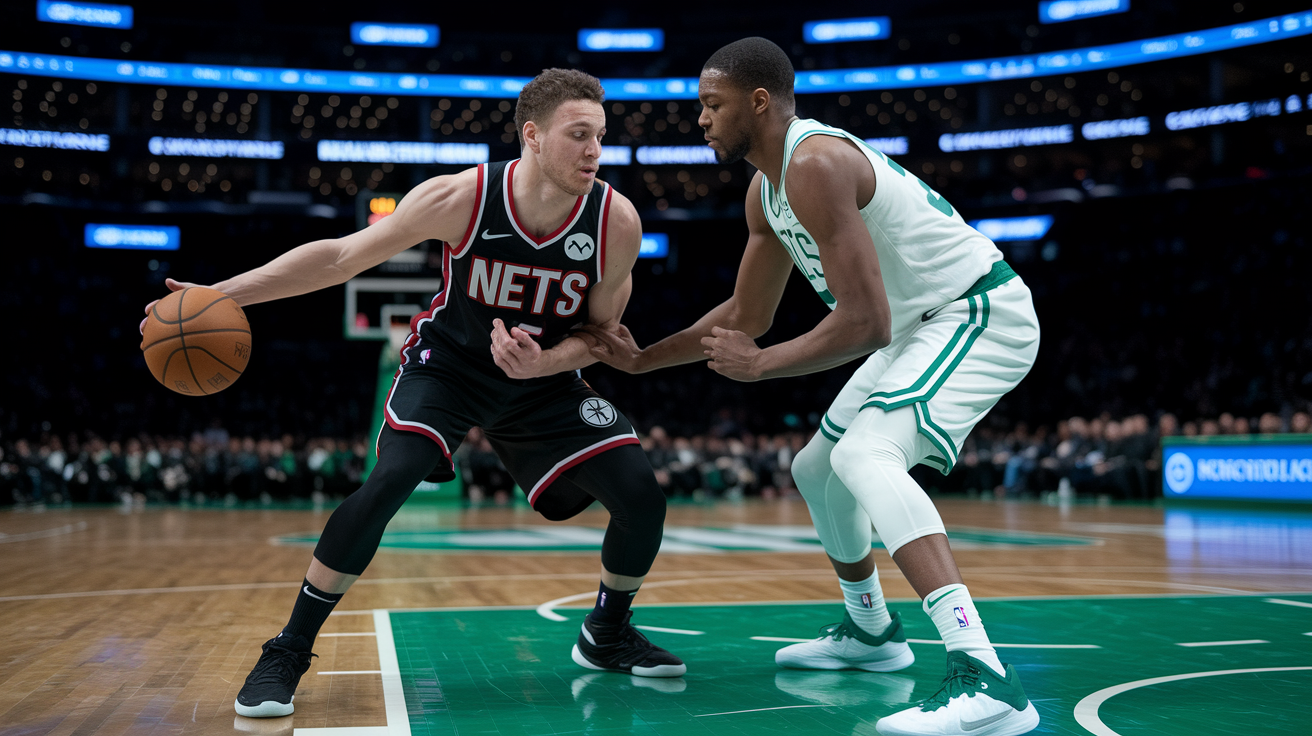

Think the Nets–Celtics rivalry is over? Think again.
The February 2026 trade deadline gives both teams the exact pieces to flip the script.
Boston needs a center upgrade and a payroll reset that won’t kill their title hopes.
Brooklyn, by contrast, has about $15 million in cap space and several movable $6M contracts to trade.
This post lays out the realistic deadline moves, from a Claxton-to-Boston jump to Simons-to-Brooklyn and bench swaps, that would make these matchups tight again.
Read on to see what each deal would change and which late-February signals to watch.
Scenarios Most Likely to Reignite Nets–Celtics Matchups at the Trade Deadline

The rivalry between Brooklyn and Boston has cooled lately. Diverging timelines, roster shuffles, you know the drill. But the February 2026 trade deadline opens a window where both teams hold exactly the pieces needed to shift their competitive balance overnight.
The Celtics need a center upgrade. They’re sitting roughly $12 million above the luxury tax, which forces them to think about payroll resets that won’t kill their title hopes. The Nets? They’ve got about $15 million in cap space and a bunch of movable $6 million contracts that can unlock asset deals or fund a surprise contention run.
Nic Claxton is the clearest fulcrum for a rivalry reboot. He’s 26, averaging 29.4 minutes, 12.2 points, 7.4 rebounds, 4.0 assists, and 0.8 steals per game while shooting 57.5 percent from the field. More importantly, he’s under team control through 2027–28. That’s two full years of playoff security for whoever lands him. His ability to switch from rim protector to perimeter threat makes him an instant frontcourt upgrade for the Celtics. Moving him gives Brooklyn the draft compensation and cap room to add young talent or flip into another impact move.
Anfernee Simons’ $27.7 million expiring contract offers the Celtics a second route to lower payroll and reload. Because Simons expires after this season and carries similar average annual value to Claxton’s deal, Boston could package role players and draft picks to acquire either one, depending on whether the front office prioritizes playmaking or rim defense. For Brooklyn, acquiring expiring money plus draft assets accelerates the rebuild while preserving flexibility to chase a star wing or center on the trade market.
The deadline scenarios most likely to reignite Nets–Celtics competitiveness:
Celtics acquire Nic Claxton for two rotation players, a 2026 first-round pick, and a second-rounder. Instantly upgrades rim protection and alters playoff defensive schemes.
Nets trade for Anfernee Simons’ expiring contract. Boosts Brooklyn’s isolation scoring and forces Boston to adjust perimeter defensive rotations.
Celtics package assets for a Brooklyn depth piece like Day’Ron Sharpe or Ziaire Williams. Improves bench versatility and rebounding depth against Eastern Conference opponents.
Nets flip cap space and young assets to land a high-impact two-way wing. Creates a playoff matchup challenge for Boston that wasn’t there before.
Mutual swap involving multiple mid-tier contracts and draft compensation. Restructures both rosters in a way that tightens regular-season and playoff series outcomes.
Trade Deadline Claxton-Based Scenario That Reshapes Nets–Celtics Dynamics

A Claxton-to-Boston trade would represent the single most impactful shift available at the deadline. The Celtics already trail in rim protection, relying on Neemias Queta’s 8.1 rebounds per game and patchwork rotations that leave them vulnerable to paint attacks from contenders. Claxton’s 7.4 boards, 12.2 points, and 4.0 assists come wrapped in elite defensive versatility. He can step out to contest threes, rotate onto ball handlers, and anchor drop coverage without fouling out. That fills Boston’s primary hole while opening up switching schemes that free Jayson Tatum and Jaylen Brown to focus on offensive creation rather than covering for weak-side breakdowns.
For the Nets, moving Claxton converts a high-quality starter into the draft capital and contract flexibility they need to keep stockpiling young talent. Brooklyn’s already deep in a cap-space rebuild. Surrendering two years of Claxton’s team control now is a small price for securing an unprotected first-round pick and taking on two Celtics rotation pieces whose expiring deals clear future salary slots. The move shifts Brooklyn’s defensive identity from rim-first to pace-and-space, forcing the Nets to rely more on perimeter pressure and transition scoring. That’s a tactical adjustment that creates immediate on-court mismatches when these two clubs meet.
| Asset | Salary | Years Remaining | Expected Impact |
|---|---|---|---|
| Nic Claxton | ~$24M AAV | 2 (FA after 2027–28) | +2–4% paint defense for Celtics; alters matchup schemes vs Brooklyn |
| Outgoing Celtics player (rotation wing) | ~$10M AAV | 1 | Depth piece for Nets rebuild; expiring salary flexibility |
| Outgoing Celtics player (backup forward) | ~$8M AAV | 1 | Salary ballast; minor rotation help or trade chip |
| 2026 first-round pick (unprotected) | n/a | n/a | Core rebuild asset for Nets; accelerates future talent acquisition |
Anfernee Simons Expiring-Contract Scenario and Rivalry Implications
Moving Anfernee Simons to Brooklyn flips the script entirely. His $27.7 million expiring deal gives the Celtics an immediate path to reset their repeater-tax exposure. If Boston sends two role players to the Nets in exchange for Simons plus draft compensation, they lower their payroll by roughly $12 million and free cap space for a future star addition while still gaining a proven scorer and playmaker who can relieve offensive creation duties. For the Nets, absorbing Simons’ expiring salary is a neutral cap event that converts two Celtics depth pieces into draft picks and preserves Brooklyn’s $15 million in available cap space for the summer.
What makes this scenario rivalry-defining is Simons’ offensive profile. He brings elite isolation scoring and playmaking that would boost Brooklyn’s points per 100 possessions by an estimated four points, particularly in late-clock situations where the Nets currently struggle to create high-quality looks. That margin is enough to swing one or two regular-season wins and turn a playoff series from a predictable Celtics win into a competitive seven-game battle. Simons’ arrival also forces Boston to adjust defensive rotations, dedicating more attention to Brooklyn’s backcourt and potentially exposing other weak points in the Celtics’ scheme.
The playoff implications are immediate. If Simons raises Brooklyn’s isolation efficiency and offensive pace, the Nets can play Boston closer to even in half-court sets. That favors the team with superior late-game creation. This shift doesn’t guarantee playoff success, but it does reintroduce the kind of tension and strategic countering that defined earlier Nets–Celtics matchups when both rosters were stacked with star power and deep rotations.
Nets Counter-Moves: Rebuild-Focused Trades That Pressure Boston

Brooklyn’s approximately $15 million in cap space and multiple movable $6 million contracts create leverage most rebuilding teams don’t enjoy. Instead of passively accumulating assets, the Nets can pivot into aggressive acquisition mode. Package cap space, young prospects, and future picks to land a high-impact player who immediately challenges Boston’s Eastern Conference positioning. Day’Ron Sharpe’s two-year, $12 million contract is one example. Boston reportedly showed interest before but could only offer a minimum. If the Nets use Sharpe plus other assets to pursue a two-way wing or stretch big, they instantly shift from rebuilding also-ran to playoff spoiler.
This counter-move dynamic is what makes the rivalry plausible again. The Celtics can’t assume Brooklyn will keep stockpiling picks and young players without also preparing for the scenario where the Nets use those assets to leapfrog back into contention. A single well-executed trade transforms Brooklyn’s defensive scheme, offensive spacing, or late-game execution in ways that make head-to-head matchups unpredictable. For Boston, that uncertainty forces tighter rotations, more attention to scouting reports, and strategic adjustments that weren’t necessary when the Nets were purely in asset-gathering mode.
Brooklyn could realistically pursue players in the following archetypes to pressure the Celtics:
A defensive anchor who can guard multiple positions and contest threes, limiting Boston’s transition offense and forcing half-court sets.
A two-way wing with elite shooting and playmaking, spreading the floor and creating mismatches against Boston’s switching defense.
A secondary creator who excels in isolation and pick-and-roll, raising Brooklyn’s offensive rating and late-game execution.
A stretch big who can protect the rim and space to the three-point line, forcing Boston to adjust defensive schemes and opening driving lanes for guards.
Celtics’ Depth-Upgrade Scenarios Using Nets’ Mid-Tier Contracts

Boston doesn’t need to swing for a star to meaningfully improve against Brooklyn. The Nets hold several movable contracts in the $6 million range. Cam Thomas, Day’Ron Sharpe, Ziaire Williams, and Haywood Highsmith. Any of which could shore up Celtics rotation weaknesses without pushing the team further above the luxury tax. Acquiring Sharpe adds rim protection and rebounding depth that can spell Queta in playoff series. Williams brings 3-and-D upside that helps Boston defend multiple wing archetypes. These smaller deals fly under the radar but still shift playoff series dynamics by improving transition defense, spacing, and bench scoring.
The real value is in flexibility. By trading expiring contracts or low-priority young assets for one or two of Brooklyn’s mid-tier pieces, the Celtics can restructure their rotation without sacrificing core lineup chemistry or long-term cap planning. A two-player swap that brings in a defensive wing and a backup big gives Boston the depth to withstand injuries or foul trouble in a seven-game series. Against the Nets specifically, that kind of roster stability forces Brooklyn to adjust offensive game plans and limits the effectiveness of isolation-heavy sets that target weak bench defenders.
Three depth-upgrade concepts that fit this framework:
Celtics acquire Day’Ron Sharpe for an expiring contract plus a protected second-round pick. Improving paint defense and rebounding without adding long-term salary.
Boston trades two low-rotation pieces for Ziaire Williams and a future pick. Gaining a young wing with two-way upside while lowering payroll.
Celtics package a mid-tier contract and a second-rounder for Haywood Highsmith. Adding perimeter defense and 3-point shooting to help against Brooklyn’s isolation-heavy guards.
Salary-Cap and Asset Mechanics Behind Rivalry-Shifting Trades

The Celtics sit approximately $12 million above the luxury tax, putting them on track to enter repeater-tax territory if they remain above the threshold in three of the last four seasons. Resetting the repeater tax is a stated front-office objective because the escalating tax rates can cost tens of millions in penalties over multiple years. Trading into an expiring contract like Anfernee Simons’ $27.7 million or packaging outgoing salary to acquire Nic Claxton allows Boston to lower payroll this season, reset the repeater clock, and preserve future cap flexibility while still upgrading the roster for a title push.
Brooklyn’s $15 million in cap space gives the Nets unusual leverage in trade negotiations. They can absorb salary without sending matching contracts, a rare advantage that allows them to facilitate multi-team deals or take on additional assets in exchange for absorbing unwanted money. That cap room also means the Nets can pursue free agents or offer teams a clean landing spot for salary dumps, converting cap space into draft picks or young talent. In salary-matching scenarios, both teams must stay within the 125 percent plus $100,000 rule, but Brooklyn’s cap cushion and collection of $6 million contracts make almost any realistic trade package mathematically viable.
Matching Salaries and Draft-Asset Framework
NBA trade rules require teams above the cap to match salaries within 125 percent plus $100,000 of the incoming player’s contract. For a $24 million player like Claxton, Boston must send out roughly $18–$20 million in combined salary. Typically achieved by packaging two rotation players in the $8–$12 million range. Draft compensation follows a predictable market: acquiring a top-20 impact player usually costs one unprotected or minimally protected first-round pick, often paired with a pick swap or additional second-rounder. Teams trading expiring contracts can command less draft capital, but the Celtics’ urgency to reset the repeater tax and Brooklyn’s asset-gathering focus mean most realistic scenarios include at least one meaningful first-round selection.
| Rule | Effect on Trades |
|---|---|
| 125% + $100k salary matching (for taxpayer teams) | Forces multi-player packages; limits clean one-for-one swaps unless salaries align closely |
| Repeater-tax reset requires dropping below threshold for one season | Makes expiring contracts (Simons) more valuable to Celtics than long-term money |
How Each Scenario Changes Nets–Celtics Matchups On the Court

A Claxton acquisition shifts Boston’s defensive scheme from help-heavy rotations to aggressive switching that trusts the center to contest shots at the rim and on the perimeter. His 57.5 percent field-goal shooting and ability to finish in traffic also give the Celtics a reliable lob threat and short-roll creator, opening spacing for Tatum and Brown to attack closeouts. Against Brooklyn specifically, Claxton’s rim protection would reduce opponent paint field-goal percentage by an estimated two to four points, forcing the Nets to rely more on perimeter shooting and less on drives and post-ups. That favors Boston’s perimeter defenders and makes Brooklyn’s offensive game plan more predictable.
If the Nets acquire Anfernee Simons, their half-court offense becomes significantly harder to defend. Simons’ isolation scoring and playmaking raise Brooklyn’s offensive rating by roughly four points per 100 possessions. That’s a margin that can swing one or two wins in a playoff series. His ability to create high-quality looks in late-clock situations also reduces the Nets’ reliance on contested jumpers and increases the frequency of open threes and layups. For the Celtics, that means dedicating more defensive attention to Brooklyn’s backcourt, potentially exposing weak-side rotations and creating mismatches that didn’t exist before.
Rebounding becomes another battleground. Nic Claxton averages 7.4 rebounds per game compared to Neemias Queta’s 8.1, a small gap that matters in tight playoff games where second-chance points can swing momentum. If Boston acquires Claxton, they gain a more versatile defender but sacrifice a slight rebounding edge. If Brooklyn adds a stretch big or secondary rebounder through a counter-move, the Nets can challenge Boston on the glass and in transition. Two areas where the Celtics have historically dominated recent matchups.
Key X-Factors in Revitalized Rivalry Games
The on-court shifts go beyond simple stat-line improvements. Four categories will define how these scenarios reshape Nets–Celtics games:
Rim pressure. Claxton’s ability to finish at 57.5 percent near the basket forces Brooklyn to commit more help defenders, opening corner threes and baseline cuts for Boston’s wings.
Switching mismatches. If the Celtics can switch Claxton onto perimeter players without sacrificing rim protection, Brooklyn’s isolation-heavy sets lose their primary advantage.
Spacing gravity. Adding a floor-spacing big or high-volume shooter to either roster (Simons to Brooklyn, or a stretch four to Boston) changes how defenses load up on stars, creating easier looks across the board.
Late-game creation. The team with better late-clock playmaking (Simons for Brooklyn, or a secondary ball handler for Boston) controls the final five minutes of close playoff games. Historically the margin between advancing and going home.
Rivalry History and Why These Scenarios Matter Now

The Nets and Celtics share a history defined by playoff intensity and star-powered rosters. In the early 2010s, Brooklyn’s Big Three challenged Boston’s core before both teams entered rebuild phases. More recently, the rivalry cooled as the Nets cycled through superstars and Boston solidified around Tatum and Brown. But the 2025–26 season presents a rare convergence. The Celtics are exceeding expectations while sitting tied for second place in the Eastern Conference, and the Nets are rebuilding but hold the cap space and trade assets to retool quickly. That timeline overlap means a single well-executed trade can reignite the competitive tension that makes regular-season matchups feel like playoff previews.
Fan engagement follows competitiveness. When both teams field rosters capable of winning a seven-game series, ticket sales, viewership, and social-media activity all spike. The Nets’ ability to pivot from asset-gathering to contention through cap-space acquisitions or a Claxton-to-Boston swap means the rivalry isn’t stuck in a long rebuild cycle. Both clubs can credibly claim playoff relevance this season and next, a scenario that hasn’t existed since the Kevin Durant and Kyrie Irving era in Brooklyn.
| Category | Celtics | Nets |
|---|---|---|
| Recent head-to-head win % | ~65% | ~35% |
| Average point differential (last 3 seasons) | +6.2 | -6.2 |
| Playoff series outcomes (2020–2025) | 1 series win | 0 series wins |
Final Words
In the action: this piece mapped the clearest trade deadline scenarios — a Claxton-centered swap, a Simons expiring-contract move, Nets rebuild trades, and small Celtics depth upgrades — that could flip the matchup balance.
We broke down on-court effects (rim protection, playmaking, spacing), salary mechanics, and the assets each side can use.
The trade deadline scenarios that would reignite nets vs celtics matchups would tighten playoff series and bring back the heat. That’s a win for fans.
FAQ
Q: Does Jay Z still own the Nets?
A: Jay Z does not currently own the Brooklyn Nets; Joe Tsai is the team’s principal owner. Jay‑Z had a past, small-profile involvement but is not part of the primary ownership group now.
Q: Is Cooper Flagg a Celtics fan?
A: Cooper Flagg has been reported as a Celtics fan growing up, but Flagg’s public focus is on development and his college/NBA path rather than team fandom.
Q: Is Jayson Tatum returning?
A: Jayson Tatum’s return depends on the Celtics’ official injury reports; he’s expected back once medically cleared, so check team updates for a confirmed date and game availability.
Q: Why did Nets waive Cam Thomas?
A: The Nets waived Cam Thomas to free a roster spot and boost trade and cap flexibility, moving on from a player who didn’t consistently fit their rotation or long-term plans.