


Think shoulder surgery is just another injury fix? Think again.
Front offices treat shoulder work far more cautiously than elbow repairs, and that caution hits a pitcher’s market fast.
A recent shoulder operation usually cuts guaranteed years, trims yearly pay by roughly 30–50%, and turns multi-year interest into one-year prove-it deals or minor-league invites.
This post lays out what teams check next, how recovery timelines shape offers, and the contract tweaks pitchers face as they try to rebuild value.
How Shoulder Surgery Alters a Pitcher’s Market Value and Team Confidence

Teams don’t treat shoulder surgery the same way they treat elbow work. The outcomes are harder to predict, and the performance paths are all over the place. Tommy John has turned almost routine. Front offices have timelines, success rates, models they trust. Shoulder repairs? Different story. Labrum tears, rotator cuff damage, debridement—each one brings its own rehab arc, and the historical data tells you that pitchers coming back from shoulder work are less likely to get back to where they were compared to elbow cases. That uncertainty alone is why clubs ask for more medical reviews, longer observation periods, and contracts built to protect them.
Contract value drops the second shoulder surgery shows up in a pitcher’s file. Guaranteed years shrink. What might’ve been a three to five year deal becomes one or two years. Average annual value can fall 30 to 50%. Total guaranteed money? Down 40 to 70% compared to what a healthy starter would get. Mid rotation arm projected for four years, $48 million? He’s looking at one year, $6 million with incentives. Or a minor league invite with a small MLB guarantee. The cut reflects the risk of poor performance, but also fewer innings, which directly affects what the team gets back.
Recent free agency cycles keep showing the same thing. Pitchers with known shoulder repairs sit unsigned deep into winter, then take short term deals or minor league contracts with spring opt outs. Some never get multi year offers at all. Doesn’t matter what their track record looks like. Teams would rather wait than commit future payroll to something this uncertain.
Four things that happen when a pitcher reports recent shoulder surgery:
- Contract offers get delayed while teams wait for updated imaging, functional testing, supervised bullpen sessions
- Contenders lose interest because they need immediate reliability and won’t gamble on their rotation
- Independent medical evaluations become mandatory, along with multiple rounds of physical exams before serious talks even start
- Teams strongly prefer low commitment structures. One year guarantees, minor league deals, option heavy contracts with team friendly buyouts
Recovery Timelines and How They Influence Front Office Projections
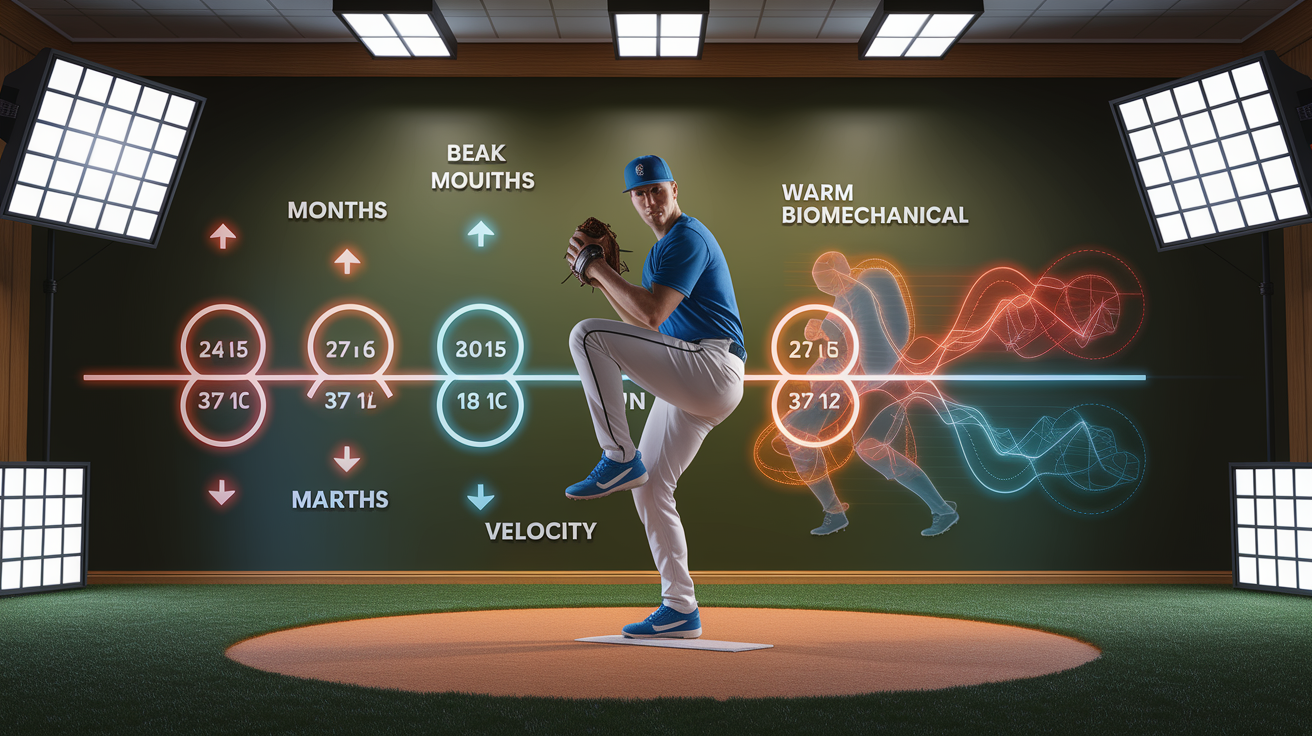
Medical timelines shape how teams value a pitcher after shoulder surgery. Labrum repairs usually need nine to eighteen months before a pitcher gets back to game action. Full velocity restoration takes even longer. Rotator cuff repairs follow similar windows. Nine to fourteen months for supervised throwing programs, and high velocity starters need extra months to rebuild arm strength and command. Even less invasive arthroscopic debridement takes four to nine months. Return rates are better, but teams still track whether pre surgery velocity and workload come back within the first competitive season. Front offices use these benchmarks to project when a pitcher might give them real innings and at what level, which shapes how much guaranteed money they’re willing to put down.
Teams lean on biomechanical assessments, MRI follow ups, velocity checkpoints throughout recovery to refine their forecasts. A pitcher hitting 92 to 93 mph in supervised bullpens six months post op when he threw 95 to 96 before surgery? Red flags. Clubs compare these data points against historical comps. Pitchers of similar age, surgery type, workload history. They estimate the probability of full recovery. If the comps show a 50 to 60% chance of returning to prior performance, the contract offer reflects that risk with shorter terms and lower guarantees.
Common stages in post surgery evaluation used by MLB medical staffs:
- Initial imaging review and surgical report analysis to classify procedure type and assess structural repair quality
- Functional testing at three, six, and nine month intervals measuring range of motion, scapular mechanics, pain free velocity
- Documented bullpen sessions and simulated game environments to track pitch mix, command consistency, workload tolerance before contract offers are formalized
Contract Structure Adjustments After Shoulder Surgery
When a pitcher’s shoulder surgery becomes public, the structure of his next contract changes completely. Multi year guaranteed deals become rare unless the pitcher is young, elite, and shows exceptional post op progress. Instead, teams pivot to one year “prove it” frameworks with modest guarantees and heavy incentive layers. A typical structure might guarantee $4 to 8 million in year one, then attach $3 to 6 million in performance bonuses tied to innings pitched, starts made, or roster days. These incentives reward durability and performance while limiting downside exposure if the pitcher struggles or lands on the injured list early. Teams also favor club options for year two with low buyouts, often $1 to 3 million, so they can retain the pitcher cheaply if he performs well or cut him loose without major financial penalty if he doesn’t.
Vesting provisions and conditional guarantees show up frequently in these deals. A contract might include a second year that vests automatically if the pitcher reaches 100 innings or 20 starts in year one. What looks like a one year deal converts into a longer commitment only if the pitcher proves healthy and effective. Medical exam triggers allow teams to void guarantees or restructure terms if follow up imaging reveals structural concerns or if the pitcher fails a physical. Assignment and outright release language also becomes more team friendly, giving clubs easier paths to remove the player from the 40 man roster without owing the full guarantee.
Incentive heavy contracts shift risk from the team to the player. A pitcher might sign for $6 million guaranteed with the potential to earn up to $14 million if he hits every performance tier. Thirty starts, 180 innings, postseason roster inclusion. That structure protects the payroll if the shoulder doesn’t hold up. But it also means the pitcher earns far less than a healthy peer unless he can demonstrate full recovery on the field.
| Contract Element | Typical Adjustment |
|---|---|
| Guaranteed years | Reduced from 3–5 years to 1–2 years; multi year guarantees rare without exceptional recovery data |
| Base salary | Cut by 40–70% compared to healthy comparables; often set at $3–8M annually for mid rotation arms |
| Performance incentives | Expanded to 20–50% of total potential value; tied to innings (60/100/150 IP), starts (15/25/30 GS), or WAR thresholds |
| Club options and buyouts | Added frequently; options for year two at $8–12M with $1–3M buyouts; vesting clauses tied to IP or starts |
Case Studies of Pitchers Returning From Shoulder Surgery
Chris Sale, Thoracic Outlet Surgery and Extended Recovery
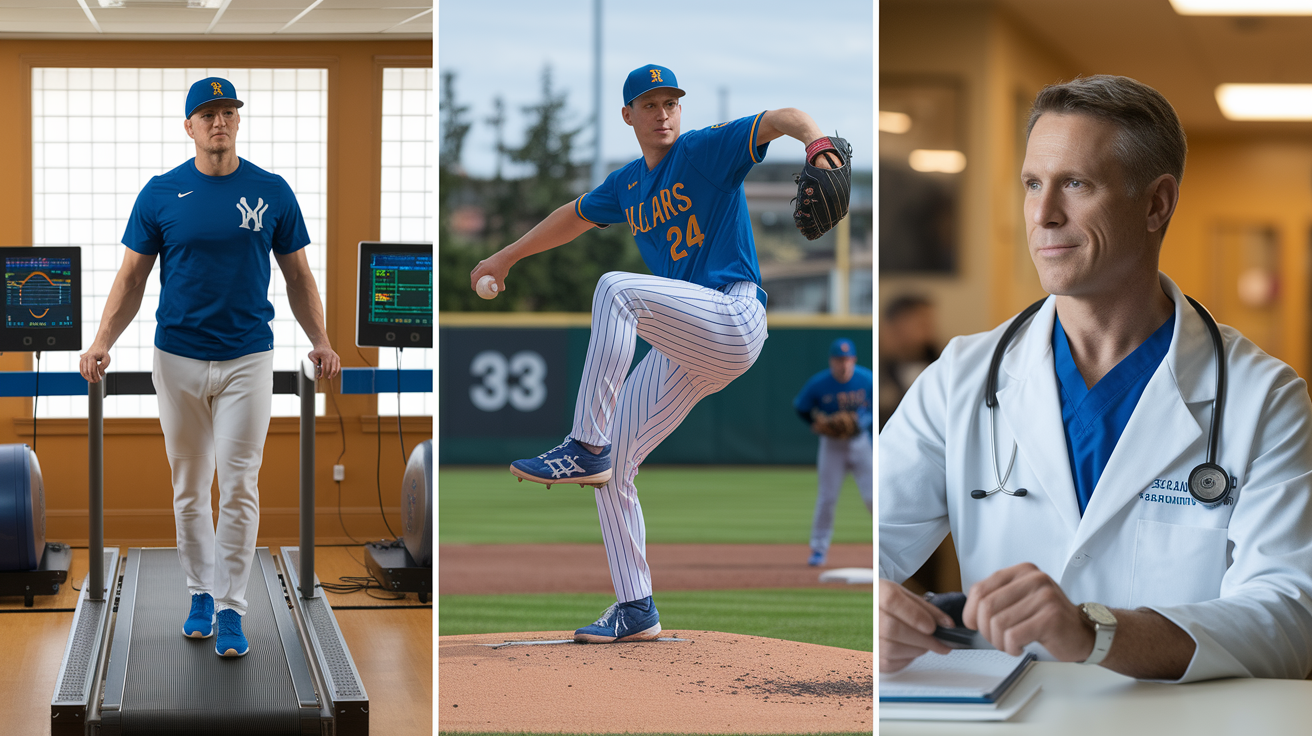
Chris Sale underwent thoracic outlet surgery in March 2020. The procedure required rib resection and carried significant uncertainty about his return to elite form. The typical recovery window for thoracic outlet cases runs six to eighteen months, but Sale’s timeline stretched longer because of additional complications and rehab setbacks. He missed the entire 2020 season and didn’t return to game action until mid 2021. His velocity, which had previously sat in the mid 90s with elite spin and ride, dropped noticeably in his initial outings. The Red Sox kept him on a heavily managed workload. His performance was inconsistent. Flashes of dominance mixed with stretches of diminished command and durability concerns.
When Sale entered free agency after the 2023 season, teams approached him cautiously despite his résumé. His deal reflected the market’s view of shoulder related risk. Shorter term, performance based structure rather than the long term commitment a healthy Sale would have commanded. Teams factored in his age, the specific nature of his surgery, his uneven post op performance. The contract included incentives tied to innings and roster days, acknowledging both his upside and the probability that he might not sustain a full starter’s workload.
Drew Smyly, Labrum Repair and Market Reset
Drew Smyly underwent labrum surgery in 2017. The procedure typically requires twelve to eighteen months for a full return to competitive pitching. He missed nearly two full seasons, returning only briefly in 2018 before being non tendered by the Cubs. His velocity, which had been in the low 90s pre surgery, struggled to return consistently. His command wavered as he rebuilt arm strength. The extended absence and uncertain performance trajectory made him a low commitment target in free agency.
Smyly signed a series of minor league deals and short term MLB contracts in the years following his surgery. His 2019 contract with the Rangers was a one year, $2 million guarantee. Far below what he would have commanded as a healthy mid rotation starter. He spent 2020 with the Giants on another modest deal, then gradually worked his way back into longer commitments as he demonstrated sustained health and performance. By 2021, after proving he could handle a full season’s workload, he signed a one year, $11 million deal with the Braves. A significant step up, but still structured as a prove it contract rather than a multi year guarantee. His case shows how shoulder surgery can reset a pitcher’s market value and how recovery credibility must be rebuilt season by season.
Rich Hill, Recurrent Shoulder Issues and Short Term Deals
Rich Hill dealt with multiple shoulder procedures throughout his career. Labrum surgery, various debridements. Each procedure reset his market and forced him into short term, low guarantee contracts despite stretches of high level performance. Teams valued his ability to miss bats and generate weak contact, but his injury history made multi year commitments too risky. Hill’s free agency deals after shoulder work typically followed a similar pattern. One year contracts with salaries in the $6 to 12 million range, often with vesting options or performance incentives tied to innings pitched.
His 2016 deal with the Athletics was a one year, $6 million contract after he had shown health in the prior season. When he proved effective, the Dodgers acquired him mid season and later re signed him to short term extensions. Even as he aged into his late 30s and early 40s, teams continued to sign him on one year deals. Never committing beyond a single season because his shoulder history made long term reliability impossible to project. Hill’s career shows how even successful post surgery performance doesn’t erase the risk premium teams apply to shoulder cases. He earned decent annual salaries. But never the multi year security that healthier pitchers with similar effectiveness received.
How Shoulder Surgery Affects the Timing of Free Agency Negotiations

Shoulder surgery introduces delays that ripple through the entire free agency process. Teams wait for updated medical imaging. MRIs, CT scans, functional assessments. Before making any serious offer. A pitcher who undergoes surgery in August or September typically won’t have clean follow up imaging until late November or December, which pushes initial medical reviews into January or later. Even when imaging looks promising, clubs demand supervised bullpen sessions and live batting practice to verify that velocity, command, and workload tolerance are trending toward pre surgery baselines. That requirement often means the pitcher won’t receive competitive offers until late winter or even spring training, well after most of the market has cleared.
This waiting period compresses a pitcher’s leverage. While healthy free agents can create bidding pressure in November and December, post surgery pitchers watch the market thin out as teams fill rotation spots with healthier options. By the time medical clearance arrives, fewer roster openings remain. Teams have less urgency to compete for the pitcher’s services. That dynamic forces many post surgery arms to accept below market deals or minor league contracts with opt outs, simply because the alternative is waiting until mid season and losing even more earning potential.
| Delay Factor | Impact on Negotiations |
|---|---|
| Medical imaging and clearance timeline | Pushes serious offers into January or later; teams won’t engage until follow up MRIs and functional tests confirm structural healing |
| Supervised throwing programs | Requires 3–6 months of documented bullpen work; teams demand velocity and command data before formalizing contract terms |
| Market competition thinning | Healthy pitchers sign early, leaving fewer roster spots and less bidding urgency; late signing pitchers face reduced leverage and lower guarantees |
Team Risk Models and How They Quantify Post Surgery Performance Volatility

Front offices build probability models to estimate how likely a pitcher is to return to pre injury form after shoulder surgery. These models incorporate biomechanical data. Shoulder range of motion, scapular stability, arm slot consistency. They layer in historical comparables of similar age, surgery type, pre injury workload. Teams calculate the percentage of comparable pitchers who regained their previous velocity within twelve months. The share who maintained that velocity over a full season. The rate at which recurrence or secondary injuries occurred. Those probabilities feed directly into contract offers. A model that projects a 50% chance of full recovery and a 30% chance of reduced effectiveness will produce a much smaller guarantee than one that projects 75% recovery odds.
Aging curves matter too. A 27 year old pitcher with a clean labrum repair and no prior shoulder history enters a risk model with better odds than a 33 year old with multiple procedures and a history of high inning seasons. Teams discount older pitchers more aggressively because recovery timelines lengthen with age. The margin for error shrinks. Biomechanical testing adds another layer. Clubs measure arm speed, release consistency, whether the pitcher’s mechanics have shifted post surgery. A pitcher who alters his delivery to compensate for reduced shoulder strength may avoid immediate pain but face long term command or injury risk. Teams price that into the contract.
Core variables in shoulder risk modeling:
- Procedure type and structural repair quality. Labrum repairs, rotator cuff work, debridement. Each carries distinct recovery probabilities and performance trajectories
- Age at surgery and cumulative workload history. Older pitchers and those with heavy prior innings face steeper decline odds and longer recovery windows
- Post operative velocity and biomechanical benchmarks. Tracked at three, six, and nine month intervals to confirm arm strength, release consistency, pain free throwing mechanics match pre surgery baselines
Final Words
A pitcher coming off shoulder surgery walks into free agency facing extra medical checks, lower guarantees, and a lot more “prove‑it” talk. We laid out why teams fear shoulder work more than elbow issues, how recovery timelines shift offers, typical contract tweaks, and real cases that show mixed results.
How recent shoulder surgery impacts a pitcher’s free agency whispers and contract value is clear: expectations drop and talks stall, but strong rehab and clean tests can still revive a market. There’s reason for cautious optimism.
FAQ
Q: What is the success rate for pitchers with shoulder labrum surgery and do pitchers recover from rotator cuff surgery?
A: The success rate for pitchers after labrum or rotator cuff surgery varies, with roughly 50–75% returning to MLB play; many regain some function, but fewer fully recover prior velocity and consistency.
Q: What is the hardest shoulder surgery to recover from?
A: The hardest shoulder surgeries for pitchers to recover from are rotator cuff repairs and revision labrum/SLAP procedures, which carry longer rehab and higher risk of lasting velocity or command loss.
Q: Who was the first MLB player to earn $1,000,000 a year?
A: The first MLB player widely credited with earning $1,000,000 a year was Nolan Ryan in 1979, a commonly cited milestone for single-season salary breakthroughs.