

Controversial take: the 2026 QB class might only have one true first-round talent.
That doesn’t mean teams won’t reach when need and fear kick in.
This guide breaks down the six names scouts keep talking about, Mendoza, Sellers, Allar, Moore, Nussmeier and Beck, using film, testing and injury timelines.
You’ll get short evaluations of size, arm, pocket play and decision-making, plus clear rankings and practical draft grades.
Read this to know who belongs near the top and who should really stay in school another year.
Comprehensive Breakdown of 2026 NFL Draft Quarterback Prospects
This isn’t the quarterback class teams have been waiting for. Multiple scouting reports call it a “one-quarterback class,” meaning only one guy actually deserves first-round consideration if you’re going strictly off film. The rest? Day 3 picks, mostly starting around Round 4 or later. That’s a pretty significant drop from recent years when you’d see three or four blue-chip signal-callers coming out.
But here’s the thing. League demand doesn’t care what the film says. Teams still need quarterbacks, and they’ll reach when desperation kicks in. Remember when the Colts signed 44-year-old Philip Rivers out of retirement? That’s what happens when you don’t have a franchise guy. Some of these 2026 prospects will get drafted way earlier than their tape suggests they should.
Most of the evaluation work pulls from 2024 and 2025 college tape. Analysts will tell you 95 percent of their conclusions form before the Senior Bowl, Combine, and pro days even start. And what does that tape show? Lots of struggles under pressure, injury concerns hitting multiple top names, and real questions about whether college production actually translates. Several guys who declared probably should’ve stayed in school another year.
Six quarterbacks keep showing up on major scouting boards:
- Fernando Mendoza (Indiana) – Heavy Heisman favorite, probably going No.1 overall
- LaNorris Sellers (South Carolina) – Elite athlete with the widest range of outcomes in the class
- Drew Allar (Penn State) – Best raw arm talent but consistency issues and injury history
- Dante Moore (Oregon) – Touch-passing specialist with smooth mechanics
- Garrett Nussmeier (LSU) – Pre-snap genius who makes dangerous decisions
- Carson Beck (Miami) – High-volume starter whose arm strength dropped after surgery
Physical Measurements and Athletic Testing for 2026 QB Prospects
Size and athleticism? All over the map with this group. Mendoza and Allar both stand 6’5″, which is your prototypical NFL pocket-passer build. Sellers measures 6’3″ but carries 240 pounds of functional strength that makes his dual-threat game work. On the other end, Nussmeier checked in at just 6’1″, 202 pounds at the Senior Bowl. That puts him in the fourth percentile for quarterback weight among prospects evaluated since 1999.
Athletic testing showed a stark split between pure pocket guys and mobile threats. Taylen Green from Arkansas impressed at the Combine despite limited on-field production, showcasing the physical tools that keep him in draft conversations. Sellers has outstanding speed, elusiveness, and balance that separate him from traditional pocket quarterbacks. Meanwhile, Mendoza and Allar lack the foot speed to escape pressure or extend plays outside structure.
| Name | Height/Weight | Athletic Notes | Injury Considerations |
|---|---|---|---|
| Fernando Mendoza | 6’5″ 225-236 lbs | Limited foot speed and pocket mobility | No major injury history |
| LaNorris Sellers | 6’3″ 240 lbs | Elite speed, strength, elusiveness, balance | Took over as 19-year-old freshman |
| Drew Allar | 6’5″ 228-235 lbs | Prototypical size, limited scramble ability | Broken ankle ended 2025 season |
| Dante Moore | 6’3″ 206 lbs | Underrated mobility, not true dual-threat | Rocky true freshman year at UCLA |
| Garrett Nussmeier | 6’1″ 202-205 lbs | Below-average size and weight for position | Undisclosed 2025 injury affected play |
| Carson Beck | 6’4-6’5″ 225-233 lbs | Adequate functional mobility in pocket | UCL elbow surgery late 2024 |
Arm Strength, Accuracy, and Throwing Mechanics Across 2026 QB Class
Arm talent is where this group gets really varied. Drew Allar has the strongest pure arm in the class. He can make effortless deep-ball deliveries and hit every throw on an NFL route tree. His release is smooth and compact, generating excellent velocity without mechanical strain. But his accuracy comes and goes, which creates frustrating inconsistency that undermines all those physical gifts. He also pats the ball before release, which telegraphs his intentions to NFL-caliber defenders.
Fernando Mendoza operates with solid arm strength that works up to 40 yards downfield. Quick release, proficient attacking outside the numbers. His deep balls can fade in the 45-50 yard range though, which limits his ability to manipulate defenses vertically or stress safeties over the top. LaNorris Sellers brings elite arm strength with dynamic throwing ability on the move, but his accuracy falls apart on middle-of-field throws where timing and anticipation actually matter. Dante Moore excels as a touch passer with outstanding spin and seam-attacking precision, yet his passes tend to die on certain throws because he relies more on finesse than drive. His effective range probably caps around 50 yards.
Carson Beck’s throwing evaluation changed dramatically after UCL surgery in late 2024. His arm strength visibly diminished when he returned for Miami’s 2025 season. He lost the velocity needed to fit balls into tight NFL windows. Garrett Nussmeier demonstrates excellent timing and a whiplike throwing motion that lets him layer throws through the middle of the field, but his decision-making frequently puts those well-thrown balls directly into dangerous coverage situations with multiple defenders converging.
Common mechanical patterns across the class:
- Quick release times show up in Mendoza, Nussmeier, and Moore’s profiles
- Deep-ball limitations affect Mendoza (45+ yards) and Moore (50+ yards max)
- Allar’s ball-patting habit and jittery footwork under pressure create pre-throw tells
- Sellers and Green both show inconsistent accuracy despite elite physical tools
- Beck’s post-surgery velocity loss fundamentally changed his evaluation grade
Pocket Presence, Mobility, and Pressure Performance in 2026 QB Evaluations

Pressure handling separates developmental quarterbacks from NFL-ready prospects. Fernando Mendoza’s consistency falls apart when defenses generate interior or edge pressure. His accuracy drops, decision-making becomes rushed, and he takes unnecessary sacks rather than throwing the ball away or finding checkdowns. This is his most concerning trait for NFL projection, because league pass rushers will exploit this weakness immediately.
Drew Allar shows ability climbing the pocket versus edge pressure. Good spatial awareness when rushers attack from the perimeter. But interior pressure short-circuits his entire operation. It causes jittery feet, fading from the rush, and abandoning solid mechanics. LaNorris Sellers presents the opposite problem. He trusts his scrambling ability more than his downfield throwing, leading to higher sack and fumble totals when he could deliver accurate passes from the pocket. Dante Moore’s underrated mobility helps him navigate collapsing pockets, though he’s not a true dual-threat quarterback who stresses defenses with designed runs.
Pressure Performance Patterns
Four distinct breakdown causes keep appearing across this quarterback class:
- Mechanical collapse – Allar’s footwork and Mendoza’s accuracy both deteriorate when pressure arrives, abandoning fundamentals that work in clean pockets
- Over-reliance on athleticism – Sellers and Green choose scrambling over throwing progression reads, creating unnecessary negative plays when viable targets exist
- Decision-making panic – Nussmeier’s high-risk tendencies amplify under pressure, forcing dangerous throws into covered windows rather than accepting modest gains
- Processing speed limitations – Multiple prospects struggle reading defensive adjustments when their timing gets disrupted by interior rush penetration
Decision-Making, Processing Speed, and Field Vision Among 2026 QB Prospects
Pre-snap recognition varies dramatically across this quarterback class. Garrett Nussmeier, son of longtime NFL quarterbacks coach Doug Nussmeier, demonstrates strong command at the line of scrimmage with excellent defensive identification skills. His pre-snap work ranks among the best in college football. His post-snap decision-making though? Serious concern. He led the SEC with 12 interceptions in 2024 by consistently throwing into high-risk windows with multiple defenders and poor ball-security decisions.
Ty Simpson’s evaluation tells a cautionary story about consistency. From Weeks 1-11 in 2025, he posted 0.32 expected points added per dropback with 21 touchdowns against just one interception. After Week 11, his EPA cratered to -0.14 as his decision-making fell apart during critical games, including the College Football Playoff. He finished with seven touchdowns and four interceptions across that late-season stretch. Early-season success doesn’t always predict performance under heightened pressure.
Drew Allar’s extreme conservatism raises questions about his field vision and willingness to attack defenses. Across 22 combined games in 2024 and 2025, he attempted only 58 passes traveling 20+ air yards downfield. For context, Simpson attempted 62 such throws in 2025 alone. This reluctance to push the ball vertically suggests either scheme constraints from Penn State’s offensive system or genuine limitations reading and trusting deep progressions. LaNorris Sellers shows inconsistent field vision, particularly on middle-of-field throws where multiple route combinations require quick pattern recognition and timing.
| Player | Processing Strength | Red Flag |
|---|---|---|
| Garrett Nussmeier | Elite pre-snap recognition and defensive reading | 12 INTs in 2024, throws into dangerous coverage |
| Ty Simpson | Strong football IQ and early-season command | EPA collapse after Week 11, playoff struggles |
| Drew Allar | Improved recognition after three starting seasons | Only 58 deep attempts across 22 games |
| Fernando Mendoza | Quick release and gunslinger mentality | Decisions deteriorate significantly under pressure |
| LaNorris Sellers | Dynamic playmaking instincts as athlete | Inconsistent middle-of-field vision and timing |
Individual 2026 QB Scouting Profiles and Film-Grade Summaries
Fernando Mendoza (Indiana)
Mendoza enters the draft as the heavy Heisman Trophy favorite and likely No.1 overall selection after leading Indiana to a national championship in 2025. He posted 41 touchdowns during that season after transferring from Cal, where he accumulated 34 total touchdowns across two years. Standing 6’5″ with a quick release and proficiency attacking outside the numbers, he displays gunslinger mentality and willingness to challenge defenses vertically, though his deep balls fade beyond 45 yards. His biggest concern centers on pressure performance, where his consistency falls apart and he takes coverage sacks rather than managing the play. Projection models compare him to Jared Goff and Carson Palmer as pocket passers who win through timing and accuracy rather than elite arm strength or mobility. Detailed film breakdowns show his production came from high-volume passing within structured offense.
LaNorris Sellers (South Carolina)
Sellers took over South Carolina’s starting job as a 19-year-old redshirt freshman in 2024, bringing a unique combination of speed, strength, elusiveness, and balance that separates him from traditional quarterback prospects. At 6’3″, 240 pounds, he’s got outstanding arm strength and dynamic quarterback run-game ability that stresses defenses with designed and improvised runs. His dual-threat capability draws comparisons to Lamar Jackson and Jalen Hurts, though his accuracy remains inconsistent and he takes more sacks and fumbles by trusting his scrambling ability over delivering throws. Middle-of-field accuracy represents his biggest technical weakness. Evaluators note he has the widest range of outcomes in this class. Ceiling as a Pro Bowl dual-threat starter, floor as a developmental project who never finds consistency. Think Trey Lance or Anthony Richardson for risk-versus-reward models.
Drew Allar (Penn State)
Allar brings three years of starting experience, prototypical 6’5″ NFL size, and the best pure arm talent in the entire draft class. His release is smooth with effortless ball delivery that creates excellent velocity without mechanical strain. He improved his recognition abilities across three starting seasons and demonstrates excellent pocket climbing versus edge pressure. But his accuracy comes and goes down-to-down, pressure short-circuits his performance causing jittery feet and fading from the rush, and he pats the ball before release. A broken ankle ended his 2025 season after just five games, three of which Penn State lost. Comparisons to Daniel Jones and Joe Flacco reflect his physical tools paired with consistency questions. Penn State finished a playoff loss to Notre Dame as the only non-military academy school without a completed pass to a wide receiver. That’s a damning statistic that led to both WR1 Harrison Wallace and WR2 Omari Evans transferring before 2025.
Dante Moore (Oregon)
Moore transferred to Oregon after a rocky true freshman season at UCLA. He’s now in his second year as a starter with measurably improved command and decision-making. At 6’3″, 206 pounds, he features a smooth throwing motion with good spin and outstanding touch accuracy that allows him to attack seams and layer throws between coverage levels. His underrated mobility helps him navigate pressure despite not being classified as a true dual-threat quarterback. Film evaluation reveals his passes are prone to dying on certain downfield throws because he’s more of a touch thrower than a drive thrower, with his effective range potentially capping around 50 yards on vertical shots. Scouts compare him to Teddy Bridgewater as a cerebral, accuracy-first quarterback who succeeds through precision rather than overwhelming physical traits.
Garrett Nussmeier (LSU)
Nussmeier, son of longtime NFL quarterbacks coach and current Saints offensive coordinator Doug Nussmeier, shows strong command at the line of scrimmage and excels at layering middle-of-field throws with great timing. His whiplike throwing motion generates solid velocity despite measuring just 6’1″, 202 pounds at the Senior Bowl. The major red flag centers on his 2024 season leading the SEC with 12 interceptions, repeatedly throwing into high-risk windows with multiple defenders and displaying poor ball-security decisions. An undisclosed injury during the 2025 season affected his performance, raising questions about durability at his size. Comprehensive rankings note one exceptional statistical year in 2024 surrounded by three mediocre seasons, creating uncertainty about which version represents his true ability. Comparisons to Andy Dalton and Quinn Ewers reflect solid starter potential without elite physical traits.
Carson Beck (Miami)
Beck enters the NFL with 40 career starts across high-end programs at Georgia and Miami, earning passing grades in size, arm strength, accuracy, functional mobility, and processing speed. He measures 6’4-6’5″ and 225-233 pounds with solid ability breaking down defenses pre-snap. The critical concern involves UCL elbow surgery performed in late 2024, after which his arm strength and velocity visibly diminished when he returned for Miami’s 2025 season. He led Miami to the national championship game before losing to Indiana, posting 30 touchdowns against 12 interceptions. Pressure triggers his questionable decision-making, often putting passes in danger when interior or edge rushers disrupt his timing. Without a single overwhelming trait and diminished arm strength post-surgery, evaluators compare him to Matt Barkley as a competent backup whose injury history prevents him from reaching projected starter potential.
NFL Comparisons, Archetypes, and Projected Career Outcomes for 2026 QB Class
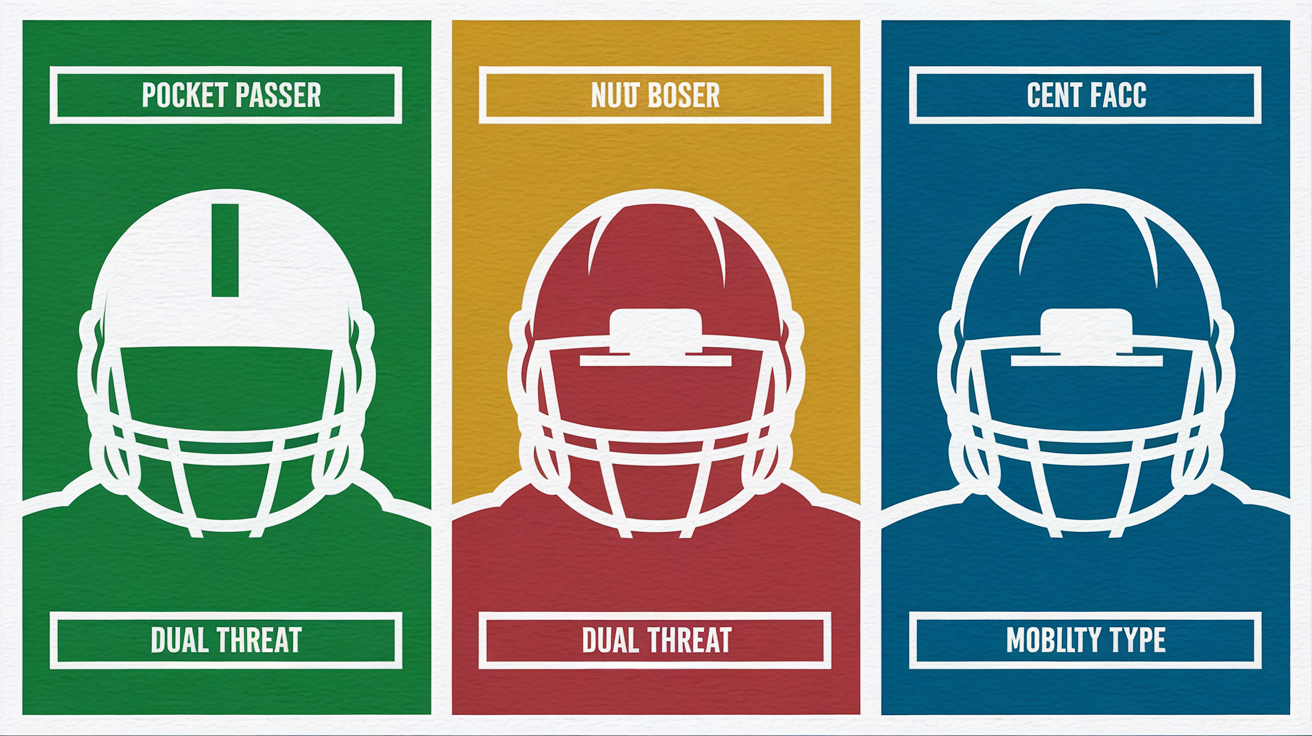
Archetype assignments help contextualize how these quarterbacks might translate to professional systems. Fernando Mendoza fits the pocket-passing mold of Jared Goff and Carson Palmer. Quarterbacks who win from structure through timing and accuracy rather than improvisation or elite arm strength. Both comparisons succeeded as top-12 NFL starters when surrounded by functional offensive lines and coordinated schemes, suggesting Mendoza’s ceiling depends heavily on landing situation rather than transcendent individual talent.
LaNorris Sellers and Taylen Green represent the high-risk, high-reward dual-threat category. Sellers draws comparisons to Lamar Jackson and Jalen Hurts as elite athletes who can stress defenses with designed runs and improvisation, though both required multiple years developing passing consistency before reaching Pro Bowl levels. Green’s physical testing at 6’6″, 227 pounds with exceptional athletic marks mirrors Tyree Jackson, a developmental project whose tools never translated to consistent quarterback play. The range of outcomes for athletic quarterbacks in this class spans from franchise-changing weapons to career backups who never develop pocket-passing reliability.
| Player | NFL Comp | Ceiling | Floor |
|---|---|---|---|
| Fernando Mendoza | Jared Goff / Carson Palmer | Top-12 pocket passer in functional system | Game manager in run-first offense |
| LaNorris Sellers | Lamar Jackson / Jalen Hurts | Pro Bowl dual-threat with MVP upside | Athletic backup who never develops consistency |
| Drew Allar | Joe Flacco / Daniel Jones | Above-average starter with playoff capability | Inconsistent QB2 with injury concerns |
| Dante Moore | Teddy Bridgewater | Accurate game manager in West Coast system | Limited ceiling backup without elite tools |
| Garrett Nussmeier | Andy Dalton / Quinn Ewers | Solid starter with turnover concerns | Career backup with pre-snap value |
| Carson Beck | Matt Barkley | Competent short-term starter post-injury | Long-term QB2/3 with diminished arm |
Ideal NFL Team Fits and Offensive Scheme Placement for 2026 QB Prospects
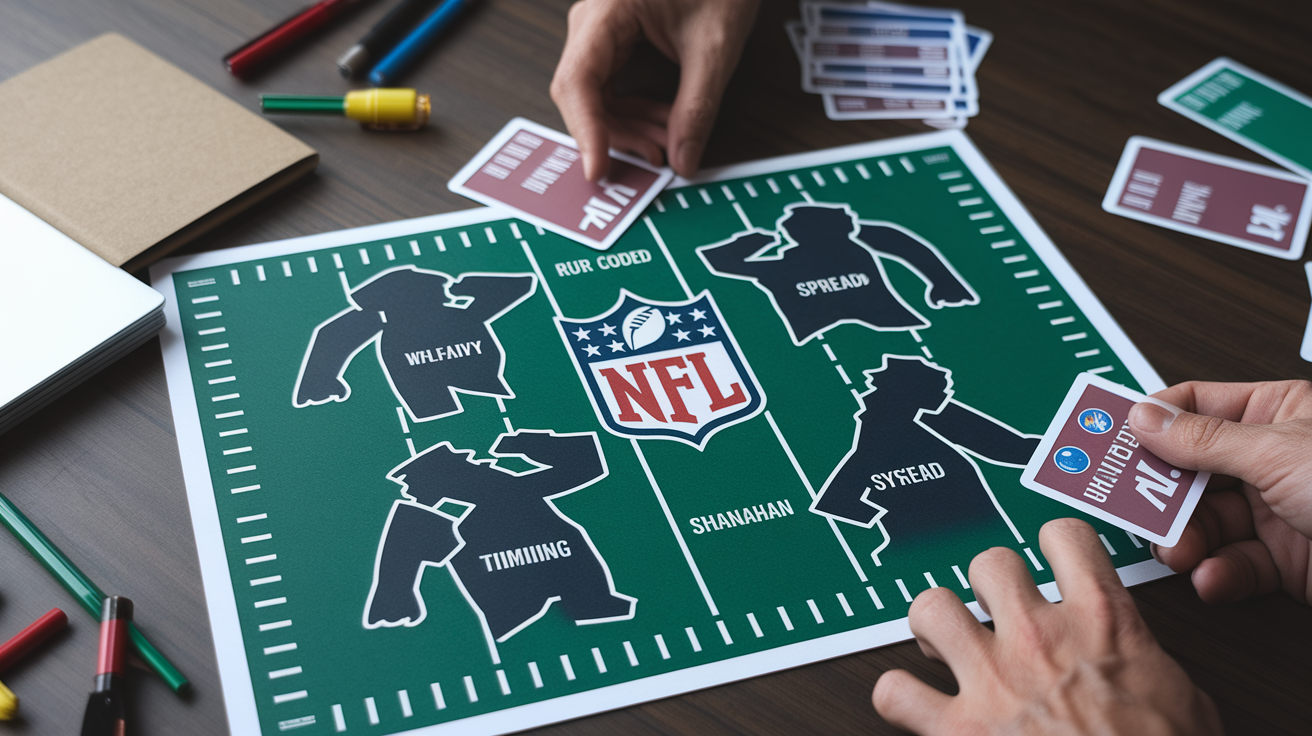
Scheme alignment significantly impacts quarterback development and career trajectory. Fernando Mendoza fits best in timing-based West Coast or Air Coryell systems that emphasize quick decision-making, layered route concepts, and attacking outside the numbers. Similar to how the Rams utilized Jared Goff before trading him to Detroit. His lack of elite mobility and pressure struggles mean he requires excellent pass protection and coordinated play-action concepts to maximize production.
LaNorris Sellers needs a run-heavy spread offense with designed quarterback runs, RPO concepts, and structure that allows him to create off-schedule. Think Baltimore’s system for Lamar Jackson or Philadelphia’s scheme for Jalen Hurts, where the quarterback serves as an additional gap threat that forces defenses into light boxes and opens explosive plays. Carson Beck’s diminished arm strength post-surgery makes him ideal for quick-game systems emphasizing short area completions, screens, and intermediate crossing routes rather than vertical attacks. Dante Moore thrives in layered-touch offenses like Kyle Shanahan’s system, where timing, anticipation, and precision matter more than cannon arm strength.
Optimal scheme fits for each prospect:
- Mendoza – West Coast timing offense with excellent pass protection and coordinated play-action
- Sellers – Run-heavy spread with designed QB runs, RPO concepts, and off-schedule creation opportunities
- Allar – Vertical pro-style system that utilizes his arm strength on deep shots, assuming accuracy improves
- Moore – Shanahan-style layered offense emphasizing touch, timing, and anticipation over arm strength
- Nussmeier – Simplified reads in quick-game system that limits high-risk decision opportunities
- Beck – Short-area quick game with screens and crossing routes that don’t require pre-injury velocity
Draft Range, Risk Assessment, and Development Timelines for 2026 QB Prospects

Projected draft positioning reflects both talent evaluation and positional desperation across NFL rosters. Fernando Mendoza represents the consensus first-round selection, likely going No.1 overall despite lacking the generational talent that typically defines top picks. Ty Simpson from Alabama receives third-round grades after his strong early-season performance in 2025, though his collapse after Week 11 introduces significant risk. Four prospects (Garrett Nussmeier, Drew Allar, Cade Klubnik from Clemson, and potentially LaNorris Sellers) project into the fourth round as developmental selections requiring patience.
Day 3 selections beginning in Round 5 include Taylen Green, Sawyer Robertson from Baylor, Carson Beck, and Cole Payton from North Dakota State. Luke Altmyer from Illinois represents a sixth-round projection as a potential backup with placement issues and limited arm strength. Complete rankings show this distribution reflects genuine talent evaluation rather than typical first-round quarterback inflation, though league desperation will likely push multiple names higher than film grades suggest.
Injury concerns heavily influence risk models across multiple prospects. Drew Allar’s broken ankle ended his 2025 season and raises durability questions given his 6’5″ frame. Carson Beck’s UCL surgery fundamentally changed his arm strength and velocity, making him a diminished version of the quarterback who started 40 games for Georgia and Miami. Garrett Nussmeier dealt with an undisclosed injury during 2025 that affected his performance, compounding concerns about his below-average size at 6’1″, 202 pounds.
Development timelines vary significantly based on prospect readiness and physical versus mental tools. Most evaluators project multi-year developmental windows for this class, with few prospects capable of contributing immediately as NFL rookies. Taylen Green specifically projects as requiring a full redshirt year to develop passing fundamentals despite his exceptional athletic testing. Teams drafting quarterbacks from this class should plan for 2-3 year development curves rather than expecting immediate starter production.
| Player | Projected Round | Main Risk Factor | Development Timeline |
|---|---|---|---|
| Fernando Mendoza | 1st Round (No.1 overall) | Pressure performance and limited mobility | 1-2 years as starter with protection |
| Ty Simpson | 3rd Round | Late-season collapse, size limitations | 2-3 years developing consistency |
| Garrett Nussmeier | 4th Round | Turnover rate, undisclosed injury, size | 2 years learning decision-making |
| Drew Allar | 4th Round | Broken ankle, accuracy inconsistency | 2-3 years if injury recovery complete |
| LaNorris Sellers | 4th Round | Accuracy, over-reliance on scrambling | 3+ years developing passing consistency |
| Taylen Green | 5th Round | 5.3% turnover rate, underdeveloped passing | Redshirt year required minimum |
| Carson Beck | 5th Round | Diminished arm post-UCL surgery | Backup role, limited starter upside |
| Luke Altmyer | 6th Round | Placement issues, limited arm strength | Career backup projection |
Final Words
We jump right into the 2026 QB class: Mendoza tops the board, but depth is thin. The post breaks down measurements, arm/accuracy, pocket play, processing, injury flags, and ideal scheme fits.
Profiles on Mendoza, Sellers, Allar, Moore, Nussmeier, and Beck show clear ceilings and clear risks. Draft ranges and development timelines mostly point to multi-year backups, with a few Day 1–2 upside cases.
This 2026 NFL draft quarterback prospect scouting report gives teams film-based grades, measurable context, and risk reads to use. A few names can still climb — so stay optimistic.
FAQ
Q: What is the overall strength of the 2026 QB class?
A: The 2026 QB class is broadly considered weak, often labeled a “one‑quarterback class,” with most prospects seen as Day‑3 picks and only one clear first‑round candidate.
Q: Who is the top QB prospect and possible No. 1 overall pick?
A: Fernando Mendoza is widely viewed as the QB1 and potential No. 1 overall pick thanks to Heisman production and high TD totals, though he has notable pressure‑handling concerns.
Q: Which quarterbacks consistently show up as top prospects?
A: The six names that repeatedly appear across scouting reports are Fernando Mendoza, Sellers, Allar, Moore, Nussmeier, and Beck.
Q: How do physical measurements and athletic testing separate prospects?
A: Physical profiles vary: Mendoza and Allar are tall (6’5”), Sellers is thick and mobile (6’3”, 240), Green tests elite athletically — size and testing shape positional projections and scheme fits.
Q: What are the main arm strength and accuracy trends across the class?
A: Arm trends: Mendoza has high‑velocity throws but deep fade issues; Sellers has elite arm power with inconsistent accuracy; Allar’s raw arm is best, but placement and delivery habits worry scouts.
Q: How do prospects perform under pressure and in the pocket?
A: Pocket trends: Mendoza loses accuracy under pressure, Sellers over‑relies on mobility, Allar can panic inside pressure, Moore handles movement better, and Nussmeier makes erratic pressure decisions.
Q: What decision‑making and turnover concerns exist among prospects?
A: Decision‑making risks include Nussmeier’s high interception totals, Simpson’s late‑season processing drop, Allar’s extreme conservatism on deep shots, and Sellers’ inconsistent middle‑field reads.
Q: Which injury histories most affect draft stock?
A: Injury red flags include Beck’s elbow surgery and post‑surgery arm decline, Allar’s broken ankle in 2025, and an undisclosed 2025 injury for Nussmeier — all pulling down draft grades.
Q: What are the projected draft ranges and development expectations?
A: Projected ranges: Mendoza Round 1; Simpson Round 3; Nussmeier/Allar/Klubnik Round 4; Green/Robertson/Beck/Payton Round 5; Altmyer Round 6 — most are seen as multi‑year developmental backups.
Q: Which offensive systems fit the top prospects best?
A: Best fits: Sellers in run‑heavy spread systems, Mendoza in timing‑based pocket schemes, Beck in quick‑game systems, Moore in layered‑touch offenses, Nussmeier with simplified reads, Allar in vertical pro‑style systems.
Q: What NFL comparisons and career ceilings look probable for the class?
A: Common comps: Mendoza → Jared Goff/Carson Palmer; Sellers → Lamar Jackson/Jalen Hurts; Allar → Joe Flacco/Daniel Jones; Moore → Teddy Bridgewater; Nussmeier → Andy Dalton; Beck → Matt Barkley, with many projecting as QB2/3.