


What if the tape is flawless but a single scan costs you millions?
Teams run X-rays, MRIs, and detailed physicals that can reveal problems scouts never saw on film.
Those medical findings routinely drop players a round or more, sometimes off the board.
This post breaks down the real medical red flags teams fear: degenerative knees, repeat concussions, cardiac issues, spine problems, chronic soft-tissue injuries, and failed physicals.
Know them before draft night so you can see why a top prospect suddenly slides.
Key Medical Red Flags That Hurt a Prospect’s Draft Stock
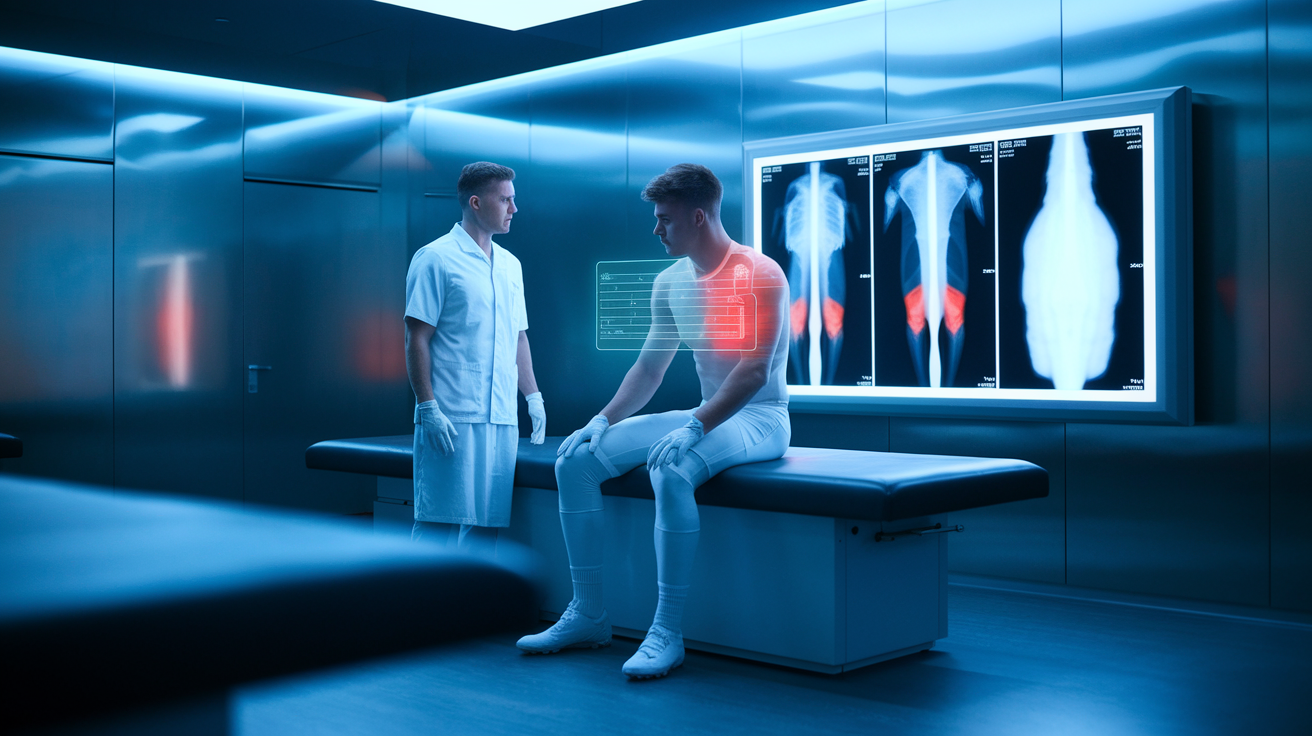
Teams run exhaustive medical testing (X-rays, MRIs, flexibility screening) that can uncover conditions nobody’s talking about publicly. And those findings can drop a prospect slightly, severely, or right off the board. It’s like a private autopsy of every joint and injury history, except the guy’s still breathing.
Certain medical red flags create universal panic across front offices. Scouts can love the tape. Interviews can go perfectly. But the medical team gets the last word on whether that body can handle NFL punishment. One bad finding in the wrong spot erases millions in guarantees or turns a projected first-rounder into a day two gamble.
High-risk medical concerns teams watch for:
- Degenerative knee conditions – cartilage loss or ongoing inflammation means less explosiveness and a shorter window to produce
- Repeated concussions – multiple documented brain injuries raise long-term neurological risk and the possibility of early retirement
- Cardiac abnormalities – structural heart problems or rhythm issues on ECG can disqualify a player outright
- Spinal stenosis or cervical instability – narrowing of the spinal canal or unstable neck bones carry catastrophic re-injury risk
- Chronic hamstring or soft-tissue strains – recurring muscle problems suggest mechanical flaws or sloppy rehab, which means more missed games
- Prior major surgeries without full recovery – labrum repairs, ACL reconstructions, or core muscle work done too close to the draft creates questions about readiness
- Failed or incomplete physicals – gaps between what the player reports and what imaging shows breed distrust and hesitation
Degenerative Knee Conditions and Long‑Term Durability Risks
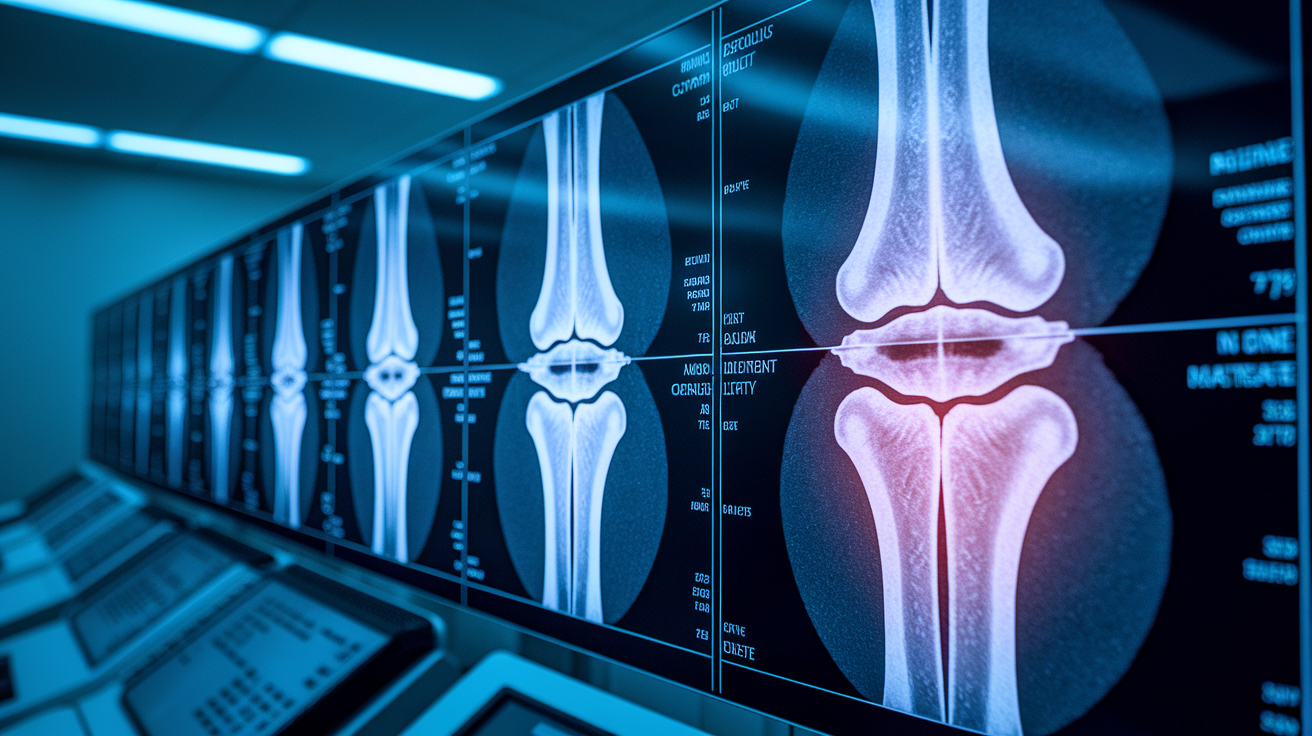
Degenerative knee damage isn’t always a single torn ligament. Teams get nervous about patellar tendinopathy (chronic inflammation below the kneecap), early osteoarthritis (cartilage breaking down inside the joint), and cartilage thinning that shows up on MRI even when the guy feels fine. These don’t heal like a clean ACL tear. They get worse. Every snap accelerates the wear. A prospect might be pain-free now, but team doctors already know what that knee looks like in year four.
Medical staffs compare combine imaging to older scans if they exist, measure joint space, check for bone-on-bone contact, and run stress tests to see how the knee responds under load. They’re not asking “Can he play this season?” They’re asking “Will this knee survive a second contract?” Risk gets magnified by position. A pass rusher who explodes off a planted knee faces bigger functional danger than a safety working in space.
Former Tennessee cornerback Jermod McCoy was projected as a first-rounder but tore his ACL. Teams later flagged his knee as a degenerative problem, not just an acute injury. That distinction changed everything. When they see wear patterns suggesting the cartilage won’t hold, the player slides no matter how good the film looks.
Concussion History and Neurological Red Flags
Multiple concussions increase long-term brain risk and trigger automatic downgrades, especially for linebackers and running backs. Teams don’t just count past incidents. They dig into recovery timelines, symptom duration after each hit, and whether the player came back to practice before full clearance. A prospect with three diagnosed concussions in college already carries documented vulnerability. The next one could end him.
Recovery patterns matter as much as totals. If a player needed two weeks to clear protocol after the first concussion but four after the second, that progression signals worsening response. Teams also watch film from right after he returns, looking for hesitation, blown assignments, or signs he’s protecting himself without realizing it.
Baseline cognitive testing gives objective data interviews can’t. Teams run memory, reaction time, and processing tests at the combine, then compare results to league norms and the player’s academic background. If scores fall below expectations or show deficits tied to past head trauma, medical staff may flag him as high-risk even if he claims he’s fine. Some organizations keep internal “do not draft” lists for players whose concussion history suggests the NFL will shorten their cognitive lifespan, talent be damned.
Cardiac Abnormalities Detected at the Combine

Structural heart differences, arrhythmias, and abnormal ECG readings can trigger immediate medical disqualification in some leagues. The NFL treats them almost as seriously. Common issues found in athlete screenings include hypertrophic cardiomyopathy (thickened heart muscle restricting blood flow), Wolff-Parkinson-White syndrome (extra electrical pathways causing irregular heartbeat), and mitral valve prolapse (a valve that doesn’t close right). Most of these produce zero symptoms in daily life but can cause sudden cardiac events under peak effort.
Risk depends on severity and whether treatment works. A minor arrhythmia that responds to medication might drop a guy a round or two. A structural problem that can’t be fixed puts his life at risk every time he sprints. Most teams will yank him off their board entirely rather than gamble. League protocols require clearance from independent cardiologists. Even one dissenting opinion can kill draft interest.
Maurice Hurst fell after a heart condition surfaced at the combine. Jeremiah Owusu-Koramoah faced similar concerns tied to heart irregularities during his process. Both eventually got medical clearance and were drafted, but their stock tanked while teams waited for follow-up testing and specialist sign-off. When a cardiac red flag pops up, the delay alone costs position because teams won’t burn a high pick on uncertainty.
Spinal Issues and Structural Concerns
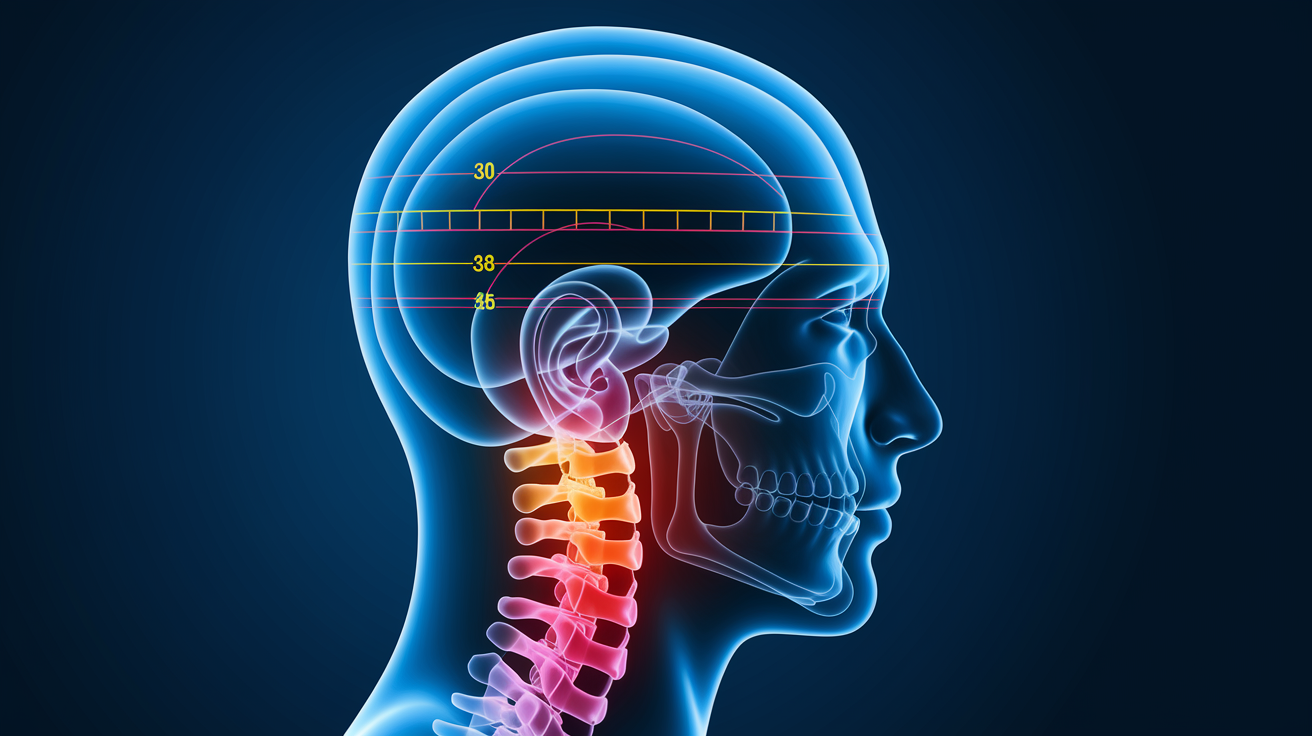
Spinal narrowing (stenosis), old neck fractures, or unstable cervical structures carry re-injury risk most teams consider non-negotiable. Spinal stenosis means the protective canal around the spinal cord is narrower than normal, leaving less room for the cord to move safely when the neck flexes or absorbs impact. A violent collision can compress the cord inside that tight space, causing temporary paralysis, permanent nerve damage, or worse. Herniated discs and cervical instability create similar danger. One bad hit in the wrong position can end a career or change a life.
Common spinal scans include cervical MRI (to measure canal width and spot disc damage), flexion-extension X-rays (to check for abnormal vertebral movement), and CT scans (to evaluate bone structure after past fractures). Teams compare measurements to published safety thresholds and usually require second opinions from spine specialists. The risk criteria are simple: if the spinal canal measures below a certain diameter or imaging shows instability that surgery can’t fix, most teams won’t draft the player at any round.
Nick Chubb’s college knee injury wasn’t spinal, but the same “non-negotiable” standard applies. Teams that see structural damage beyond a safe threshold won’t take the risk, no matter how talented the guy is. When a prospect’s spine shows stenosis or instability, he often goes undrafted or signs as a priority free agent with contract language limiting guaranteed money.
Chronic Soft‑Tissue Injuries That Signal Recurring Problems

Patterns of recurring muscle strains point to biomechanical problems or sloppy rehab, which tanks projected availability. A hamstring that pops every August, a calf that tightens after every speed session, or a groin that never fully heals all say the same thing: something in the athlete’s movement, flexibility, or recovery is broken. And it’ll follow him to the NFL.
Teams review college injury reports and compare them to combine testing, especially flexibility benchmarks and movement quality screens. If a prospect missed three games in two years for hamstring strains but shows tight hip flexors and limited hamstring length during physical testing, the red flag isn’t the injuries. It’s the underlying cause nobody fixed. That player will keep missing time until someone corrects his mechanics or strengthens the weak links.
Most common recurring soft-tissue problems:
- Hamstring strains – usually tied to poor hip mobility, strength imbalance, or sprinting mechanics that overload the muscle
- Calf strains – often result from tight Achilles tendons, limited ankle range, or compensatory movement after a previous lower-body injury
- Groin pulls – typically signal weak adductors, hip instability, or side-to-side movement that exceeds the muscle’s capacity
How Failed or Incomplete Team Physicals Affect Draft Position

The physical evaluation starts weeks before the draft with combine medical exams, continues through private team visits (teams get 30 player visits at their facility, like the Browns’ Berea campus), and wraps with final reviews by each organization’s medical staff. Players go through orthopedic testing, imaging, bloodwork, and functional movement screens. Teams compare medical imaging, orthopedic results, and historical data to league standards. Discrepancies can tank a guy’s stock or slap a “do not draft” tag on internal boards.
Typical causes of failure include undisclosed surgeries that pop up on imaging, structural issues the player didn’t know existed, or test results that contradict his self-reported health history. If a prospect says he’s fully healed from a shoulder injury but his range-of-motion testing shows a 20-degree deficit and the MRI reveals a partial labral tear that was never repaired, teams assume he either lied or doesn’t understand his own body. Neither builds confidence. Failed physicals also happen when a player can’t pass basic strength or stability tests, signaling he’s not ready to contribute right away.
The downstream effects on draft placement are immediate and measurable. A failed physical at one team usually leaks to others, either through back-channel medical networks or because the player’s agent discloses it to manage expectations. Prospects projected in the first round can slide into the second or third. Short-term issues may cause a mid-round drop but still lead to roster spots. Career-threatening findings can push a player to undrafted status and a veteran minimum deal with zero guarantees. Jihaad Campbell had surgery for a torn shoulder labrum after the combine and hasn’t played since. That timing alone creates risk because no team’s seen him function post-surgery, and his draft projection dropped accordingly.
Final Words
Teams are flipping through scans and comparing notes as draft day approaches.
This piece walked through the big medical trouble spots, knees, concussions, heart screens, spines, soft-tissue repeats and failed physicals, and why each can push a player down.
If you’re tracking prospects, watch for patterns rather than one-off findings. Understanding medical red flags that can drop a draft prospect helps you read a team’s move, not just react to rumors.
There’s still room for bounce-backs. Careful rehab and clean evaluations can change the story.
FAQ
Q: What medical problems disqualify you from the draft?
A: The medical problems that can disqualify you from the draft are serious cardiac abnormalities (arrhythmias, structural defects), unstable spinal injuries, progressive neurological disease, or failing a team/league physical with dangerous findings.
Q: What are the 10 red flag symptoms? What are red flags to any medical care plan? What are 5 red flag symptoms?
A: The main red-flag symptoms teams watch for are repeated concussions, unexplained chest pain or irregular heartbeat, chronic knee degeneration, recurring hamstring/soft-tissue strains, limited range of motion, prior major surgeries, and failed or incomplete physicals.