

Who wins this young-core rivalry — the Thunder’s proven stars or the Rockets’ deeper upside?
Oklahoma City arrives with All-NBA Jalen Williams, two-way anchor Chet Holmgren, and lock-down guard Cason Wallace, so they look ready now.
Houston pushes back with All-Star Alperen Şengün and a raft of high-upside wings (Jabari Smith Jr., Amen Thompson, Reed Sheppard), so they might be better long term.
This piece argues OKC has the near-term edge while Houston holds the higher ceiling, and the breakout of Holmgren vs. Şengün and Williams vs. Smith Jr. will decide who dominates.
Evaluating the Thunder vs Rockets Young-Core Rivalry Landscape

The Thunder vs Rockets young-core rivalry sits at the top of the Western Conference’s next-generation storylines. Oklahoma City’s core, headlined by Jalen Williams (21.6 points, 5.3 rebounds, 5.1 assists, All-NBA), Chet Holmgren (elite rim protection, floor-spacing upside), and Cason Wallace (38.9% from three, 92nd percentile Defensive EPM), earned the No. 1 ranking among league young cores and already contributed to a championship run. Houston counters with the No. 4 ranked unit anchored by Alperen Şengün (16.0/8.6/4.1, All-Star, +6.6 defensive rating on-court), Jabari Smith Jr. (22 years old, defensive versatility), Amen Thompson (elite on-ball defender), and Reed Sheppard (2024 No. 3 pick). The Thunder sit closer to immediate contention. The Rockets project as a rising challenger backed by deeper defensive youth and a 52-win baseline.
OKC holds the edge in proven top-end talent. Williams already made All-NBA at 24, Holmgren offers two-way dominance, and the core logged title minutes. Houston counters with breadth: four of five core members were major contributors on a top-four defensive team, Şengün is an established All-Star offensive hub, and multiple wings (Thompson, Smith Jr.) hold star ceilings. The rivalry centers on ceiling versus floor. Thunder players have demonstrated immediate championship-level performance, while Rockets pieces combine volume, defensive foundation, and longer-term star upside if shooting and creation mature.
Advanced analytics for young core evaluation favor OKC’s current readiness but Houston’s depth trajectory. Williams’ 57.3 true shooting percentage and Wallace’s elite defensive metrics confirm role mastery. Şengün’s +6.6 on-court defensive swing and Houston’s fourth-ranked defensive efficiency show structural team-level excellence. Both cores are built for a 1–3 year window where they’ll collide repeatedly, with Oklahoma City banking on high-floor All-NBA contributors and Houston betting on quantity, versatility, and the potential for a secondary star to emerge from Smith Jr., Thompson, or Sheppard.
Key rivalry-defining advantages for each team:
Thunder: Jalen Williams’ All-NBA two-way play, Holmgren’s elite rim protection and spacing potential, proven championship experience for the entire core, Wallace’s elite guard defense and 38.9% three-point shooting, immediate contention timeline with title infrastructure already in place
Rockets: Deeper rotation of high-upside contributors (Şengün, Smith Jr., Thompson, Sheppard, Eason), established All-Star in Şengün providing offensive hub consistency, top-four defensive efficiency built around young defenders, 52-win floor showing near-term competitiveness, multiple pathways to a superstar breakout among Smith Jr. and Thompson
Thunder Young Core Development and Breakout Trajectories

Oklahoma City’s player development timeline accelerated faster than any recent rebuild. Jalen Williams reached All-NBA status in his third season. Holmgren survived the rookie-year injury reset to become one of the league’s premier defensive anchors. Wallace evolved from a late first-rounder into a championship-caliber role player by year two. The Thunder’s young core didn’t just grow. They contributed immediately to title contention, proving the organization’s ability to combine draft talent with winning habits and role clarity.
The Thunder’s development success hinges on fit and complementary construction. Williams and Holmgen each bring distinct two-way skill sets that layer with Shai Gilgeous-Alexander’s lead creation, and Wallace fills the connective guard-defense role that allows OKC to switch and contest without drop-off. Josh Giddey’s documented 16.6/7.9/6.2 season as a 20-year-old showed high-floor playmaking upside. Even depth pieces like Ousmane Dieng and Jaylin Williams have clear developmental paths within the system.
Jalen Williams’ All-NBA Leap
Williams averaged 21.6 points, 5.3 rebounds, and 5.1 assists on 57.3 true shooting percentage while earning All-NBA Third Team honors at age 24. His blend of pick-and-roll creation, shooting consistency, and defensive versatility positioned him as OKC’s clear second star. Williams’ trajectory suggests sustained All-Star upside with potential to anchor secondary offensive possessions in high-leverage playoff series.
Chet Holmgren’s Two-Way Ceiling
Holmgren projects as the league’s top floor-stretching, paint-protecting big if he adds strength and refines shot creation. His 7’1 frame, elite shot-blocking instincts, and mobility to defend in space give the Thunder a defensive anchor who can also space the floor. Holmgren’s ceiling is higher than Williams’ due to positional scarcity and the ability to impact both ends without heavy usage.
The Wallace & Giddey Impact
Wallace shot 38.9% from three for his career and graded in the 92nd percentile in Defensive Estimated Plus/Minus, offering proven role-player reliability on a title team. Giddey’s 16.6/7.9/6.2 stat line as a 20-year-old demonstrated high-floor playmaking and rebounding, though shooting and athleticism remain long-term questions. Both players provide secondary creation and connective glue that lets OKC field deep, switchable lineups.
Four development indicators signaling sustained Thunder growth:
Jalen Williams’ true shooting efficiency (57.3%) and All-NBA recognition at age 24
Chet Holmgren’s defensive upside as a mobile, shot-blocking floor-spacer
Cason Wallace’s immediate championship contribution and elite guard defense metrics
Proven championship experience across the entire young core
Rockets Young Core Growth and Future Star Potential

Houston won 52 games and finished fourth in defensive efficiency, driven by a young core that logged heavy rotation minutes and contributed on both ends. Alperen Şengün is an established All-Star with career averages of 16.0 points, 8.6 rebounds, and 4.1 assists. His +6.6 on-court defensive rating swing proved he can anchor a top-tier defense despite not fitting the traditional rim-protecting mold. Jabari Smith Jr., Amen Thompson, and Reed Sheppard each hold two-way upside, and the roster timeline to contention runs shorter than most rebuilds due to the blend of proven contributors and rising prospects.
The Rockets’ growth trajectory depends on whether Smith Jr. or Thompson can ascend to perennial All-Star status. Şengün already provides the offensive hub role, but Houston’s championship viability rests on a secondary superstar emerging to pair with him. Smith Jr. offers long-term two-way wing upside as a 6’10 floor-spacer with defensive versatility. Thompson’s elite on-ball defense and athleticism give him a sky-high ceiling if his shooting improves. Reed Sheppard, the No. 3 pick in 2024, played sparingly as a rookie but projects to earn more minutes in 2025–26, adding another wild card to Houston’s rotation.
The Rockets built a defensive ecosystem that lets multiple young players thrive without requiring a single dominant rim protector. Pairing Şengün with Thompson, Tari Eason, and Smith Jr. boosts team defense through switching, perimeter contesting, and physical intensity. Traits that disrupt rhythm offenses and complement Houston’s young-veteran mix of Fred VanVleet, Dillon Brooks, and Jock Landale. The roster’s defensive versatility among young wings positions Houston to test elite offenses in playoff matchups. The 52-win baseline signals a team already on the doorstep of true contention.
Alperen Şengün’s Offensive Hub Role
Şengün’s 16.0/8.6/4.1 career averages and All-Star selection establish him as Houston’s primary offensive creator. His inside playmaking, post scoring, and passing from the elbow give the Rockets a polished offensive hub who can generate easy looks for shooters and cutters. Şengün’s defensive impact (+6.6 on-court rating) proves he can function within a team-defense system, even if he lacks traditional rim-protection tools.
Jabari Smith Jr. & Wing Defense Foundation
Smith Jr.’s defensive potential and floor-spacing profile project him as a future two-way wing star. At 22 years old and 6’10, he offers switchable length, perimeter shot-contesting, and the ability to guard multiple positions. Smith’s shooting underperformed rookie expectations, but his long-term projection remains high due to his versatility and fit within modern defensive schemes that prioritize mobility and length.
Amen Thompson & Reed Sheppard Future Outlook
Thompson is an elite on-ball defender with exceptional athleticism, but his breakout depends on improving his outside shot. Sheppard, the 2024 No. 3 pick, logged limited rookie minutes but holds shot-making and defensive promise expected to surface in 2025–26. Both players add depth and upside to Houston’s guard rotation, offering multiple developmental pathways for the Rockets to uncover a second star alongside Şengün and Smith Jr.
Direct Prospect Matchups Defining the Thunder vs Rockets Rivalry
The Thunder vs Rockets rivalry will be shaped by head-to-head prospect battles that carry long-term playoff implications. Chet Holmgen versus Alperen Şengün frames the interior duel. Holmgren projects as the superior rim protector and floor-spacer, while Şengün is already the more polished offensive hub with documented playmaking and rebounding production. Jalen Williams versus Jabari Smith Jr. defines the wing creation matchup: Williams is the more complete All-NBA contributor now, but Smith’s 6’10 frame and defensive versatility give him a higher long-term two-way ceiling if his shooting continues to develop. Cason Wallace against Amen Thompson and Reed Sheppard sets up elite guard-defense battles. Wallace offers proven reliability and 38.9% three-point shooting, while Houston counters with Thompson’s athleticism and Sheppard’s breakout potential.
These matchups carry strategic weight because each player influences how the teams can attack and defend. Holmgren’s ability to protect the rim and stretch the floor lets OKC play faster and switch more confidently. Şengün’s offensive creation forces defenses to commit help, opening kick-out opportunities for Houston’s wings. Williams’ two-way balance allows the Thunder to run secondary offense through him in high-leverage possessions, while Smith Jr.’s length and shooting let the Rockets switch across positions and space the floor in crunch time. Wallace’s perimeter defense pairs with Holmgren’s rim protection to create a defensive ecosystem that can stifle elite guards. Thompson’s on-ball pressure and Sheppard’s projected shot-making give Houston multiple ways to counter OKC’s ball movement and pace.
| Player | Team | Strength Profile | Current Impact Level | Long-Term Projection |
|---|---|---|---|---|
| Chet Holmgren | Thunder | Elite rim protection, floor-spacing, defensive mobility | Championship contributor, defensive anchor | Potential league-best two-way big |
| Alperen Şengün | Rockets | Offensive hub, playmaking, +6.6 defensive rating on-court | All-Star, 16.0/8.6/4.1 averages | Polished offensive anchor, team-defense contributor |
| Jalen Williams | Thunder | All-NBA two-way wing, 21.6/5.3/5.1, 57.3 TS% | All-NBA Third Team, clear second star | Sustained All-Star, secondary playoff creator |
| Jabari Smith Jr. | Rockets | 6’10 switchable defender, floor-spacing upside | Rising two-way contributor | Future star if shooting consistency arrives |
| Cason Wallace | Thunder | Elite guard defense (92nd percentile EPM), 38.9% 3PT | Proven championship role player | High-floor 3-and-D guard |
| Amen Thompson / Reed Sheppard | Rockets | Elite athleticism, on-ball defense / No. 3 pick shot-making potential | Thompson: defensive specialist; Sheppard: limited rookie role | Thompson: star ceiling if shooting improves; Sheppard: breakout wild card |
Draft Capital, Asset Accumulation, and Long-Term Team Building
The Thunder made five lottery picks in recent seasons, giving them broader complementary depth across multiple developmental timelines. Houston countered with three top-five picks in the last three years, using concentrated high-value selections and veteran signings to accelerate the rebuild. OKC’s philosophy emphasizes fit and role clarity. Each lottery pick slots into a defined roster need, whether it’s Wallace’s guard defense or Dieng’s wing depth. Houston’s approach leans on quantity and versatility, betting that a deeper pool of high-upside pieces will produce multiple stars even if not every pick pans out.
Reed Sheppard, the No. 3 pick in 2024, represents Houston’s latest high-capital bet on long-term upside. Historical examples show young cores can mature rapidly. The Nuggets jumped from 51 to 56 wins and eventually won a championship. The Grizzlies posted back-to-back 50-win seasons early in their rebuild. Both OKC and Houston have the asset base to follow similar trajectories, but the Thunder’s five lottery picks provide more margin for error and a wider range of role-player fits around Williams and Holmgren. Houston’s concentrated picks (Şengün, Smith Jr., Thompson, Sheppard) create higher variance: if two or three break out as stars, the Rockets could leapfrog OKC. If development stalls, the lack of broader depth could slow their timeline.
Five ways draft capital shapes the Thunder vs Rockets rivalry balance:
OKC’s five lottery picks create deeper rotational insurance. If one or two prospects plateau, the Thunder still field multiple young contributors around Williams and Holmgren.
Houston’s three top-five picks in three years concentrate star upside in a smaller group, raising the ceiling if Smith Jr., Thompson, or Sheppard reach All-Star status.
Oklahoma City’s broader asset base allowed them to add proven role players (Wallace) who contributed immediately to championship runs, shortening the rebuild timeline.
The Rockets’ veteran signings (VanVleet, Brooks) aim to professionalize development and accelerate wins, offsetting the risk of relying on fewer high-upside prospects.
Both teams hold the draft capital to remain flexible in trades or free agency, but OKC’s depth gives them more paths to sustained contention if their top stars stay healthy.
Playoff Timelines and Championship Viability for Thunder and Rockets
The Thunder sit on an immediate championship timeline, driven by Jalen Williams’ All-NBA production, Chet Holmgren’s two-way dominance, and the entire core’s title experience. Oklahoma City’s young players already contributed to a championship run, proving they can execute in high-leverage playoff moments. Houston operates on a 1–3 year window. The 52-win baseline and top-four defensive efficiency show the Rockets are already near-term contenders, but true title viability depends on one or two players ascending to perennial All-Star or superstar status. Alperen Şengün is the established offensive hub. The next step requires Jabari Smith Jr. or Amen Thompson to make a star leap.
The Thunder’s advantage is role clarity and proven high-end talent. Williams and Holmgren anchor both ends, Wallace provides elite guard defense, and the supporting cast (Giddey, Dieng, Jaylin Williams) knows how to function within a winning system. Houston counters with depth and defensive versatility. Four of five core members were major contributors on a 52-win team, and the Rockets’ ability to switch, contest, and sustain defensive intensity gives them a tactical edge against pace-and-spacing offenses. If Smith Jr. or Thompson breaks out, Houston could close the gap within two seasons. If development plateaus, the Thunder’s immediate talent advantage could widen into a multi-year dynasty window.
Four-item timeline comparison:
Thunder immediate contention (0–2 years): Williams and Holmgren already All-NBA and championship-level contributors. Core is built to compete for titles now.
Rockets near-term contention (1–3 years): 52-win baseline and elite defensive foundation show playoff readiness. Championship window opens if secondary star emerges.
OKC driven by proven stars: Williams (All-NBA), Holmgren (elite two-way big), Wallace (championship role player). High-floor, high-ceiling talent already in place.
Houston betting on depth and breakout potential: Şengün (All-Star hub), Smith Jr. (two-way upside), Thompson (elite defense, shooting question), Sheppard (wild card). Championship viability tied to one or two players reaching superstar level.
Future Thunder vs Rockets Matchup Storylines and Rivalry Evolution
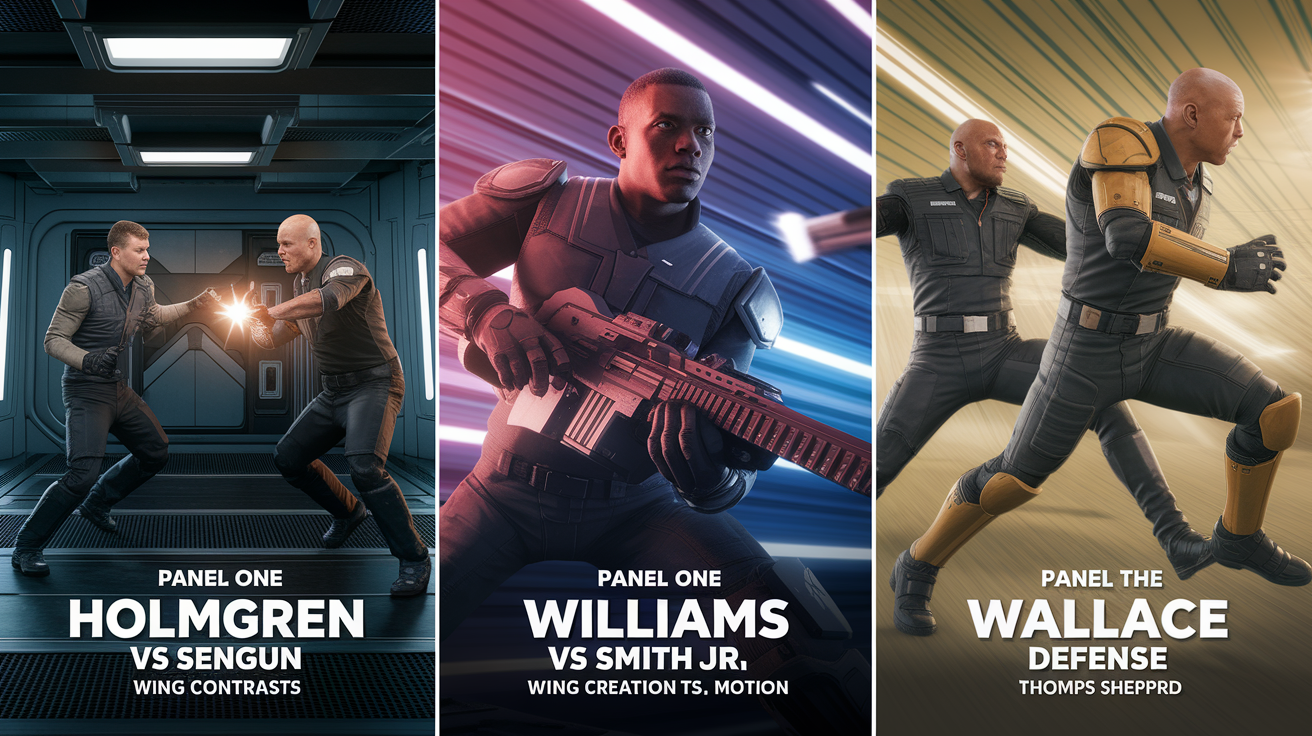
The Thunder vs Rockets rivalry will be shaped by three core matchup storylines over the next 2–4 seasons. The big-man duel between Chet Holmgren and Alperen Şengün defines interior play. Holmgren’s rim protection and floor-spacing versus Şengün’s offensive creation and on-court defensive impact. The wing creation battle between Jalen Williams and Jabari Smith Jr. determines which team can generate secondary offense and defend multiple positions in crunch time. Guard-defense matchups pit Cason Wallace’s elite perimeter defense and shooting against Amen Thompson’s athleticism and Reed Sheppard’s emerging shot-making, with each player capable of swinging playoff possessions through stops, transition plays, or timely baskets.
Houston’s depth allows multiple players to swing a series. If Şengün controls the paint, Smith Jr. hits threes, and Thompson disrupts ball-handlers, the Rockets can overwhelm OKC’s rotations even if Williams and Holmgren dominate individually. The Thunder rely on higher-end top-core talent, banking on Williams’ All-NBA two-way play and Holmgren’s defensive anchor role to neutralize Houston’s numbers advantage. Player chemistry during head-to-head matchups will be critical: OKC’s title experience gives them an edge in execution and composure, while Houston’s youth and versatility create more lineup combinations and strategic flexibility in seven-game series.
Five key matchup themes over the next 2–4 seasons:
Holmgren vs Şengün interior chess match: elite rim protection and spacing against polished offensive hub and defensive swing player
Williams vs Smith Jr. wing creation battle: All-NBA two-way dominance versus rising 6’10 switchable defender with star ceiling
Wallace vs Thompson/Sheppard guard-defense duels: proven championship defender against Houston’s athletic playmaking and emerging shot-making duo
Depth versus star power: Rockets’ rotation versatility and multiple contributors against Thunder’s higher-end proven talent and title experience
Coaching and development as rivalry accelerator: both teams’ ability to maximize young-core growth will determine whether this becomes a decade-long Western Conference showdown or a brief window before one team pulls ahead
Final Words
Thunder are a step closer to contention right now, All-NBA Jalen Williams, Holmgren’s two-way upside and a proven playoff push give OKC the edge. Rockets, though, are no joke: Şengün, Jabari Smith Jr. and a deep, defensive young group make Houston a rising challenger.
This piece broke down readiness, ceilings, head-to-head matchups, and how draft capital shapes both teams’ windows. Watch for breakout seasons and the Holmgren vs Şengün duel.
The Thunder vs Rockets young-core rivalry will be fun to follow, and both teams look set to push each other higher in the years ahead.
FAQ
Q: Are KD and Harden still friends?
A: KD and Harden are reportedly still friendly, but their relationship is more professional than close now; public interactions are limited since both changed teams, with occasional mutual respect shown in interviews and social media.
Q: Is Kevin Durant playing Game 2?
A: Kevin Durant playing Game 2 depends on the team’s official injury update; there’s no final confirmation here — check the team’s pregame report for the starting lineup and active player list.
Q: Why did the Houston Rockets trade Russell Westbrook?
A: The Houston traded Russell Westbrook to clear salary cap space, improve roster fit with younger players, and accelerate a rebuild focused on more shooting, defense, and long-term flexibility.
Q: Who are the big 3 for OKC Thunder?
A: The Thunder’s big 3 are Shai Gilgeous-Alexander, Jalen Williams, and Chet Holmgren, combining elite scoring, playmaking, and rim protection to push OKC toward immediate contention.